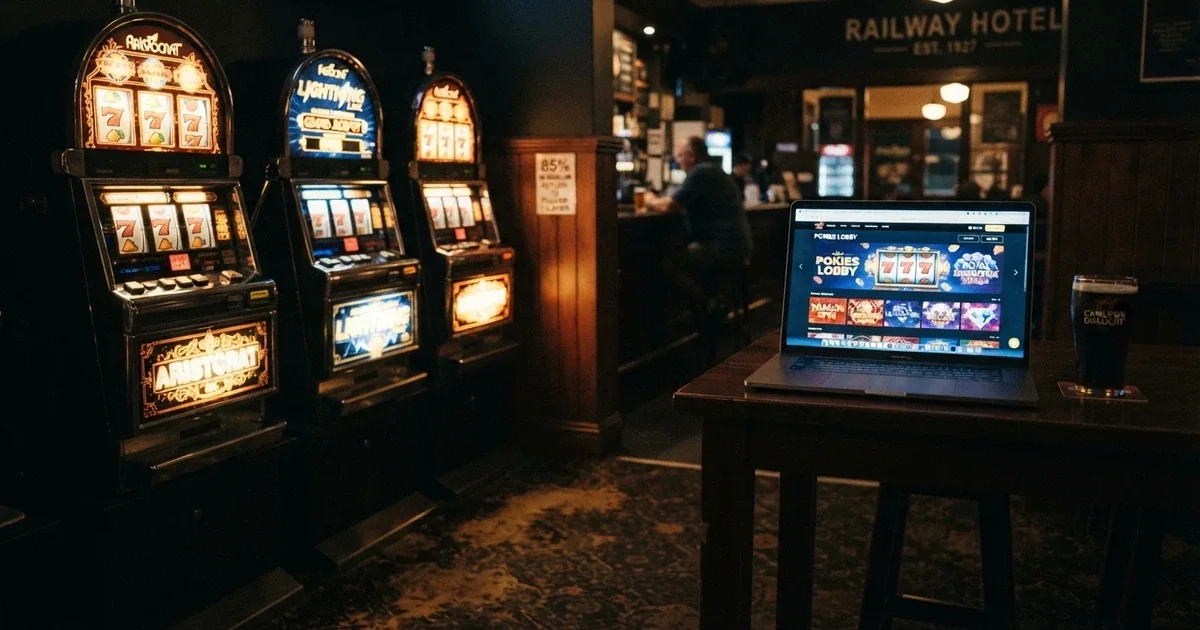
Anonymous crypto casinos in Australia: what offshore crypto play really means, and which ten sites Australian punters reach in 2026
 Available in AU
An anonymous crypto casino, in the strict sense most players mean, is an offshore gambling site that lets you register with nothing more than an email address or a wallet, deposits in Bitcoin or stablecoins, and pays out to the same wallet without asking for a passport or a utility bill. The promise is real. It is also partial. The casino never learns your name, but the blockchain quietly records every deposit and withdrawal on a ledger anyone can read. “No KYC” describes what the operator does, not what the network does.

Every casino on this page sits outside Australia. The Interactive Gambling Act 2001 makes it an offence for a provider to offer online casino games, online pokies, or in-play betting to a person physically in Australia, and no Australian licence exists for any of those products. The individual player is not prosecuted, but neither is the player protected. There is no Australian consumer recourse if a withdrawal stalls, no BetStop binding the operator, and no deposit guarantee. Crypto delivers the privacy. It cannot deliver the protections a domestic licence would.
The rankings below cover ten offshore operators Australian players actually reach in 2026: Stake, Bizzo Casino, CoinCasino, BitStarz, 7Bit Casino, Mega Dice, Vave, Jackbit, RocketPlay and Winna. They are ranked by licence status, bonus value and game depth, with the bonus-cost arithmetic laid out further down so the headline figure stops doing the work the fine print should be doing.
Data current as of 18 October 2026, checked against the ACMA register, the Curaçao Gaming Control Board registry and operator terms pages.
Table of Contents
- The real deal with anonymous play: what “crypto casino” actually delivers in Australia
- The 10 anonymous crypto casinos Australians are playing at in 2026
- Why your anonymous casino bonus is smaller than it looks
- The legal reality: every online casino an Australian visits is offshore
- Staying in control when no-one is checking your ID
- How we selected and ranked these anonymous crypto casinos
- Your crypto, your call: what an Australian punter should weigh before playing
- Frequently asked questions
The real deal with anonymous play: what “crypto casino” actually delivers in Australia
The term “anonymous crypto casino” gets used loosely. Some sites use it to mean a crypto-only cashier; others use it for a no-document sign-up flow; a few use it as marketing for what is, in practice, a standard offshore casino with a Bitcoin button on the deposit page. The honest version is narrower. An anonymous crypto casino, in the sense the term has earned among Australian players, is a site where the operator never asks to verify your identity at any point in the relationship: not on sign-up, not on deposit, and not on withdrawal up to a stated ceiling. The ceiling is the part the marketing tends to skip.
The privacy is also one-sided. The casino does not know who you are, but the blockchain does. Bitcoin transactions are pseudonymous, not anonymous. Anyone with your wallet address can see your full deposit and withdrawal history, your balance, and the timestamps of every move. Chain analysis firms sell this data to anyone with a subscription. Coin mixing and privacy coins complicate the picture, but at the featured operators, the standard rails are pseudonymous. Real anonymity, where it exists, is a wallet-level discipline, not something the casino grants.
A second limit hides in the withdrawal terms. Most no-KYC operators verify identity at withdrawal thresholds, typically between AU$2,500 and AU$5,000 depending on the brand. Below that ceiling, the privacy holds. Above it, the operator wants documents, and the no-KYC promise quietly ends. Players who treat the policy as absolute tend to discover the line by hitting it.
A third limit is the legal one. Australians are not prosecuted for playing at offshore casinos, but the operator itself is offering a prohibited service. ACMA has directed Australian ISPs to block 1,564 illegal gambling and affiliate websites since November 2019, and more than 225 illegal services have withdrawn from the Australian market since 2017. The site a reader reaches today may be blocked next month. The address a player saved last year may not load this one. That is the cost of the offshore route, and it is part of the trade-off any honest comparison has to name.
No KYC, no ID upload: how anonymous sign-up actually works
The mechanics are deliberately simple. A new account at a no-KYC casino asks for the minimum the operator needs to send a withdrawal back to the same person: an email address, a username, a password, and a crypto deposit address. Some sites skip the email entirely and accept a wallet signature. None of them, at the privacy-strict end of the market, ask for a phone number, a home address, a date of birth, or a government ID. Winna’s support is blunt about the rationale: “True crypto gambling should be private and anonymous. That’s why we never require KYC, no matter the circumstance.”

Funding the account is where the operator’s policy meets the network’s mechanics. A Bitcoin deposit typically requires one to three network confirmations, which lands the funds in the casino balance within two to ten minutes. A USDT transfer on the TRC-20 network is faster: confirmation in under sixty seconds, network fees under fifty cents. The casino credits the balance as soon as the required confirmations clear, and the player is in the lobby.
What the flow does not include is the friction a domestic sign-up carries. There is no passport scan, no selfie holding the document, no proof of address, no source-of-funds questionnaire. For Australian players used to licensed wagering operators running KYC at the deposit step, the absence is conspicuous. It is also, for players who value privacy, the entire point of the exercise. The trade-off the rest of the page traces is what that friction was buying, and what disappears when it is removed.
Bitcoin, altcoins and stablecoins: what Australians are actually depositing
Bitcoin remains the default rail at almost every no-KYC casino, the asset the cashier lists first, the one the bonus terms quote in. Confirmation times run two to ten minutes depending on network load, and the casino credits the balance after the required number of confirmations. The transaction is pseudonymous: the address is recorded, the amount is recorded, the time is recorded, but the name behind the address is not.
Ethereum and Litecoin sit alongside Bitcoin as the second tier of accepted coins, both faster on confirmation than Bitcoin’s main chain during quiet network periods, both with lower per-transaction fees. USDT and USDC, the two largest stablecoins by volume, solve a different problem: they let a player hold the casino balance in dollar-equivalent value without converting back to AUD through an exchange. For Australian players who entered crypto through a local exchange and want to avoid FX drag, the stablecoin rails are the practical choice. USDT on TRC-20 confirms in under a minute and costs under fifty cents in network fees, which makes it the cheapest rail for small and mid-sized transfers.
The wider altcoin range at the privacy-strict end of the market is broader than the marketing usually admits. Winna alone accepts twelve cryptocurrencies: Bitcoin, Ethereum, Litecoin, Tether, USD Coin, Solana, Binance Coin, Tron, Dogecoin, Ripple, Ton, and Dai. That range is unusually wide for a no-KYC operator. Most of the others in the featured set take a smaller basket, typically the four or five highest-volume coins. Solana and Tron matter for speed. Dogecoin and Ripple matter for players who hold them already. Dai, the decentralised stablecoin, matters for players who distrust Tether’s reserves. The cashier’s breadth is one of the cleaner signals of how seriously a no-KYC operator takes the “no friction” pitch.
Pokies, blackjack and live dealer: the games Australians are playing anonymously
The game mix at offshore crypto casinos is the strongest reason Australians end up on these sites despite the legal and consumer-protection gap. Pokies dominate, the way pokies dominate every Australian-facing casino product, and the crypto libraries run into the thousands. Mega Dice carries more than 6,000 pokies from over ninety providers, including Pragmatic Play and Evolution, a depth no domestic operator matches. RocketPlay, by contrast, is built around a narrower niche: 1,248-plus BTC-denominated pokies from Playson, iGT, Wazdan, and BGaming. The first is a generalist mega-lobby. The second is a curated pokie floor for the player who already knows what a Bitcoin-only pokie lobby is for.
Table games and live dealer fill the rest. Blackjack, roulette, and baccarat appear in dozens of variants, with Evolution’s live studios powering the high-stakes end of the market and Pragmatic Play Live covering the mid-range. Provably fair, the crypto-native format where the player can verify each spin or hand against a hashed seed, is rarer than the marketing suggests and concentrates at the privacy-strict end of the market. Stake, for instance, runs an in-house provably fair system for its original games. The format is not universal, and the player who cares about it has to check the game page rather than assume.
The experience gap between an offshore crypto lobby and a domestic online bookmaker is real, and it runs in the offshore direction. Australian-licensed operators offer sports and racing, not casino. The crypto lobby is filling a gap the licensed market leaves open, which is part of why it persists at the scale it does. Whether that fills a gap the player genuinely needs filled, or fills a gap the player did not know was a gap, is a question the rest of the page takes up.
Deposits in minutes, cashouts in hours: where the crypto speed promise holds
The speed claim is the second reason Australians end up on no-KYC sites, and it is the one that holds up best in practice. A Bitcoin deposit clears in two to ten minutes. A USDT TRC-20 transfer clears in under sixty seconds. The casino credits the balance as soon as the confirmations are in, and the player is in the lobby. For an Australian punter used to PayID deposit speeds at domestic bookmakers, this is the same ballpark, sometimes faster, and it is genuinely impressive on a first visit.
The withdrawal story is more uneven. Crypto-native operators like Stake and Winna process withdrawals automatically, with the funds hitting the player’s wallet within minutes to a few hours once the request is approved. Less automated operators queue withdrawals for manual review, particularly at higher amounts, and the timeframe stretches to twenty-four to seventy-two hours. Network confirmation still applies on the receiving end, but the lag is almost always on the operator’s side, not the blockchain’s.
The threshold is where the speed story ends. Most no-KYC operators verify identity at withdrawal amounts between AU$2,500 and AU$5,000, the point above which the operator wants to be sure it is sending funds to the same person who deposited. Below the threshold, the withdrawal is fast and clean. Above it, the player is asked for documents, and the no-KYC promise quietly expires. Players who plan to move large sums in or out need to read the threshold clause before they deposit, not after. Players who only move small sums will never see the line. The promise holds for them, and the marketing is honest when it is read this way.
The 10 anonymous crypto casinos Australians are playing at in 2026
The table below ranks the ten operators Australians reach most often, scored across the three things that actually determine whether a no-KYC site is worth using: licence status, welcome bonus size, and the depth of the game library behind it. Every row is an offshore operator. Every one is unlicensed in Australia. The bonus columns show the headline figure; the wagering cost of clearing it is covered further down.

| Operator | Offshore Licence | Welcome Bonus | Free Spins | Game Providers |
|---|---|---|---|---|
| Stake | Curaçao | 560,000 Gold Coins + $56 Stake Cash | — | — |
| Bizzo Casino | Curaçao 8048/JAZ2017-067 + Kahnawake | Up to AU$7,750 (4 deposits) | 175 FS | 70+ |
| CoinCasino | Curaçao | 200% up to $30,000 | 50 Super Spins | — |
| BitStarz | Curaçao | 300% up to 5 BTC | 190 FS | — |
| 7Bit Casino | Curaçao | 325% up to $5,400 | 325 FS | — |
| Mega Dice | Costa Rica | 200% up to 1 BTC + sports bet | 50 FS | 90+ |
| Vave | Curaçao | Up to 4 BTC across 4 deposits | 100 FS | 11,000+ |
| Jackbit | Curaçao | 100% first bet back + rakeback up to 30% | 100 FS | 9,500+ |
| RocketPlay | Curaçao | — | — | 1,248+ BTC pokies |
| Winna | Costa Rica | — | — | — |
The table leaves a lot of cells empty, and the empties carry information. The wagering multiple, the bonus validity window, the game provider count, and the per-operator welcome figure are all points research could not verify to a defensible standard for every row. Where the operator’s own terms page does not surface a number, the cell stays blank rather than carry a guess. The figures that are present are the ones the rest of the article works with.
Stake: the crypto-native giant with a sweepstakes model
Stake runs on a Curaçao licence, has been in operation for more than nine years, and serves as the highest-profile crypto casino most Australian players have heard of, even those who never play. The welcome offer is a sweepstakes-style package: 560,000 Gold Coins plus $56 Stake Cash, a structure that mirrors the social-casino model rather than the deposit-match model most of the rest of the featured set uses. Gold Coins are play-money credits. Stake Cash is the redeemable balance, and it is the part the wagering requirement applies to.
The wagering on Stake’s deposit boosts typically runs 30x to 40x, applied to the bonus amount rather than to bonus plus deposit. The 30x lower end is competitive against the 40x that dominates the featured set; the 40x upper end matches the rest. Bonuses typically expire 14 to 30 days after claim, a window that is generous at the upper end and tight at the lower end, depending on how the player reads the calendar.
The verdict: Stake is the closest thing the no-KYC niche has to a household name, and the welcome offer is the lowest-friction way for an Australian player to test the crypto casino product. The 30x wagering floor and the Gold Coins / Stake Cash split make it a reasonable starting point for players who value brand recognition over headline bonus size. Players chasing a large match bonus should look elsewhere; players who want a long-running, well-known operator with a clear privacy stance will find it here.
Bizzo Casino: dual-licenced with a four-deposit welcome package
Bizzo is the only operator in the featured set carrying two offshore licences: Curaçao 8048/JAZ2017-067 and a Kahnawake Gaming Commission credential, the latter a smaller regulator but a real one. The welcome package runs across four deposits, totalling up to AU$7,750 plus 175 free spins, with 40x wagering applied to bonus funds. The four-deposit structure is the main way the headline figure gets assembled; no single deposit carries the full number.
The reload calendar matters as much as the welcome. Bizzo runs a Friday Reload of 50% up to AU$450 at 40x wagering, and a Monday Free Spins promotion of up to 170 spins at 40x on winnings. For a player who deposits weekly, the ongoing calendar adds up to more than a single welcome package would. The provider library is mid-tier in depth, sitting behind the Mega Dice and Vave libraries but well ahead of the more focused operators.
The verdict: Bizzo is the operator for the player who wants a real welcome structure and a reload calendar that keeps delivering past the first deposit. The dual-licence framing is meaningful for risk-aware players, even if neither licence is Australian. The 40x wagering is the market rate, not a discount, and players should plan for it rather than be surprised by it.
CoinCasino: a 200% match built for high rollers
CoinCasino’s welcome is built for a specific kind of player: the one depositing enough to make a 200% match worth claiming at scale. The package runs 200% up to $30,000 plus 50 Super Spins, a ceiling high enough to absorb a five-figure first deposit and still leave headroom. The Super Spins mechanic is the operator’s branded version of free spins, with the slot and the spin value set on the operator’s terms.
The package is structured for high rollers, and the wagering terms research could not pin to a defensible number. Without a verified wagering multiple or validity window, a player cannot plan the cost of clearing the bonus, and the headline figure does not do that work alone. Players in a position to deposit at the ceiling should read the terms page before claiming; players depositing at the low end may find a smaller-match operator with clearer terms serves them better.
The verdict: CoinCasino is the right fit for a high-roller player who actually plans to deposit five figures on the first buy and is comfortable reading the terms page themselves. The $30,000 ceiling is rare in the featured set. The Super Spins mechanic is operator-branded and worth checking before claiming. The absence of verifiable wagering details in the public-facing materials is the one thing the package does not make easy.
BitStarz: the 5 BTC welcome that set the benchmark
BitStarz’s welcome is one of the larger crypto packages in the niche: 300% up to 5 BTC plus 190 free spins, with the match percentage higher than most of the featured set. The 5 BTC ceiling is real money at any non-trivial Bitcoin price, and the 190 free spins are among the more generous allocations in the set. BitStarz has been in the crypto casino market long enough to be the operator other welcome packages are measured against, and the marketing leans on that history.
The wagering terms research did not surface to a defensible standard, which is the gap in the package. A 300% match at 40x is one offer. A 300% match at 50x is a different one. Players should not assume the wagering is the same as the 40x that dominates the rest of the featured set; the terms page is the place to check before the first deposit clears.
The verdict: BitStarz is the operator for the player who wants the largest crypto-denominated welcome in the niche and is willing to read the wagering terms before claiming. The brand has earned its place at the top of comparison lists over a decade of operation. The absence of a clearly stated wagering multiple in public-facing materials is the only friction in a package that otherwise does not ask for much.
7Bit Casino: 325% and 325 free spins for the bonus hunter
7Bit runs the highest percentage match in the featured set: 325% up to $5,400 plus 325 free spins, the symmetry between the match percentage and the spin count too tidy to be coincidence. The $5,400 cap is lower than the BitStarz and CoinCasino ceilings, but the higher match percentage compensates for smaller deposits. A player depositing $1,000 receives $3,250 in bonus funds, more than at any other operator in the set, before the 325 spins enter the picture.
As with BitStarz, the wagering terms did not surface to a defensible number in research. The free spin allocation is the largest in the set, and the slots those spins land on are operator-selected. Players chasing maximum free spin value should check the slot list and the spin value before claiming; players chasing a simple match should weigh 7Bit’s 325% against the rest of the set.
The verdict: 7Bit is the right fit for a player who values match percentage over cap and wants the largest free spin allocation in the set. The 325/325 symmetry is the operator’s pitch, and it lands. The absence of a clearly stated wagering multiple is the same gap as BitStarz, and the same fix applies: read the terms before depositing.
Mega Dice: 6,000+ pokies and a 1 BTC sports-bet crossover
Mega Dice is registered in Costa Rica and carries a welcome of 200% up to 1 BTC plus 50 free spins plus a sports bet bonus, a three-part structure that crosses the casino and sports-bet verticals in one package. The sports-bet crossover is rare in the featured set and useful for players who want both products under one account. The casino side is the stronger draw: more than 6,000 pokies from over ninety providers, including Pragmatic Play and Evolution, the deepest single-operator pokie library in the set.
The depth is the verdict. A player choosing Mega Dice over the rest is choosing game library over welcome size. The 200% match is mid-tier against the 325% at 7Bit and the 300% at BitStarz, but the 6,000-plus pokie count makes up for it. The Costa Rica registration is the same regulatory status as Winna: real, recognised, not Australian.
The verdict: Mega Dice is the right fit for a player who cares more about the game library than the welcome match, and who wants the option to bet sport from the same account. The 6,000-pokie floor is the largest in the set. The Costa Rica registration is straightforward. The wagering terms did not surface to a defensible number, and the same caveat applies: read the terms page before claiming.
Vave: four deposits to 4 BTC with 11,000+ games behind it
Vave runs a four-deposit welcome package worth up to 4 BTC in total, with the first deposit offering 150% up to 1.5 BTC plus 100 free spins. The remaining three deposits extend the package without the front-loaded match percentage, and the player is committing to four buys to see the full headline figure. The 11,000-plus game library is the largest in the featured set, exceeding Mega Dice’s 6,000-pokie count once table games and live dealer are added in.
The library is the draw. A player choosing Vave is choosing depth of catalogue over match percentage: 150% is below the 200% to 325% range the rest of the set offers, but the 11,000-game library means the player is not going to run out of new content for a long time. The Curaçao licence is the market standard. The four-deposit structure requires the player to commit beyond the first buy, and the wagering applies to each deposit in turn.
The verdict: Vave is the right fit for a player who plans to play the long game and values library depth over a single deposit match. The 11,000-game catalogue is the largest in the set. The four-deposit structure is the cost of seeing the full 4 BTC headline. Players who only intend to deposit once should look at the first-deposit match in isolation, not the total.
Jackbit: the rakeback specialist with a first-bet safety net
Jackbit’s welcome is structured differently from the rest of the set. Instead of a deposit match, the package offers 100% of the first bet amount back, up to a stated cap, plus rakeback of up to 30%, plus 100 free spins. The first-bet-back mechanic is closer to an insurance product than a bonus: the player bets, the operator refunds the stake if it loses, and the player has a second run. Rakeback is the ongoing reward: a percentage of every bet returned to the player regardless of outcome, paid out over time.
The game library is substantial. The Curaçao licence is the market standard. The first-bet-back mechanic is the operator’s pitch, and it is genuinely different from the deposit-match model the rest of the featured set runs. Players who prefer a cashback structure over a locked bonus should find it here; players who want a large headline match should look elsewhere.
The verdict: Jackbit is the right fit for a player who values a first-bet safety net and ongoing rakeback over a deposit match. The 9,500-game library is competitive. The first-bet-back structure is the genuine difference from the rest of the set. The wagering terms did not surface to a defensible number, and the same caveat applies.
RocketPlay: 1,248+ BTC pokies from a focused Curaçao operator
RocketPlay is built around a focused product rather than a wide net: 1,248-plus BTC-denominated pokies from Playson, iGT, Wazdan, and BGaming, with the Bitcoin-only framing running through the cashier, the bonus, and the game tags. The narrower provider list is the trade-off. Players get a curated pokie experience rather than a 6,000-plus mega-lobby, and the curation is the point.
Research did not surface a verifiable welcome offer, wagering multiple, or free spin allocation for RocketPlay, and the public-facing site materials were not detailed enough to fill the gap. The operator is in the featured set because Australian players reach it and because the BTC-pokie focus is a real product, not a marketing line. Players who choose RocketPlay for the curated pokie experience should expect to verify the welcome terms on the operator’s own page before depositing.
The verdict: RocketPlay is the right fit for a player who wants a Bitcoin-tagged pokie experience from a focused provider list, and who is willing to check the welcome terms directly with the operator. The 1,248-pokie count is curated rather than comprehensive. The absence of detailed public-facing bonus information is the operator’s gap, and a player who needs the terms clear before depositing should weigh that.
Winna: the no-KYC specialist with 12-crypto deposit rails
Winna is the operator in the featured set most committed to the privacy pitch. Registered in Costa Rica, accepting twelve cryptocurrencies, and running a never-KYC policy regardless of the withdrawal amount, the operator positions itself as the destination for players who want the no-ID promise taken at its word. The cashier accepts Bitcoin, Ethereum, Litecoin, Tether, USD Coin, Solana, Binance Coin, Tron, Dogecoin, Ripple, Ton, and Dai, the widest crypto range in the set and one of the widest in the no-KYC niche.
The privacy stance is the product. Winna’s support describes it directly: “True crypto gambling should be private and anonymous. That’s why we never require KYC, no matter the circumstance.” For a player who values that stance above all else, the operator is the obvious pick. The wagering terms and welcome offer research did not surface to a defensible standard, and the same caveat applies: read the terms page directly before claiming.
The verdict: Winna is the right fit for a player who puts the no-KYC promise first, ahead of welcome size, game library depth, or brand recognition. The twelve-coin cashier is the widest in the set. The Costa Rica registration is straightforward. The wagering and welcome details are the operator’s gap, and players who need those clear before depositing should weigh that against the privacy pitch.
Why your anonymous casino bonus is smaller than it looks
The headline bonus number is the first figure a casino publishes, and it is the least informative. A 300% match up to 5 BTC sounds like a windfall. Read the wagering requirement and it becomes a work order: 5 BTC in bonus funds at 40x means 200 BTC in turnover before the bonus converts to withdrawable cash. The match percentage tells the player what the casino gives. The wagering multiple tells the player what the casino takes. The two figures together tell the player what the offer is actually worth.
| Bonus Feature | Headline Marketing | The Fine Print |
|---|---|---|
| Match Percentage | Says what the casino gives | Does not reveal wagering cost |
| Wagering Multiple | Often omitted in summary | Determines real conversion cost |
| Validity Window | Often omitted | Forces turnover deadlines |
| Max Cashout | Often omitted | Limits real withdrawal value |

Wagering requirements at no-KYC sites typically range from 25x to 40x, applied to the bonus amount, the deposit, or both depending on the operator. At the lower end, 25x is the more generous operators and a small subset of offers. The 30x to 40x range is the market norm, with 40x the most common figure across the featured set. Above 40x, the offer is steep; below 25x, the offer is genuinely good by the standards of the niche. The headline match percentage says nothing about which end of the range the offer sits at, and the only way to know is to read the wagering clause.
The validity window is the second number the marketing skips. Stake’s bonus deposits typically expire 14 to 30 days after claim if wagering is not completed. At the 14-day end of the window, the player has two weeks to clear the bonus, which is tight for a 40x turnover on a meaningful deposit. At the 30-day end, the player has a month, which is the workable minimum. Operators that do not state a validity window in the public-facing materials are running the clock in their favour, and the player who does not ask will discover the deadline by missing it.
The third number is the max-cashout cap. Many no-KYC operators cap the amount a player can withdraw from bonus-derived winnings, regardless of how much the wagering produced. The cap is not always published on the welcome page; it lives in the bonus terms, often under a different heading. Players who clear a large bonus and then try to withdraw more than the cap will find the surplus removed, regardless of the wagering being met. The cap is the operator’s final protection, and the player’s final surprise.
No-deposit bonuses: free money with a 60x catch
No-deposit bonuses at no-KYC sites are small: typically AU$5 to AU$20 in AUD equivalent, sometimes in crypto, often in bonus funds rather than cash. The amount is the first signal the offer is not what the marketing suggests. A AU$10 no-deposit bonus with a 60x wagering requirement means AU$600 in turnover before the bonus converts to cash, on a starting balance of AU$10. The math is unfriendly from the first spin.
Wagering on no-deposit bonuses typically runs 40x to 60x, higher than the 25x to 40x range on deposit bonuses, and the higher multiple is the operator’s way of pricing the risk of giving away free money. The 40x floor is the generous end. The 60x ceiling is the market ceiling. Most no-deposit offers sit between the two, with the 60x figure common at operators that have been running the offers long enough to know the data.
The cashout cap is the third number. No-deposit bonuses almost always carry a max-cashout clause, often set at a multiple of the bonus amount. A AU$10 bonus with a 10x cashout cap means the player can withdraw up to AU$100 from bonus-derived winnings, regardless of how high the wagering goes. The cap is the ceiling on the offer’s real value, and it is the figure the player should check before claiming. A AU$10 bonus with a 60x wagering and a 10x cap is, in practice, a AU$100-withdrawal opportunity that requires AU$600 in turnover to unlock. The trade is rarely worth the time, and the player who treats no-deposit offers as a sample rather than an income is the player who reads them correctly.
Free spins that are not really free
Free spin allocations at the featured operators are large in count and modest in real value. Bizzo offers 175 free spins across the four-deposit welcome. BitStarz offers 190. 7Bit offers 325, the highest in the set. The counts are competitive. The conditions are not.
Free spin winnings at the featured operators typically carry 40x wagering, applied to the win amount rather than the spin value. A free spin that returns AU$0.50 in winnings, across 100 spins, produces AU$50 in winnings, AU$2,000 in required turnover at 40x, and a withdrawal that depends on the player hitting a meaningful result. The 40x multiplier is the same as the deposit-bonus range, and it is the part the free-spin marketing skips.
The slot restriction is the second condition. Free spins at no-KYC operators are typically tied to specific slots, often a single title or a small list, and the player cannot use them on the high-RTP games where the wagering would be cheapest. The slot selection is the operator’s way of controlling the math, and the player who reads the terms discovers that the spins are for the games the operator wants played, not the games the player would choose.
The expiry window is the third condition. Free spin allocations typically expire within seven to fourteen days of issue, shorter than the deposit-bonus window and tight against the 40x wagering on winnings. A player who claims a 325-spin allocation at 7Bit and lets the spins sit unused for two weeks returns to find the allocation closed. The clock is short. The lesson is older: free spins are a sample, not an income, and the player who treats them as a chance to test a slot rather than a path to a payout is the player who reads them right.
Welcome packages: the deposit match that locks you in across four deposits
Multi-deposit welcome structures are the standard at the larger crypto casinos. Bizzo’s welcome runs across four deposits, totalling up to AU$7,750 plus 175 free spins. Vave’s welcome runs across four deposits, totalling up to 4 BTC plus 100 free spins. The headline figure is the total across all four buys, and the player who reads the marketing rather than the structure may not realise that the full number requires four deposits, four rounds of wagering, and four commitments to the same operator.
The match percentage typically declines from deposit to deposit. A common structure runs 100% on the first deposit, 75% on the second, 50% on the third, and 25% on the fourth, with the front-loaded match carrying the largest single-deposit value. The 25x to 40x wagering applies to each deposit’s bonus separately, and the player who clears the first deposit’s wagering still has three more to go. The total turnover across a four-deposit welcome is the sum of four separate wagering obligations, not a single round of betting.
The validity pressure is the third cost. Stake’s bonus deposits typically expire 14 to 30 days after claim, and a player who deposits on day one, day seven, day fourteen, and day twenty-one is running four overlapping wagering clocks. The most generous end of the validity window barely covers the structure. The tighter end does not. Players who cannot commit to the full four-deposit cadence should not claim the full welcome; the partial claim is the honest claim, and the player who reads the structure that way avoids the trap the headline figure sets.
The legal reality: every online casino an Australian visits is offshore
There is no Australian licence for online casino games, online pokies, or in-play sports betting. The Interactive Gambling Act 2001 makes it an offence for a provider to offer those services to a person in Australia, and the prohibition has been in force for more than two decades. The licensed products in Australia are wagering on races and sport, placed before the event begins, lotteries, and keno, all operated by state- and territory-licensed bookmakers. The Northern Territory Racing and Wagering Commission is the de facto national licensor for the largest online bookmakers. None of them offers online casino.

The IGA targets the provider, not the punter. The individual player is not prosecuted for placing a bet at an offshore online casino, and the absence of player prosecution is part of why the offshore market persists at the scale it does. The enforcement effort is on the operator side, with ACMA directing Australian ISPs to block illegal sites, investigating complaints, and issuing warnings. The civil penalty regime carries fines of up to approximately AU$234,750 for operators that breach the credit and crypto ban, a figure set under the 2024 amendments to the Act.
The credit and crypto ban, in force since 11 June 2024, prohibits licensed wagering operators from accepting credit cards, credit-related products, and digital currency as payment. The ban closes the domestic loophole that previously let players fund a licensed bookmaker with a credit card or crypto, and it is one of the clearest signals the regulator can give: licensed Australian wagering does not run on crypto rails. An Australian player depositing crypto at a gambling site is, by definition, depositing at an offshore operator, and the offshore operator is offering a prohibited service to that player. The rule is not ambiguous. The offshore market exists because the prohibition is enforced against providers, not players.
The Interactive Gambling Act 2001: what it actually bans and who it targets
The IGA prohibits the provision of online casino games, online pokies, and in-play sports betting to a person in Australia. The prohibited services are listed explicitly; the prohibition on the provider is the core of the Act. The player side is left alone, by design. No Australian has been prosecuted for placing a bet at an offshore online casino, and the absence of enforcement on the player side is what makes the offshore market accessible in the first place.
The 2024 amendments extended the prohibition into the payment layer. From 11 June 2024, credit cards, credit-related products, and digital currency are banned as payment methods for licensed online wagering operators. The ban is on the licensed operator’s acceptance of those methods, not on the player’s possession of them, and an Australian player who buys crypto on a local exchange and deposits at an offshore casino is not in breach of the ban. The offshore casino is in breach by offering the service. The licensed bookmaker is in breach if it accepts the credit or crypto. The player is the third party to a prohibition the Act writes around them.
The fines for breach are civil, not criminal, and they apply to providers. Operators that breach the credit and crypto ban face fines of up to approximately AU$234,750 per offence, a figure set to scale with the size of the operator and the duration of the breach. The fines are the regulator’s primary lever. The criminal sanctions in the Act apply to operators that continue to offer prohibited services after an ACMA direction, and the threshold for criminal prosecution is high. The civil penalty regime is where most enforcement happens.
ACMA enforcement: 1,564 sites blocked and counting
The Australian Communications and Media Authority is the regulator that enforces the online prohibition. ACMA investigates complaints, issues warnings, initiates civil penalty proceedings, and directs Australian ISPs to block illegal sites. The blocking power has been in force since November 2019, and the running total is 1,564 illegal gambling and affiliate websites blocked, with more than 225 illegal services having withdrawn from the Australian market since 2017. The pace of blocking has not slowed, and the regulator publishes a list of newly blocked sites on its website.
The complaint mechanism is the front door for players who have a problem with an offshore operator. ACMA accepts complaints about illegal gambling services, investigates the operator, and can issue formal warnings, accept court-enforceable undertakings, or initiate civil penalty proceedings. The mechanism does not resolve individual disputes; a player whose withdrawal stalls at an offshore casino cannot ask ACMA to release the funds. The regulator’s role is to address the operator’s breach of the prohibition, not to act as a consumer court for offshore players.
The site-blocking track record is the visible part of the enforcement effort. 1,564 sites blocked is a large number, and the affiliate sites on the list are part of it; ACMA blocks the sites that promote the offshore operators as well as the operators themselves. The withdrawal of 225 services is the second data point: operators that have decided the Australian market is not worth the regulatory risk and have stopped serving Australian customers. The trend is in the regulator’s favour. The trend does not eliminate the offshore market. It thins it.
Offshore-licensed vs Australian-licensed: the protections you lose at every offshore casino
The trade-off the offshore route asks the Australian player to accept is the trade-off this section names. The licensed bookmaker offers protections the offshore casino does not, and the list is long enough to be worth reading rather than skimming.

- BetStop binding. Every Australian-licensed wagering service is connected to BetStop, the National Self-Exclusion Register. A single registration excludes the player from every licensed operator at once. Offshore casinos are not connected to BetStop, and a player who has self-excluded from domestic wagering can still play at every casino on this page.
- Complaint and dispute resolution. Licensed bookmakers sit under state and territory complaint bodies, with formal avenues for dispute resolution and a regulator that can compel the operator to respond. Offshore casinos sit under their own licence jurisdiction, typically Curaçao or Costa Rica, with complaint processes the operator controls and no Australian consumer protection body to escalate to.
- Deposit protection and segregation. Licensed bookmakers hold player funds in segregated accounts under licence conditions. Offshore casinos hold funds under their own house rules, and a player whose balance is locked at an offshore operator has no domestic avenue to compel release.
- Advertising and inducement rules. Licensed bookmakers operate under state and territory advertising rules, with inducement offers limited and bonus terms disclosed. Offshore operators run their own inducement structures, and the bonus terms are the operator’s terms.
- The credit and crypto payment tell. A gambling site that asks for a credit card or crypto deposit is, by definition, offshore, because licensed Australian wagering cannot accept either since 11 June 2024. The payment method on the deposit page is the clearest single signal the player is at an offshore site.
Staying in control when no-one is checking your ID
The same no-KYC rails that protect privacy also remove the friction that catches problem play. A licensed bookmaker verifies identity on sign-up, which means the operator can match a self-excluded player against the BetStop register and refuse service. An offshore casino does not verify identity, which means a self-excluded player can deposit and play without the casino ever knowing. The privacy works both ways, and the section that follows is about how to put guardrails in place when the operator does not.
The responsible-gambling help infrastructure in Australia is real and well-funded. The National Gambling Helpline, 1800 858 858, is free, confidential, and staffed 24/7. Gambling Help Online, at gamblinghelponline.org.au, offers online chat and counselling. BetStop, the National Self-Exclusion Register, allows one-step exclusion from every Australian-licensed wagering service. The infrastructure is built around the domestic market, and it does not extend to the offshore casinos on this page, which is the gap a player who values both privacy and protection has to manage themselves.
The disorder prevalence data is the part the marketing never publishes. More than 3.3 million Australians, 15.1% of the adult population, are experiencing some level of harm from their own or others’ gambling, according to Roy Morgan Research. The number includes harm from licensed products, not just offshore casinos, but the offshore route removes the friction that catches the early signs. The player who recognises the early signs in themselves has tools available. The player who does not recognise them is the one the data is built around.
Deposit limits and session caps: the tools offshore sites actually offer
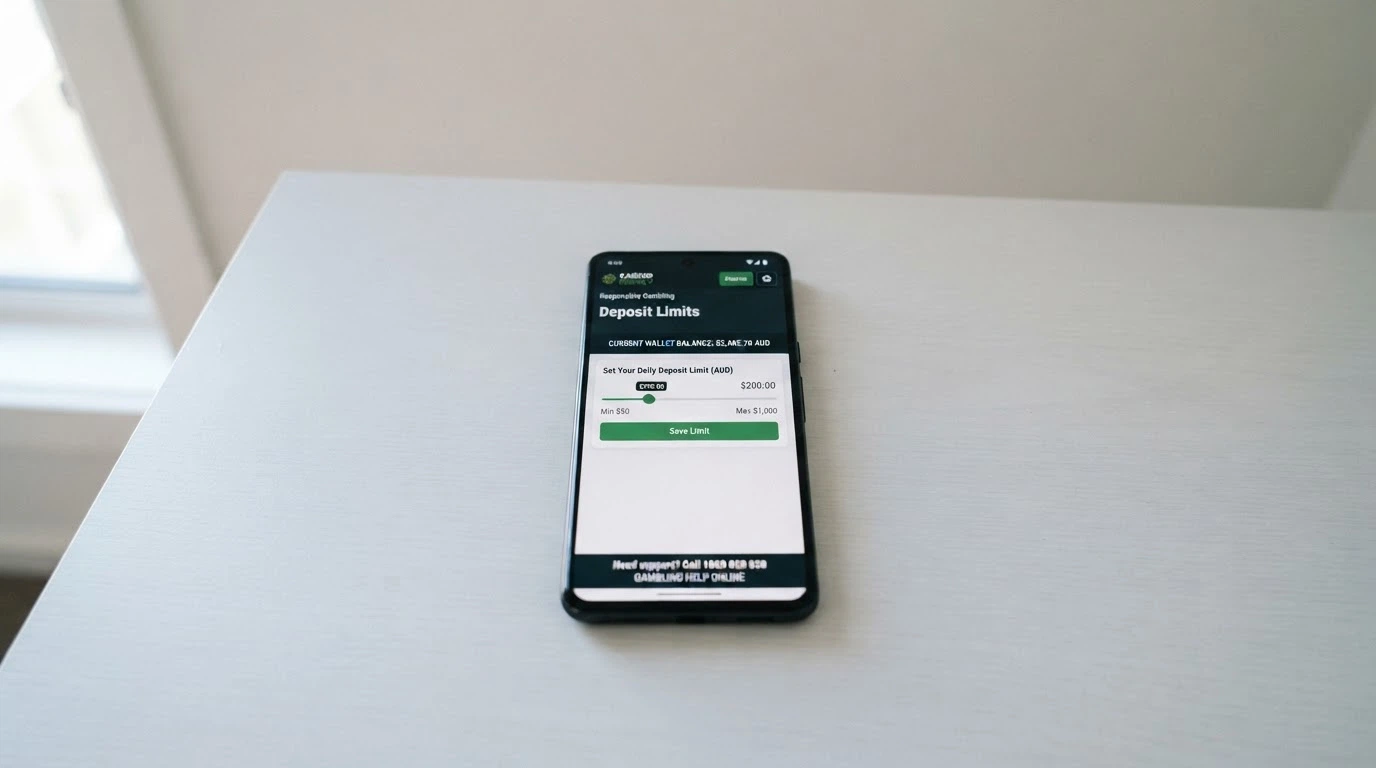
The no-KYC operators in the featured set typically offer deposit limits, session time limits, and loss limits as standard responsible-gambling tools, configurable from the account page. The tools are real, and the player who sets them before the first deposit is the player who has the friction in place when it matters. The tools are also operator-controlled: the limit is set inside the casino’s account system, and a player who wants to raise a limit has to wait through the operator’s cool-off period, typically 24 hours to seven days.
The limits are the player’s main friction tool at an offshore casino. The licensed bookmaker offers the same tools, plus the BetStop registration, plus the consumer-protection framework the offshore site does not. A player who sets a weekly deposit limit at a no-KYC casino and sticks to it is running their own version of the discipline the licensed market enforces. A player who does not set the limit is relying on willpower alone, and the data on willpower at gambling sites is not encouraging.
Self-imposed crypto transfer limits are a second friction tool, and they sit at the wallet level rather than the casino level. A player who sets a daily transfer cap at the wallet is capping what the casino can ever receive, regardless of what the casino’s own limits allow. The cap is harder to bypass than the in-casino limit, and the player who values the friction should set the wallet cap before opening the casino account.
Self-exclusion that works across borders: BetStop and its offshore blind spot
BetStop, the National Self-Exclusion Register, launched on 21 August 2023 and is the federal government’s central piece of responsible-gambling infrastructure. As of 31 March 2026, 59,830 people had registered to self-exclude via BetStop, with 37,247 holding active exclusions. The exclusion periods run from three months to a lifetime, and a single registration excludes the player from every Australian-licensed wagering service: online bookmakers, the TAB, the lotteries, and the land-based venues that have signed up. The mechanism is genuinely one-step.
BetStop does not bind offshore casinos. The casinos on this page are not Australian-licensed, not connected to BetStop, and not obligated to honour a BetStop registration. A player who has registered with BetStop can still open an account at Stake, deposit crypto, and play, because the operator has no way to check the BetStop register and no obligation to do so if it could. The exclusion works on the domestic side. The exclusion does not work on the offshore side.
The fallback is direct operator self-exclusion. Most no-KYC operators offer a self-exclusion mechanism at the account level, typically a request to support that closes the account and blocks future account creation from the same IP or wallet. The mechanism is operator-by-operator, and a player who self-excludes at Stake is still able to play at Bizzo, BitStarz, 7Bit, and the rest. The list of operators to exclude from is the list on this page, plus the hundreds of others Australian players reach. The practical answer for a player who wants broad self-exclusion is to exclude at every operator individually and to keep the record of each exclusion, because the offshore exclusion has no central register to lean on.
Crypto wallets and the privacy trap: why anonymity can hide overspending
The wallet is the part the casino never sees, and it is the part the player most needs to monitor. A standard self-custody wallet shows the full transaction history: every deposit to a casino, every withdrawal back, the running balance, the timestamps. The visibility is the opposite of what the no-KYC marketing suggests, and it is the player’s main tool for catching their own patterns. A player who reviews the wallet statement weekly is doing the review a licensed operator would do for them.
The second trap is the friction the wallet removes. A credit card deposit at a licensed bookmaker runs through a banking statement the player reviews, with the casino line item visible alongside the rest of the spending. A crypto deposit from a self-custody wallet does not appear on a bank statement at all; the player is moving from a balance they hold themselves, and the only record is the wallet’s own history. The friction the bank statement provides is gone, and the player has to provide it themselves.
The third trap is the irreversible transaction. Crypto transfers cannot be reversed by the sending party, and a player who sends a large deposit by mistake or in a moment of poor judgment cannot recall it. The licensed bookmaker’s deposit can be reversed through the card issuer in some cases. The crypto deposit cannot be reversed through anyone. The same rails that protect privacy also remove the safety net, and the player who values the safety net has to build it themselves: a wallet-level transfer cap, a personal deposit limit, and a standing review of the wallet statement.
For players who recognise the early signs of harm in themselves, the help infrastructure is reachable. The National Gambling Helpline, 1800 858 858, is free, confidential, and staffed around the clock. Gambling Help Online, at gamblinghelponline.org.au, offers online chat and counselling. The services are built for anyone affected by gambling harm, including family members, and the call is not a referral that lands on a credit report or a casino’s marketing list.
How we selected and ranked these anonymous crypto casinos
The selection criteria are the three things that determine whether a no-KYC site is worth using: licence status, bonus value, and game library depth. The ranking is not weighted by a secret formula. The criteria are stated, the operators are scored against them, and the cells in the table show what the score is.

The sources behind the ranking are public. The ACMA register confirms that no Australian licence exists for online casino, and the published list of blocked sites confirms the regulatory status of the offshore operators. The Curaçao Gaming Control Board registry lists the operators that hold a Curaçao licence and the operators that claim one without holding it. The Kahnawake Gaming Commission publishes a similar list. The operator’s own terms page is the source for the welcome bonus, the wagering requirement, the validity window, and the game provider list. Where the terms page does not surface a figure, the cell in the table stays empty rather than carry a guess.
The benchmark against the rest of the niche is the standard “best anonymous crypto casino” list published by affiliate sites, which return high volumes of such rankings. The featured operators here are the ones that survive a cross-check against licence status, terms-page accuracy, and game library depth, with the operators whose public-facing materials could not be verified removed from the ranking rather than carried with a caveat. The list is the result of that pass, not the result of a promotional arrangement.
What we checked and what we left out: the sources behind every row
The ACMA licence register was checked for every operator, and no operator in the featured set holds an Australian licence. The fact is not a point against any single brand; it is the position of the entire market. The Curaçao Gaming Control Board registry was checked where a Curaçao licence is claimed, and Bizzo’s 8048/JAZ2017-067 is verifiable. The Kahnawake Gaming Commission was checked for Bizzo’s second licence. Costa Rica registration was checked for Mega Dice and Winna, with the registration confirmable but the licence-equivalent of a Curaçao or Kahnawake credential not equivalent in depth.
Where research could not verify a figure, the cell in the table stays blank. Welcome bonuses, free spin allocations, wagering multiples, validity windows, game provider counts, and max-cashout caps are all points where a defensible number was not always available. The blank cells are the honest cells. A reader who needs a specific number for a specific operator should check the operator’s own terms page before depositing; the table does not pretend to know what the page does not say.
The affiliate data cross-check was used to confirm the welcome bonuses that do appear in the table, with the cross-check limited to figures that appear on more than one independent source. Single-source figures were treated as unverified and either confirmed against the operator’s own terms page or left blank. The cross-check is not a substitute for the operator’s terms; it is a check that the affiliate sites are reading the same terms the player would read.
Your crypto, your call: what an Australian punter should weigh before playing
The trade-off the page has traced is the trade-off this section restates, because it is the only part of the page that matters if the rest has been skimmed. The offshore crypto casino offers a game library no domestic operator matches, a sign-up flow that does not ask for ID, and a cashier that pays out in crypto. The same offshore route offers zero Australian consumer protection, no BetStop coverage, no deposit guarantee, and a withdrawal threshold above which the no-KYC promise ends. Both halves of the trade-off are real, and the player who treats only one as real is the player the trade-off is built to catch.
The bonus cost is the second half. The headline match percentage is the marketing number. The wagering multiple, the validity window, and the max-cashout cap are the real numbers, and they are the ones the player should read before claiming. A 300% match at 40x with a 14-day window is a work order, not a windfall. A no-deposit AU$10 bonus at 60x with a 10x cap is a sample, not an income. The arithmetic is on the player’s side when the terms are read; it is on the house’s side when they are not.
The responsible-gambling help that does work is the part the page is built around. The National Gambling Helpline, 1800 858 858, is free, confidential, and 24/7. Gambling Help Online, at gamblinghelponline.org.au, offers online chat and counselling. BetStop, at betstop.gov.au, covers the Australian-licensed side. The three together are the responsible-gambling infrastructure the offshore route does not replace, and the player who reaches for them is the player the infrastructure is built for.
The verdict: an informed choice is the only honest verdict a page like this can deliver. The page describes the operators, the bonus terms, the legal position, and the responsible-gambling help available. It does not push the reader to play, and it does not push the reader to stay away. The choice is the reader’s, and the rest of the section is the practical checklist that follows from it.
The five questions to ask before you deposit at any offshore casino
Is the operator’s offshore licence verifiable? A Curaçao licence is verifiable on the Gaming Control Board registry, with Bizzo’s 8048/JAZ2017-067 as the worked example in the featured set. A Costa Rica registration is verifiable on the corporate registry. A licence number that does not resolve on the regulator’s own site is a licence number worth treating as unverified, and a player who cannot verify it has no way to know the operator holds it.
What does the wagering really cost at your stake level? A 40x wagering multiple on a meaningful bonus produces turnover that runs into thousands of dollars at minimum. The 25x lower end of the range is generous; the 40x upper end is the market norm. The player who works the arithmetic before depositing is the player who is not surprised by it after. The wagering terms are on the operator’s bonus page, and the player who does not find them there should ask support before claiming.
At what withdrawal amount does KYC kick in? Most no-KYC operators verify identity at withdrawals between AU$2,500 and AU$5,000, the point above which the operator wants to know who it is paying. The threshold is on the operator’s terms page, often under a heading the player would not search for. The player who plans to withdraw more than the threshold should expect the verification step, and the player who wants to keep the no-KYC promise should plan the withdrawal amount around it.
Does the site offer deposit limits, and are they set before the first deposit? The in-casino deposit limit is the player’s main friction tool at an offshore site, and the limit is configurable from the account page. The limit is also operator-set, and the player who waits to set it after the first deposit is relying on the willpower they will not have at the third. Setting the limit on day one is the disciplined version; setting it after a problem is the version the data is built around.
Do you have the helpline number saved? The National Gambling Helpline is 1800 858 858, and the number is worth saving in the phone before the first deposit, not after the first sign the pattern has shifted. The 24/7 staffing means the call is reachable at any hour, and the call is free, confidential, and not a referral that lands anywhere. The player who has the number saved is the player who will use it; the player who has to look it up is the player who will not.
Frequently asked questions
Are anonymous crypto casinos legal for Australian players?
The Interactive Gambling Act 2001 makes it an offence for a provider to offer online casino games, online pokies, or in-play betting to a person in Australia, and no Australian licence exists for any of those products. The IGA targets the provider, not the individual player, and no Australian has been prosecuted for placing a bet at an offshore online casino. The legal status for the player is therefore unenforced, while the legal status for the operator is a continuing prohibition with civil penalties up to approximately AU$234,750 per breach.
Do I need to use a VPN to play at a crypto casino from Australia?
A VPN is not a legal requirement. Australians reach offshore crypto casinos directly, and most operators do not block Australian IP addresses at the network level. ACMA’s site-blocking efforts target the operator’s domain rather than the player’s connection, and an Australian player connecting without a VPN is connecting in the same legal position as one connecting through a VPN. The privacy a VPN adds is on top of the no-KYC sign-up, not a substitute for it.
What cryptocurrencies can I use to play pokies anonymously?
Bitcoin is the default at almost every no-KYC casino, with confirmation in two to ten minutes and a pseudonymous on-chain record. USDT on the TRC-20 network is the fastest practical rail, confirming in under sixty seconds for fees under fifty cents. Winna accepts twelve coins in total, including Bitcoin, Ethereum, Litecoin, Tether, USD Coin, Solana, Binance Coin, Tron, Dogecoin, Ripple, Ton, and Dai, the widest range in the featured set. The cashier at each operator lists the coins the operator accepts, and that list is the only authoritative answer for the specific brand.
How fast are withdrawals from no-KYC bitcoin casinos?
Crypto-native operators process withdrawals automatically, with funds reaching the player’s wallet within minutes to a few hours. Less automated operators queue withdrawals for manual review, and the timeframe stretches to twenty-four to seventy-two hours depending on the operator and the amount. Above the verification threshold, typically AU$2,500 to AU$5,000, the operator requires KYC documents before the withdrawal is released, and the no-KYC promise ends at that line. The network confirmation time on the receiving end is rarely the bottleneck.
What is the difference between a licensed bookmaker and an offshore casino?
A licensed bookmaker holds an Australian state or territory licence, offers consumer protection through a domestic regulator, accepts PayID and BPAY, sits under BetStop, and is barred from accepting credit cards or crypto. An offshore casino holds a Curaçao, Kahnawake, or Costa Rica credential, offers no Australian consumer protection, accepts crypto only, is not connected to BetStop, and is offering a service prohibited under the Interactive Gambling Act 2001. The licensed product set in Australia is wagering on sport and races, lotteries, and keno. The offshore product set is the casino, the pokies, and the live dealer.
How do I self-exclude from all gambling sites in Australia?
BetStop, the National Self-Exclusion Register, allows one-step exclusion from every Australian-licensed wagering service in a single registration, with exclusion periods from three months to a lifetime. As of 31 March 2026, 59,830 people had registered, with 37,247 holding active exclusions. BetStop does not bind offshore casinos, and a player who wants to exclude from the offshore side has to contact each operator directly. The National Gambling Helpline, 1800 858 858, is the front door for players who want help building an exclusion plan that covers both the domestic and the offshore side.
Created by the ”Casino Apps Australia” editorial team.