
Newest Online Casinos With No-Deposit Bonuses — The AU Player’s Honest Field Guide
The newest casinos offering no-deposit bonuses to Australian players are, every last one of them, operating outside the law. That is not editorial flourish. Under the Interactive Gambling Act 2001, it is an offence to provide online casino games — pokies, table games, live dealer — to a person physically in Australia. No licence exists. None can be issued. The Australian Communications and Media Authority has blocked 1,564 illegal gambling and affiliate websites since November 2019, and more than 225 offshore services have withdrawn from the Australian market since enforcement was strengthened in 2017. The bonus page you are about to read is, by Australian law, on the wrong side of the regulator.
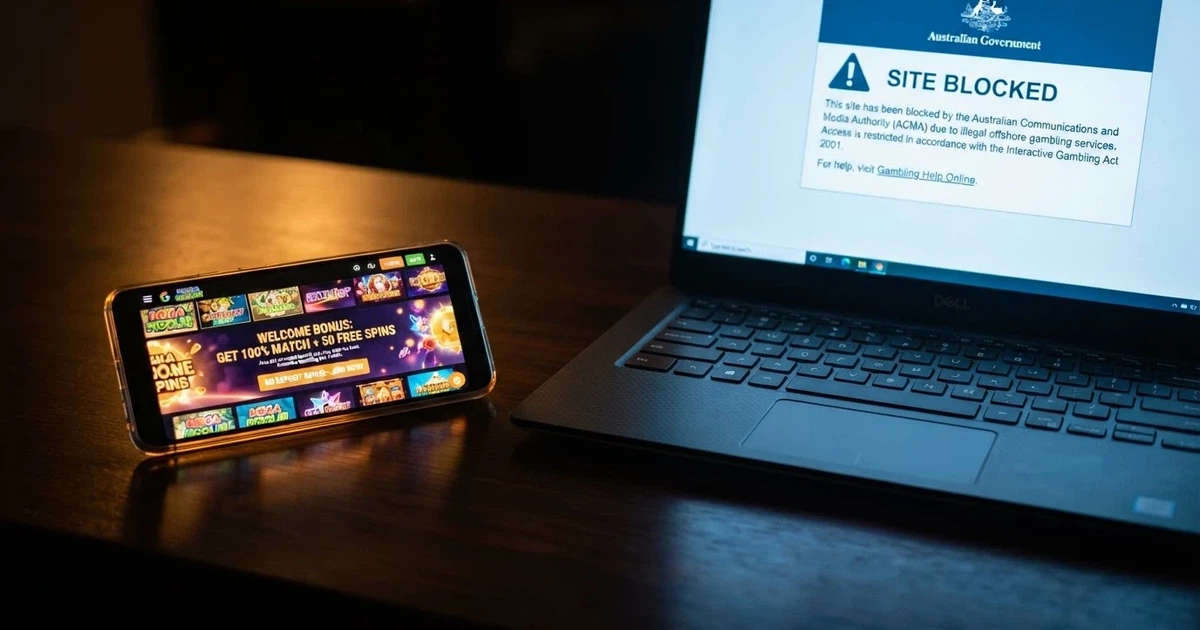
Updated as of 16 October 2026 — verified against the Australian Communications and Media Authority register, the Interactive Gambling Act 2001 and the Interactive Gambling Amendment (Gambling Reform) Bill 2026 (Parliament of Australia).
This page exists because the offshore market is the reality Australian players navigate, whether or not the regulator approves of them doing it. The job here is to compare what is actually on offer — recency, market reach, the shape of the no-deposit bonus, the payment methods on the deposit screen — and to make plain what the trade-off costs the person accepting it. Every operator on the ranking below is offshore. None is licensed in Australia. None is connected to BetStop. None can be compelled by an Australian regulator to pay out a disputed balance. That is the structure, and the reader deserves to know it before comparing any bonus.
Table of Contents
- Australia’s Newest Online Casinos: What “New” Actually Means in 2026
- No-Deposit Bonuses at New Australian-Facing Casinos: Free to Start, But Every “Free” Has a Price
- The Newest Casino Brands Accepting Australian Players in 2026
- New Pokies and Slots: What Australian Players Are Actually Spinning in 2026
- Free Pokies and Demo Mode: Try Every Game Before You Risk a Cent
- Paying at Offshore Casinos: PayID, Deposit Tiers and the Payment Methods That Scream “Offshore”
- The Legal Reality: Every Online Casino an Australian Visits Is Offshore — Here Is What That Costs You
- Staying Safe: Responsible Gambling Tools and the BetStop Gap Every Australian Needs to Know
- How We Evaluated the Newest Casino Brands
- What the Smart Australian Player Does Before Signing Up to Any of These Casinos
- Frequently Asked Questions
Australia’s Newest Online Casinos: What “New” Actually Means in 2026
“Newest online casino Australia” is a search term that returns pages built for an Australian searcher, served from an Australian-friendly domain, but licensed nowhere on the continent. The novelty is genuine — sites are launching every month — but the legal status of the launch is the same as it was for every offshore casino that came before. Recency tells you about a brand’s age; it does not tell you anything about its protection.
A “new” casino in the AU-facing market means one of three things. It is a freshly built offshore site targeting Australian traffic for the first time. It is an existing operator group launching a new brand or skin under the same parent. Or it is an established offshore brand refreshing its domain and design without changing the underlying licence or ownership. The Australian player has no way to distinguish these from the welcome page, and the distinction matters because the operator’s track record is what protects a balance, not the launch date.
What a launch date does tell you, fairly, is which sites have the freshest acquisition budget. New offshore casinos spend heavily on no-deposit bonuses, free spin bundles and aggressive first-deposit matches because customer acquisition is the entire business model in a market where they cannot advertise legally. The bonus structure on a new site is therefore the brightest line on its page. The protection structure is the dimmest.
The AU Player’s Default: Why Every Casino You Visit Is Offshore
The Australian situation is unusual. In Britain, the regulator licenses online casinos and the player picks among licensed brands. In Germany, the regulator licenses online casinos, slots are taxed differently from table games, and there is a national deposit ceiling. In France, online poker and sports betting are licensed, online slots are not. Australia lands at the restrictive end of that range: the regulator does not license the product at all, so there is no licensed set to pick from.
The Interactive Gambling Act 2001 made it an offence to provide interactive gaming services—including casino games, pokies, or in-play wagering—to anyone physically present in Australia. The 2017 amendment gave the ACMA enforcement teeth — civil penalty proceedings, formal warnings, and the power to direct Australian internet service providers to block illegal sites at the DNS level. The Act targets the provider, not the player. An Australian who plays at an offshore casino commits no offence. The casino, and any affiliate that markets one to Australian traffic, commits one each time the page loads.
That structural fact shapes every comparison that follows. The “licensed” column on any comparison table is empty, because no licensed set exists. The “regulated” column on any protection comparison is empty, because no Australian regulator covers offshore casino play. The closest Australian regulator can do is block the site — a measure that takes the site offline but does not return a cent to a player with a balance on it.
Brand-New vs Established: Why a Launch Date Is Only Half the Story
A brand launched in the last six months is not automatically safer or better than one launched three years ago. Recency, operator track record and the brand’s AU-facing history all matter more than the launch date alone.
Consider what a launch date actually buys the player. A new site may carry a fresh game library, modern payment integration and a no-deposit bonus built to attract first-time depositors. It also carries zero dispute history — no player complaint has been resolved against it, no regulator has formally warned it, no payout delay has been logged publicly. The first six months of any new offshore casino’s life are, from a player-protection standpoint, its most opaque.
An established offshore brand brings the opposite trade-off. It has a track record that can be checked — payout timelines, complaint volume, term changes over time — and a player community that has stress-tested its withdrawal queue. It also brings inertia: older bonus terms, less aggressive acquisition offers, and the residue of complaints the brand has handled badly. Neither profile is uniformly better.
The Northern Territory Racing and Wagering Commission, the de facto national licensor for online wagering, issues licences that run up to 20 years. The offshore casino has no equivalent horizon. The site you sign up to this quarter may not be the same site, under the same ownership, accepting Australian players, next quarter.
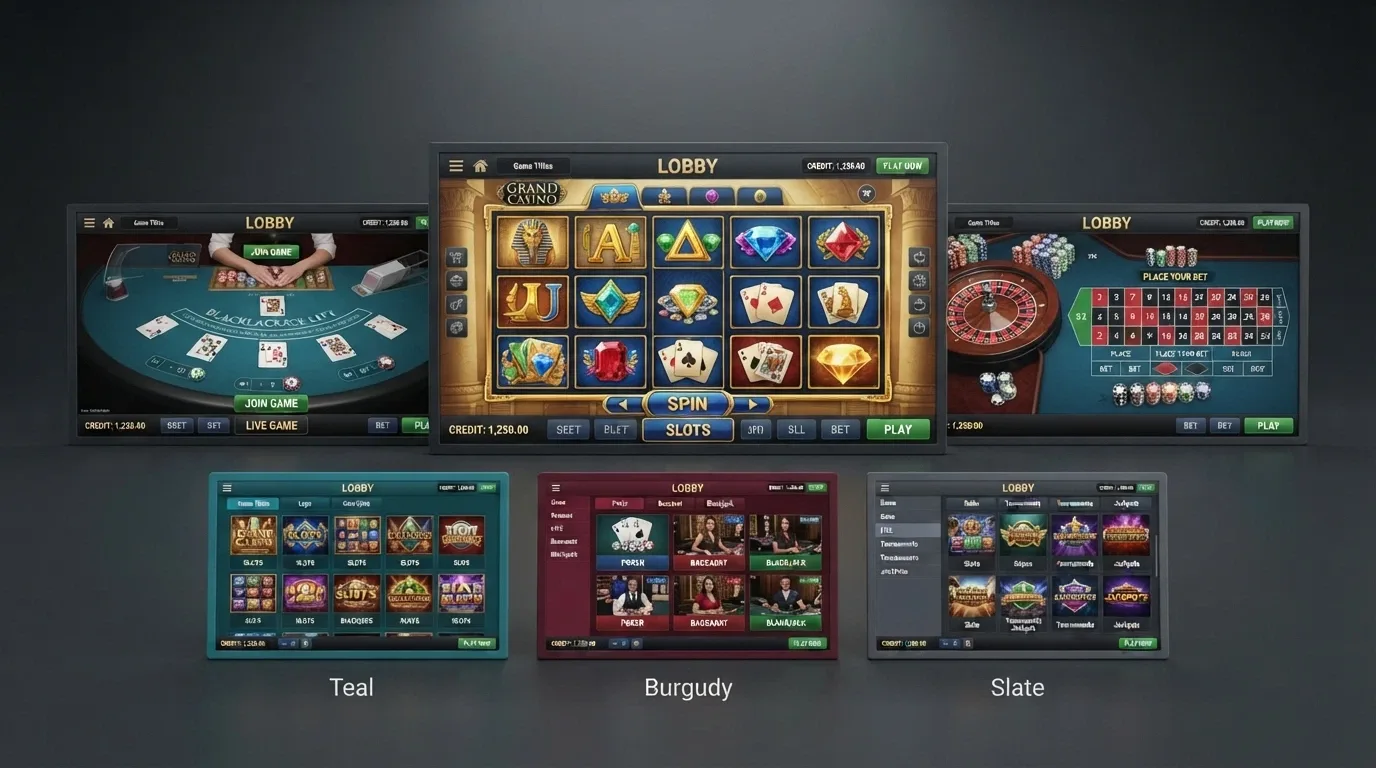
Mobile Play at New AU-Facing Casinos: Pokies in Your Pocket
The Australian who searches for pokies on a phone is the default user of an AU-facing offshore casino in 2026, not the edge case. New offshore sites launch mobile-first. The desktop experience is treated as a compatibility layer, not a primary surface.
What mobile-first means in practice: instant-play browser access through HTML5, no downloadable app in most cases, account continuity across phone and tablet, and a payment flow built for mobile-native rails. The newer the site, the more of this is genuinely native rather than retrofitted. Older offshore casinos still carry desktop-first templates that scale awkwardly to a five-inch screen.
Game availability is the trade-off. Mobile browsers cannot run every pokie a desktop client can. The newest sites have built their libraries against this constraint from day one; older sites are catching up. A new site’s mobile lobby is therefore usually a better indicator of its game quality than its desktop one.
No-Deposit Bonuses at New Australian-Facing Casinos: Free to Start, But Every “Free” Has a Price
A no-deposit bonus is a conditional credit. The casino gives the player a small amount — bonus cash or free spins on a designated pokie — without requiring a deposit first. The credit is real enough to win with; it is not real enough to keep without satisfying conditions.
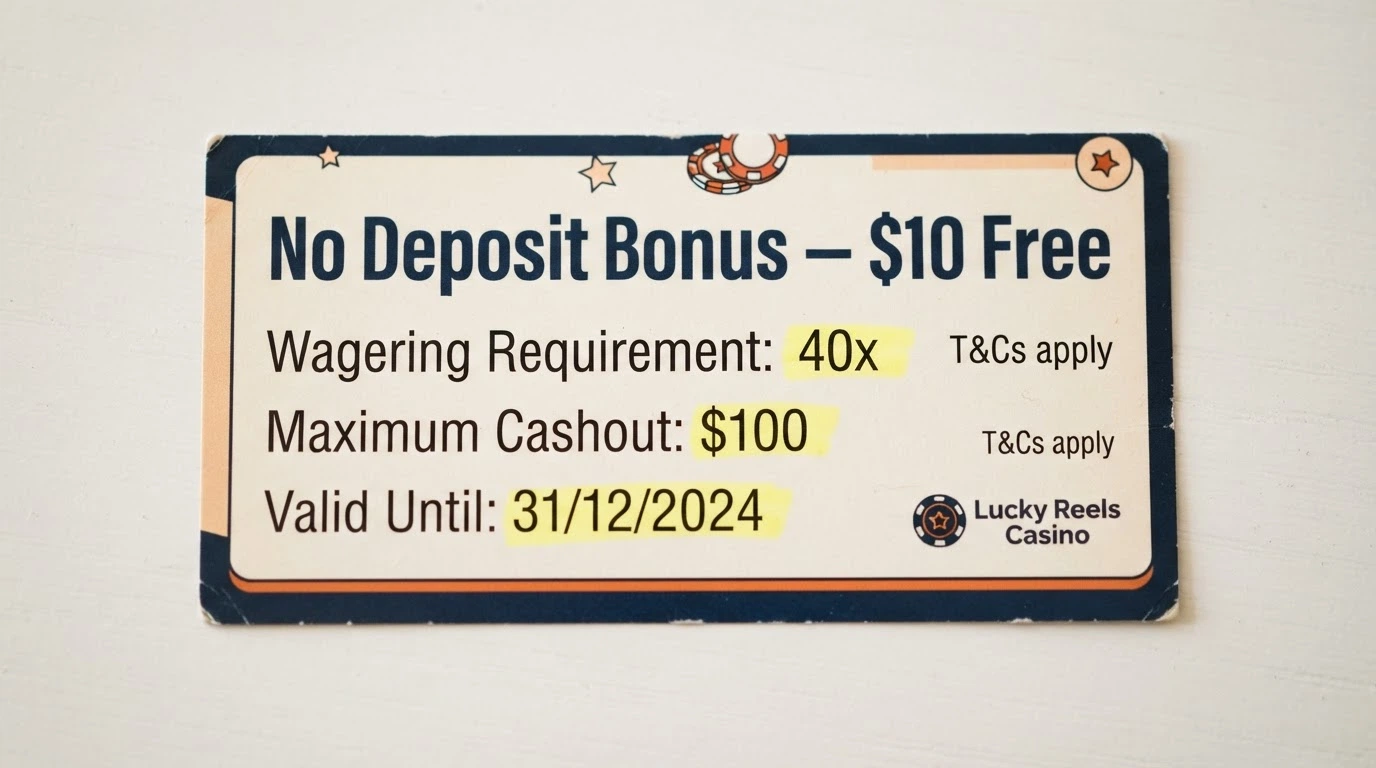
Three conditions decide whether anything survives the playthrough. The wagering multiplier — how many times the bonus must be turned over before a withdrawal is permitted. The maximum cashout cap — the most the casino will pay out from bonus-derived winnings, regardless of what the player actually wins. And the validity window — how many hours or days the player has to complete the wagering before the bonus and any winnings from it expire.
Offshore casinos are not bound by the inducement restrictions that take effect from 1 January 2027 for Australian-licensed wagering operators. From that date, direct marketing of inducements is prohibited for 14 days after a customer signs up, for three months after a person deregisters from BetStop, and indefinitely for customers identified as at risk of gambling-related harm. The offshore casino is outside the regime. Its “free” offer is, structurally, the offer the licensed market is being told to stop making.
That is the comparison the page should be making, and it is the comparison most affiliate listicles skip. The licensed bookmaker will, from January 2027, be unable to send a “deposit $50, get $50” email to a fresh sign-up within two weeks of registration. The offshore casino can and will, because nothing stops it.
What a No-Deposit Bonus Actually Gives You (And What It Doesn’t)
A no-deposit bonus is not free money. It is a marketing credit the casino extends so the player experiences the platform before committing a deposit. The credit costs the casino less than the acquisition cost of a paid channel would — affiliate commissions, search bid prices, the cost of being blocked and rebuilding under a new domain — and the casino’s expected return comes from the small fraction of no-deposit players who go on to deposit, lose, and fund the next round of free credit.
What the player gets: a real session of real-money games, with a real chance of a real win, at no upfront cost.
What the player does not get: the certainty of a withdrawal. The wagering multiplier turns the bonus amount into a turnover requirement many times its face value. The cashout cap limits the upside regardless of what happens on the reels. The validity window turns the playthrough into a clock the player races against. A player who understands all three before claiming is the one who might walk away with something. A player who claims on the headline alone almost certainly will not.
The licensed-wagering side of the comparison matters here because the rules are converging in opposite directions. From 1 January 2027, licensed wagering operators will be restricted in how aggressively they can market inducements to fresh sign-ups and to people who have recently deregistered from BetStop. Offshore casinos face no equivalent constraint. The bonus on a brand-new offshore casino’s welcome page is, structurally, the offer the licensed market is being legislated out of.
No-Deposit Bonus Types: Free Spins, Bonus Cash and the Terms That Separate Them
Two structures dominate the no-deposit market. Free spins tie the bonus to a specific pokie — sometimes one pokie, sometimes a small group from a single provider — and credit the player with a fixed number of plays at a fixed per-spin value. Bonus cash credits the player’s account with a small amount of bonus money the player can spend across a wider game selection, usually with steeper wagering.
Free spins suit a player who wants to test one pokie and accept that the bonus ends with it. The wagering is usually calculated on the winnings from the spins, not on the face value of the spins themselves, and the cashout cap is typically modest. The player trades flexibility for a tighter, more predictable experience.
Bonus cash suits a player who wants to roam. The wagering is calculated on the bonus amount itself, and the multiplier is usually higher because the casino is giving up control over which game eats the turnover. The player trades certainty for flexibility.
Neither type is inherently better. The choice is between a constrained session with cleaner terms and a flexible session with thicker ones. A player who has already picked the pokie they want to test will usually get more out of a free-spins offer on that game. Those who want to experiment with different titles generally find bonus cash more suitable, despite the higher turnover obligations.
Wagering Requirements: The Multiplier That Decides Whether You Keep Anything
The wagering multiplier is the single most important number on a no-deposit bonus page, and it is the one players most often underweight. A 40x multiplier on a $10 no-deposit bonus means the player must turn over $400 before a withdrawal is permitted. A 60x multiplier on the same bonus means $600. The headline stays at $10 in both cases; the cost does not.
The cost compounds through expected loss. At a typical online pokie returning 96% of turnover to players, the house edge is 4%. The expected loss from turning over $400 is approximately $16. The expected loss from turning over $600 is approximately $24. The player started with a $10 bonus. The arithmetic is not kind.
Game weighting adds another layer. Most offshore casinos do not credit 100% of every bet toward wagering. Slots usually contribute fully. Table games often contribute 10–20%. Live dealer sometimes does not contribute at all. The player who tries to grind the wagering through blackjack burns turnover that does not count, then runs out of validity with the bonus still locked.
A player who has not checked the wagering multiplier, the game weighting table and the validity window before claiming has not actually evaluated the bonus — they have evaluated the marketing.
Welcome Packages and Ongoing Promotions at New Casinos Beyond the No-Deposit Offer
The no-deposit bonus is the door-opener. The welcome package behind it is the closer. A new offshore casino’s welcome package typically bundles the no-deposit offer with one or more deposit-match bonuses, free-spin bundles on first and second deposits, and a reload offer the player can opt into weekly or monthly.
The arithmetic changes once the player has deposited. A 100% match on a $100 deposit with a 35x wagering multiplier means $3,500 of turnover — much more than the no-deposit bonus ever demanded, but the player has $200 of real-and-bonus money to grind it through. The expected loss on $3,500 of turnover at a 96% pokie is around $140, against $100 of bonus value. The cost-to-bonus ratio is still unfavourable, but the player has skin in the game, and the casino has skin in keeping the player.
Reload and loyalty promotions at new casinos are usually softer than the welcome offer. Lower match percentages, higher wagering multipliers, but smaller amounts that recur. They are the offer the player receives once the casino has decided the player is going to stay. That offer is also where the inducement restrictions from 1 January 2027 will hit licensed wagering hardest — the licensed operator will, from that date, be unable to market recurring inducements to the same player base the offshore casino is still courting.
The Newest Casino Brands Accepting Australian Players in 2026
The ranking below is built on BLASK market-share tracking for AU-facing gambling brands and on the operator research this page is based on. It is a ranking of which brands actually reach AU players and how much of that reach they command. It is not a ranking of safety, of fairness or of likelihood-to-pay. Every brand on the list is offshore. No Australian casino licence exists for any of them. None is connected to BetStop. None is answerable to an Australian complaints body.
| Operator | Market Share (AU-facing, BLASK tracking) | Offshore Status |
|---|---|---|
| Rocket Play | ~9.4% | Offshore — no AU casino licence exists |
| Skycrown | ~8.55% | Offshore — no AU casino licence exists |
| Royal Reels | ~2.51% | Offshore — no AU casino licence exists |
| WinSpirit | ~1.55% | Offshore — no AU casino licence exists |
| Stake | ~1.28% | Offshore — no AU casino licence exists |
| Rainbet | ~1.28% | Offshore — no AU casino licence exists |
| Scream Casino | ~0.99% | Offshore — no AU casino licence exists |
| FairGO | ~0.8% | Offshore — no AU casino licence exists |
| Bizzo Casino | ~0.57% | Offshore — no AU casino licence exists |
| Rocket Casino | ~0.57% | Offshore — no AU casino licence exists |
The figures are tracking-derived estimates, not audited operator disclosures. They tell the reader where each brand sits in the AU-facing volume, not what each brand will do with a disputed withdrawal. The two questions are different, and the page does not pretend they are the same.
Per-operator bonus terms — welcome bonus amount, free-spin count, wagering multiplier, bonus validity, max cashout, game providers and licence permit date — could not be confirmed in the research this page is built on. The brands themselves are confirmed real and active through the market-share tracking; the volatile fields were not retrievable. Any player evaluating a specific offer on one of these sites should verify the terms on the operator’s own promotion page before claiming, and should treat the absence of independently confirmable terms as itself a signal.
Rocket Play
The largest AU-facing offshore casino brand by tracked market share, sitting at roughly 9.4% with estimated revenue of $632.69M. That volume makes Rocket Play the benchmark for the rest of the list — its bonus structure, its payment screen and its withdrawal queue are what the smaller operators below it are positioning against.
The brand is offshore. No Australian casino licence exists, and Rocket Play holds none. There is no BetStop coverage, no Australian complaints body the player can escalate to, and no consumer-law remedy if the operator declines a withdrawal. The brand’s market position is built on the same offshore foundation every other entry on this list stands on, and the size of the foundation does not change what is underneath it.
Operator-specific bonus terms were not confirmed in the research this page is built on. A player evaluating Rocket Play should treat the brand’s volume as evidence that the casino has paying customers — not as evidence that the casino has paying processes, and not as evidence that the bonus page is more honest than the smaller operators’. The volume is what it is.
For a player who has already decided to play at an offshore casino and is weighing acquisition offers, Rocket Play is the largest pool of Australians doing the same thing. That is a real signal. It is not a safety signal.
Skycrown
The second-largest AU-facing brand by tracked market share, at roughly 8.55% with estimated revenue of $436.07M. Close enough to Rocket Play that the two brands effectively compete for the top of the AU-facing market, and far enough ahead of the rest that the gap below them is structural.
Skycrown is offshore, like every other entry on this list. No Australian casino licence exists. The brand’s reach gives it scale advantages — a bigger game library, more payment-rail integrations, a more mature bonus calendar — but no offshore scale buys Australian regulatory coverage, and no offshore volume buys BetStop enrolment.
Operator-specific bonus terms were not confirmed. A player comparing Skycrown against Rocket Play is comparing two large offshore casinos on terms neither page can independently verify. The comparison should be on what the player can actually see — the bonus calendar, the payment screen, the withdrawal times on community reports — and not on which brand is more established, because both brands are equally unestablished in Australian regulatory terms.
For an AU player prioritising game variety and acquisition-bonus aggressiveness, Skycrown is a real alternative to the market leader. This operator is offshore, and Australian regulatory protections do not reach it.
Royal Reels
A mid-tier AU-facing brand at roughly 2.51% market share and estimated revenue of $243.99M. The brand carries an Australian-sounding name — “Royal Reels” reads as a pokie-themed Australian property — and that name is the whole pitch for a slice of the AU-facing market that prefers local resonance to global brand recognition.
The name suggests local relevance. The licence tells the real story. Royal Reels is offshore, like every other entry on this list. No Australian casino licence exists, and the name is a marketing choice, not a regulatory one. The player who picks Royal Reels because the brand sounds Australian is picking the name over the licence, and the licence is the part that protects a balance.
Operator-specific bonus terms were not confirmed. The reader comparing Royal Reels to Rocket Play or Skycrown is comparing one-fifth the AU-facing volume against the market leaders on terms the research could not independently verify for any of them. A smaller operator can be more aggressive on acquisition bonuses — there is less to lose and more to gain from each new depositor — but the wagering multiplier, the cashout cap and the validity window are the same shape of trade-off regardless of brand size.
For an AU player who values the AU-facing brand presentation, Royal Reels is a recognisable name. The recognisability is real; the protection is not.
WinSpirit
A smaller but tracked AU-facing operator at roughly 1.55% market share. Below the top three but well clear of the long tail, WinSpirit sits in the band where acquisition offers tend to be sharpest — the operator is large enough to be sustainable, small enough to need every new depositor.
Offshore, like every other entry. The brand operates without an Australian licence and is entirely outside the domestic regulatory framework. The operator is competing in the same unregulated space as the brands above it on this list, with a smaller player pool to draw on.
Operator-specific bonus terms were not confirmed. A smaller market share means less liquidity in the player pool — fewer community reports on withdrawal times, fewer complaints logged publicly, less word-of-mouth signal on how the bonus terms actually behave in practice. The player evaluating WinSpirit has less third-party data to lean on than the player evaluating Rocket Play, and that asymmetry is part of what the smaller brand’s sharper offer is paying for.
For a player who reads smaller brands as hungrier, WinSpirit is a reasonable candidate. It is worth remembering that a sharper bonus does not imply a higher standard of service.
Stake
A globally recognised brand whose AU-facing presence is modest at roughly 1.28% market share. Many Australians arrive at Stake already knowing the name — the brand carries significant global recognition in the cryptocurrency wagering space — and that recognition is part of why the AU-facing share is what it is.
The brand-recognition premium is real, and it is also a liability in this market. A player who knows the Stake name from global coverage may bring expectations the AU-facing product does not match. Stake’s global positioning is built on crypto rails and a house-edge model that differs from a typical online casino. The AU-facing offering may not match the reputation, and a player who signs up expecting the global brand experience will be the one most surprised by the gap.
Offshore, like every other entry. It has no Australian licence, and its regulatory structure is designed for jurisdictions that explicitly permit online casino play. Australia is not one of them, and the brand does not become Australian because an Australian deposits there.
Operator-specific bonus terms were not confirmed. For a player who weighs brand recognition heavily, Stake is the obvious name on this list. Just keep in mind that the brand’s global reputation does not equate to Australian regulatory oversight.
Rainbet
A smaller AU-facing operator sharing the same market-share tier as Stake, at roughly 1.28%. In a tier where market-share figures alone do not separate operators, the differentiating factors are the game library, the bonus calendar and the payment screen — the things a player can evaluate by signing up and looking around.
Offshore, like every other entry. The casino does not hold an Australian licence, and its bonus terms should be evaluated with care. The trade-off is sharper terms or weaker terms, depending on what the supplementary research would have shown had it confirmed.
Operator-specific bonus terms were not confirmed. A player choosing between Rainbet and a similarly sized peer is choosing on terms neither page can independently verify. The comparison should be made on the visible surface — the welcome page, the bonus T&Cs, the deposit screen — and not on brand size, because the two brands are the same size and the size does not discriminate.
For an AU player who has decided to play at a smaller-tier offshore brand, Rainbet is one option among several at the same share level. The available market data is essentially a volume snapshot, rather than a definitive recommendation.
Scream Casino
A niche AU-facing brand below the 1% market-share threshold, at roughly 0.99%. The threshold matters because the brands above it have enough volume that reputation effects start to discipline behaviour — bad payout reports reach enough players to cost the operator. The brands below it have less to lose from a single reputation hit.
Offshore, like every other entry. No Australian casino licence exists. The smaller the brand, the harder the player-protection gap bites — not because small operators are inherently worse, but because the operator has less public reputation capital to spend on a disputed withdrawal.
Operator-specific bonus terms were not confirmed. The reader weighing Scream Casino against a brand three times its size is weighing a sharper acquisition offer against a deeper reputation pool. The sharper offer is real. The reputation pool is the protection against a sharp offer turning out to mean sharp terms.
For a player who reads below-1% brands as opportunities, Scream Casino is in the band where those opportunities exist. The inherent trade-off is that smaller casinos have less reputation to risk, making due diligence especially critical.
FairGO
An Australian-branded name at roughly 0.8% market share. “Fair GO” is as Australian a brand name as anything in the AU-facing offshore market, and the name does specific work in signalling local relevance to a player who values that signal.
The brand name is Australian. The operator is not. FairGO is offshore, and no Australian casino licence exists. The payment methods on the deposit screen are the cleanest tell — a casino asking for credit card or crypto deposits is operating outside Australian rules, regardless of the brand name painted across the welcome page.
Operator-specific bonus terms were not confirmed. The AU-branded name is a marketing choice, and the player who picks FairGO for the name is picking the marketing over the licence. The marketing is real; the licence is the part that matters when the marketing and the withdrawal queue disagree.
For an AU player who values local brand presentation and is willing to play offshore, FairGO carries the most Australian-resonant name on this list. Note, however, that this brand identity is a marketing choice, not a reflection of the casino’s regulatory standing.
Bizzo Casino
A small AU-facing operator at the lower end of the tracked set, at roughly 0.57% market share. The figure rounds to the same band as the smallest operator on the list, and the two brands are statistically indistinguishable on market presence alone.
Offshore, like every other entry. No Australian casino licence exists. At the bottom of the tracked set, the operator is competing for every depositor against brands that have more marketing budget and longer track records. Acquisition offers at this tier are often the most aggressive on the page — the operator cannot afford to be the second-sharpest offer the player sees.
Operator-specific bonus terms were not confirmed. A player comparing Bizzo Casino to the smallest peer on this list is comparing two brands at the same volume tier on terms neither page can independently verify. The visible surface — bonus calendar, deposit screen, withdrawal page — is the only surface that can be compared with confidence.
For an AU player who is willing to look at the bottom of the tracked market, Bizzo Casino is one of the names that will come up. The reader should know that the bottom of the tracked market is where the research has the thinnest third-party data to offer.
Rocket Casino
A small operator at roughly 0.57% market share, sharing a name stem with the market leader. Rocket Casino and Rocket Play are distinct brands — different domains, different ownership groups, different bonus calendars — but the name overlap is enough that a player searching for one will routinely surface the other.
The name-confusion risk is real. A player who lands on Rocket Casino after searching for Rocket Play has landed on the wrong site, and the wrong site has its own terms, its own withdrawal queue and its own dispute history. The marketing budgets of both brands benefit from the confusion; the player does not.
Offshore, like every other entry. No Australian casino licence exists for either brand, and the name overlap does not create one. Both are outside BetStop, both are outside any Australian complaints body, and both are competing for the same AU-facing traffic from distinct positions in the market.
Operator-specific bonus terms were not confirmed. The reader who notices the name overlap should treat it as a signal to verify the domain and the operator carefully — the market-share figure is the cleanest differentiator between the two brands, and it is also the cleanest signal that the two are not the same operation.
For a player who is evaluating Rocket Casino on its own merits, the brand is a small-tier operator with a familiar-sounding name. The familiarity is a marketing asset; it is not a regulatory one.
New Pokies and Slots: What Australian Players Are Actually Spinning in 2026
Australian players do not search for “slots”. They search for “pokies”. The vocabulary is the single most reliable indicator of which game lobbies an offshore casino has built for — a casino without a deep pokies section is invisible to the AU searcher regardless of how strong its table-game or live-dealer offering is.
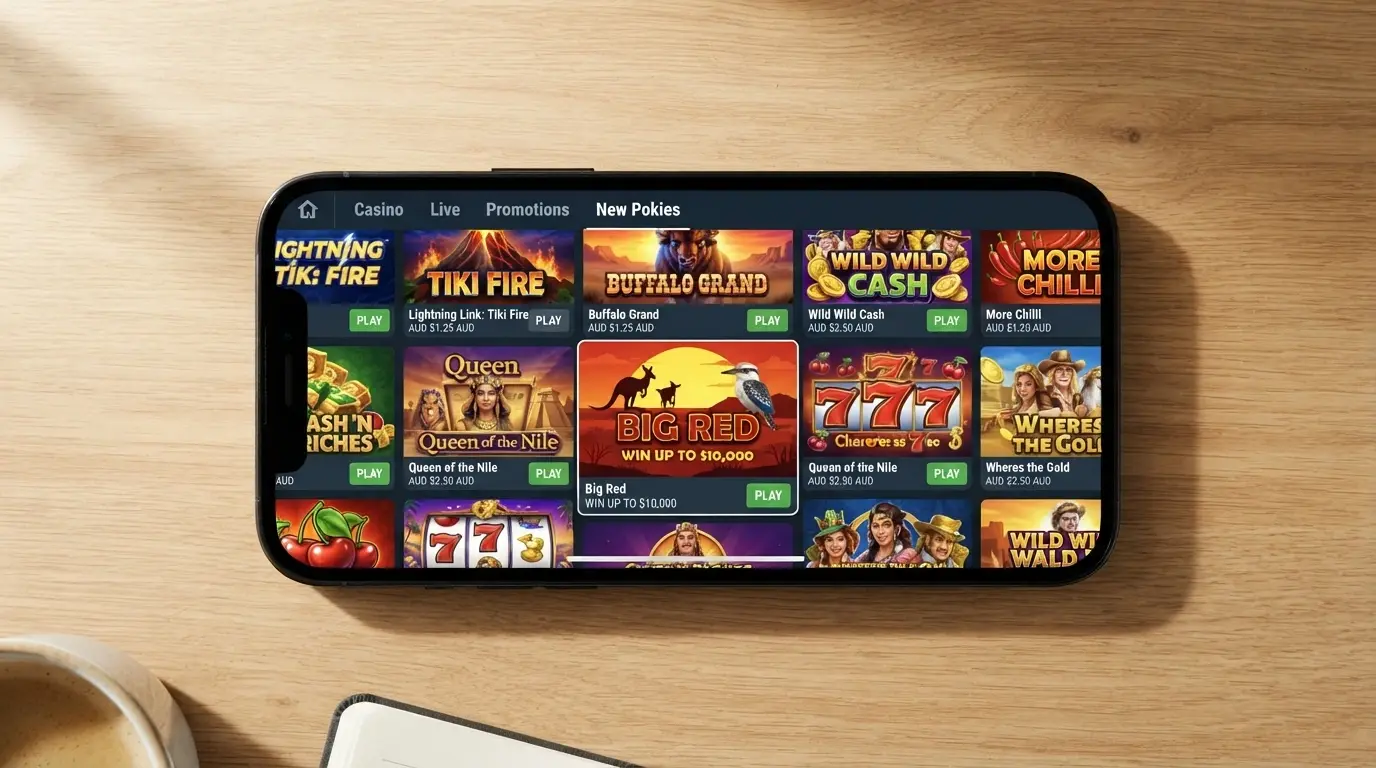
The pokies landscape at AU-facing offshore casinos in 2026 is shaped by two forces. Provider licensing deals determine which studios can distribute which games through which operator, and regional popularity — the titles that AU players actually click on — determines which deals the operator bothers to close. Real Time Gaming is the provider whose name keeps surfacing in AU player searches, and a new site without an RTG library is missing the catalogue segment the Australian player expects. Pragmatic Play is the other major name that recurs, with a broader catalogue that crosses both slot and live-dealer territory.
Pokies: The Games Australian Players Search For by Name
The term “pokies” is the Australian native word for what the rest of the English-speaking gambling world calls slots. It dominates Australian search behaviour, and the offshore casino that does not optimise its lobby around the word is optimising around the wrong audience.
The pokies-first design of an AU-facing casino is not an accident. New sites launching into the Australian traffic segment organise their navigation, their bonus targeting and their homepage featured games around pokies. A player who lands on an AU-facing casino expecting a slots-first experience will find one. A player who lands expecting a table-games-first experience will not, because the site is not built for that player.
The distinction between classic three-reel pokies and modern video pokies matters more at new sites than at established ones. Established libraries carry both, and the player can pick. New sites tend to launch with a heavy modern-video-pokies tilt — Megaways-style mechanics, cluster pays, branded tie-ins — and a thinner classic-reel section. A player who prefers the older format may have to dig further into a new site’s library to find what they want.
Game Variety at New AU-Facing Casinos: Slots, Tables and the Gaps
A new casino’s game count is a marketing number. The count includes demo slots the player will never click on, regional variants that do not load in an Australian timezone, and progressive jackpots denominated in currencies the player does not hold. What matters is whether the games an Australian player actually wants — pokies with AU-preferred themes, live-dealer tables that accept AUD-denominated play during Australian evening hours, progressive jackpots denominated in AUD — are present and load reliably.
Slot variety beyond the pokies section tends to be thinner at new sites. The provider deals that bring a full multi-provider library take time to close, and a brand-new site usually launches with one or two providers — sometimes RTG, sometimes Pragmatic Play, sometimes both — and adds more over the operator’s first six to twelve months. The player who wants breadth will find it at the older end of the market, not the newer end.
Table games and live dealer follow the same pattern. A new site’s table-game selection usually covers the basics — blackjack, roulette, baccarat — and a small live-dealer suite. The fuller live-dealer experience, with game-show formats and regional variants, comes later, after the operator has the volume to justify the integration cost.
Progressive jackpot access is the clearest gap at the newest sites. The major progressive networks — the ones that pool liquidity across operators and run jackpots into the millions — require integration agreements the new site may not have closed yet. A player chasing a network progressive will usually find more options at an established brand.
RTG, Pragmatic and the Providers Powering the Newest AU-Facing Sites
Real Time Gaming is the provider whose name appears most often in the Australian-facing pokie discussion. RTG-built pokies have a recognisably Australian-flavoured catalogue — themes, volatility profiles and bonus structures that match what AU players click on — and the provider’s distribution relationships with offshore casinos have made it the default in many AU-facing lobbies.
Pragmatic Play is the other name that recurs, with a wider catalogue that crosses slots, table games and live dealer. Pragmatic’s distribution reach is broader than RTG’s in global terms, and the provider has become the second pillar of many AU-facing libraries — especially at sites targeting a player who wants both pokie volume and a working live-dealer section.
A new site’s provider mix signals its target market. An RTG-heavy launch signals an AU-first build. A Pragmatic-heavy launch signals a broader international build with an AU section bolted on. A mixed-provider library signals an established operator that has spent the integration budget to cover both bases. The player who knows which providers they want has already narrowed the candidate set before looking at the bonus page.
Provider licensing is not the same as casino licensing. RTG and Pragmatic are game studios whose own certification — RNG testing, return-to-player verification — sits with the testing houses that audit their catalogues. The casino’s licence, where it has one, is a separate question, and in the AU-facing offshore market the casino licence is the one that is missing.
Free Pokies and Demo Mode: Try Every Game Before You Risk a Cent
Free-play demo mode is the single most underused player-protection tool at an offshore casino. It lets the player load a pokie with virtual credits, run it through enough spins to see how the bonus frequency and the volatility actually behave, and decide whether the game is worth a real-money session — all without registering, depositing or signing a terms agreement.
Demo mode is not a no-deposit bonus. Demo mode costs the player nothing and pays nothing. A no-deposit bonus costs the player nothing to claim but ties up the player’s time in wagering, with a cashout cap and a validity window attached. A player who has tested a pokie in demo mode for ten minutes knows more about the game’s behaviour than a player who has burned through a $10 no-deposit bonus on the same pokie chasing a wagering requirement they did not read.
The games that offer demo mode cover most of the major pokie catalogues. The games that do not — some progressive jackpots, some live-dealer tables, some branded exclusive titles — are the ones the player cannot test before depositing. The reader should know which games fall into each bucket before deciding where the demo-mode session ends and the real-money session begins.
Paying at Offshore Casinos: PayID, Deposit Tiers and the Payment Methods That Scream “Offshore”
How the player pays is the single clearest signal of whether a casino sits inside or outside the Australian regulatory perimeter. The payment methods on the deposit screen are not a marketing choice; they are a legal one.
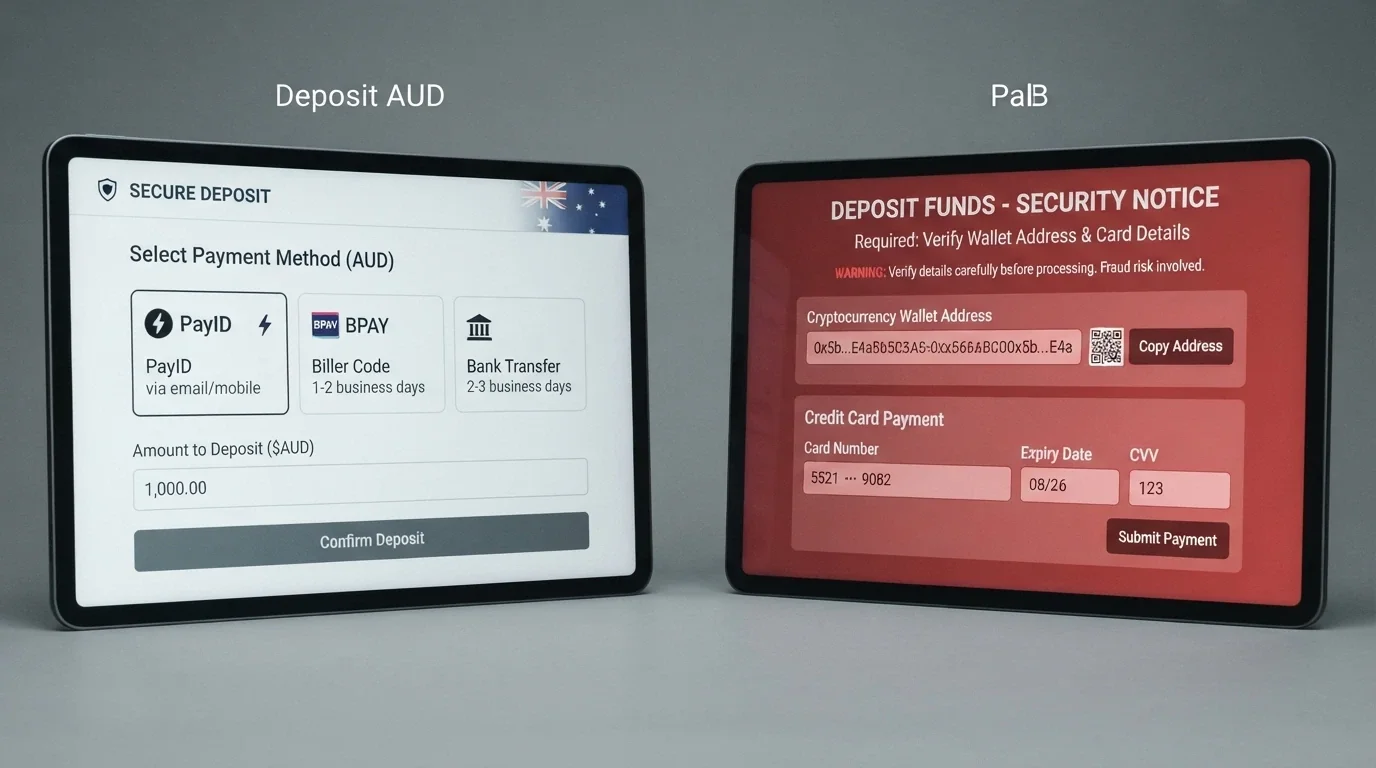
Since 11 June 2024, credit cards, credit-related products and digital currency have been banned as payment for online wagering in Australia. An operator licensed in Australia cannot offer them on the deposit screen. An operator that does offer them is, by definition, outside the Australian rules. The penalty for an Australian-licensed operator that fails to enforce the ban is up to $247,500 per breach. The offshore casino has no equivalent penalty, because the offshore casino is not licensed in Australia at all.
PayID and Osko are the AU-preferred deposit rails — instant transfers through the player’s own bank app, no card details shared, no merchant fees on the player’s side. A casino offering PayID deposits is offering an Australian-friendly rail. The casino is not, by virtue of offering PayID, an Australian-licensed operator. PayID is a payment method. It is not a regulatory perimeter.
PayID and Fast Banking: Why Australians Search for It and What It Actually Delivers at Offshore Casinos
PayID is fast, free and Australian. It links a bank account to a mobile number or email address, and transfers through the PayID network settle in near-real time through the Osko rails. An Australian depositing through PayID does not hand over card details, does not wait for a card processor to clear the transaction, and does not pay a merchant fee on the deposit side.
At an offshore casino, PayID is a deposit rail — not a consumer-protection signal. The deposit side of the transaction is fast. The withdrawal side still depends on the operator’s own processing queue, and the operator’s processing queue is the part no Australian regulator audits. A player who deposits through PayID and expects the withdrawal to be equally fast is comparing the wrong halves of the transaction.
The deposit-versus-withdrawal asymmetry is the practical shape of PayID at an offshore casino. Instant in. Queued out. The reader should know the asymmetry before treating PayID acceptance as a quality signal.
What Your Deposit Method Says About the Casino — And What It Cannot Tell You
A casino asking for credit card deposits is signalling, in real time, that it sits outside the Australian regulatory perimeter. The same is true of a casino asking for crypto deposits. The payment method is itself a tell, and the tell is enforceable in the sense that no Australian-licensed operator would offer either rail.
The legal AU routes — debit card, bank transfer, PayID, BPAY — are the rails an Australian-licensed wagering operator must offer. An offshore casino may offer them alongside the illegal ones, or it may not offer them at all. The presence of the legal rails alongside the illegal ones does not make the operator Australian; the absence of the legal rails does not necessarily make the operator worse than one that offers them. The reader should know what each rail signals and not over-read.
Minimum-deposit tiers — $10, $20, $30 — are common at new offshore casinos. A low minimum looks like a low-risk entry point. The terms attached to the minimum are the part that costs. A $10 minimum deposit that unlocks a 200% match bonus with a 50x wagering multiplier is asking the player to turn over $1,000 — at a typical 96% pokie RTP, the expected loss is around $40, against a $20 bonus credit. The arithmetic runs the same way regardless of how small the deposit is.
From 1 January 2027, banks and payment providers gain express authority to block transactions to illegal gambling operators. The change does not make the offshore casino illegal — it was already illegal to provide one — but it does give Australian banks a tool to refuse the transaction at the payment-rail level. A player who finds their deposit blocked by their own bank in 2027 will have learned, in real time, that the operator was outside Australian rules.
The Legal Reality: Every Online Casino an Australian Visits Is Offshore — Here Is What That Costs You
Online casino games are prohibited in Australia. The Interactive Gambling Act 2001 makes it an offence to provide such services, including pokies and in-play sports wagers, to a person in Australia. The 2017 amendment gave the regulator the enforcement powers that have led to 1,564 blocked sites and more than 225 withdrawn services. The Interactive Gambling Amendment (Gambling Reform) Bill 2026 passed Parliament on 19 August 2026 and commences on 1 January 2027, adding inducement restrictions, an advertising opt-out register, and express bank-blocking authority to the existing regime.

| Player Protection Feature | Offshore Casino (no AU licence) | Licensed AU Wagering Operator |
|---|---|---|
| Australian regulator with recovery power | No | Yes — state/territory regulator |
| BetStop self-exclusion coverage | No | Yes — single registration excludes from every licensed service |
| Australian complaints body | No | Yes — operator’s ADR scheme plus state/territory escalation |
| Consumer-law recourse (ACL) | No | Yes — Australian Consumer Law applies |
| Deposit method restrictions enforced | No — operator’s own policy | Yes — credit card and crypto banned since 11 June 2024 |
| Identity verification required | Operator’s own policy | Yes — federal AML/CTF obligations |
| Advertising restrictions from 1 January 2027 | Not applicable | Yes — three-phase rollout, inducement ban |
| Bank blocking from 1 January 2027 | Applicable — deposits may be refused | Not applicable |
The two columns are not equivalent. The licensed AU wagering operator sits inside a regulatory perimeter with a complaints body, a self-exclusion register, a deposit-method ban and a consumer-law backstop. The offshore casino sits outside every one of those. The fact that licensed wagering operators do not offer online casino games does not make the offshore casino the safer option by default; it makes the offshore casino the only option, for a product the licensed market does not provide, with the protections stripped out.
The IGA 2001 Explained: What the Law Says and What the ACMA Does About It
The Interactive Gambling Act 2001 prohibits the provision of online casino games, online pokies and in-play sports betting to a person in Australia. The 2017 amendment gave the Australian Communications and Media Authority enforcement and blocking powers, and the ACMA has used them — 1,564 illegal gambling and affiliate websites blocked since November 2019, more than 225 services withdrawn from the Australian market since 2017.
The ACMA directs Australian internet service providers to block illegal sites at the DNS level. The blocking is real, and a blocked site with a player balance on it is a total loss — the ACMA’s blocking power does not include a power to recover funds. The blocking also affects affiliate sites that market the casinos to Australian traffic, which is why the 1,564 figure is not just casino domains.
The law distinguishes the provider from the player. The provider commits an offence by offering the service to a person in Australia. The individual player commits no offence. That distinction is the reason the offshore market exists at the scale it does — the legal pressure is on the supply side, not the demand side — and it is the reason a page like this one can be written without telling the reader they are about to break the law.
Offshore and Unprotected: What Happens When There Is No Australian Regulator to Call
When an offshore casino blocks a withdrawal, closes an account or changes its terms overnight, there is no Australian regulator to call. The ACMA can block the site, but blocking the site does not pay out the disputed balance. There is no Australian complaints body with jurisdiction over the offshore operator. There is no BetStop coverage, no Australian Consumer Law recourse, and no state or territory escalation path. The player is, in the practical sense, on their own.
BetStop — the National Self-Exclusion Register — binds Australian-licensed wagering services. A person who registers with BetStop is excluded, in a single step, from every Australian-licensed online and phone wagering service. As at 31 July 2026, BetStop had 67,480 registrations in three years of operation, of which 41,290 exclusions were still active. The register works. It does not cover the offshore casinos on this page. A self-excluded Australian who signs up at an offshore casino will be accepted, will be able to deposit, and will be able to play.
The 2026 reform does not fix this. The reform strengthens BetStop’s operation and promotion within the licensed market, introduces a Wagering Advertising Opt-out Register (AdStop) — not expected to be operational by 1 January 2027 — and gives banks express authority to block transactions to illegal operators from the same date. None of these provisions extend BetStop coverage to the offshore casino. The offshore casino is, and remains, outside the register.
The payment-method tell is the practical risk screen the reader can apply right now. A casino asking for credit card or crypto deposits is, by definition, outside Australian rules. The reader who sees either rail on the deposit screen has their answer about the operator’s regulatory position before they need to ask the question.
Staying Safe: Responsible Gambling Tools and the BetStop Gap Every Australian Needs to Know
BetStop is Australia’s single best player-protection tool. One registration excludes a person from every Australian-licensed online and phone wagering service. The register has been live since August 2023 and, as at 31 July 2026, carries 67,480 registrations — of which 41,290 exclusions are still active. Seventy-eight per cent of registrants were under 40 at the time of registration, and thirty-eight per cent chose lifetime exclusion. The demand for self-exclusion is real, and the register meets it for the licensed market.
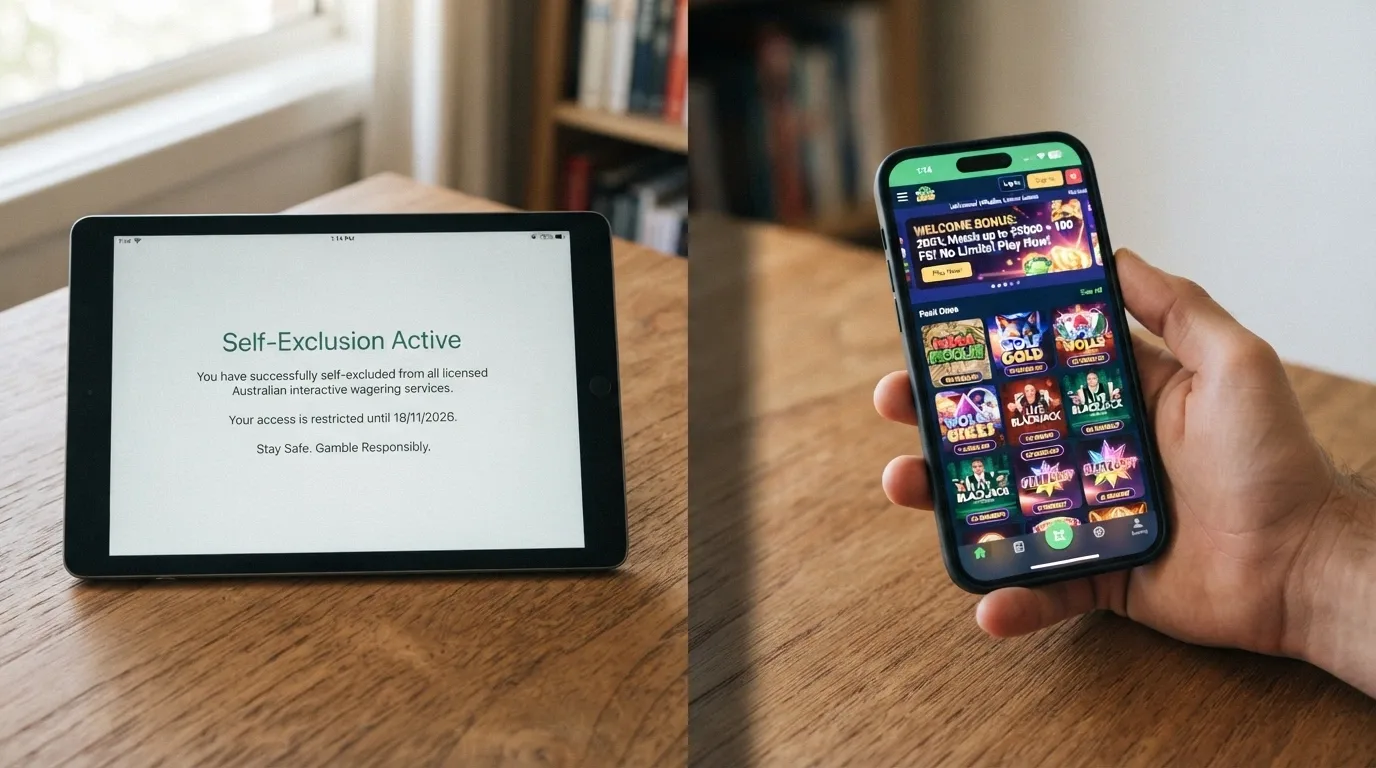
The register does not meet it for the offshore market. BetStop binds Australian-licensed wagering services only. An offshore casino is not connected to the register, and an offshore casino will keep taking a self-excluded person’s money. This is the single most important gap any Australian considering an offshore casino needs to understand before signing up.
For an Australian who is struggling with gambling, the help lines are real and they are free. The National Gambling Helpline is 1800 858 858 — free, confidential, staffed 24 hours a day, seven days a week. Gambling Help Online — gamblinghelponline.org.au — provides online chat and counselling. Both services are run outside the offshore casino market and both will speak with someone regardless of whether the person plays at a licensed operator or an offshore one.
About 2.1% of Australian adults — roughly 430,000 people — experience problem gambling. The Australian Institute of Health and Welfare put high-risk gambling at 1.8% in 2022. The figures are not going down as the offshore market grows, and the gap between the licensed protections and the offshore reality is the structural reason the gap is widening.
How We Evaluated the Newest Casino Brands
The ranking on this page is built on two inputs: BLASK market-share tracking for AU-facing gambling brands and the operator research this page is based on. The market-share figures tell the reader where each brand sits in the AU-facing volume. The operator research confirms each brand is real and active. Neither input tells the reader how the brand will behave on a disputed withdrawal — that information is not in the research, and the page does not claim to know it.
The regulatory check applied to every operator: ACMA licence register. No online casino licence exists in Australia, and none of the operators on this list holds one. The check is the same for every brand — the regulatory status is the same for every brand — and the page does not rank one above another on regulatory grounds because there is no ranking to perform.
The ranking criteria are stated plainly: market presence, recency, AU-facing profile, and bonus terms where confirmed. Per-operator bonus terms were not confirmed in the research this page is built on, so the bonus dimension is a no-data column rather than a ranked column. The reader can see what the research carries and what it does not, and can make their own call on the gaps.
This evaluation does not endorse any operator. It does not claim any operator is licensed in Australia. It does not substitute for the reader’s own due diligence. The page describes the brands Australians are landing on, in the order they are landing on them, with the regulatory status and the protection gaps stated in full. The decision is the reader’s.
What the Smart Australian Player Does Before Signing Up to Any of These Casinos
The brands are on the page. The bonuses are described as far as the research carries them. The legal reality is stated in full. The decision framework that follows is what the page owes the reader next.

Verify the operator’s licence before signing up. Not because an Australian licence exists — none does — but because an offshore licence is the closest thing to a regulatory backstop the player will get. A Curaçao licence is not equivalent to a Malta Gaming Authority licence, and neither is equivalent to a UK Gambling Commission licence. The reader should know which authority has issued the licence the operator carries and what that authority’s dispute-resolution process looks like.
Check the payment methods on the deposit screen before depositing. Credit card or crypto options signal an operator outside Australian rules — the payment method is itself a tell, and the tell is enforceable in the sense that no Australian-licensed operator would offer either rail. PayID, debit card and bank transfer are the legal AU routes. Their presence does not make the operator licensed, and their absence does not necessarily make the operator worse — but a credit card or crypto option is a clear signal the operator sits outside the perimeter.
Read the bonus terms in full before claiming any offer. The wagering multiplier, the cashout cap and the validity window are the three numbers that decide whether anything survives the playthrough. A player who has not checked all three has not evaluated the bonus — they have evaluated the marketing.
Test the withdrawal process early, with a minimum amount, before committing a larger balance. The deposit side of the transaction is fast at every offshore casino. The withdrawal side is the part the player learns the truth about. A small withdrawal that completes in 48 hours is a different signal from a small withdrawal that stalls at “pending” for a week.
Know that BetStop does not cover this casino. Set deposit and session limits at the operator level if the site offers them, and recognise that those limits are not enforced by any Australian authority. The player is the only person enforcing them.
Save the help-line numbers before they are needed. The National Gambling Helpline — 1800 858 858 — is free, confidential and staffed 24/7. Gambling Help Online — gamblinghelponline.org.au — provides online chat and counselling. Both are outside the offshore casino market. Both are real.
The verdict the figures support: a no-deposit bonus is worth claiming only when the wagering multiplier, the cashout cap and the validity window have been verified and the expected cost of the required turnover is less than the bonus value. The cost is what the player pays in expected loss over the playthrough. The bonus value is what the player walks away with after the cashout cap. The arithmetic favours the player rarely, and the player who runs it before claiming is the one who knows when it does.
Frequently Asked Questions
How does a no-deposit bonus actually work at new Australian-facing casino sites?
A no-deposit bonus is a conditional credit the casino extends without an upfront deposit — usually bonus cash or free spins on a designated pokie. The player uses the credit to play real-money games, but cannot withdraw any winnings until the wagering multiplier has been satisfied. The casino also caps the maximum cashout from bonus-derived winnings and sets a validity window for the playthrough. A player who reads all three terms before claiming is the one who might walk away with something.
Does BetStop protect me if I use an offshore online casino?
No. BetStop — the National Self-Exclusion Register — binds Australian-licensed wagering services only. An offshore casino is not connected to the register and will keep accepting a self-excluded person’s deposits and play. A BetStop registration protects the player from licensed Australian wagering operators, not from the offshore casinos on this page, and the player using an offshore casino needs to know that the gap exists.
Why are there no Australian-licensed online casinos?
Because the Interactive Gambling Act 2001 prohibits the provision of online casino games, online pokies and in-play sports betting to a person in Australia. No licence exists for these products federally or in any state or territory, and none can be issued under the current law. The licensed Australian wagering market covers race and sport betting placed before the event, lotteries and keno — products the IGA permits. Online casino games are not among them.
What can I do if an offshore casino refuses to pay out my winnings?
There is no Australian regulator with recovery power over an offshore operator. The ACMA can block the site, but blocking the site does not pay out the disputed balance. There is no Australian complaints body with jurisdiction, no Australian Consumer Law recourse, and no state or territory escalation path. The practical options are the operator’s own internal dispute process, any ADR scheme the operator’s offshore licence provides for, and — for larger disputes — legal advice in the operator’s licensing jurisdiction. None of these is fast, and none guarantees a payout.
Are my winnings from an online casino taxable in Australia?
No, not for an ordinary punter. Betting and gambling winnings are not assessable income under section 6-5 of the ITAA 1997, and gambling losses are not deductible under section 8-1, unless the person is carrying on a business of betting or gambling. No Australian case has held the winnings of an ordinary punter assessable. The tax obligations fall on the operators — state and territory point-of-consumption taxes typically 10–15% of net wagering revenue, plus the Northern Territory’s 5% wagering tax and 0.05% racing levy where the operator is NT-licensed for its permitted products.
How will the 2026 gambling reform affect online casino players?
The Interactive Gambling Amendment (Gambling Reform) Bill 2026 passed Parliament on 19 August 2026 and commences on 1 January 2027. Its main player-facing provisions: direct marketing of inducements is prohibited for 14 days after sign-up, three months after BetStop deregistration, and indefinitely for at-risk customers; banks and payment providers gain express authority to block transactions to illegal gambling operators; wagering advertising is restricted through a three-phase rollout culminating in a 6am–10pm broadcast prohibition; and a Wagering Advertising Opt-out Register (AdStop) is established. The reform does not license online casino play and does not extend BetStop coverage to offshore casinos. The offshore casino on this page will, in 2027, still be illegal to provide and still outside BetStop.