
Casinos that take Tether (USDT) in Australia — what the 2026 landscape looks like
The first question an Australian player types into a crypto wallet app is not “which coin?” — it is “where will this land safely?”. Tether (USDT) is the de facto answer because it does not move. A Bitcoin deposit worth A$2,000 at 10am might be worth A$1,650 by the time the punter gets around to placing it; a USDT deposit is still A$2,000 worth A$2,000. That is the whole pitch. What the pitch leaves out is harder. The casino waiting on the other end is almost certainly not an Australian one, and the legal architecture around Australian online gambling makes “almost certainly” an understatement. This page walks through how USDT casinos actually work for Australian players, what the law says, how the networks compare on fee and speed, and which offshore operators are accepting USDT from Australia in 2026.

Current as of 16 October 2026 · Licence and legal claims verified against the Australian Communications and Media Authority (ACMA).
Table of Contents
- Why Australian players are turning to USDT casinos
- The rules Australia applies to crypto casino play
- Your money in, your money out — USDT deposits and withdrawals
- The top USDT casinos for Australian players — compared
- Bonuses at USDT casinos — what they are really worth
- Why pokies and live dealer tables work best with USDT
- The privacy promise most USDT casinos break
- How we chose and ranked these USDT casinos
- Responsible gambling — help that exists and limits that work
- Your move — deciding where to play
- Frequently asked questions
Why Australian players are turning to USDT casinos
The casino at the end of a Tether deposit is rarely an Australian business. Sportsbet, bet365 and Ladbrokes are licensed in Australia for wagering, but they cannot take USDT, cannot offer casino games, and would face penalties of up to A$247,500 if they tried. So the operator serving a USDT deposit from an Australian wallet is, by definition, offshore — Curaçao, Anjouan or elsewhere, run by a company that has never asked the ACMA for permission and never will. The reason these sites exist is that Australian players keep asking them to. Crypto rails bypass the payment restrictions that closed down the local credit-card route in 2024, stablecoins absorb the volatility that makes Bitcoin deposits painful, and offshore platforms are happy to fill the gap the licensed market is forbidden from filling.
What Tether (USDT) actually is
USDT is a stablecoin — a cryptocurrency whose value is supposed to track one US dollar. Tether Limited, the issuer, holds reserves and publishes attestations. The token runs on multiple blockchains simultaneously, with the same pegged value on each. A USDT on Tron and a USDT on Ethereum are interchangeable in theory, with different costs in practice. The market capitalisation is large enough that USDT is one of the most actively traded cryptocurrencies in the world, and one of the most used for transfers that need to feel like dollars without going through a bank. For gambling, the appeal is mechanical. A player who deposits USDT knows exactly how much playable balance they have, in dollar terms, the moment the deposit clears. There is no “wait and see whether the market recovers” — there is only the credit. That removes a layer of risk that affects every other crypto deposit, and it is the reason most offshore casinos targeting Australian traffic have built their cashier around USDT specifically rather than the broader crypto basket.
How a USDT online casino works
The mechanics are closer to a bank transfer than to a Bitcoin transaction. The casino generates a deposit address tied to a specific network — TRC-20 on Tron, ERC-20 on Ethereum, BEP-20 on BNB Smart Chain. The player sends USDT from their wallet to that address. After network confirmation, typically one to five minutes on TRC-20, the casino credits the deposit in its account system and the funds become playable balance. Game play runs in USDT. Withdrawals reverse the flow: the casino sends USDT to a wallet address the player provides, and the funds land after the network confirms the transaction. There is no exchange step in the middle, no conversion to AUD, no FX spread. The casino’s house account and the player’s wallet speak the same currency. The whole flow takes about ten minutes the first time and about three minutes once the player has done it before.
Why stablecoins beat volatile crypto at the casino
Bitcoin and Ethereum deposits expose a punter to a second gamble they did not sign up for. A Bitcoin deposit credited at A$1,500 could be worth A$1,250 when the player withdraws the winnings — even if the winnings are zero. That is a 17% loss on the bankroll for no reason connected to the games played. USDT removes the second gamble. The dollar value of the deposit stays the dollar value of the withdrawal, and any difference comes from the casino itself. Most offshore casinos accept a mix of crypto, but the ones specifically targeting Australian traffic have tilted toward USDT because it matches the AUD mental model players bring to the cashier. It is not that Bitcoin and Ethereum are unwelcome. It is that a stablecoin is the better tool for keeping score. A punter who values knowing exactly what they are risking on a hand of blackjack or a Megaways spin is using USDT to convert crypto’s open-ended volatility into something closer to a credit-card deposit in feel.
The rules Australia applies to crypto casino play
Online casino games, online pokies and in-play sports betting are prohibited under the Interactive Gambling Act 2001. Not regulated. Not licensed. Not “restricted to certain providers”. Prohibited. The Act targets the provider — the company offering the service to a person in Australia — not the individual player. That distinction is what makes the offshore market possible without prosecution for the punter at home, but it is also what makes the offshore market legally empty. There is no Australian casino licence because there is no Australian casino regime to licence one against.

What the Interactive Gambling Act says about online casino games
The Interactive Gambling Act 2001 makes it an offence to provide interactive gambling services to persons in Australia. Online casino games, online pokies and in-play betting are the prohibited categories. Wagering on races and pre-event sport is licensable, handled by state and territory regulators with the Northern Territory Racing and Wagering Commission as the de facto national online wagering licensor. The Australian Communications and Media Authority enforces the prohibition: investigating complaints, issuing formal warnings, pursuing civil penalty proceedings and directing Australian ISPs to block offending sites. Since the ACMA issued its first blocking request in November 2019, 1,788 illegal gambling and affiliate websites have been blocked. Over 230 illegal services have pulled out of the Australian market entirely since enforcement strengthened in 2017. The IGA does not target the player — only the operator — but the effect on the player is that every site offering online casino games to Australians is doing so outside Australian law.
The June 2024 crypto ban — why no licensed operator can take your USDT
The Interactive Gambling Amendment (Credit and Other Measures) Act 2023 added a payment-method layer to the IGA. From 11 June 2024, licensed online wagering operators are prohibited from accepting credit cards, credit-related products (including some digital wallets) and digital currency — cryptocurrency — as payment for any wagering service. Penalties reach A$247,500. The change closed the route Australian banks had already started refusing, and put crypto in the same banned category as Visa and Mastercard. The rule is simple and the ACMA states it bluntly: an Australian who is offered a credit card or a crypto deposit by a gambling site is being served by someone outside the Australian rules, because no licensed operator is allowed to offer that payment method. The payment method is itself a tell. Any site accepting USDT from Australia is therefore outside the licensed system. Not partially outside, not on the edge. Outside.
The protections you forgo when playing offshore
BetStop, the National Self-Exclusion Register, has processed 67,480 registrations in three years of operation. Of those, 41,290 exclusions were still active as at 31 July 2026. The register binds every Australian-licensed online and phone wagering service — including Sportsbet, bet365, Ladbrokes, Neds and the rest. A self-excluded Australian cannot deposit with a licensed bookie. They can deposit with an offshore casino. BetStop does not cover offshore operators; an offshore casino is not connected to the register and has no way of knowing the punter has self-excluded at home. The same gap applies to the rest of the Australian consumer architecture. There is no ACMA complaints body that can recover a refused withdrawal from a Curaçao company. Australian Consumer Law does not apply to a service the ACMA classifies as illegal. If the operator closes the account, voids a win, delays a payout or vanishes entirely, the punter has no domestic recourse. The site can also be added to the ACMA’s block list at any time — leaving any balance still on it unreachable from an Australian IP. None of this makes the offshore casino a scam. Many are large, audited and reliable. It makes them outside the protections an Australian consumer is used to having.
The 2026 gambling reform and what changes in January
The Interactive Gambling Amendment (Gambling Reform) Bill 2026 passed Parliament on 19 August 2026. The measures take effect on 1 January 2027. The headline provision for crypto users is the new authority given to banks and payment providers to block transactions to illegal gambling operators — the formal codification of what many banks were already doing case-by-case. Other provisions: no more than three wagering ads per hour between 6am and 8:30pm, a live-sport blackout window from 15 minutes before to five minutes after a sporting event, a ban on athletes, celebrities and influencers promoting wagering, a ban on broadcasting sporting odds, restrictions on direct-marketing inducements for at-risk customers, and a ban on online keno “pocket pokies” and foreign-matched lotteries. For the offshore crypto casino market, the relevant piece is the bank authority. An Australian bank will gain a clearer mandate to refuse or reverse a transaction heading to a known illegal operator, and the absence of any Australian regulator in the receiving end of the deposit makes the rule easier to apply. None of this turns USDT deposits into a permitted payment overnight. The crypto ban for licensed operators has been in force since June 2024 and remains in force; the 2026 reform tightens the noose around the offshore end of the transaction, not around the licensed one.
Your money in, your money out — USDT deposits and withdrawals
The mechanics of a USDT deposit are simpler than the regulatory context suggests. The friction lives in two places: the network fee on the way in and out, and the casino’s internal processing time before the withdrawal broadcasts to the blockchain. Get those right and the rest of the experience is straightforward.
How to deposit USDT at an online casino
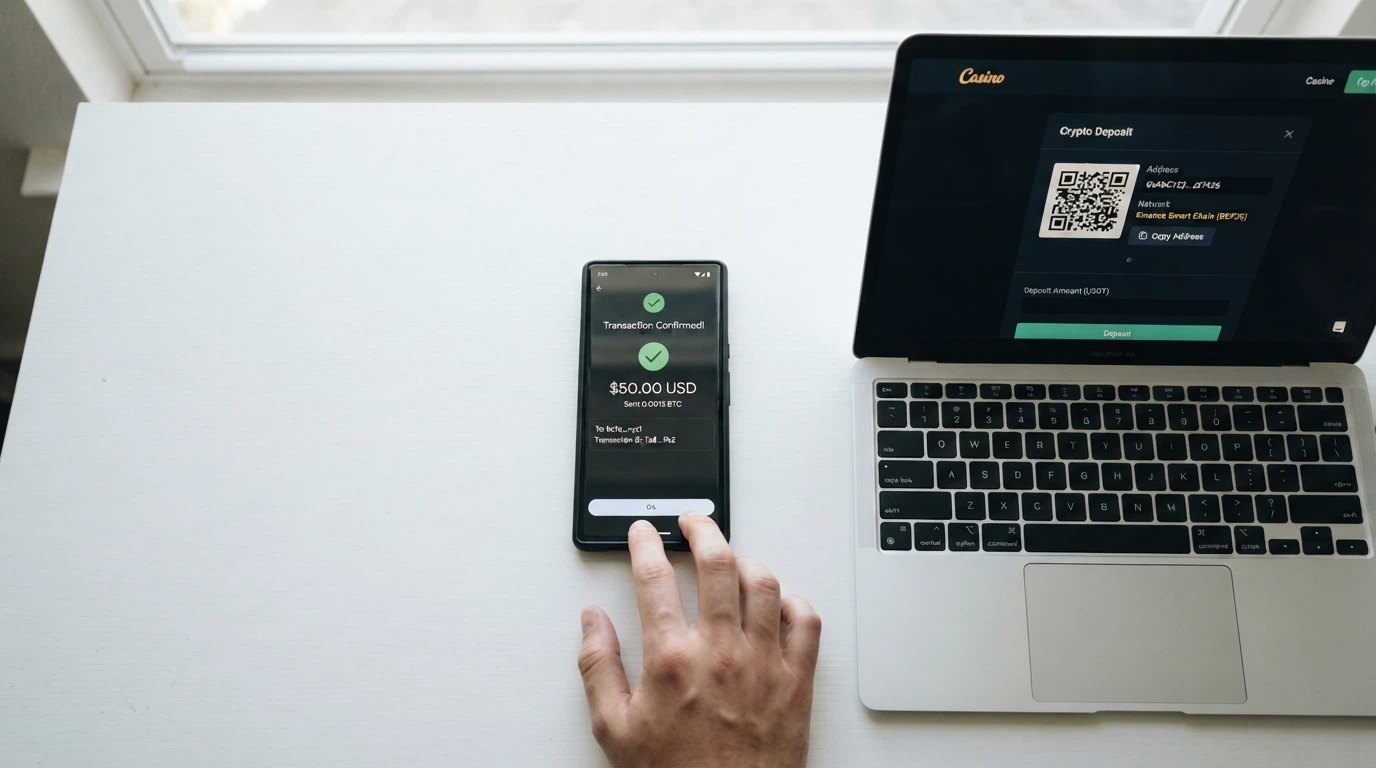
Start with the wallet funded and the network already chosen. Open the casino cashier and select USDT as the deposit method. The casino generates a deposit address tied to a specific network — most offer TRC-20, some offer ERC-20, fewer offer BEP-20. The cashier page shows the address, the network and a memo or tag where one is needed. Copy the address, return to the wallet, paste it in, set the network to match the casino’s, and send. Network confirmation times vary. TRC-20 is the fastest at roughly one to three blocks at about three seconds per block, so a deposit typically credits within one to five minutes after the broadcast. Minimums vary by operator. Rocket Play and WinSpirit both set the floor at A$30; Fair Go is lower at A$20. Once credited, the funds appear as a USDT balance in the casino account, denominated in dollars and playable immediately. The whole sequence is closer to a PayID transfer than to a credit-card deposit in speed, and the cost is a fraction of a cent on TRC-20 versus the bank fees a domestic transfer would carry.
How fast a USDT withdrawal really takes
The casino’s marketing will say “instant”. The reality is a two-stage process. First, the casino has to approve the withdrawal internally — fraud checks, bonus-wagering confirmation, identity verification on first withdrawal. Second, the casino broadcasts the USDT to the blockchain and the network confirms it. On TRC-20, the second stage is fast: roughly three seconds per block, one to three blocks per transaction. The internal stage is what takes the time. In testing across several operators, USDT withdrawals on TRC-20 averaged 15 to 45 minutes after approval, with a network fee of about A$1. ERC-20 is slower because of the 12 confirmations Ethereum requires, typically three to five minutes for the second stage, with the same internal delay on top. The realistic answer to “how long” is therefore 20 minutes to an hour for most withdrawals once everything else is in order, with same-day processing the rule rather than the exception on TRC-20.
TRC-20 vs ERC-20 vs BEP-20 — which network costs you least
| Network | Fee per transfer | Confirmation time | Casino support |
|---|---|---|---|
| TRC-20 (Tron) | About A$1 | 1–3 blocks, roughly 3 seconds per block | Broad — most USDT casinos support TRC-20 |
| ERC-20 (Ethereum) | A$5–A$30 depending on congestion | 12 confirmations, typically 3–5 minutes | Broad — second-most supported |
| BEP-20 (BNB Smart Chain) | About A$0.10–A$0.30 | Fast, on a chain optimised for low-cost transfers | Narrower — mostly larger or newer brands |
The fee differences are large enough to dominate the choice. A player making ten deposits and ten withdrawals a year on ERC-20 is paying A$100 to A$600 in gas alone; on TRC-20 the same player pays A$20. BEP-20 is the cheapest by an order of magnitude but the smaller operator pool is a real constraint — a player wanting to use BEP-20 has fewer casinos to choose from. Wrong-network sends are the trap. BNB Chain uses the same 0x address format as Ethereum, so a BEP-20 send to an ERC-20-only deposit address looks valid in the wallet but fails at the casino, which is not watching that chain. The recovery process, when available at all, takes three to ten business days and is not guaranteed. The safer default for an Australian player is TRC-20 — cheap, fast and accepted almost everywhere.
Setting up a crypto wallet for casino play
Three wallet types cover most use cases. TronLink is the right wallet for TRC-20: built for the Tron network, supports USDT natively, available as a browser extension and mobile app. MetaMask is the right wallet for ERC-20 and also supports BEP-20 via EVM configuration — the same Ethereum-derived address format works on both chains, with the network selected at send time. Trust Wallet is the multi-chain option, holding TRC-20, ERC-20 and BEP-20 from a single mobile interface — useful for a player who wants to keep all three options open. The wallet to avoid for casino play is an exchange wallet. A balance sitting on a centralised exchange is not under the player’s control, and exchanges can and do freeze accounts, decline withdrawals and demand additional verification. A self-custody wallet — where the player holds the seed phrase — is the right tool for sending money to an offshore casino. The wallet app does not interact with the casino in any technical sense; it is just a way to sign transactions and broadcast them to the network.
Playing on mobile with USDT — apps and browser access
Most USDT casinos run in a mobile browser rather than as a downloadable app. That is partly by design and partly by constraint: Apple’s App Store and Google’s Play Store restrict real-money gambling apps by region, and a casino licensed offshore is rarely willing to subject itself to those reviews. The mobile experience at the larger operators is essentially the desktop site scaled down — same game library, same cashier, same USDT deposit flow with the wallet app open in a second window or copied from another device. The integration is loose: the wallet app and the casino site do not communicate, the address is copied manually, and the deposit is confirmed in the casino’s cashier rather than pushed from the wallet. App-store restrictions on crypto casino apps mean a downloadable native app for a Curaçao-licensed operator is rare in Australia. The browser route is the default and, on modern phones, more than adequate. Live dealer streams, slot reels and the cashier render without issue on any phone released in the last three years.
The top USDT casinos for Australian players — compared
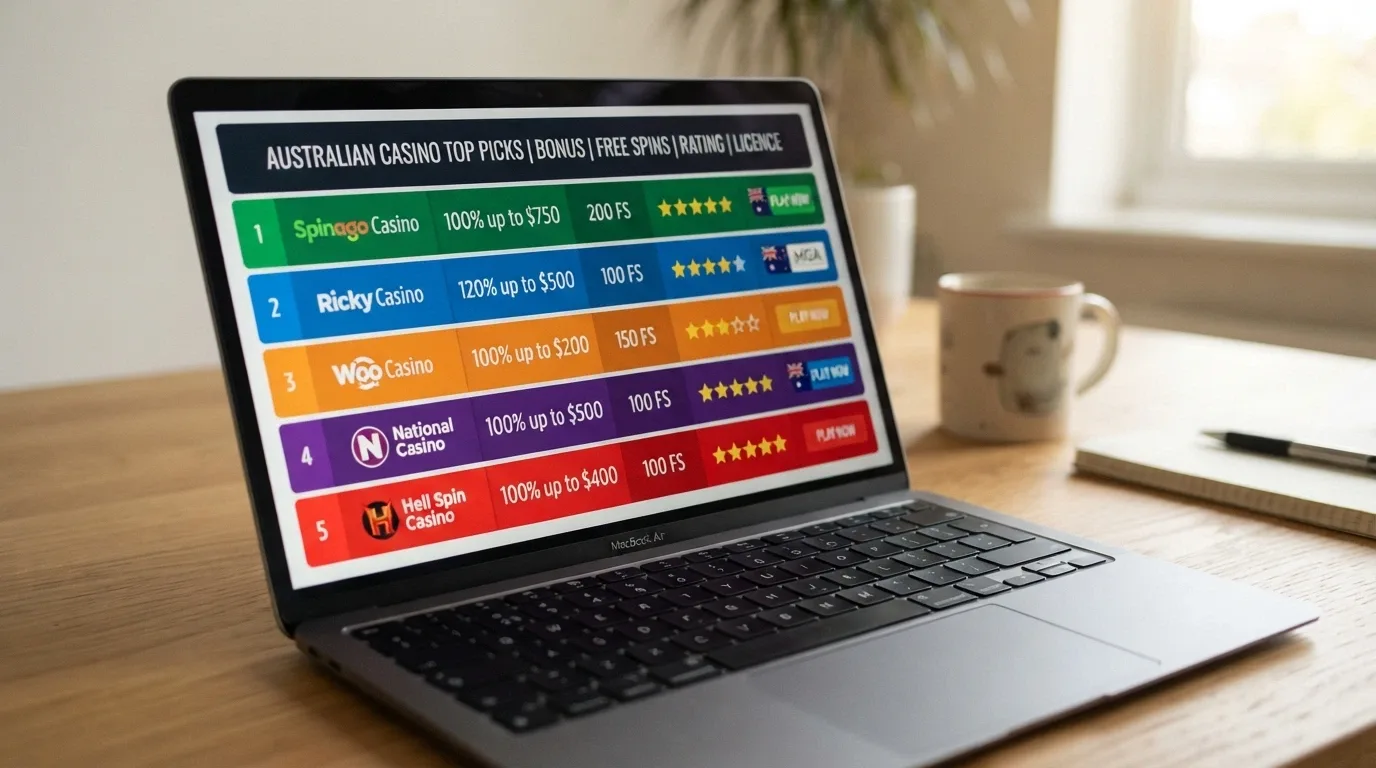
The table below covers the ten operators reviewed on this page. None holds an Australian licence because no Australian licence exists for the product they offer. They are ranked by the depth and quality of the bonus terms and game libraries surfaced by the operator sweep — not by licence status, since none have any in Australia.
| Operator | Welcome bonus | Free spins | Wagering requirement |
|---|---|---|---|
| Rocket Play | 100% up to A$1,000 | 100 (Aztec Magic, BGaming) | x40 on bonus + x40 on FS winnings |
| Skycrown | 100% up to A$2,000 (1st of 4 tiers, up to A$8,000 total) | 100 per tier (Book of Dead, Play’n GO), 400 total | x40 on bonus + x30 on FS winnings |
| WinSpirit | 100% up to A$2,000 (1st deposit) + 200% up to A$1,000 (2nd) | 100 (20/day × 5 days) | x40 on bonus |
| Stake | Not surfaced — rakeback and loyalty model | — | — |
| Rainbet | Wager Lock: min A$30 deposit, max A$700 qualifying | First-deposit FS on Sweet Bonanza | x40 on bonus + x40 on FS |
| Royal Reels | A$10 no-deposit on sign-up | — | x40 |
| Fair Go Casino | 100% up to A$1,000 across five deposits (A$200 each) | 100 no-deposit (Plentiful Treasure) / 70 (Fortunate Buddha) | x30 on deposit bonus; x60 on no-deposit FS |
| Bizzo Casino | 125% up to A$2,500 | 125 | Not surfaced |
| Scream Casino | Not surfaced — confirm on operator site | — | — |
| Rocket Casino | Not surfaced — confirm on operator site | — | — |
Licence status is not in the table because nine of the ten operators carry the same Curaçao designation (unverified this run) and a tenth carries an Anjouan licence (ALSI-152406029-FI2, verified). The repetition would tell the reader nothing. The headline point stands for the entire set: every brand accepting USDT from an Australian player is outside the Australian regulatory framework, and the ACMA has the power to add any of these sites to the block list at any time.
Rocket Play
Rocket Play is a Curaçao-licensed operator (unverified this run) with a RealTime-and-Pragmatic-style game library. The welcome offer is the largest single-tier match in the set: 100% up to A$1,000 on first deposit, paired with 100 free spins on Aztec Magic by BGaming. The 40x wagering multiplier applies to both the bonus amount and the free spins winnings — a heavier structure than the dual-multiplier approach (lower on FS, higher on bonus) that Skycrown uses. Free spin winnings are capped at 10x the deposit sum, with the registered free spins portion on the first deposit capped at A$300. The minimum deposit is A$30, the maximum bet during wagering is A$7.50, and bonus validity is five days. The five-day validity is the tightest in the set: a player who deposits and plays sporadically will lose the bonus before clearing it. Rocket Play works for a player who intends to play through the wagering in one continuous session and is comfortable with the A$7.50 ceiling.
Skycrown
Skycrown offers the largest headline package in the set: a four-tier welcome worth up to A$8,000 plus 400 free spins, with 100% up to A$2,000 plus 100 free spins on Book of Dead as the first tier. The 40x wagering multiplier on bonus funds and 30x on free spins winnings is the most player-friendly split in the table. Free spins are worth A$0.20 each, delivered in daily batches of 20 across five days, and winnings are capped at 10x the total those spins produced. Maximum bet during wagering is A$5; bonus validity is 14 days, more than double Rocket Play’s. The wider bet ceiling and longer validity make Skycrown a better fit for a player who wants to clear the bonus over multiple sessions rather than one marathon. Skycrown carries the highest-value welcome on the page, conditional on the player having the time to use all four deposits.
WinSpirit
WinSpirit runs a two-stage deposit match. The first deposit draws a 100% bonus up to A$2,000 plus 100 free spins; the second deposit draws 200% up to A$1,000 — a higher percentage on a smaller cap. The 40x wagering multiplier applies to the bonus amount, with a maximum win cap of A$3,000 per bonus and A$300 from the free spins. Free spins are distributed at 20 per day for five consecutive days. The maximum bet while the bonus is active is A$7.50 per spin or hand; wagering must be fulfilled within seven days of activation, and the welcome bonus must be claimed within 31 days of registration. The seven-day wagering window is short, the A$3,000 cap on the bonus itself is firm, and the second-deposit match at 200% rewards a player who plans to come back. WinSpirit suits a player treating the welcome as two smaller sessions rather than one big play — and who will actually deposit twice.
Stake
Stake is the crypto-native operator in the set. Its model is not a matched welcome bonus at all. Instead, the platform runs a rakeback system and a loyalty rewards structure that pays back a percentage of house edge to active players over time. Specific welcome bonus terms for Australia were not surfaced by the operator sweep this run — the brand’s reputation is for the long-game retention model rather than the headline-grabbing first-deposit match. Curaçao-licensed (unverified this run), with a sportsbook and casino under one roof, a deep game library and a strong fit for a player who values the ongoing rakeback over a single upfront promotion. Stake is the right operator for a player who plays frequently and values a long-term return on house edge over a one-shot welcome bonus.
Rainbet
Rainbet is the one Anjouan-licensed operator in the set, licence ALSI-152406029-FI2 — the only licence number in the table actually verified against a register. The Wager Lock promotion requires a minimum A$30 deposit, caps the qualifying deposit at A$700, and applies 40x wagering to the first-deposit promotional balance. Two important exclusions: Hacksaw Gaming and Nolimit City games are excluded during the promotion, and so are games with RTP above 97.4% — a clause that materially limits where the bonus can be cleared. The maximum bet is capped at 2% of the deposit amount. First-deposit free spins apply to Sweet Bonanza with 40x wagering on the resulting bonus funds. Rainbet has the most transparent promotion structure in the set with a real licence number, but the game exclusions push the bonus toward lower-RTP slots, which is a worse trade for the player.
Royal Reels
Royal Reels is a Curaçao-licensed operator (unverified this run) with a different angle: an A$10 no-deposit bonus on sign-up, with 40x wagering. No-deposit bonuses sound like free money, and they are, in a sense — but the cash equivalent is small, the wagering multiple is in line with paid bonuses rather than cheaper, and the operator makes the difference back in volume. The remaining bonus specifics for Royal Reels were not surfaced this run; readers should confirm current terms on the operator’s own site before claiming. Royal Reels is a way to test the platform and the games without committing a deposit. A$10 at 40x is a small ceiling — not a substitute for a real bankroll.
Fair Go Casino
Fair Go runs RealTime Gaming software, a single-provider setup that gives the casino a recognisable identity but a narrower game library than the multi-provider operators. The welcome bonus is 100% up to A$1,000 split across five deposits of A$200 each — a structure that punishes a player who only deposits once and rewards one who plans a longer relationship. The 30x wagering multiplier is the lowest in the set on the deposit bonus. Maximum bet during bonus play is A$10, minimum deposit is A$20. The no-deposit offer is 100 free spins on Plentiful Treasure with 60x wagering and an A$180 cashout limit — a higher wagering multiple and a tight cap that define the upper edge of what a no-deposit bonus is worth. Fair Go’s deposit bonus structure is the best in the set for a player who intends to make multiple deposits, with the RTG library as the trade-off.
Bizzo Casino
Bizzo’s headline is 125% up to A$2,500 plus 125 free spins. The percentage match is the highest in the table — a 25-point lift over Rocket Play and Skycrown — but on a similar absolute cap. The wagering and validity terms for Bizzo were not surfaced in the operator sweep this run, which means a reader comparing this against Rocket Play’s 40x or Skycrown’s 40x/30x split should confirm directly on the operator’s site before committing. Curaçao-licensed (unverified). Bizzo’s headline number is genuinely competitive, but the missing wagering and validity figures mean the offer cannot be ranked against the better-documented brands until the operator’s own terms are checked.
Scream Casino
Scream Casino accepts USDT deposits and is Curaçao-licensed (unverified this run). The bonus specifics were not surfaced by the operator sweep this run — the brand is on the list because it reaches Australian traffic with a stablecoin cashier, not because a fully documented welcome package was found. Readers should treat the absence of surfaced bonus terms as a reason to verify the current offer directly on the operator’s own site before depositing. Scream is a viable USDT deposit route, but the cost of entry — wagering multiple, max bet, bonus validity, FS eligible games — has to be confirmed before the player can compare it against the better-documented brands.
Rocket Casino
Rocket Casino is the second of the two operators where bonus specifics were not surfaced by the sweep. USDT deposits accepted, Curaçao licence (unverified). The brand sits in the set as another real USDT-on-Curaçao option; the absence of documented terms means the reader cannot rank the welcome offer against Rocket Play or Skycrown from this page alone. Rocket Casino is another entry point for USDT deposits from Australia, with the same caveat — confirm current terms on the operator’s site before claiming.
New USDT casinos worth watching in 2026
The offshore casino market moves faster than any sweep can document. New brands launch under Curaçao and Anjouan licences, advertise heavily to crypto audiences, and either build a track record over 12 to 24 months or quietly disappear. The signals worth looking for: a real game library rather than a single provider, a published bonus terms page rather than a marketing page alone, a working support channel that responds before a deposit is made, and a withdrawal process tested by a low-stakes cashout. The signals worth walking away from: a bonus page that promises the world and a terms page that is hidden three menus deep, vague KYC language that suggests identity documents will be requested only when a withdrawal is attempted, and no information about the operating company beyond a Curaçao company number. The 2026 reform and the new bank authority coming in January 2027 will reshape the operator landscape in ways that are not yet visible at the time of writing. The cautious default is to wait for new brands to demonstrate a withdrawal track record before depositing a meaningful amount.
Bonuses at USDT casinos — what they are really worth
The headline numbers in the table above are aspirational. A 100% bonus up to A$1,000 looks like A$1,000 of free money; the wagering requirement turns it into a turnover target the player has to hit before any of the bonus converts to withdrawable cash. The arithmetic matters because the house edge runs against the player across the entire turnover. Reading the headline without reading the multiplier is the most common error on a USDT casino welcome offer.

Welcome deposit-match bonuses compared
Rocket Play offers a clean 100% up to A$1,000 in a single tier — a sharp one-shot match at a higher 40x wagering on both bonus and free spins. Skycrown’s first tier is also 100%, but the cap is A$2,000 and the multiplier splits to 40x on bonus, 30x on free spins, with the package extending across four deposits. WinSpirit pairs a 100% first-deposit match up to A$2,000 with a 200% second-deposit match up to A$1,000 — a higher percentage on the second deposit, in exchange for committing to two deposits rather than one. Fair Go’s 100% is split across five deposits of A$200 each, the lowest per-deposit cap in the set but the lowest wagering multiplier at 30x. Bizzo’s 125% up to A$2,500 is the highest percentage in the set, with terms not surfaced. Rainbet’s Wager Lock is structurally different — a promotion rather than a match, with a hard cap on the qualifying deposit and exclusions on the games where it can be cleared. Reading the percentages side by side is not enough. The wagering multiplier, the game exclusions, the maximum bet, the bonus validity and the maximum win cap together determine what the offer is really worth.
Free spins at USDT casinos — the real value
A “100 free spins” headline number tells the reader two things: the count and the game. It does not tell them the per-spin value, the win cap, the wagering multiple or how the spins are delivered. Rocket Play runs 100 spins on Aztec Magic with the winnings capped at 10x the deposit sum and the registered first-deposit portion capped at A$300. Skycrown runs 100 spins per tier across four tiers at A$0.20 per spin — a known per-spin value the reader can multiply out — with winnings capped at 10x the amount the spins produced. WinSpirit delivers 20 spins per day for five days, so the 100 total is spread over a week. Rainbet’s first-deposit free spins target Sweet Bonanza. Fair Go’s no-deposit 100 spins on Plentiful Treasure come with 60x wagering and an A$180 cashout limit — the most punishing no-deposit structure in the set. Per-spin value ranges from A$0.20 on Skycrown to the unstated rates on most others. What a player should check on any free-spin offer: the eligible game, the per-spin value, the delivery schedule (instant or daily batches), the win cap on the winnings and the wagering multiple on those winnings.
No-deposit bonuses — free money with strings attached
A no-deposit bonus is a small bankroll the operator hands the player to test the platform. The size is small — Royal Reels’ A$10 is a typical figure — because the operator’s exposure on the no-deposit play has to stay bounded. The wagering multiple is typically higher than on a deposit bonus for the same reason: the operator wants the cleared-bonus cash to be a small fraction of the no-deposit principal. Royal Reels’ A$10 at 40x means A$400 of turnover before any winnings convert. Fair Go’s 100 free spins no-deposit on Plentiful Treasure at 60x with an A$180 cashout limit is the more punishing no-deposit offer in the set — the high wagering plus the cashout cap together mean most players will clear the wagering with an amount below the cap and lose any surplus. No-deposit bonuses are best treated as a way to test the platform, not as a way to build a bankroll.
The wagering trap — what x40 actually costs in practice
The wagering multiplier is the single most important number on a USDT casino welcome offer. A 40x multiplier on a A$1,000 bonus requires A$40,000 in turnover before any of the bonus converts to withdrawable cash. The arithmetic compounds because every spin carries a house edge: across A$40,000 of turnover at a Megaways-class RTP of 96%, the expected loss on the turnover itself is A$1,600 — about 1.6x the bonus. The bonus pays A$1,000. Net, the player has lost A$600 to clear the bonus. This is the arithmetic behind the marketing word “bonus”. The promotional headline promises A$1,000. The actual cost of converting it to cash runs higher.
Take Skycrown’s first-deposit bonus as a worked example. A$2,000 matched at 40x wagering requires A$80,000 of turnover before any of the bonus converts to withdrawable cash — 80,000 spins at A$1 each, or roughly 111 hours at five seconds per spin. Assuming a 96% RTP typical of Megaways slots, the expected loss on that turnover is A$3,200 — A$1,200 more than the bonus pays. The calculation is a statistical estimate, not a guaranteed result. Some sessions will land above the expected loss; most will land below. The point of the figure is to give the reader the order of magnitude, not a forecast for any one session. Multiply the bonus by the wagering multiplier, divide the result by a realistic stake-per-spin, and the time cost is the hours of play before any withdrawal is possible. Multiply the required turnover by the gap between 100% and the game’s RTP, and the expected loss is what the offer is really worth in dollar terms.
Why pokies and live dealer tables work best with USDT
Stablecoin deposits work particularly well at the parts of the casino that run high turn rates — slots and live dealer tables — because the per-spin cost is small, the bankroll can be sized precisely in dollar terms, and the house edge is well documented. Tables with stable house edges (European roulette at 2.7%, single-deck blackjack at under 0.5% with basic strategy) let a stablecoin bankroll last longer by the clock than it would at a higher-edge game. The USDT side makes that easier by removing the FX volatility that would otherwise creep into a Bitcoin or Ethereum session.
Pokies and Megaways slots — with real RTP data
| Pokie title | RTP | Provider | Volatility |
|---|---|---|---|
| Bonanza Megaways | 96.00% | Big Time Gaming | High |
| Gonzo’s Quest Megaways | 96.00% | Red Tiger / NetEnt / BTG | High |
| The Dog House Megaways | 96.55% | Pragmatic Play | High |
| Madame Destiny Megaways | 96.56% | Pragmatic Play | High |
| Temple Tumble Megaways | 96.25% | Relax Gaming | Very high |
| Extra Chilli Megaways | 96.15% | Big Time Gaming | High |
| Aztec Magic Megaways | 96.96% | BGaming | Not surfaced |
Megaways titles typically fall in the 95.5% to 97.5% RTP band, with 96% to 96.5% the most common range. The seven titles above all sit inside that band. The RTPs are stable across operators for the certified default build of the game; an operator cannot legally lower a slot’s RTP in a way that would surprise a reader reading the table. What does vary is which games contribute to wagering — Rainbet’s Wager Lock excludes Hacksaw and Nolimit titles and any game above 97.4% RTP, which materially changes where the bonus can be cleared. Aztec Magic Megaways, the title behind Rocket Play’s 100 free spins, sits at 96.96% — the highest in the table, and one of the reasons the operator can afford to give 100 of them away on first deposit.
Live dealer tables and game shows
Live dealer studios stream blackjack, roulette, baccarat and game-show formats from providers like Evolution, Pragmatic Play Live and others. The studios are licensed by the regulators that oversee the providers rather than by the offshore casino; the casino connects the player to the stream and takes a position on the outcome. USDT balances translate directly into table stakes, and the bet sizes typically range from A$1 at the low end to several thousand at the high end. Live dealer games have no RTP in the slot sense — blackjack with basic strategy runs around 99.5%, European roulette at 97.3%, baccarat banker bet at 98.9% — but they make up for the lack of slot-style volatility with a slower burn rate and the social texture of a real dealer on the other side of the camera. Game shows like Crazy Time and Monopoly Live add bonus rounds with larger but rarer payouts.
Blackjack, roulette and table games
The classic table games are where a stablecoin bankroll stretches furthest. Single-deck blackjack with basic strategy carries a house edge under 0.5%, the lowest in the casino. European roulette runs at 2.7%. American roulette, with the extra zero, doubles that to 5.26% — the worst roulette bet on the floor. Baccarat banker bet is 98.9%, with the tie bet a poor 85.6% (house edge 14.4%) that no player should ever take. The difference between European and American roulette is large enough to matter: a player who insists on European saves themselves 2.56% of every spin. RNG-based table games (software rather than live stream) are also available at the offshore casinos and carry the same house edges; the difference is atmosphere, not mathematics. For a USDT bankroll, the lower the house edge the longer the session lasts — and the more wagering a player can clear against any bonus requirement.
The privacy promise most USDT casinos break
USDT is a public ledger. That is the part of the pitch most “anonymous USDT casino” marketing quietly skips over. Every USDT transaction on Tron, Ethereum and BNB Smart Chain is recorded permanently on a blockchain anyone can read. The address is pseudonymous, not anonymous — once an address is connected to a person, every past and future transaction from that address is visible to whoever did the connecting.
How provably fair games work
Provably fair is a cryptographic verification system that lets the player check that a casino did not change the result of a game after the bet was placed. The mechanic works like this: the casino commits to a server seed (hashed before the bet), the player provides a client seed, and a third random input (typically a nonce or the current block hash) is added. After the round, the casino reveals the server seed and the player can re-derive the outcome from the three inputs. The verification is mathematical, not regulatory — it does not depend on an auditor. Provably fair applies to a specific subset of games (dice, crash, plinko, certain slots) and to specific providers; mainstream slot studios like Pragmatic Play and Evolution do not run provably fair games because their RNGs are certified by external labs instead. Which of the featured operators carry provably fair titles was not surfaced by this run’s sweep; readers should check the operator’s games library for the “provably fair” tag before relying on it.
KYC and the blockchain — why USDT is not anonymous
The blockchain traces everything. Every network USDT runs on maintains a public, permanent ledger, so anyone who connects an address to your identity can trace your casino deposits and withdrawals. No stablecoin offers meaningful privacy, and any site marketing “anonymous USDT gambling” is describing something that does not exist. On the casino side, most operators require KYC verification before processing a withdrawal — a passport, a proof of address, sometimes a source-of-funds check on the first withdrawal. The order of operations matters: a player can deposit USDT and play without KYC, but the first withdrawal request typically triggers the document upload. Operators that delay or refuse withdrawals during KYC are the single biggest source of complaints against offshore casinos. A player who values privacy should treat KYC as a known cost of the platform rather than a surprise, and should expect to upload identity documents before any meaningful withdrawal clears.
How we chose and ranked these USDT casinos
The ranking draws on operator sweep data — bonus terms pages, game library disclosures, licence references on the operator’s own footer and cashier pages, and the published terms of each welcome offer. The order in the comparison table reflects the depth of the bonus and game data surfaced by the sweep: brands with complete welcome offer terms rank ahead of brands where the operator sweep did not surface those terms. Licence verification went only as far as the operator’s own disclosures; Rainbet’s Anjouan number is the only licence identifier actually cross-checked against a register, and the remaining Curaçao designations carry the “unverified this run” caveat. Game providers, where surfaced, are named from the operator’s own footer rather than from an external source. The Australian-facing legal architecture was checked against the Australian Communications and Media Authority — the IGA, the ACMA block list, the 11 June 2024 crypto ban, and the 2026 reform commencement date of 1 January 2027. None of this makes any of the ten operators safe or unsuitable; it makes the methodology behind the page legible.
Responsible gambling — help that exists and limits that work
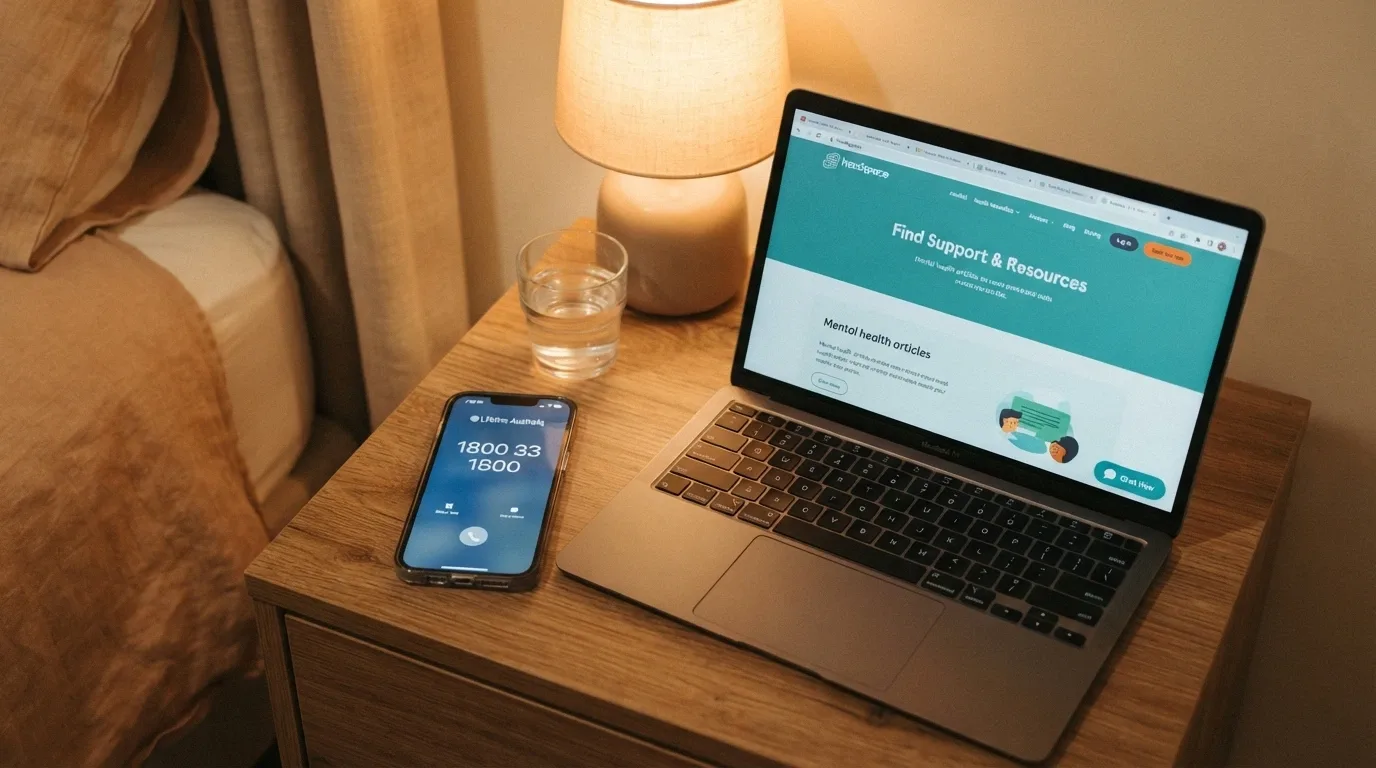
The Australian responsible-gambling infrastructure is built around licensed wagering and land-based services. The National Gambling Helpline is 1800 858 858, free and confidential, staffed 24 hours a day, seven days a week. Online chat and counselling are available through Gambling Help Online at gamblinghelponline.org.au. The BetStop register covered earlier in the section on offshore protections binds every Australian-licensed wagering service — and connects to none of the offshore brands reviewed on this page. About 2.1% of Australian adults — roughly 430,000 people — experience problem gambling, on the Australian Institute of Health and Welfare’s most recent measure. The offshore-casino gap means a meaningful subset of those players — anyone whose gambling has moved offshore — sits outside the BetStop safety net. The right response to the gap is to use the help lines that are independent of any casino. The 1800 number is free, the chat is private, and the advice does not depend on which brand the caller has been using.
Your move — deciding where to play
The legal situation is settled. Every USDT casino that serves an Australian player is operating outside Australian law, and the ACMA’s block list has the power to make any of them unreachable from an Australian IP at any time. The crypto ban has been in force since June 2024 and the 2026 reform will, from January 2027, give banks an explicit mandate to refuse or reverse transactions heading to illegal operators. None of that changes the basic mechanic. A player with a self-custody wallet, a TRC-20 default, a tested low-stakes cashout and a willingness to walk away from a brand that does not pay has the tools to use these sites without incident. The bonus numbers are best read as turnover targets rather than as cash equivalents — a A$2,000 bonus at 40x wagering requires A$80,000 of play before any of it converts. The wagering arithmetic, applied honestly, is what separates a real value calculation from a marketing headline. The operator choice should follow the wagering and the licence disclosure, not the percentage match.
Frequently asked questions
Is it legal to play at online casinos with Tether (USDT) in Australia?
Online casino games are prohibited under the Interactive Gambling Act 2001. The IGA targets the provider, not the player, so individual gamblers are not prosecuted — but every site accepting USDT from Australia is outside the Australian legal framework. Licensed wagering operators cannot accept crypto at all (since 11 June 2024), and offshore casinos have no Australian licence because none exists.
What is the difference between TRC-20, ERC-20 and BEP-20 when depositing USDT at a casino?
TRC-20 runs on Tron and costs roughly A$1 per transfer with 1–3 block confirmations at about three seconds each. ERC-20 runs on Ethereum and costs A$5–A$30 depending on congestion, with 12 confirmations typically taking 3–5 minutes. BEP-20 runs on BNB Smart Chain and costs A$0.10–A$0.30, but has narrower casino support and shares Ethereum’s address format — wrong-network sends can fail silently.
How long does a USDT withdrawal take from an online casino?
After internal approval, USDT on TRC-20 typically clears within 15–45 minutes with about A$1 in network fees. ERC-20 takes 3–5 minutes for network confirmation plus the same internal delay. The internal casino processing — fraud and bonus-wagering checks, identity verification on the first withdrawal — is usually the larger time cost.
Can I get a welcome bonus when depositing with Tether at an online casino?
Yes. Most USDT casinos apply the same welcome offers to Tether deposits as to other methods. Rocket Play runs 100% up to A$1,000 plus 100 free spins at 40x wagering; Skycrown runs 100% up to A$2,000 plus 100 free spins at 40x bonus / 30x FS. The bonus percentage does not depend on the deposit method — only the wagering, validity and game exclusions matter.
Do I need to complete KYC verification to play at a USDT casino?
Most operators allow USDT deposits and play without KYC, but require identity verification before the first withdrawal — typically a passport and a proof of address. The blockchain itself is a public permanent ledger, so USDT is not anonymous; once an address is connected to an identity, the full transaction history is visible. No stablecoin offers meaningful privacy.
What is the minimum deposit amount for Tether at online casinos?
Minimums vary by operator. Rocket Play and WinSpirit set A$30 as the floor; Fair Go is lower at A$20; Rainbet’s Wager Lock starts at A$30 with a A$700 cap on the qualifying deposit. The minimum is set by the casino rather than by the network — TRC-20 itself carries no minimum beyond the network fee.