
Solana Casino Comparison Australia: Speed, Fees and the Legal Reality of Offshore SOL Play
Solana moved from a niche crypto experiment to the default rail for fast, low-cost casino deposits in the space of a few years. The block time clocks in around 400 milliseconds, the average fee sits at roughly $0.032, and a deposit typically reaches a casino balance in under ten seconds. Australian players who have used Bitcoin or Ethereum for the same job have watched SOL do it for a fraction of the cost and a fraction of the wait. The natural question follows: which Solana casino is worth the SOL you intend to deposit, and what does the law actually say about you placing that bet?
This comparison ranks ten offshore Solana casinos on licence status, welcome bonus net of wagering, SOL withdrawal speed and AU accessibility. Every operator in the set is unlicensed in Australia, because no online casino licence exists here under the Interactive Gambling Act 2001. The comparison is honest about that gap and ranks the operators on what is left: speed, bonus substance, withdrawal limits and the friction of getting your money out.
Current as of 18 October 2026 · Licence claims checked against the ACMA register and operator-published terms.
Table of Contents
- Why Australian Players Are Turning to Solana Casinos in 2026
- SOL Deposits Hit Your Balance in Seconds — What That Speed Actually Costs You
- Provably Fair, On-Chain and Brutally Fast — the Games SOL Actually Funds
- No, a Solana Casino Is Not Licensed in Australia — Here Is What That Means
- Staying Safe When the Offshore Operator Has No Obligation to Protect You
- The Solana Casinos Australians Can Actually Access — Compared Point by Point
- How We Evaluated These Solana Casinos
- What You Should Actually Do About Solana Casinos as an Australian Player
- Frequently Asked Questions
Why Australian Players Are Turning to Solana Casinos in 2026
What a Solana casino actually is — and how it differs from a standard online casino
A Solana casino is an online casino that runs on the Solana blockchain for deposits and withdrawals, often for game logic as well. The defining feature is wallet-based access: a player connects a Phantom or Solflare wallet, the casino reads a public key, and play begins without an email, password or identity check at the front door. SOL is the rail. SPL tokens and NFTs ride the same network and can fund play at operators that accept them.
A standard online casino sits on a bank-rail deposit flow — card, PayID, BPAY — and runs through a centralised account with username, password and KYC verified before the first withdrawal. Solana casinos sit on the opposite model. The wallet is the identity. The chain is the ledger. House edges, bet settlements and provably fair seeds can live on chain or alongside it. The practical difference the player notices is speed: SOL deposits credit in under ten seconds, and SOL withdrawals queue for minutes rather than days.
How this comparison ranks the field — and what it does not cover
The comparison ranks ten offshore operators, drawn from sources including CryptoCasinoHouse, VIP-Grinders, Casipto, WagerScope, BitcoinChaser and the operators’ own published terms. Four evaluation dimensions drive the ranking: licence status (checked against the ACMA register, with offshore regulators Anjouan and Curaçao noted where applicable), welcome bonus net of wagering requirements, SOL withdrawal speed from published testing and AU accessibility (whether the operator serves Australian accounts, whether crypto deposits trigger bonus exclusions, whether VPN is allowed).
What the comparison deliberately leaves out: a recommendation of one operator as the place to play. The legal reality in Australia is that every Solana casino reviewed here is offshore and unlicensed. The comparison ranks; the reader decides.
The Australian Solana casino landscape in 2026 — offshore by necessity
Every Solana casino an Australian player can access is offshore. Online casino, online pokies and in-play sports betting are prohibited under the Interactive Gambling Act 2001 — there is no licence for any of them, not federally and not in any state or territory. The ACMA enforces the prohibition, investigates complaints and directs Australian ISPs to block illegal sites. Since November 2019, 1,640 illegal gambling and affiliate websites have been blocked, and over 230 illegal services have withdrawn from the Australian market entirely.
The offshore vacuum is what the Solana casino comparison fills. None of the operators ranked here holds an AU licence, because none can. The rest of this page unpacks what that means, what it costs the player and which operators stand out by the criteria a SOL depositor can actually verify.
SOL Deposits Hit Your Balance in Seconds — What That Speed Actually Costs You
| Network | Avg Confirmation Time | Fee per Transaction (AUD) |
|---|---|---|
| Solana (SOL) | 43 seconds | Under A$0.01 |
| Ethereum (ETH) | 3.4 minutes | Variable, typically higher than SOL |
| Bitcoin (BTC) | 23.7 minutes | A$5–20 during congestion |
Solana’s headline speed is real. The cost of that speed, in fees, in transparency and in the no-KYC trade-off, is what this section unpacks.
Funding your play with SOL — the mechanics, speeds and costs
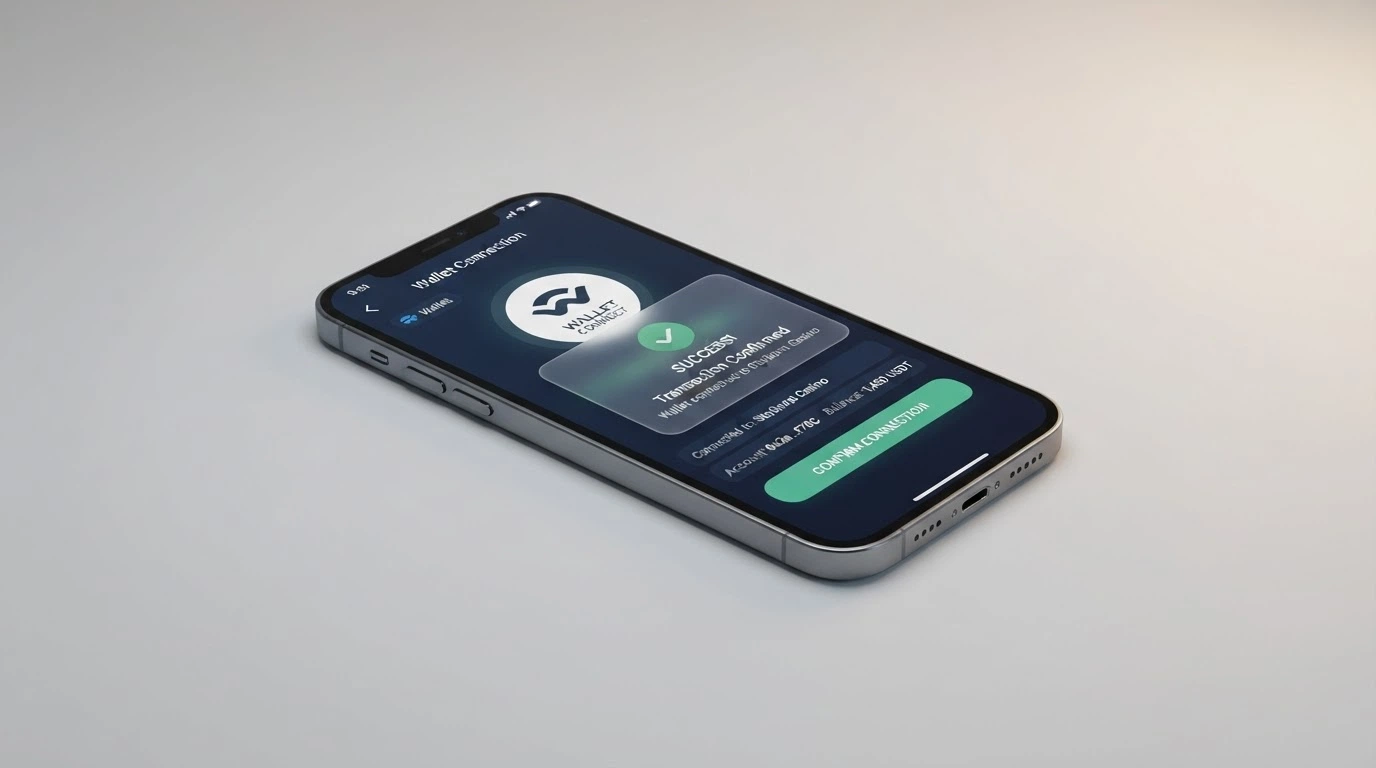
A SOL deposit runs from wallet to casino balance in a sequence the player can complete in a few taps. Open Phantom or Solflare, copy the casino’s deposit address or scan its QR code, enter the amount and confirm. The transaction hits the network in roughly 400 milliseconds and reaches finality in seconds. The casino’s deposit page usually credits the balance within ten seconds of the first confirmation — wall-clock time from wallet submit to playable balance.
The fee reality matches the speed. Average SOL transaction fees run about $0.032 per transaction and rarely climb above $1 even during network congestion. By comparison, Bitcoin fees routinely reach A$5–20 during busy periods and Ethereum fees swing with gas markets. For a player moving A$100 of SOL into a casino and back, the on-chain cost rounds to nothing. The wallet itself must keep a tiny balance on chain — about 0.001 SOL, roughly $0.15 — as a rent-exempt minimum. It is the price of admission to the network, paid once and forgotten.
The 43-second average SOL confirmation time is not theoretical. Measured from wallet submission to balance credit, it outpaces Bitcoin (23.7 minutes) and Ethereum (3.4 minutes) by margins that matter to a player chasing a time-sensitive bonus or a live bet. The speed advantage is the reason Solana casinos exist as a category.
Wallet-only access and the no-KYC promise — what it delivers and what it does not
Wallet-only sign-up is the signature feature of most Solana casinos. Connect a wallet, deposit SOL, play. No email, no password, no passport scan, no utility bill. The friction that licensed wagering operators in Australia must build in — customer-set deposit limits, activity statements, KYC before first withdrawal — is absent at wallet-only casinos.
What the no-KYC promise delivers is frictionless entry. What it does not deliver is anonymity. KYC escalation triggers remain at the operator’s discretion: a large withdrawal, a flagged deposit pattern or a manual review can demand documents at any time. The wallet-only experience is a default, not a guarantee. Daily SOL withdrawal limits at no-KYC casinos run 25–50 SOL, which is enough for most recreational play but caps the high-roller ceiling.
The transparency trade-off — why Solana is fast, not private
Solana’s 400-millisecond block time makes it the fastest major chain for deposits. It also makes it the most traceable. Every transaction settles near-instantly and lands on a public ledger that anyone can read. The chain sees what the casino sees: deposit address, withdrawal address, bet timing and balance movement. As one industry analysis put it: Solana is the wrong choice if privacy matters — the fastest blockchain is also the most transparent.
For a player who values speed and cost over anonymity, the trade-off is fine. For a player who chose crypto specifically to keep their gambling off their bank statement, the trade-off is the wrong way around. A VPN does not change the on-chain reality — it changes only the IP address the casino logs. The transaction history remains visible to anyone with the wallet address, including the operator, including any chain-analytics firm that later buys the data.
SOL tokens, SPL assets and NFT-funded casino play
Beyond the SOL coin, the Solana network carries SPL tokens and NFTs, both of which some casinos accept. BC Game supports 150+ cryptocurrencies, including SPL tokens, and rolls them into the same deposit-and-play flow. Rollbit goes further with NFT integration, allowing NFT-funded play and SPL token support alongside SOL. The model is straightforward: an SPL token is treated as a casino chip with its own balance; an NFT can be connected to a wallet and used for gated access or funded play at operators that support it.
For an Australian player, the practical question is whether the operator accepts SOL directly first. SPL and NFT support is an extra, not a substitute. The simplest path is SOL in, SOL out; anything else requires the operator to have built the integration and to publish the rate.
Free-to-enter play at no-KYC Solana casinos — demo mode without the paperwork
Most Solana casinos offer demo or fun-mode play that costs nothing and asks nothing of the player. Wallet connection is optional in demo; even a player without SOL loaded can spin a few reels to test a game. The path to real-money play remains a deposit.
A rare exception in the AU-facing part of the market is Royal Reels, which offers new Australian players an A$10 no-deposit bonus with 30x wagering. It is the closest a wallet-only Solana casino gets to letting an Australian player try the lobby without committing SOL first. Royal Reels’ SOL acceptance is not confirmed in the sources checked; the no-deposit entry point may be fiat-only. Either way, the structure of the offer — free credit, real wagering requirement — is worth noting for what it says about how the casino wants a player through the door.
Provably Fair, On-Chain and Brutally Fast — the Games SOL Actually Funds
Solana casinos carry a distinct game mix. Provably fair originals dominate the lobby: Dice, Crash, Limbo, Plinko, Mines and Wheel sit alongside Blackjack, Baccarat, Roulette and Keno. Pokies and slots from third-party providers fill out the rest. The defining feature is that the house edge is published, not hidden.
Provably fair — what the blockchain actually verifies and what it cannot
Provably fair means the outcome is checkable after the fact. A provably fair game generates a server seed, hashes it, shows the player the hash before the bet, lets the player supply their own seed, then combines the two after the bet settles. The player can replay the result against the published seeds and confirm the outcome was not altered. Crash, Dice, Limbo, Plinko and Mines are the standard provably fair formats at Solana casinos.
What provably fair does not mean is that the house has no edge. Each game carries a published house edge — typically 1% on Dice, climbing to around 4% on Wheel segments. The math works the same as a fiat casino: the player loses on average over time. The blockchain verifies that the game played the round it said it played; it does not verify that the round was generous. Provably fair is transparency about the mechanism, not generosity about the result.
Crash, dice and flip — the Solana-native game types
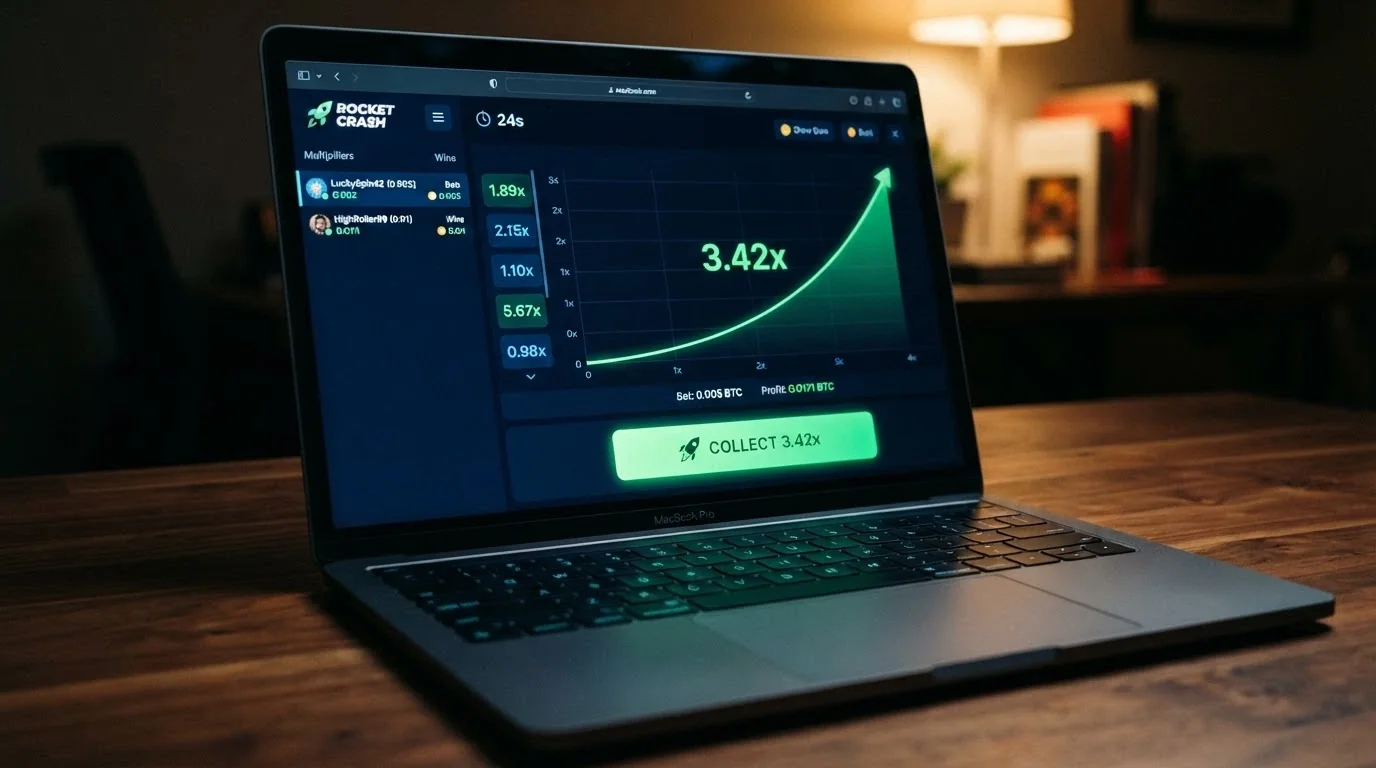
Crash is the format built for the crypto-native casino. A multiplier climbs from 1x upward; the player cashes out before it crashes. The maximum multiplier on offer at Solana casinos runs up to 1,000,000x in theory, with realistic play clustering well below that ceiling. CryptoGames’ Dice 2.0 on Solana caps the maximum bet at 2,600 SOL and the maximum win at 260 SOL per bet — concrete ceilings that bound the bankroll the game will accept.
Dice is the simplest: roll a 100-sided die, bet over or under, settle at a published multiplier. The house edge on Dice runs around 1%, which makes it one of the cheapest casino games to play on a per-bet basis. Flip and coin-flip crash variants sit between Crash and Dice in volatility — a binary outcome with a published edge. These three formats are what the crypto casino was built around; everything else is borrowed from the fiat lobby.
Pokies and slots funded with SOL — what the RTP numbers actually mean
Slots at Solana casinos run the same RTP bands as fiat online casinos. The working cluster of published RTP defaults sits between 95.0% and 96.7%, with outliers from 88% on legacy jackpot titles to 98% on high-return releases. Four RTP bands account for most multi-version slot releases: roughly 96.x%, 94.x%, 92.x% and 88.x%.
A handful of specific titles carry concrete numbers worth carrying into the comparison. Pragmatic Play’s Gates of Olympus runs 96.50% RTP at standard and 96.58% on bonus buy, with high volatility and a 5,000x max win. Hacksaw Gaming’s Wanted Dead or a Wild sits at 96.38% RTP and a 12,500x max win. Relax Gaming’s Money Train 3 is at 96.1% RTP and a 100,000x max win. Play’n GO’s Book of Dead defaults to 96.21%. Nolimit City’s Mental — extreme volatility as the studio’s positioning — runs 96.08% RTP and a 66,666x max win. Across tracked providers, NetEnt posts the highest average RTP at 96.39%.
The gap between published RTP and effective return is real. A 96.5% slot returns A$96.50 per A$100 wagered over the long run — thousands of spins, not a session. A player who loads A$200 of SOL and plays for an hour sees variance, not the long-run average. The published RTP is what the math promises; what the player experiences is a sample, and the sample swings hardest at high-volatility titles.
Live dealer and table games at Solana casinos
Blackjack, baccarat and roulette appear in most Solana casino lobbies. The live-dealer feed is the same third-party stream every crypto casino uses — the same studios, the same dealers, the same game tempo. SOL is converted at the table into a chip value, bets are placed in chip units and winnings convert back to SOL at the same rate. There is nothing Solana-specific about the live-dealer experience beyond the deposit and withdrawal rail.
Game breadth varies across operators. Stake’s 4,200+ games is the largest library in the set; smaller operators carry a few hundred. The breadth gap matters to a player who wants provider choice; it matters less to a player who plays provably fair originals and a handful of slots.
No, a Solana Casino Is Not Licensed in Australia — Here Is What That Means
The Interactive Gambling Act and why every Solana casino sits offshore
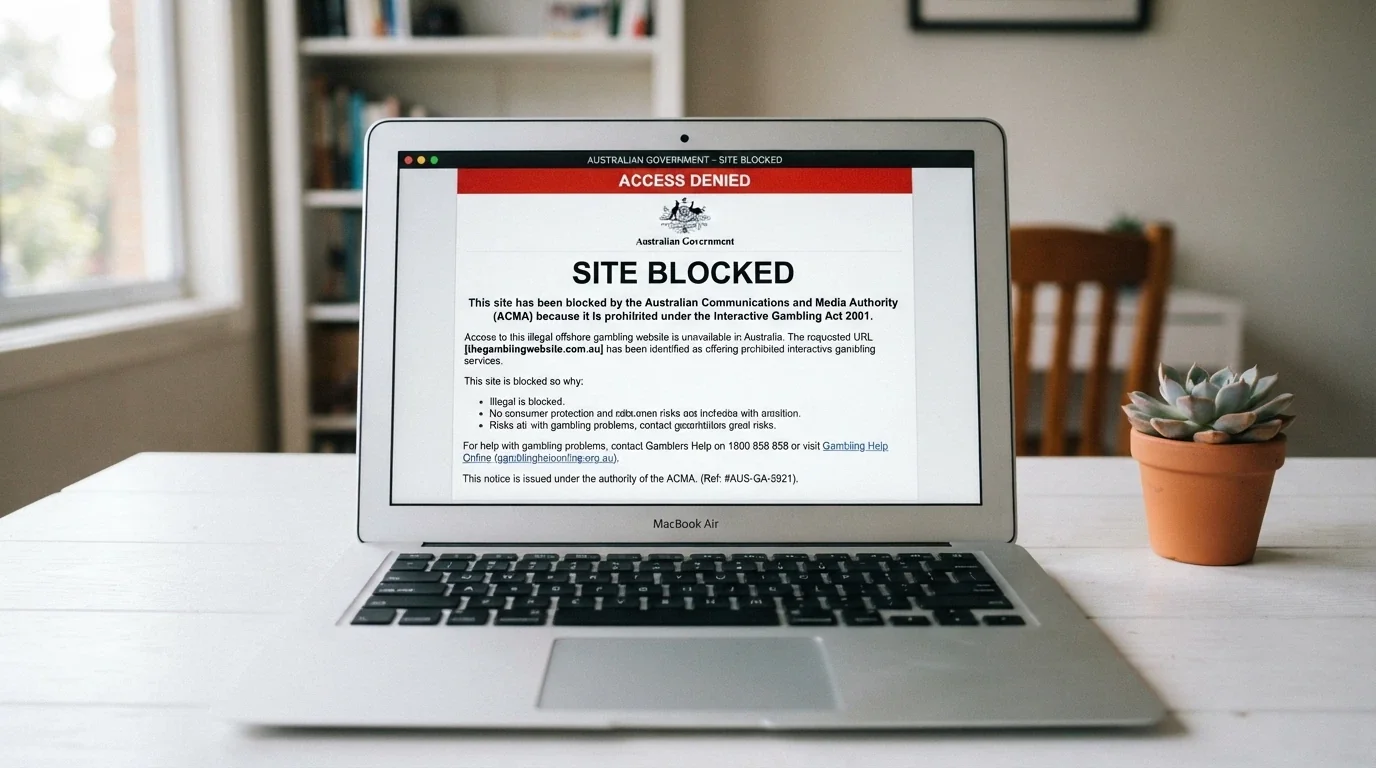
The Interactive Gambling Act 2001 makes it an offence to provide an online casino, online pokies or in-play sports betting to a person in Australia. There is no licence for any of these products, not federally and not in any state or territory. The Australian Communications and Media Authority enforces the prohibition: it investigates complaints, issues formal warnings, refers operators for civil penalty proceedings and directs ISPs to block illegal gambling sites.
The penalty scale is built for providers, not players. Civil penalties reach up to $2,475,000 per day for an individual and $12,375,000 per day for a corporation providing prohibited services. Between January and March 2026, the ACMA received 422 enquiries and complaints, launched 25 formal investigations covering 60 gambling websites and identified at least one IGA breach in 23 cases — 22 of those involving prohibited interactive gambling services offered to Australian customers. The individual player is not prosecuted under the IGA. The Act targets the provider, not the bettor.
The crypto payment ban and what it means for your SOL deposits
Since 11 June 2024, credit cards, credit-related products and digital currency — crypto — are banned as payment methods for online wagering in Australia, under the Interactive Gambling Amendment (Credit and Other Measures) Act 2023. A site that accepts SOL from an Australian customer is operating outside the payment rules that apply to licensed wagering operators. The ban targets licensed wagering, not offshore casinos directly, but the practical effect is the same: SOL flowing from an Australian wallet to an offshore casino sits outside every Australian consumer-protection regime that exists for legal gambling.
From 1 January 2027, the picture tightens further. Banks and payment providers gain express authority to block transactions to illegal gambling operators. The offshore Solana casino is not the direct target, but a SOL purchase on a regulated Australian exchange that flows on chain to an offshore casino sits in a rail the bank can now interrupt.
What you give up when you play offshore — consumer protections that do not travel
Playing at an offshore Solana casino means forfeiting a specific list of protections an Australian takes for granted at a licensed wagering operator. There is no BetStop coverage: the offshore casino is not connected to the National Self-Exclusion Register and will keep taking deposits from a self-excluded Australian. There is no ACMA complaints body for withheld funds: the ACMA enforces the IGA against providers, not against operators who refuse to pay out a balance. There is no Australian consumer-law recourse if the operator disappears, blocks the account or voids a bonus.
As the ACMA has put it: even if a service looks legitimate, it’s unlikely to have important customer protections — Australians who use illegal gambling services risk losing their money. The operator’s offshore licence — Anjouan or Curaçao — sits in a jurisdiction that offers no practical path to recovery for an Australian player. The site itself can be blocked at any time, with a balance still sitting on it. Over 230 illegal services have withdrawn from the Australian market entirely since 2017; their players’ balances went with them.
The 2026 reform wave — what changes in 2027 and what stays the same
The Interactive Gambling Amendment (Gambling Reform) Bill 2026 passed Parliament on 19 August 2026. Its measures commence on 1 January 2027. The headline changes: an hourly cap of three wagering advertisements per hour between 6:00 am and 8:30 pm, a live-sport advertising blackout, broadcast odds restrictions, and a ban on athlete, celebrity and influencer promotion. Inducement marketing is restricted in the period after sign-up and after a BetStop deregistration.
The reform is built for the licensed wagering market. The offshore Solana casino sits structurally outside these rules: no AU advertising licence to lose, no AU broadcaster to comply with, no AU inducement framework to breach. The reform wave tightens what licensed operators can do in Australia and leaves the offshore casino’s behaviour on the player side unchanged. The 2027 bank-blocking provision is the closest the reform comes to the offshore model — and even that targets the on-ramp, not the casino itself.
Staying Safe When the Offshore Operator Has No Obligation to Protect You
BetStop and the offshore gap — what self-exclusion cannot reach
BetStop, the National Self-Exclusion Register, launched on 21 August 2023. As of 31 March 2026, 59,830 Australians had registered, and 37,247 of those registrations were active exclusions. The register covers approximately 150 licensed wagering providers in Australia — every operator licensed to take a bet on sport or racing under a state or territory regime. Self-exclusion periods run from a minimum of three months up to lifetime; 78% of registrants are under 40 and 38% have chosen lifetime exclusion.
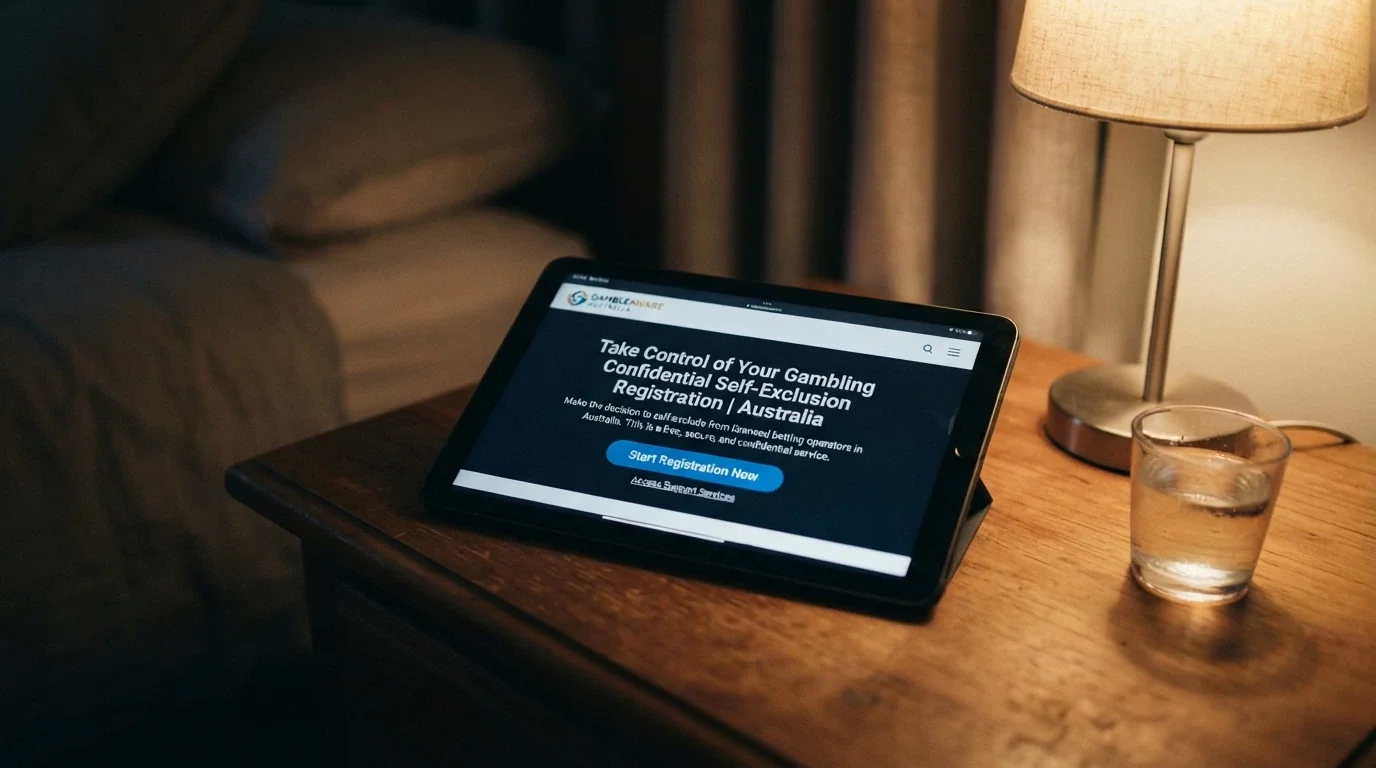
The register does not cover offshore casinos. A BetStop registration blocks a player from every licensed wagering operator in Australia. It does not block a SOL deposit to BC.Game, Stake, Roobet or any other offshore operator on this page. The offshore casino will keep taking a self-excluded person’s money, because the offshore casino is not connected to the register and not bound by it. The exclusion works where the law reaches; the offshore model sits outside that reach.
Deposit limits, activity statements and the self-help tools Australian punters actually have
Licensed wagering operators in Australia must offer customer-set deposit limits and activity statements under state and territory conditions. The toolkit is familiar to any Australian who has used a corporate bookmaker: a daily, weekly or monthly deposit cap, a statement of activity on request, a take-a-break function. The PayID, Osko and BPAY rails that Australian players use at licensed operators produce the bank-statement trail that supports the activity-statement review.
The offshore Solana casino offers none of this by default. Some wallet-only casinos publish a deposit-limit toggle inside the account; most do not. There is no activity statement because there is no bank-statement trail to compare against. The player is the compliance officer. The 2027 bank-blocking provision changes the on-ramp; it does not install a deposit limit at the casino.
Gambling harm in Australia — the numbers every punter should see before depositing SOL
The prevalence data is the floor of this page. About 2.1% of Australian adults — roughly 430,000 people — experience problem gambling, with the Australian Institute of Health and Welfare putting high-risk gambling at 1.8% in 2022. Australians lose approximately $25 billion a year on legal forms of gambling. In 2022, 11% of Australians reported gambling online in the previous six months, up from 8% in 2020. The trend line on online participation is upward; the trend line on harm is what the upward line costs.
The help infrastructure exists and it is free. The National Gambling Helpline is 1800 858 858, confidential, staffed 24 hours a day, 7 days a week. Gambling Help Online, at gamblinghelponline.org.au, provides online chat and counselling. BetStop covers the licensed wagering market. For an Australian choosing to play at an offshore Solana casino, the responsible course is to know these numbers and know these resources before the first deposit.
The Solana Casinos Australians Can Actually Access — Compared Point by Point
How this ranking was built — the criteria that sorted the list
The ranking rests on four evaluation dimensions. Licence status is the first: each operator is checked against the ACMA register (no AU online casino licence exists) and the offshore regulator is named where the operator publishes one. Welcome bonus net of wagering is the second: the headline figure is set beside the wagering requirement, the validity window and any cashout cap, so the reader sees the offer as a whole. SOL withdrawal speed is the third: queue time from operator-published testing and the on-chain settlement that follows, with minimum withdrawal noted. AU accessibility is the fourth: whether the operator serves Australian accounts, whether crypto deposits trigger bonus exclusions and whether VPN use is permitted.
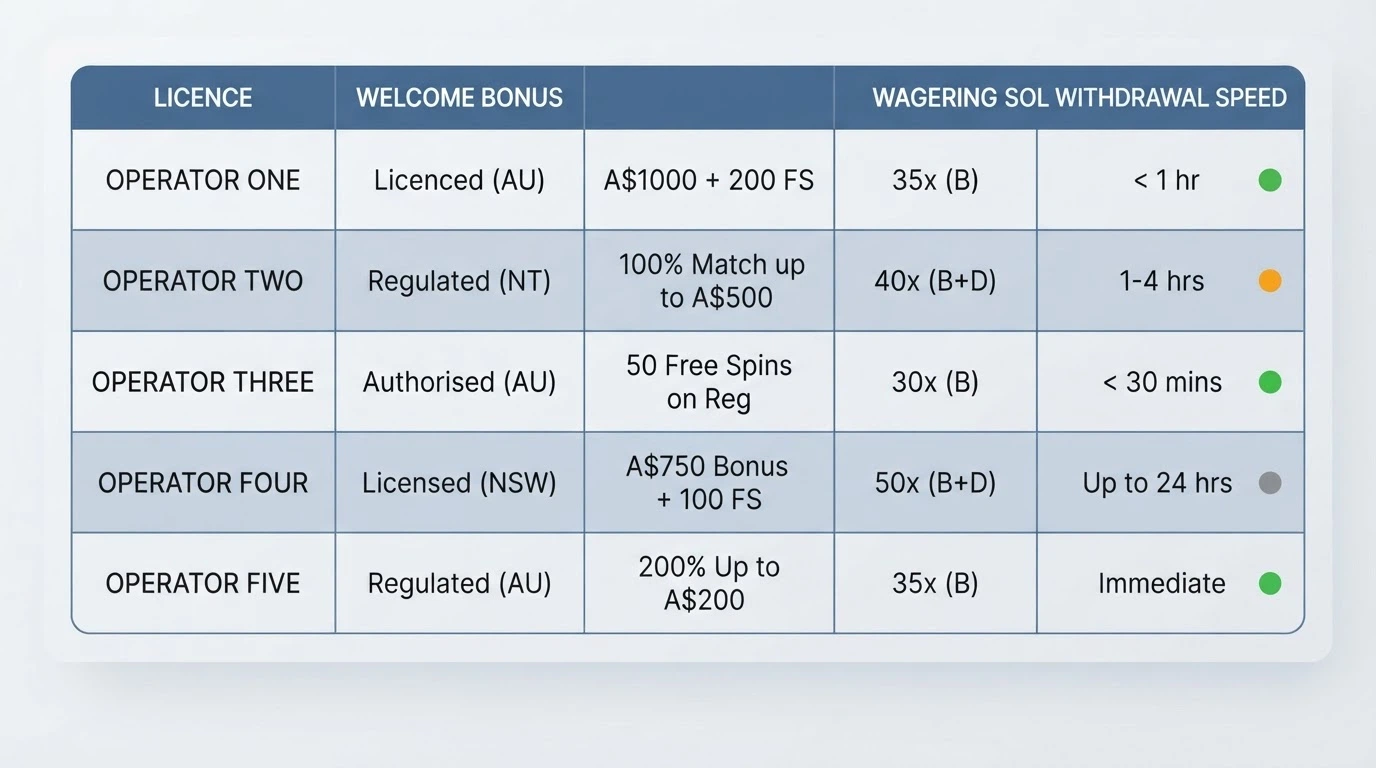
The ranking weights these dimensions qualitatively. No scoring formula is published; the order reflects where each operator stands strongest across the four. Where research does not cover a dimension, the no-data marker is used and that row is read accordingly.
Side-by-side comparison — every featured Solana casino at a glance
| Operator | Licence | Welcome Bonus | Wagering | SOL Withdrawal Speed |
|---|---|---|---|---|
| BC.Game | Anjouan | 4-tier up to $4,000 / 220,000 BCD | Varies by VIP tier | 2–10 min queue |
| Stake | Curaçao | No welcome bonus; $100k Daily Race, $75k Weekly Raffle | n/a | ~30 min average |
| Skycrown | Curaçao (OGL/2023/176/0095) | 450% up to A$8,000 + 400 FS | 40x | — |
| Rainbet | Anjouan | $2,100 + 60 FS (Path 2, 3 deposits) | 40x | 2–10 min queue |
| Royal Reels | Not confirmed | 100% up to A$500 + A$10 no-deposit | 30x (no-deposit) | — |
| CoinCasino | Anjouan | 200% up to $30,000 + 50 FS | 60x (10% blocks) | 1–3 min queue |
| Shuffle | Curaçao | 200% up to $2,000 | 35x | Under 1 min queue |
| Rollbit | Not confirmed | — | — | 2–5 min |
| Roobet | Not confirmed | — | — | 3–5 min |
| Duelbits | Not confirmed | — | — | 2–5 min |
The gaps in the table are the gaps in the source data. Skycrown’s SOL withdrawal speed is not reported in the research reviewed; Royal Reels’ SOL acceptance is not confirmed. The operators whose licence is not confirmed — Rollbit, Roobet, Duelbits and Royal Reels — are flagged as such because the operator’s primary source did not publish a verifiable licence at the time of the review.
BC.Game — the 150-crypto veteran with a SOL-native rewards ladder
BC.Game has been operating since 2017 and supports more than 150 cryptocurrencies, including SPL tokens alongside SOL. The welcome offer is structured as a four-tier package worth up to $4,000 or up to 220,000 BCD — BC.Game’s native platform token — unlocking gradually as the player wagers. First deposit alone delivers a 120% match up to $1,000 plus 100 free spins. SOL withdrawals queue in 2–10 minutes with a minimum of about 0.1 SOL, near-instant once broadcast on chain. The licence is Anjouan.
BC.Game is the broadest crypto casino in the set. The slow-unlock welcome structure rewards sustained play rather than a single deposit; the player who intends to stay a month gets more out of the package than the player who deposits once. The 150-crypto breadth is real for a player who wants SPL tokens or altcoins alongside SOL, and the provably fair originals — Dice, Crash, Plinko, Mines, Limbo — sit in the lobby alongside the slot catalogue. For a SOL depositor who wants depth over flash, BC.Game is the strongest fit.
Stake — no welcome bonus, but daily races that dwarf a match offer
Stake does not offer a traditional welcome bonus. The promotion model is ongoing: a $100,000 Daily Race and a $75,000 Weekly Raffle, paid out to active players on a leaderboard. The game library runs to 4,200+ titles across 20+ cryptocurrencies including SOL. SOL withdrawals average about 30 minutes, internal queue time; on-chain settlement is instant once broadcast. The licence is Curaçao.
The absence of a welcome bonus is not a gap for the right player. The player who plans to play daily captures more value from a leaderboard race than from a one-time match, because the match expires and the race pays out every 24 hours. The 4,200-game library is the largest in the set. The Curaçao licence sits where Anjouan sits on other operators in the ranking — a recognised offshore regulator, no AU jurisdiction. For a player who values library breadth and ongoing promotion over sign-up bonus, Stake is the natural pick.
Skycrown — the biggest match bonus in the field, but not for crypto players
Skycrown’s welcome package is the largest headline figure in the comparison: a 450% deposit match up to A$8,000 plus 400 free spins across four deposits. The first deposit alone is 120% up to A$1,200 plus 125 free spins on Wolf Treasure by IGTech. Wagering is 40x the bonus amount; free-spin winnings carry the same 40x. Bonus validity is 14 days for the standard package, 5 days for the high-roller version. Maximum bonus-to-real-money conversion is capped at A$5,000 per welcome bonus. The licence is Curaçao, certificate OGL/2023/176/0095, operated by Hollycorn N.V.
The catch is the audience. Skycrown’s welcome bonus is not available to crypto depositors. An Australian player funding with SOL sits outside the bonus terms; the headline 450% match applies to fiat deposits only. For a SOL depositor, Skycrown is a casino to play at on its own terms, not on its bonus terms. The licence is verifiable; the bonus structure is honest about who it is for; the SOL player is not who it is for.
Rainbet — dual-path welcome with a $50 withdrawal catch
Rainbet offers a choice of two welcome paths. Path 1 is a Wager Lock that unlocks bonus credit at roughly 0.2% per dollar wagered, up to $700. Path 2 is the more traditional structure: $2,100 plus 60 free spins across three deposits (100% up to $700 plus 20 FS on the first, 50% up to $700 plus 20 FS on the second, 100% up to $700 plus 20 FS on the third). Wagering on Path 2 is 40x. Minimum deposit to trigger is $30. The withdrawal cap on Path 2 welcome balances is $50. The licence is Anjouan.
The $50 withdrawal cap on the welcome code balance is the detail that decides who Rainbet suits. A player who intends to deposit, clear the bonus and withdraw is capped at $50 of bonus-derived winnings; anything above that ceiling stays with the casino. Path 1’s wager-unlock structure avoids the cap but delivers less headline value. SOL withdrawal speed sits at 2–10 minutes queue. Rainbet is a fit for a player who reads the cap before claiming and plans around it, not for a player who treats the $2,100 figure as cash.
Royal Reels — the rare AU-facing operator with a no-deposit entry point
Royal Reels gives new Australian players an A$10 no-deposit bonus with 30x wagering on the no-deposit amount, plus a 100% deposit match up to A$500. The AU market share is high relative to other offshore operators reviewed here. The licence status is not confirmed from a primary source in the research reviewed; SOL acceptance is not confirmed either.
The no-deposit entry point is the headline feature. An A$10 free credit with 30x wagering is a real chance to test a lobby without committing a deposit, and the 100% match up to A$500 sits beside it for a player who decides to fund the account. What the entry point does not change is the offshore status: Royal Reels is not AU-licensed, no AU consumer protection applies and the ACMA can block the site. For a player who wants a low-friction first look at an AU-facing casino, the no-deposit offer is the reason to look; the licence gap is the reason to look carefully.
CoinCasino — the lowest SOL withdrawal minimum and a 60x reality check
CoinCasino has the lowest SOL withdrawal floor in the comparison at about 0.05 SOL, with no withdrawal fee. SOL cashouts queue 1–3 minutes. The welcome package is 200% up to $30,000 plus 50 free spins; wagering is 60x with 10% release blocks, meaning the bonus pays out in 10% increments as wagering clears. The licence is Anjouan.
The 60x wagering with 10% blocks is the figure that decides who CoinCasino suits. A player who deposits A$1,000 and claims the full 200% bonus must wager the bonus amount 60 times before any of it converts to withdrawable cash, and the conversion happens in ten pieces. The headline $30,000 is real; the path to withdrawing it is long. The SOL withdrawal minimum at 0.05 SOL means a player can cash out small amounts without fee, which is a genuine operational advantage. For a low-roller who values low minimums and is not chasing the welcome headline, CoinCasino’s withdrawal mechanics are the strongest in the set.
Shuffle — sub-one-minute SOL cashouts with a $1.25 sting
Shuffle releases SOL faster than any other featured operator: under one minute of queue time, near-instant on-chain once broadcast. The welcome bonus is 200% up to $2,000 with 35x wagering. The licence is Curaçao. The withdrawal fee is $1.25 flat per cashout — the only withdrawal fee among the Solana casinos reviewed.
The trade-off is mechanical. The fee is small in absolute terms, but on a chain where the actual on-chain cost rounds to zero, charging a flat fee per cashout is a choice the operator has made. A player who intends to cash out frequently pays the fee repeatedly; a player who intends to play through and withdraw once pays it once. The 35x wagering is the lowest in the set, and the $2,000 ceiling is modest. Speed here has a price list, and it reads $1.25 per cashout — the fastest exit in the set, billed by the trip.
Rollbit — SPL tokens, NFTs and email-only KYC
Rollbit supports SPL tokens and integrates NFTs into the casino model. The SOL withdrawal speed is 2–5 minutes; the daily SOL withdrawal limit on email-only KYC is 30 SOL. VPN use is handled case-by-case. The licence is not confirmed from a primary source in the research reviewed.
The SPL-and-NFT-native model is what differentiates Rollbit in the set. A player who holds SPL tokens or NFTs and wants to use them at a casino has one strong option in this comparison; for a SOL-only depositor, Rollbit is a competent operator rather than a differentiated one. The 30 SOL daily limit caps a high-roller ceiling; the email-only KYC default means a full KYC escalation is available if the player wants to lift the cap. The licence gap is the unresolved part of the profile.
Roobet — 25 SOL daily cap and a hard VPN block
Roobet enforces a 25 SOL daily withdrawal ceiling on email-only KYC verification. SOL withdrawals queue 3–5 minutes. VPN connections are blocked outright. The licence is not confirmed; the welcome bonus is not stated in the sources reviewed.
Roobet is the most restricted operator in the comparison on three measures that matter to a SOL depositor: the daily SOL ceiling is the lowest in the set, the VPN policy is the strictest, and the licence is unconfirmed. For a player who does not need a VPN and plays within the 25 SOL daily ceiling, the operator is functional; for a player who travels, uses a VPN for any reason or intends to withdraw more than 25 SOL on a single day, Roobet is the wrong fit. The welcome bonus gap is information the reader needs to know: the operator either does not offer one or did not publish it in the sources checked.
Duelbits — 40 SOL daily cap with VPN freedom
Duelbits offers the highest daily SOL withdrawal ceiling among the no-KYC operators at 40 SOL. SOL withdrawals queue 2–5 minutes. VPN use is explicitly allowed. The licence is not confirmed; the welcome bonus is not stated in the sources reviewed.
The combination of high daily cap, short queue and permissive VPN policy makes Duelbits the most flexible no-KYC operator in the set for a player whose circumstances require any of those three. The licence gap is the same caveat that applies to Rollbit and Roobet. The welcome bonus gap means a player who values a sign-up offer has nothing to compare on at Duelbits — the operator either does not run one or did not publish it.
A worked example — why a $2,000 bonus is not worth $2,000
The Shuffle welcome package illustrates how a headline bonus shrinks once the wagering requirement and the house edge are applied. A $2,000 bonus with 35x wagering means $70,000 of required turnover before the bonus converts to withdrawable cash. At a slot RTP of 96.50% — Pragmatic Play’s Gates of Olympus as the concrete example — the expected loss on that $70,000 turnover is $70,000 multiplied by (1 minus 0.965), which is $2,450. The headline bonus is $2,000; the expected cost of clearing it is $2,450. The player is, on average, paying $450 more than the bonus pays out.
The figure is a statistical estimate — an average over thousands of spins under the stated assumptions, not a guarantee for any single player. Variance will deliver wins to some sessions and losses to others. The expected loss is the long-run centre the session swings around. The $2,000 headline and the $2,450 expected loss are both true; the gap between them is what the wagering requirement actually costs.
How We Evaluated These Solana Casinos
The comparison draws on operator-published terms, public review sources (CryptoCasinoHouse, VIP-Grinders, Casipto, WagerScope, BitcoinChaser, CasinoVAGuide, SlotRandomizer, Track360, SLM.Games, Playcasino.com, Casino.guru, RushLayer) and the ACMA register for the licence check. Speed figures are taken from published testing, not from primary deposit testing by this comparison. RTP and volatility figures are taken from per-title published sources where available; provider averages are used where per-title data is absent.
The limits of the data are worth naming. Self-reported withdrawal speeds are the publisher’s own queue-time measurements, not a controlled benchmark. No primary deposit testing was conducted. Some operators did not publish full terms in the sources checked; the gaps appear as the no-data marker in the comparison table and as qualitative language in the write-ups. Where research marks a licence as unverified or not confirmed, that qualifier carries into the write-up verbatim. The ACMA register remains the benchmark for licence status against an Australian audience, because it is the only register that actually governs what an Australian player is doing.
What You Should Actually Do About Solana Casinos as an Australian Player
The speed argument is real. Solana deposits credit in under ten seconds; SOL fees round to nothing; the on-rail experience is faster and cheaper than Bitcoin or Ethereum for the same job. For a player who values that speed above everything else, the Solana casino model delivers what it promises on that dimension and only on that dimension.
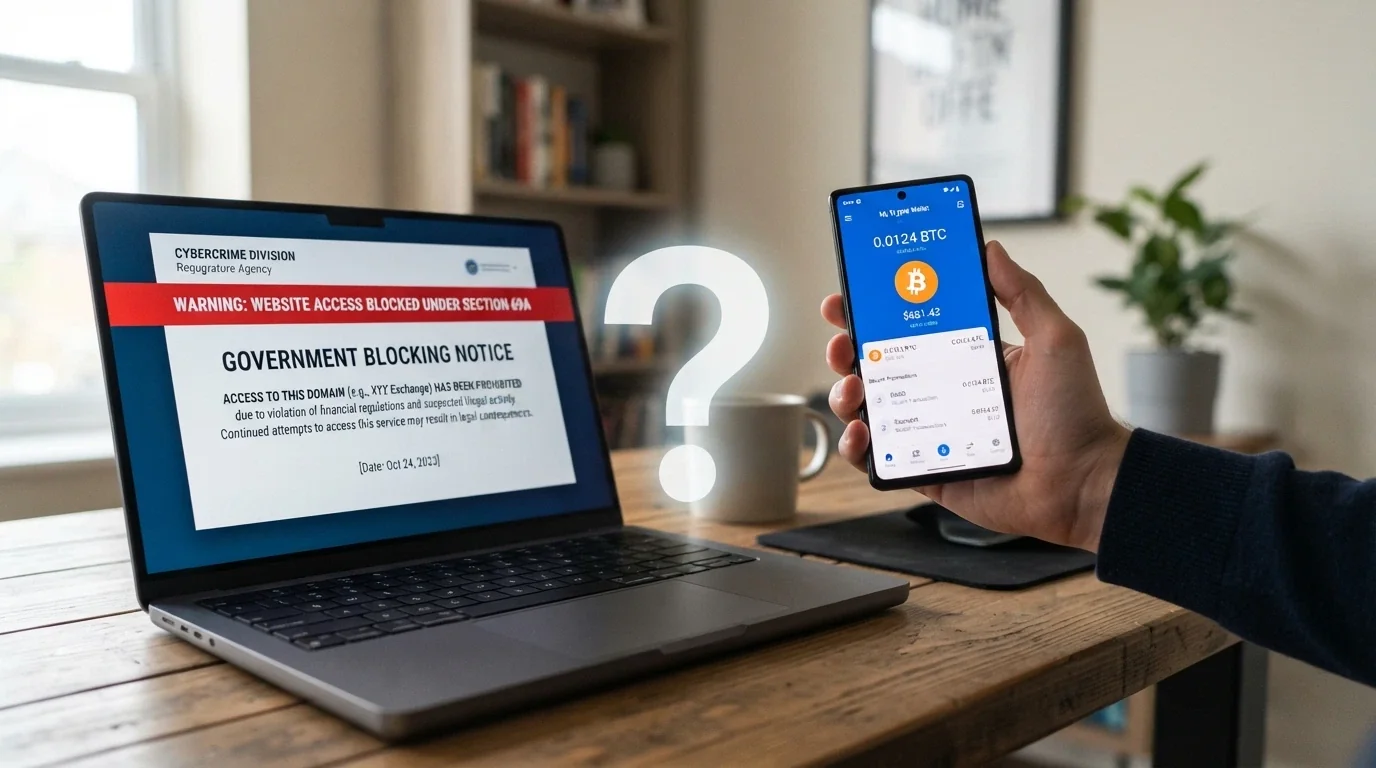
The legal exposure is structural. Every Solana casino available to an Australian is offshore and unlicensed. The IGA targets the provider, not the player, so the immediate risk is not prosecution — it is the absence of every Australian consumer protection that exists for legal gambling. No BetStop coverage, no ACMA complaints body for withheld funds, no Australian consumer-law recourse, no deposit limits or activity statements by default. The site can be blocked at any time, with a balance still on it; over 230 illegal services have already withdrawn from the Australian market entirely.
The no-KYC promise is thinner than it looks on a transparent chain. Solana is fast because the chain is open; that openness is the opposite of privacy. The wallet is the identity; the chain is the ledger. A player who chose crypto specifically to keep their gambling off their bank statement has chosen the wrong chain for that goal. The 400-millisecond block time is also the time it takes for a transaction to become permanently traceable.
The bonus numbers shrink hard under wagering. A $2,000 welcome bonus with 35x wagering means $70,000 of required turnover; at 96.50% RTP, the expected loss on that turnover is $2,450. The headline is a marketing figure; the wagering requirement is the real cost, and it exceeds the bonus for most slot RTPs in the working cluster. The 2027 bank-blocking provision changes the on-ramp; it does not change the wagering math.
BetStop and the helpline are the floor. The National Self-Exclusion Register covers the licensed wagering market and does not reach offshore casinos; the National Gambling Helpline is 1800 858 858, free and 24/7; Gambling Help Online sits at gamblinghelponline.org.au. For a player who chooses to play offshore, the responsible course is to know these resources before the first SOL deposit and to set personal limits the casino will not set for them.
If a player chooses to play offshore, the practical posture is narrow: fund a wallet with SOL you can afford to lose, never leave a balance sitting on a site the ACMA can block tomorrow, withdraw to a self-custodial wallet rather than leaving funds on the operator, read the bonus terms before claiming and treat the wagering requirement as the real cost. The comparison above ranks; it does not recommend. The legal and structural picture does the recommending, and it recommends caution.
Frequently Asked Questions
How fast are Solana (SOL) casino deposits and withdrawals?
SOL deposits typically reach a casino balance in under ten seconds wall-clock time from wallet submission, with average confirmation at about 43 seconds. Withdrawals vary by operator: BC.Game queues in 2–10 minutes, CoinCasino in 1–3 minutes, Shuffle in under one minute and Stake in about 30 minutes. On-chain settlement is near-instant once the queue releases.
What is the best welcome bonus at a Solana casino in 2026?
The largest headline figure is Skycrown’s 450% up to A$8,000 plus 400 free spins, but the bonus excludes crypto depositors and so does not apply to a SOL-funded player. Among operators that serve SOL depositors, BC.Game’s 4-tier package up to $4,000 or 220,000 BCD is the broadest, while Shuffle’s 200% up to $2,000 with 35x wagering is the lowest wagering requirement in the set. The “best” bonus depends on whether wagering, cashout cap or match percentage matters most to the player.
What wallets do I need for Solana casino gambling?
A Solana-compatible wallet is required: Phantom and Solflare are the two most widely supported at Solana casinos. The wallet must hold a small rent-exempt minimum — roughly 0.001 SOL (about $0.15) — to remain active on chain. Demo play is available without a wallet at most Solana casinos; real-money play requires a deposit from the connected wallet.
What happens if an offshore Solana casino blocks Australian withdrawals?
The ACMA enforces the Interactive Gambling Act against providers, not against operators who refuse to pay out balances. There is no Australian consumer-law recourse for funds withheld by an offshore casino; the operator’s licence (typically Anjouan or Curaçao) sits in a jurisdiction that offers no practical recovery path. The site itself can be blocked by Australian ISPs at any time, which can render the balance inaccessible. This is the core practical risk of playing offshore.
How does Solana compare to Bitcoin for online casino deposits?
Solana deposits confirm in about 43 seconds on average versus 23.7 minutes for Bitcoin; SOL fees average under A$0.01 versus A$5–20 for Bitcoin during congestion. Solana carries a throughput advantage (up to 65,000 TPS theoretical) but is more transparent on chain than Bitcoin — every transaction is publicly traceable. For speed and cost, SOL wins; for privacy, the two chains differ from fiat rails but Solana is the more traceable of the two.
Are crypto deposits banned at licensed Australian wagering operators?
Yes. Credit cards, credit-related products and digital currency (including crypto) are banned as payment methods for online wagering in Australia, with the ban commencing on 11 June 2024 under the Interactive Gambling Amendment (Credit and Other Measures) Act 2023. From 1 January 2027, banks and payment providers gain express authority to block transactions to illegal gambling operators, which extends the ban’s reach into the on-ramp from Australian bank accounts.