
$2 Deposit Casinos in Australia: Why the Cheapest Entry Comes With the Highest Distance from the Law
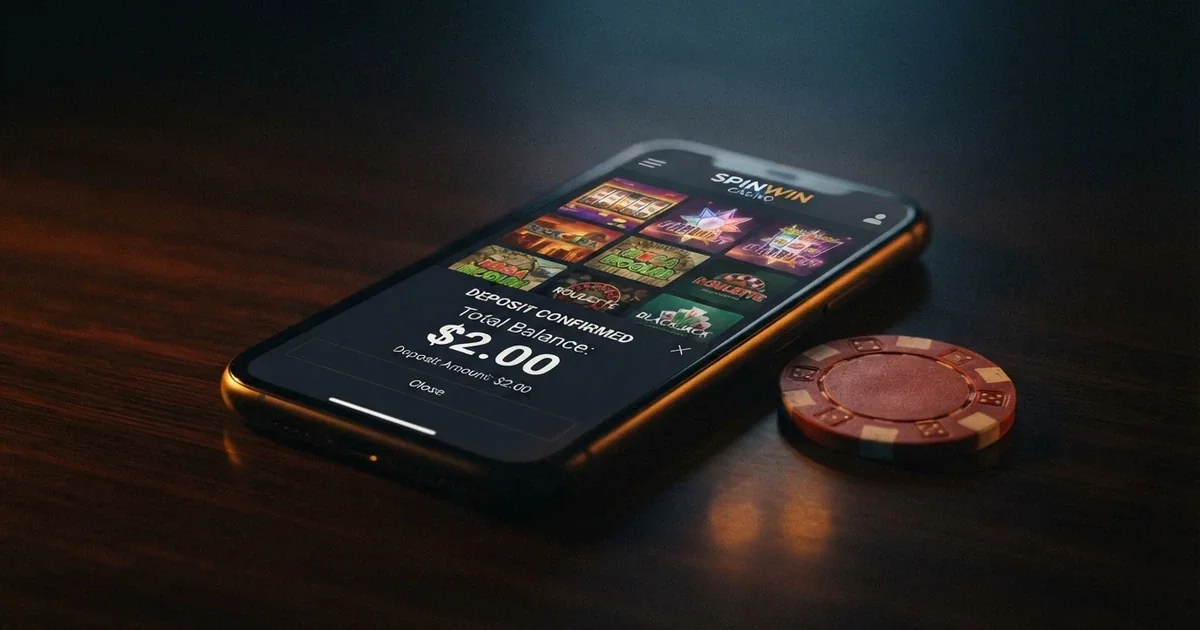
The phrase “two-dollar minimum deposit casino” arrives with the enthusiasm of a marketing hook, and the habit of treating it like one is what gets players in trouble. In Australia, a $2 deposit is real — it processes, the reels spin, the cashier accepts the click. It also only clears at offshore casinos, almost always through cryptocurrency or a prepaid voucher, and it places the player outside every layer of Australian consumer protection that licensed wagering normally sits behind. The pages ranking these casinos tend to skip over that second half of the sentence. This one does not.
Currency note: the figures below are current as of 18 October 2026, cross-checked against the Australian Communications and Media Authority (ACMA), the Interactive Gambling Act 2001, the Australian Institute of Family Studies (AIFS) and the Australian Institute of Health and Welfare (AIHW).
Table of Contents
- Why the $2 Deposit Casino Is an Offshore-Only Proposition
- The 10 Offshore Casinos Offering a $2 Minimum Deposit to Australian Players
- Your $2 Buys About 20 Spins — Fewer If You Pick the Wrong Pokie
- Crypto and Prepaid Vouchers Will Take Your Two Dollars — Your Card and PayID Almost Certainly Won’t
- Playing Your $2 Deposit on a Phone: Browser, App or Both?
- New $2 Deposit Casinos and the Welcome Bonus That Barely Registers on a Two-Dollar Buy-In
- Every $2 Casino That Accepts Australians Operates Offshore — Here’s What That Actually Means
- What 430,000 Australians Already Know: The Real Cost of a $2 Habit
- How We Evaluated Every $2 Deposit Casino on This Page
- Your Real Risk Isn’t the Two Dollars — It’s What You Give Up Alongside It
- Frequently Asked Questions
Why the $2 Deposit Casino Is an Offshore-Only Proposition
The $2 floor exists, but it does not exist where the player is probably expecting it to. No Australian-licensed casino offers it, because no Australian-licensed online casino exists at any deposit level. The Interactive Gambling Act 2001 makes it an offence to provide online casino games or online pokies to a person in Australia, and the ACMA has been enforcing that prohibition with DNS-level blocks for years. Since November 2019, the regulator has directed Australian ISPs to block 1,564 illegal gambling and affiliate websites; more than 225 illegal services have withdrawn from the Australian market since enforcement was strengthened in 2017. The search results a player sees for “$2 deposit casino Australia” are the result of that enforcement gap — affiliate pages pointing at offshore brands the regulator has not yet blocked.
The IGA targets providers, not individual players. The reader is not at risk of prosecution for signing up. That is the one comfort in the picture, and it is small. The provider is at risk, the provider operates from Curaçao, and the site can disappear overnight when an ISP-level block lands. The page disappears; the player’s balance does not always come with it.
The $2 floor is also not what the online headlines suggest. A blanket “$2 across all payment methods” claim is, as one industry editorial put it, “almost extinct” — the floor survives in a narrow band of methods, and the methods are themselves a signal of the operator’s regulatory posture. Where the rest of this page goes depends on understanding that distinction.
Why the $2 Minimum Only Clears Through Crypto and Prepaid Vouchers
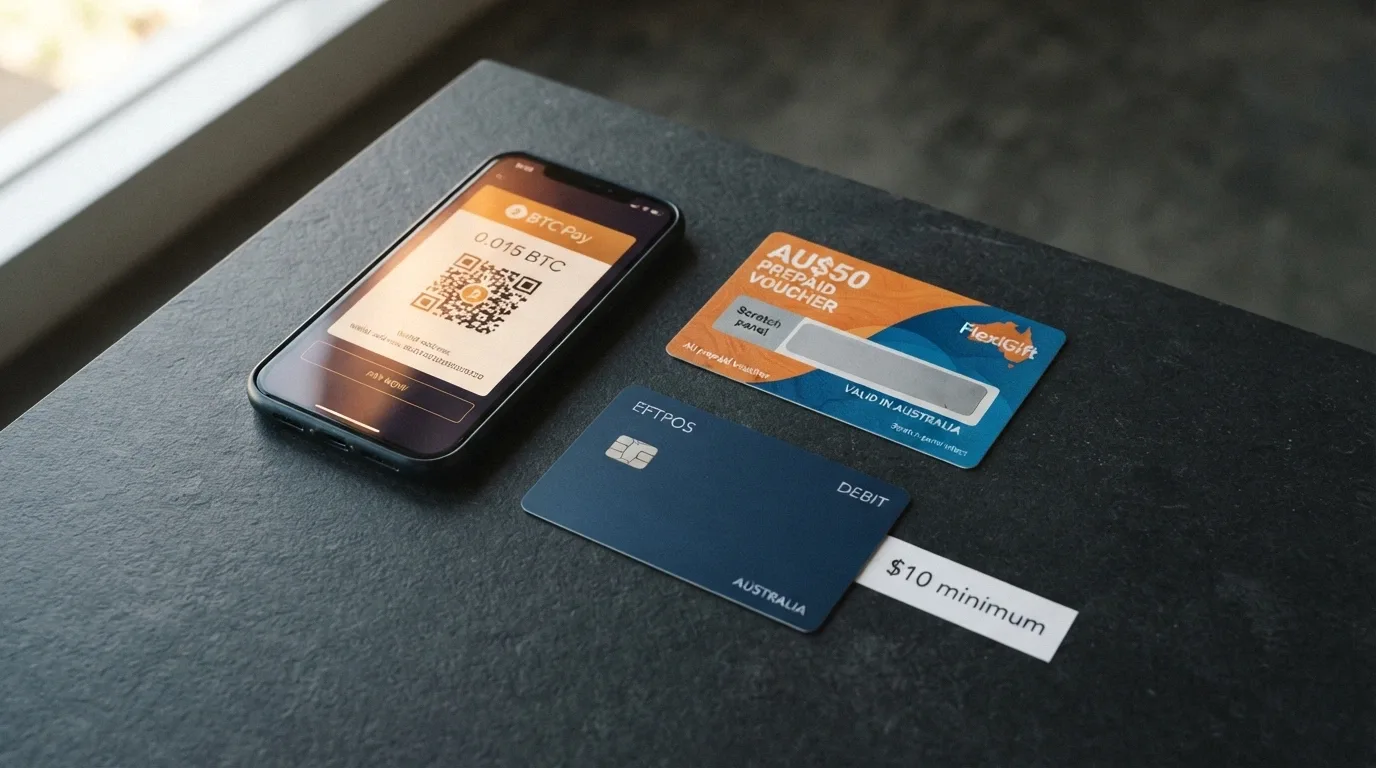
A casino that lists PayID, a Visa debit card and a bank transfer alongside crypto, with a single $2 minimum on every method, is misrepresenting its cashier. The $2 floor holds only on the rails that process without a banking intermediary: cryptocurrency wallets, which settle peer-to-peer, and prepaid vouchers like Neosurf and Paysafecard, which carry fixed denominations that match the $2 gate. Standard credit cards, debit cards and bank transfers almost universally enforce a $10 to $20 minimum at the cashier. PayID and POLi, the two Australian-friendly instant rails, typically carry minimums of $10 or more. The implication runs both ways: a player who wants a true $2 deposit must use a method that licensed Australian wagering operators cannot legally accept. Crypto has been banned as a payment method for licensed online wagering since 11 June 2024. The $2 casino that processes a Bitcoin deposit from an Australian IP address is, by the payment method alone, operating outside Australian law.
Real-Money Play from a Two-Dollar Buy-In: What You Can Actually Do
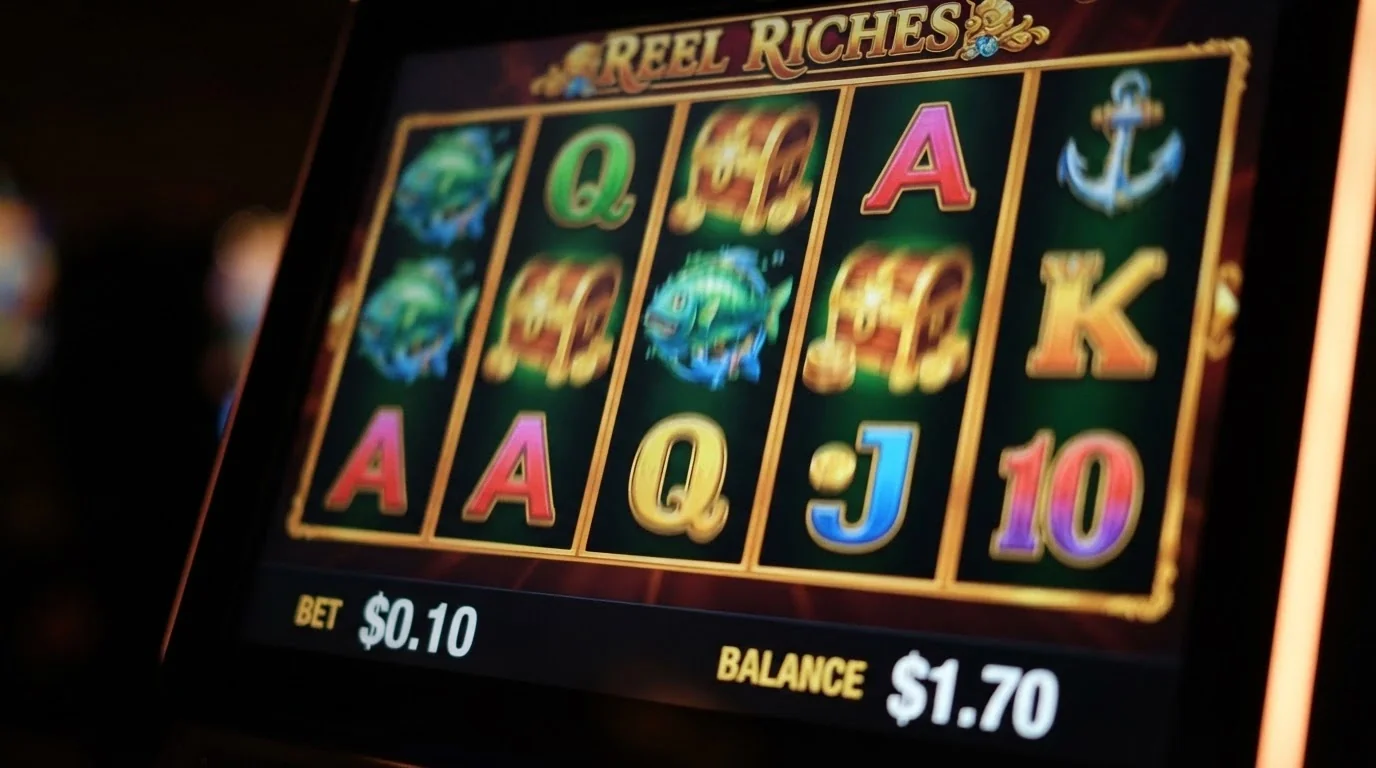
Twenty. Most online pokies start at AU$0.10 per spin, which is what a $2 deposit buys at the minimum-bet floor: twenty spins on titles like Big Bass Bonanza, Starburst and Book of Dead. That is a real session, not a gimmick — the reels spin, the balance ticks down in $0.10 increments, a feature can trigger, a small win lands on the balance. But twenty spins is also a thin slice of play, and the return is governed by RTP, not by how cheap the deposit was. A pokie with 96% RTP returns $96 on every $100 wagered over millions of spins; it does not return $1.92 on a $2 buy-in. The first spin, the tenth spin and the twentieth spin are independent draws, and the $2 deposit buys twenty of them.
A different pokie at a $1 minimum bet burns the $2 in two spins. Aristocrat progressive pokies, with their $0.50 floor, give four spins before the balance reads zero. The arithmetic of how long a $2 session lasts is set entirely by the title the player chooses, and the title is the variable that matters more than the deposit. Two dollars is a low entry price; it is not a long session.
What “$2 Minimum Deposit Casino” Really Means — and the Fine Print It Hides
The label is honest about the deposit and silent about the cost. It signals a low barrier to entry, which the offshore casino genuinely offers. It hides that the operator is unlicensed in Australia, that the payment method is the gatekeeper on whether the $2 floor is real, and that the player has stepped outside every protection Australian wagering law normally provides. ACMA blocking is a standing risk: a casino accessible today can be unreachable tomorrow, and the DNS-level block does not migrate player balances or resolve withdrawal disputes. The editorial framing one industry source gave the segment — treat the $2 deposit as a test drive, not an investment — is the right framing. The fine print is that the test drive happens on an unregulated road.
The 10 Offshore Casinos Offering a $2 Minimum Deposit to Australian Players
Every operator on this list is offshore. None holds an Australian licence, because no such licence exists for online casino at any deposit level. The ranking below reflects each brand’s share of AU search traffic among the featured set; it is not a quality judgment, because most of the per-operator specifications — bonus terms, wagering multiples, game provider lists, licence dates — were not surfaced during this round of research, and several remain genuinely thin. The licence column marks what is known about each operator’s regulator; the gaps are honest, not editorial.
| Operator | Licence / Regulatory Status |
|---|---|
| Rocket Play | Offshore — Curaçao (unconfirmed) |
| Skycrown | Offshore — Curaçao (unconfirmed) |
| Royal Reels | Offshore |
| WinSpirit | Offshore |
| Stake | Offshore — Curaçao (industry-known) |
| Rainbet | Offshore |
| Scream Casino | Offshore |
| FairGO | Offshore — Curaçao (per search snippets) |
| Bizzo Casino | Offshore |
| Rocket Casino | Offshore |
The table answers only one question: is this operator licensed in Australia? The answer is no, for every row, and will remain no until the IGA 2001 changes. What each brand actually offers at the $2 floor — the welcome package, the free-spin count, the wagering requirement, the max cashout, the game library — varies by operator, and the H3s below work through what is known and what is not.
Rocket Play
Rocket Play is the largest offshore brand by AU market share in the featured set at 9.4%, with reported revenue above $630 million. It is the casino most likely to appear at the top of the search results for an Australian player, which is itself useful information: it is the brand ACMA’s next blocking action is most likely to catch.
The licence is offshore. Curaçao is the most commonly stated regulator for operators at this tier, though research could not confirm it for Rocket Play specifically this run. Welcome bonus terms, free-spin allocations, wagering multiples, bonus validity windows, max cashout figures and the game provider list were all unconfirmed. A player evaluating Rocket Play should treat the bonus headline as marketing copy and open the bonus terms page before depositing any amount, including $2.
Verdict: the brand is the most prominent of the group and therefore the most exposed to ACMA blocking. The bonus data is thin, the player should read the terms page, and the $2 deposit itself is method-specific rather than universal.
Skycrown
Skycrown holds the second-largest AU market share among the featured set at 8.55%, with a multi-provider game library described in promotional material as “huge”. A welcome package with cashback is mentioned in the search results, though the percentage, wagering multiple and cashback structure were not confirmed this run. Like Rocket Play, the Curaçao licence is plausible but unconfirmed.

What this brand has that most of the others do not is a confirmed game-selection breadth — multi-provider means the $0.10 pokies the player wants (Big Bass Bonanza, Starburst, Book of Dead) are more likely to be available. What it does not have is verifiable bonus maths.
Verdict: the game library is the differentiator, the bonus terms need a read-through at the cashier, and the operator sits in the same regulatory gap as the rest of the list.
Royal Reels
Royal Reels holds 2.51% AU market share in the featured set, putting it a clear third on search presence but well behind the top two. Welcome bonus, free-spin allocation, wagering, game providers and licence date were all unconfirmed this run. Even the Curaçao licence that almost every offshore operator at this tier holds could not be verified for Royal Reels.
The data gap is the story here. A player choosing Royal Reels over Skycrown is choosing a less-confirmed operator with thinner publicly verifiable information, on a product (online casino) that Australian law does not license. The $2 deposit is real; everything around it is marketing copy that this round could not verify.
Verdict: third in AU traffic, last on verifiable specifics, the player should check the bonus terms page before depositing.
WinSpirit
WinSpirit is a mid-tier operator in the featured set at 1.55% AU market share. Welcome bonus, free spins, wagering, game providers and licence date are all unconfirmed. The operator’s presence in the $2 list is enough to put it on the list, not enough to recommend its bonus over another’s.
A $2 deposit at WinSpirit is a thinner-information play than a $2 deposit at Skycrown. The only thing research confirms is that WinSpirit exists in the offshore segment and accepts Australian players; what it offers them is not on the public record in a form this run could verify.
Verdict: presence in the search results is the only confirmed data point; the player should read the terms page before depositing $2.
Stake
Stake is the most recognised crypto-native brand in the featured set, Curaçao-licensed (industry-known), positioned for players depositing in Bitcoin, Ethereum and other cryptocurrencies. Its 1.28% AU market share understates its international presence; among the crypto-first operators it carries the heaviest brand recognition. Welcome bonus terms specific to the AU market were not surfaced this run.
The crypto positioning is the relevant point. A $2 deposit at Stake clears through a Bitcoin or Ethereum transfer at the $2 floor — no card processing minimum stands in the way, and the deposit matches the method the IGA 2001 amendment of 2024 banned from licensed Australian wagering. The player is, by the payment method, several regulatory steps outside Australian law.
Verdict: the cleanest $2 deposit experience among the featured set for a crypto-native player; the regulatory distance from Australia is correspondingly larger.
Rainbet
Rainbet shares Stake’s 1.28% AU market share tier but with no surfaced licence body, no confirmed provider list, and no bonus specifics. The operator appears in search results; beyond the listing, the public record is thin. The information gap is the message: a player choosing Rainbet is choosing a brand this round could not verify beyond its name.
Verdict: search results presence confirmed, everything else is a gap the player must close themselves before depositing $2.
Scream Casino
Scream Casino holds 0.99% AU market share in the featured set, putting it in the lower tier of the list. Welcome bonus, free spins, wagering, game providers and licence date were all unconfirmed this run. The brand is identifiable in the search results; the offer is not.
Lower-tier operators in the offshore segment share a common pattern: thinner search results, less verifiable licensing information, fewer third-party reviews. The $2 deposit will process, the game library will be smaller, the bonus headline will be harder to verify.
Verdict: thin profile, thin information, the player should verify the bonus terms and the licence body independently.
FairGO
FairGO is the one operator in the featured set where the $2 claim is actually documented: the AU$2 minimum deposit is confirmed in search snippets, the Curaçao licence is referenced in the same snippets, and the welcome package with free spins is named, though the count, wagering and cashout cap remain unconfirmed. The operator runs on RTG (RealTime Gaming), which is a single-provider setup rather than the multi-provider stacks Skycrown and Rocket Play claim. RTG carries a smaller pokie catalogue, though the $0.10 minimum-bet titles are present.
FairGO is the operator that most closely matches the search results. A player who specifically wants a confirmed $2 deposit landing on a Curaçao-licensed offshore site with a free-spin welcome package will find FairGO is the closest match in this set. The wagering and cashout terms remain the verification gap.
Verdict: the closest match to the $2 deposit claim in the featured set, RTG-only catalogue, free-spin welcome package confirmed but specific terms still need the cashier page.
Bizzo Casino
Bizzo Casino holds 0.57% AU market share in the featured set, near the bottom of the list. Welcome bonus, free spins, wagering, game providers and licence date were all unconfirmed this run. The brand is in the search results; the offer is not on the public record this round could surface.
At this tier of AU search presence, the verification gap widens. A $2 deposit at Bizzo is an act of faith in the operator’s cashier page rather than in any third-party verification.
Verdict: lowest confirmed data tier, every bonus and provider claim needs the player’s own check at the cashier.
Rocket Casino
Rocket Casino shares Bizzo’s 0.57% AU market share tier in the featured set, the smallest in the ranking. Licence body, bonus terms and provider list are all unconfirmed this run. The brand name is similar to Rocket Play but the operators are distinct; a player who sees both names in the search results should not confuse them.
A $2 deposit at a lowest-tier offshore brand carries the highest information risk. The deposit itself is the same $2 as at Skycrown or FairGO; the operator behind it is the least verifiable on the page.
Verdict: smallest operator in the featured set, largest verification gap, the player should treat the $2 as a test drive of an unverified brand.
Your $2 Buys About 20 Spins — Fewer If You Pick the Wrong Pokie
The arithmetic of a $2 session is short and the math is unforgiving. Twenty spins at $0.10 is the best case: the player picks a pokie with the standard minimum bet, gets a full twenty spins on the balance, and the session ends with whatever the reels returned over those twenty draws. Four spins at $0.50 is the worst case: the player picks an Aristocrat progressive, and the $2 deposit is gone before the bonus feature has a chance to load.
The session-length gap between $0.10 and $0.50 minimum bets is fivefold. Same $2 deposit, same cashier, completely different play time. The title is the variable, and the player who picks the right title gets the longer session; the player who picks the wrong title learns what “minimum bet” means by watching the balance empty.
Gates of Olympus by Pragmatic Play, the best-documented title in this segment, runs at 96.50% RTP with high volatility and a maximum win of 2,500x the line bet. Twenty spins on Gates of Olympus at $0.10 is a $2 session with a high-volatility return profile: most spins will return less than the stake, occasional spins will return several times the stake, and over twenty draws the variance will dominate the outcome. The expected return on those twenty spins, assuming the player bets $0.10 per spin across 20 spins at 96.50% RTP, is $2.00 × 0.9650 = $1.93. That is the average. A single twenty-spin session will land somewhere on either side, often well on one side, because twenty draws is a small sample.
A pokie with 96% RTP returns $96 on every $100 wagered over millions of spins; it returns $1.92 on a $2 wagered over twenty spins as an average across many sessions. The player will not see $1.92 back. They will see $0, $0.20, $4.50 or $0 in any single session, because twenty spins is twenty independent draws and the variance is high. RTP is a long-run measure, not a session guarantee, and on a twenty-spin session the variance eats the average.
The Pokies Your $2 Actually Unlocks — by Title and Minimum Bet
Big Bass Bonanza, Starburst and Book of Dead are the three titles consistently confirmed at the AU$0.10 minimum-bet floor across the search results. Each gives a $2 deposit twenty full spins. Starburst sits in the NetEnt family alongside Gonzo’s Quest and Dead or Alive 2, all of which carry RTPs in the 96–97% range with mid-to-high volatility. Big Bass Bonanza is a Pragmatic Play title with a feature-heavy bonus round. Book of Dead is a Play’n GO title with a higher-volatility profile.
Aristocrat progressive pokies, where the minimum bet is AU$0.50 per spin, give the $2 deposit four spins before the balance empties. The progressive jackpot is what makes the higher floor worth paying for some players; on a $2 session, the higher floor is just a shorter one.
RTP and Volatility at the $2 Buy-In: What Each Spin Is Worth
| Pokie Title | RTP | Provider | Volatility | Minimum Bet |
|---|---|---|---|---|
| Gates of Olympus | 96.50% | Pragmatic Play | High | AU$0.10 |
| Ugga Bugga | ~99.07% | Playtech | — | — |
| Blood Suckers | ~98% | NetEnt | — | — |
| Big Bass Bonanza | — | Pragmatic Play | — | AU$0.10 |
| Starburst | — | NetEnt | — | AU$0.10 |
| Book of Dead | — | Play’n GO | — | AU$0.10 |
The table is thin because research is thin: only Gates of Olympus carries a full specification from the sources this round consulted. Ugga Bugga and Blood Suckers carry RTP figures confirmed across the search results, but volatility and minimum-bet data for those two titles was not surfaced this run. Big Bass Bonanza, Starburst and Book of Dead carry the $0.10 minimum-bet confirmation but not the per-title RTP or volatility numbers. The table reflects what is known, not what a player would want to know.
The honest reading: on a twenty-spin session, the RTP gap between a 96% and a 99% title is roughly $0.06 per spin, or about $1.20 across the session. The volatility gap is larger and more variable — a high-volatility title will swing further from the average on any single session, which is exactly what a twenty-spin sample is. Picking the higher-RTP title stretches the average return; it does not change the session variance. Picking the lower-volatility title flattens the swings.
Crypto and Prepaid Vouchers Will Take Your Two Dollars — Your Card and PayID Almost Certainly Won’t
The payment-method column is the column that decides whether the $2 floor is real. A casino that lists Visa, Mastercard, PayID and POLi at a $2 minimum across the board is misrepresenting its cashier; the cards and the instant rails enforce their own floors. A casino that accepts Bitcoin, Ethereum, Neosurf and Paysafecard at $2 is reporting the actual rail-level minimums, because those rails process small amounts without the intermediary floors that cards and PayID impose.
The two clusters behave differently because they are different technologies. A credit card transaction runs through an acquiring bank, a card network and an issuing bank, each of which charges per-transaction fees that make sub-$10 deposits economically irrational for the merchant. PayID and POLi run through the New Payments Platform and POLi’s payment-page intermediary, both of which impose minimums that match the cost of clearing. Crypto and prepaid vouchers do not have that problem: a Bitcoin transaction has no intermediary floor, and a $2 Neosurf voucher is a fixed-denomination product the merchant simply accepts.
Crypto and Prepaid Vouchers: The Only Rails That Clear at $2
Neosurf and Paysafecard are the two prepaid voucher brands that recur across the search results for the $2 deposit segment. Both sell fixed-denomination vouchers (including $2 where the merchant accepts it) at retail outlets; the player redeems the voucher code at the casino cashier and the deposit clears without any card or bank intermediary. The merchant receives the payment from the voucher processor, not from a card network, and the floor is whatever the merchant chooses to accept.
Cryptocurrency works the same way at the rail level. A Bitcoin or Ethereum transaction settles peer-to-peer on the blockchain; there is no acquiring bank, no card network, no per-transaction minimum imposed by an intermediary. The merchant’s $2 floor is the merchant’s own choice, and the offshore casinos in the $2 segment have chosen $2 because their crypto payment processors allow it. The player who deposits $2 in crypto at an offshore casino is also, by the payment method, transacting through a rail that licensed Australian wagering operators are banned from accepting. That ban took effect on 11 June 2024.
Why Your Debit Card, Credit Card and PayID Won’t Clear Below $10
The processing floors on cards and PayID are not optional. Card networks impose per-transaction fees that make sub-$10 deposits economically unworkable for the merchant; the $10 to $20 minimum is the floor at which a card transaction covers its own processing cost. PayID/Osko and POLi carry their own minimums because the underlying payment infrastructure and the merchant’s payment processor both impose them. A casino that lists PayID at a $2 minimum is either describing a payment method it does not actually offer or describing a minimum it does not actually enforce.
TAB.com.au is the exception that proves the rule. TAB.com.au accepts PayID deposits with a $2 minimum — but TAB is a licensed Australian wagering operator, not an online casino, and the $2 PayID minimum applies to wagering (racing and sport), not to casino games. The product the player came to the offshore casino for is the one TAB does not offer. The $2 PayID floor at TAB is real; it is also for a different product on a different licence.
Withdrawal Speed by Payment Method: What Comes Back and How Fast
| Payment Method | Minimum Deposit (AUD) | Withdrawal Speed |
|---|---|---|
| Cryptocurrency (BTC, ETH) | $2 | 15 minutes to 2 hours |
| PayID | $10+ | 4–24 hours (after KYC) |
| Bank transfer | $10–$20 | 1–3 business days |
| Neosurf / Paysafecard (deposit only) | $2 | N/A — voucher deposits are typically one-way |
The withdrawal column reverses the deposit picture in one respect: crypto is the fastest rail on the way out as well as on the way in. Fifteen minutes to two hours for a Bitcoin withdrawal compares with four to twenty-four hours for PayID after KYC, and one to three business days for a bank transfer. The KYC step — Know Your Customer identity verification — is the universal gate. No offshore casino pays out without it, and the gate applies regardless of which deposit method the player used.
A voucher deposit is, in most cases, a one-way transaction. Neosurf and Paysafecard clear at $2 because they are not bank rails and do not need to be; they also do not return funds the way a card payment or a bank transfer can. The deposit is the deposit; the withdrawal is a separate transaction on a separate rail.
Playing Your $2 Deposit on a Phone: Browser, App or Both?
The phone experience at an offshore casino is a browser experience. Native apps for unlicensed casino operators are not available on the Australian App Store or Google Play storefronts, and most offshore operators targeting Australian players build responsive browser products instead. The lobby tiles resize to the phone screen, the cashier slides out from the side menu, the deposit button is in the same place it would be on desktop. The $2 deposit does not change on mobile.
What does change is the verification step. A phone screen is a smaller verification surface, and the cashier’s payment-method list is sometimes truncated on mobile — a player who checks the deposit options on desktop before switching to phone will see the full list. A player who goes straight to mobile sees the mobile list, which may not include every method. The $2 floor depends on the method, and the method depends on what the mobile cashier actually shows.
New $2 Deposit Casinos and the Welcome Bonus That Barely Registers on a Two-Dollar Buy-In
New offshore casinos target the $2 deposit segment for the same reason new restaurants offer a $5 lunch: the low entry price builds a customer base. The economics work differently at a casino, because the bonus attached to a $2 deposit is too small to clear the wagering requirement that almost every welcome offer carries.
Most welcome bonuses trigger at a $10 minimum deposit. Many trigger at $20 or $25. A $2 deposit is below the trigger floor on most welcome offers; the bonus does not activate. The rare welcome offer that does activate at $2 — a 100% match, for instance — delivers $4 in bonus funds, and the wagering requirement on a $4 bonus is the same wagering requirement as on a $400 bonus. At a 35x multiplier, $4 in bonus funds requires $140 in wagered play, which on a $0.10 pokie is 1,400 spins. At five seconds per spin, that is roughly two hours of continuous play for a $4 bonus payout. The arithmetic is technically possible; the practical value is almost zero.
What a Welcome Bonus Actually Looks Like on a $2 Deposit
FairGO is the one operator in the featured set with a confirmed welcome package including free spins. The specific number of spins, the per-spin value, the wagering requirement and the maximum cashout from the bonus were not surfaced this run. What is confirmed is that FairGO offers a free-spin welcome package to depositing players, and that the AU$2 minimum deposit is the confirmed entry point.
The rest of the featured set did not surface bonus terms at all this round. A player evaluating welcome offers at these operators is reading marketing headlines, not bonus terms pages. The $2 deposit does not unlock most of them. The ones it does unlock deliver a token amount, and the wagering requirement makes the token effectively unreachable in any reasonable play session.
Every $2 Casino That Accepts Australians Operates Offshore — Here’s What That Actually Means
The Interactive Gambling Act 2001 is the statute that explains every line above. Online casino games, online pokies and in-play sports betting are prohibited under the Act. It is an offence to provide these services to a person in Australia. The IGA targets providers, not players — the player is not prosecuted for accessing offshore sites — but the provider faces civil penalties, formal warnings and ISP-level blocking. The Australian Communications and Media Authority (ACMA) is the regulator that enforces it.
The enforcement is operational. ACMA has directed ISPs to block 1,564 illegal gambling and affiliate websites since November 2019. More than 225 illegal services have withdrawn from the Australian market since enforcement was strengthened in 2017. The block is DNS-level: the site disappears from Australian internet connections, and the player loses access without warning.
The Interactive Gambling Act 2001 and Why No Australian Casino Licence Exists
The IGA 2001 prohibits providing online casino games, online pokies and in-play betting to anyone in Australia. The Interactive Gambling Amendment Act 2017 closed the offshore loopholes operators had used and gave the ACMA its blocking and civil-penalty powers. There is no federal licence for online casino; there is no state or territory licence for it; the prohibition is uniform.
What Australia does license is wagering on races and sport (placed before the event), lotteries and keno. The Northern Territory Racing and Wagering Commission (NTRWC), administered through Licensing NT, is the de facto national licensor for online wagering, and about fifty brands hold NT licences. None of those brands offer online casino. The TAB.com.au PayID minimum is for wagering, not for the pokies the player came for.
BetStop Won’t Protect You Here — and Neither Will the ACMA
BetStop — the National Self-Exclusion Register — has recorded 67,480 registrations since going live in August 2023, with 41,290 exclusions still active as at 31 July 2026. A single BetStop registration excludes a person from every Australian-licensed online and phone wagering service in one step. 78% of registrants were under 40; 38% chose lifetime exclusion.
BetStop’s reach stops at the Australian border. An offshore casino is not connected to the register and will keep taking a self-excluded player’s money. The 41,290 active exclusions cover licensed wagering only. The offshore casino segment is uncovered.
The ACMA cannot do what BetStop does for offshore operators either. ACMA blocks sites; ACMA does not recover player funds, does not arbitrate withdrawal disputes, does not void unfair bonus terms. When an offshore casino refuses a withdrawal, ACMA has no mechanism to compel payment. When a casino voids a win on a bonus-term technicality, ACMA has no consumer-protection framework to apply. The Australian consumer law that covers licensed wagering does not reach offshore operators. The player who has a dispute with an offshore casino has, in practice, no Australian remedy.
The 2026 Gambling Reform and What Changes for Offshore Casino Players
The Interactive Gambling Amendment (Gambling Reform) Bill 2026 passed Parliament on 19 August 2026, and its measures commence on 1 January of the following year. The reform is the most significant change to the IGA framework since 2017, and several provisions will land directly on offshore operators and their Australian players.
AdStop, the national wagering advertising opt-out register, will be administered by the ACMA. From 1 January of the following year, no more than three wagering ads will be permitted per hour between 6:00 am and 8:30 pm, with a live-sport blackout from fifteen minutes before to five minutes after a live event. Direct marketing of wagering inducements will be prohibited for fourteen days after a customer signs up and for three months after a person deregisters from BetStop. Athletes, celebrities and influencers will be banned from wagering promotion.
The provision most relevant to a player at an offshore casino is the express authority given to banks and payment providers to block transactions to illegal gambling operators. From 1 January of the following year, an Australian bank can decline a transaction it identifies as going to an illegal gambling operator, including an offshore casino. The reform does not require banks to block; it permits them to. A bank that identifies a recurring $2 deposit to a Curaçao-licensed casino may decline the transaction under the new authority, and the player will see the decline at their own bank rather than at the casino cashier. The $2 deposit that processes today may not process six months from now.
What 430,000 Australians Already Know: The Real Cost of a $2 Habit
The harm data behind the offshore casino segment is not Australian-specific to offshore play; it is Australian-specific to the gambling patterns that lead players to offshore casinos in the first place. About 2.1% of Australian adults — roughly 430,000 people — experience problem gambling, according to the Australian Institute of Health and Welfare. The Australian Institute of Family Studies’ 2022 research on regular pokies gamblers found that 81.9% of participants who gambled regularly on pokies were classified as being at risk of gambling harm, with 18–34-year-olds at the highest risk tier at 89.2%.
Four out of five regular pokies gamblers at risk of harm is the headline number. The help-seeking gap underneath it is the harder number: only 9.2% of regular pokies gamblers sought help for gambling harm in the past year. Embarrassment, cited by 65.4% of those who did not seek help, was the most common barrier. The $2 deposit is a small entry price to a product whose documented harm profile is not small.
Where to Get Help — and What the Numbers Say About a $2 Deposit Habit
The National Gambling Helpline — 1800 858 858 — is free, confidential and staffed 24 hours a day. Gambling Help Online at gamblinghelponline.org.au provides online chat and counselling. BetStop, the National Self-Exclusion Register, covers Australian-licensed wagering but not offshore casinos; the offshore segment is the gap the registered exclusion does not reach.
The spending data sharpens the picture. Regular pokies gamblers spent around $1,019 per month (median) across all gambling types, including $400 per month on pokies alone, according to AIFS. A $2 entry point does not mean a $2 habit; the median monthly pokies spend is two hundred times the entry deposit. The $2 floor is the front door; the median monthly spend is what the player carries through it.
Practical Limits and Bankroll Discipline at the Lowest Deposit Tier
67% of regular pokies gamblers reported setting maximum spend limits for their most recent session, with a median limit of $100 per session. The $100 median is two thousand times the $2 entry deposit; the limit is set by the player who has already moved past the $2 stage. A player who is starting at $2 and wants to stay at $2 is the player who has not yet hit the median session spend; the discipline is to keep the session at the $2 boundary and not let it drift toward the $100 median.
Offshore casinos vary on the responsible-gambling tools they offer — deposit limits, session timers, loss caps, self-exclusion. Research did not surface a per-operator tool list this run. A player who wants a hard ceiling should set it personally before opening the casino: a $2 deposit, a $2 loss limit, a twenty-spin session. The tools on the casino site are supplementary; the discipline is the player’s own.
How We Evaluated Every $2 Deposit Casino on This Page
The operator list above was assembled from the top search results for “$2 deposit casino Australia” as of the current research cycle. The sources consulted include Slotozilla, AusPokies, Roulette77, MatesWin, VegasPokie, WinAce, LuckyWins, PokiesRoo, NextGen Flooring Solutions and Solar Power Bendigo. The regulatory backbone of the page — the IGA 2001 prohibition, ACMA enforcement figures, the BetStop registration data, the harm prevalence figures — comes from primary sources: the Australian Government’s published statute, ACMA’s published blocking and exclusion figures, the AIFS 2022 research and the AIHW prevalence data.
The ranking order reflects each operator’s share of AU search traffic among the featured set, drawn from industry data. It is not a quality judgment, because most per-operator specifications — bonus terms, wagering multiples, game provider lists, licence issue dates — were not refreshed in this research cycle, and several operators carry thin or no verifiable data beyond their online presence. A player should treat the table as a starting list, not as a verdict.
Where research could not confirm a specification — a bonus percentage, a wagering multiple, a max cashout, a provider name — the page says so. The gaps are deliberate. The alternative is to invent the figure, and the alternative is worse.
Your Real Risk Isn’t the Two Dollars — It’s What You Give Up Alongside It
The two dollars is the smallest number on this page. It is the only number a reader will spend today. It is also the least interesting number on this page. The interesting numbers are the ones a reader does not see at the cashier: the offshore licence that connects to no Australian regulator, the payment method that licensed Australian wagering operators are banned from accepting, the site that can be DNS-blocked overnight with no notice to the player, the withdrawal dispute that ACMA cannot arbitrate, the self-exclusion that BetStop cannot extend to the offshore segment.
The $2 deposit is real. The twenty spins it buys at the $0.10 minimum-bet floor are real. The Gates of Olympus session at 96.50% RTP is real, and the average return across many sessions of twenty spins at that RTP is $1.93, give or take the variance of any individual session. The wagering requirement that makes a $4 welcome bonus effectively unreachable is real. The reading-the-terms-page before depositing is the most useful thirty seconds a player will spend.
The decision the page leaves the reader with is not whether $2 deposit casinos exist. They do. The decision is whether the player accepts the regulatory distance that comes with the $2 deposit: no BetStop coverage, no ACMA recourse on disputes, no Australian consumer protection, no guarantee the site will be reachable next week. The bonus is a token. The risk is the product. The product is offshore, the distance is real, and the player’s two dollars is the price of admission to a market Australian law has decided not to license.
For readers who recognise themselves in the patterns the AIFS data describes — four out of five regular pokies gamblers at risk, fewer than one in ten seeking help, the median monthly spend two hundred times the $2 entry point — the National Gambling Helpline is 1800 858 858, free and confidential, twenty-four hours a day. Gambling Help Online is at gamblinghelponline.org.au. The $2 habit is worth noticing before it becomes the $1,019 median.
Frequently Asked Questions
Can I really win real money with a $2 deposit at an online casino?
Yes, but the session is short and the return is governed by RTP, not by the deposit size. A $2 deposit at the standard $0.10 minimum bet gives twenty spins, and on a 96.50% RTP pokie like Gates of Olympus the average return across many such sessions is $1.93, with the variance of any single session dominating the outcome. Twenty spins is a small sample.
What is the minimum bet on pokies at a $2 deposit casino?
Most online pokies start at AU$0.10 per spin, including Big Bass Bonanza, Starburst and Book of Dead, which gives a $2 deposit twenty full spins. Aristocrat progressive pokies carry an AU$0.50 minimum bet, which gives the same $2 deposit only four spins. Titles with a $1 minimum bet burn the $2 in two spins. The title the player picks is the variable that decides session length.
What happens if an offshore casino blocks my withdrawal — can ACMA help?
No. ACMA blocks offshore gambling sites at the DNS level and pursues civil penalties against providers, but ACMA cannot recover player funds, cannot arbitrate withdrawal disputes and cannot compel an offshore operator to pay out. Australian consumer law covers licensed wagering; it does not reach offshore casino operators. A player with a dispute at an offshore casino has, in practice, no Australian remedy.
Is it safe to play at offshore $2 deposit casinos from Australia?
“Safe” is the wrong frame. Online casino is prohibited under the Interactive Gambling Act 2001, and every $2 deposit casino accepting Australian players operates offshore — usually Curaçao-licensed. The player is not prosecuted, but is not protected by Australian consumer law, by BetStop, or by ACMA dispute resolution. ACMA has blocked 1,564 illegal gambling sites since November 2019, and any listed site can be blocked at any time.
Do $2 deposit casinos offer welcome bonuses or free spins?
Rarely in a form that activates on a $2 deposit. Most welcome bonuses trigger at a $10 or $20 minimum; a $2 deposit falls below the trigger. The offers that do activate on $2 deliver a token amount — a 100% match yields $4 in bonus funds — and the wagering requirement on a $4 bonus is functionally unreachable in any reasonable play session. FairGO is the one operator in the featured set with a confirmed free-spin welcome package; the specific terms need the cashier page.
Can I deposit $2 with PayID at an Australian online casino?
Not at an online casino. PayID’s $2 minimum applies at TAB.com.au, which is a licensed Australian wagering operator offering racing and sport, not casino games. PayID at offshore casinos carries a $10 or higher minimum because of the processing floors on the rail. A genuine $2 casino deposit clears through cryptocurrency or a prepaid voucher like Neosurf or Paysafecard, both of which licensed Australian wagering operators are either banned from or structurally unable to accept.
App vs Browser: Does the Deposit Minimum Change on Mobile?
No. The deposit minimum is a payment-method floor, not a device floor. A Bitcoin deposit from a phone browser at $2 is the same transaction as a Bitcoin deposit from a desktop browser at $2. A PayID deposit from a phone will hit the same $10+ minimum it hits on desktop. The device is irrelevant to the floor; the payment rail sets it.
The browser route is also the default route. Native casino apps in the Australian app stores require Australian regulatory compliance, and offshore operators do not meet it. The mobile experience is a browser experience, full stop, for the entire offshore segment.