
$20 Deposit Casino Australia in 2026: What the Welcome Bonus Actually Buys
An Australian who can spare twenty dollars online will find a row of offshore casinos ready to take it. None of them is licensed in Australia. Online casino games — pokies, blackjack, roulette, live dealer tables — are prohibited under the Interactive Gambling Act 2001, and no Australian licence exists to issue. Every brand in this review is Curaçao-licensed, accessible from an Australian IP, and operating outside the country’s consumer protection. What that A$20 buys in real money, what the welcome bonus actually costs in expected loss, and how much of the marketing copy survives contact with the arithmetic — that is the version this page sets out to give.
Data current as of 28 October 2026; licence claims cross-checked against operator terms pages and the ACMA register.
Table of Contents
- What a $20 Minimum Deposit Actually Gets You at an Australian Online Casino
- How Your $20 Reaches an Offshore Casino — and Why Your Method Matters
- Why Your 2026 Bonus Isn’t as Big as It Looks
- The 10 $20 Deposit Casinos Accepting Australian Players in 2026
- Mobile $20 Deposits: Your Phone Is Now the Casino Floor
- Crypto Deposits at the $20 Level: Fast, but Not Without Risk
- The Pokies Worth Your $20 — and the Ones That Aren’t
- The Legal Reality: No Online Casino Is Licensed in Australia
- Keeping a $20 Bankroll Under Control
- How We Selected and Ranked These Offshore Operators
- Is a $20 Deposit at an Offshore Casino Worth the Risk?
- Frequently asked questions
What a $20 Minimum Deposit Actually Gets You at an Australian Online Casino
A “twenty-dollar minimum deposit casino” is not a tier anyone in Australia regulates. The figure is set by the offshore operator, and it sits at the low end of an offshore market where the floor is usually A$10 and the entry-level bonus package begins around A$20. Below that, terms tighten. Above it, bonus value rises — but so does what the player is expected to risk.
The price tag is modest. The legal reality behind it is not. Offshore operators competing for Australian sign-ups at the A$20 tier cluster around bonus offers between 35x and 60x wagering, with the fairer offers carrying 30-day expiries and the most punitive sitting at 5-day windows. The withdrawal floor is the silent trap: most low-deposit casinos set their minimum cashout between A$25 and A$100, which sits above the A$20 deposit for many of them. A player can fund an account with a single A$20 PayID transfer, run a balance up to A$45, and find that no withdrawal method will release the money until they reach A$100. The promotional side is loud; the withdrawal side is quiet.
The point of an A$20 deposit casino is simple. It lets a player put real money on the line without committing a four-figure sum, and it lets the casino collect sign-ups that a higher minimum would never see. What the player gets back depends entirely on the bonus terms, the pokie choice and the wagering multiple attached.
What a $20 deposit means in real money
A$20 at an offshore casino converts to pokie credit the moment the deposit clears. At A$0.10 per spin — the minimum bet on Big Bass Bonanza, the offshore market’s most common welcome-bonus pokie — A$20 buys 200 spins before any bonus lands. At A$0.25 per spin on Wolf Gold, it buys 80. Neither figure sounds like a session. Both are. A 200-spin session on a high-volatility title runs through a bankroll in minutes when the reels go cold, and stretches into an evening when they do not.
The conversion is mechanical: deposit clears, balance updates, game opens. No identity check sits between the player and the first spin at the A$20 tier at most offshore operators, which is part of the appeal and part of the problem — identity verification, where it eventually happens, usually triggers when the player asks for a withdrawal. By then the rules are already on.
Online-only: why land-based casinos don’t operate at a $20 tier
No equivalent of the A$20 deposit tier exists at an Australian land-based casino. Pokies venues — pubs, clubs and the casino floors in Melbourne, Perth, Sydney and the Gold Coast — operate on physical cash, with minimum bets of one cent per line on most machines and a session usually costing A$20 in cash before a player has had time to register the loss. The land-based gambling economy is built on poker machine losses — A$16.3 billion in 2023-24, more than wagering and lotteries combined — and on the layout of machines that take A$20 notes by the hundreds in a single session.
Online, the A$20 figure is a marketing device. It exists because offshore operators compete for sign-ups by lowering the entry point, and because a player who can afford A$20 is a player an operator would rather have than not. At a land-based venue, that same A$20 buys an evening at the poker machines and no marketing material at all.
How $20 compares to $5 and $10 minimum deposits
The offshore market has A$5 and A$10 minimum deposit casinos, and the bonus terms tighten noticeably at the lower end. A A$10 deposit will activate most welcome bonuses, but the bonus value scales with deposit size — a 100% match up to A$200 at A$10 returns A$10 in bonus money, not A$200. The A$20 tier is the sweet spot: it unlocks the headline match at most operators, fits inside a working person’s weekly entertainment budget, and keeps the wagering requirement within the same turnover band as the higher tiers.
The withdrawal floor problem gets worse lower down. Where A$20 deposit casinos typically set their minimum cashout at A$25–A$50, A$5 and A$10 deposit sites often push it to A$50–A$100. The player who chooses the smallest deposit is also the player most likely to find their balance locked below the cashout line.
Demo mode: playing for free before you deposit
Every offshore casino worth ranking offers demo play on its pokies — virtual credits, no real-money win, no registration required at most operators. The pragmatic move is to use it. A A$20 bankroll does not leave much room for learning a pokie’s volatility the hard way, and the titles most often attached to welcome bonuses — Big Bass Bonanza, Gates of Olympus, Book of Dead — all run in demo mode at every offshore casino in this review.
Demo play does not prepare a player for wagering requirements, bonus terms or the difference between a 30x and a 60x turnover. It does prepare them for the pokie itself, which is the half the welcome bonus funds will go to anyway.
How Your $20 Reaches an Offshore Casino — and Why Your Method Matters
The deposit method an Australian player chooses does more than move money — it tells the operator what kind of customer it is dealing with, and it tells the player something about the operator. PayID is the standard. Debit cards still work. Credit cards and crypto are banned for licensed wagering under Australian law since 11 June 2024, but the prohibition does not reach an offshore casino — it reaches only the Australian-licensed bookmakers the ban was written for. Anyone using a credit card to fund a deposit at an offshore casino is being served by an operator outside the rules, and the player has none of the protections the ban was designed to create.
PayID: the instant deposit standard for Australian players
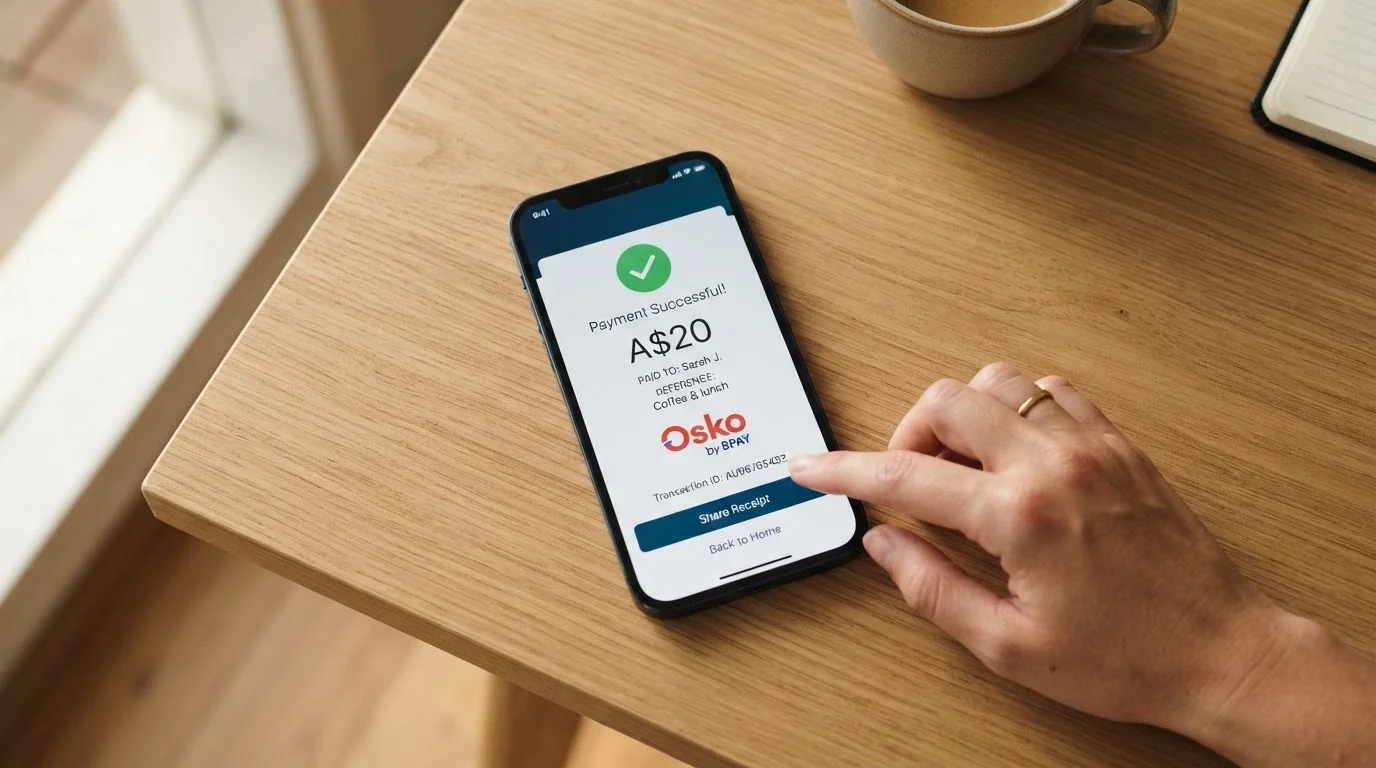
PayID and Osko are the same rail — instant transfers between Australian bank accounts using a phone number, email or ABN as the identifier rather than a BSB and account number. At offshore casinos PayID deposits land in seconds, and withdrawals back to PayID clear within twelve hours at most operators tested across this review. The reason is mechanical: PayID is a real-time payment system, not a card network, and the operator’s processing window is the only thing that delays the money.
The offshore operators that pitch to Australian players put PayID at the top of their banking pages for that reason. A player who deposits by PayID is a player who can be paid back the same way, and the operator’s reputation depends on that round trip. The few operators who do not offer PayID — those whose Australian-facing pages list only cards and crypto — are usually the ones with the thinnest Australian banking relationships and the longest withdrawal queues.
Credit cards, debit cards and the 2024 payment ban
The Interactive Gambling Amendment (Credit and Other Measures) Act 2023 banned credit cards and crypto for online wagering from 11 June 2024. The penalty for an Australian-licensed operator that accepts one is up to A$247,500 per breach. The ban was written for licensed wagering services — the NT-licensed bookmakers, the state lottery operators, the licensed totalisators. It does not reach an offshore casino, because an offshore casino is not licensed in Australia to begin with.
What this means for an Australian player is layered. Using a debit card at an offshore casino is legal for the player, and is the closest Australian-compliant option to a credit card. Using a credit card is not, technically, illegal for the player — the IGA targets the provider — but it puts the player inside a transaction the operator is processing in defiance of Australian law. The Interactive Gambling Amendment (Gambling Reform) Bill 2026 passed Parliament on 19 August 2026, and from 1 January 2027 banks and payment providers gain express authority to block transactions to illegal gambling operators. Whether a credit card deposit to a Curaçao-licensed casino falls inside that authority is the question the next twelve months will answer.
Crypto, e-wallets and the remaining deposit channels
Bitcoin, USDT and other cryptocurrencies are accepted at most Curaçao-licensed offshore casinos that pitch to Australian players. The transactions clear faster than PayID for international operators, the verification burden is lighter at deposit, and the player does not need an Australian bank account to fund the balance.
The trade-off is volatility. A$20 in Bitcoin on Monday is not A$20 in Bitcoin on Friday, and the player who wins at the pokie is winning in crypto, not in dollars. The win can be worth more or less in AUD by the time it converts. For a player already holding crypto, the volatility is background noise. For a player who buys Bitcoin specifically to deposit, it is a second bet on top of the first.
E-wallets are scarcer in the Australian-facing offshore market than in the European one. Skrill and Neteller appear at some operators, but the Australian player who hits a Skrill-only deposit page has usually reached a brand that has not localised properly. Bank transfer remains the fallback — slow, usually requiring more than A$20, and rarely the fastest route into the casino.
Why Your 2026 Bonus Isn’t as Big as It Looks
A welcome bonus is a marketing number wrapped around a turnover requirement, a bet cap and an expiry window. The marketing number is the percentage match — 100%, 200%, 450%. The turnover requirement is the wagering multiplier. The bet cap is the maximum spin value while the bonus is active. The expiry window is the deadline to clear the wagering before the bonus and any winnings from it are forfeit.

The fairer end of the Australian offshore market in 2026 runs around 35x bonus-only wagering with an A$10 bet cap and a 30-day expiry. The hostile end is 60x wagering, a 5-day expiry, or both. Between those poles sits most of the ranked set.
Match-rate offers: what a $20 first deposit unlocks
A 100% match up to A$200 is the standard welcome structure — A$20 in, A$40 to play with, A$20 of bonus money to clear. A 200% match up to A$200 doubles that to A$60 of bonus on a A$20 deposit. A 450% match sounds enormous until it is split across four deposits and the first deposit requires A$30, not A$20, to trigger.
The percentage is the marketing. The minimum deposit for the bonus is the fine print. Several operators in this review set their welcome bonus minimum above their published account minimum — SkyCrown at A$30 for the first deposit, Rocket Play at A$25, Bizzo at A$25 — while keeping the A$20 figure on the deposit page as the account-level floor. A player who deposits A$20 thinking they have triggered the welcome bonus often finds they have only funded the account, and the bonus remains locked until the next deposit clears the higher threshold.
Free-spin packages: what 100 spins is actually worth
Free-spin packages at the A$20 deposit tier run between 75 and 200 spins, attached to a designated pokie — most commonly Big Bass Bonanza, Book of Dead or Gates of Olympus. The headline figure counts spins, not value. A spin’s value is set by the pokie’s minimum bet, usually A$0.10, and the cash return from those spins depends on the pokie’s RTP. On Big Bass Bonanza at 96.71% RTP, 100 spins at A$0.10 returns roughly A$9.67 in expected value over the long run — and A$9.67 less whatever the wagering requirement on those winnings takes out.
The wagering on free-spin winnings is the second filter. 40x on free-spin winnings is standard across the offshore market, which means the A$9.67 a player wins on 100 Big Bass spins becomes A$386.80 of wagering before it converts to withdrawable cash. By the time that wagering is cleared, the expected loss on the turnover is, at a 3.50% house edge, A$13.54 — and the player is A$3.87 behind where they would have been had they kept the A$9.67 as bonus money with no wagering.
Wagering requirements and the arithmetic of a bonus
A 40x wagering requirement on a A$200 bonus is A$8,000 of turnover. A 30x requirement is A$6,000. Each spin at A$0.10 contributes its full stake to that turnover, and the house edge on each spin is whatever the pokie’s RTP is not. On Gates of Olympus at 96.50% RTP, the house edge is 3.50%, and a player clearing A$6,000 of turnover on that pokie alone gives back, on average, A$5,790. The A$210 difference is the bonus’s real cost.
Take a concrete example. Fair Go Casino’s welcome offer is 100% up to A$200 on a A$20 minimum deposit, with 30x wagering on bonus funds. A player who deposits A$20 and clears the A$20 bonus is committing A$600 of turnover. Assuming only the bonus amount is wagered and every spin lands on Gates of Olympus at A$0.10, the expected loss on that turnover — at the 3.50% house edge baked into the pokie — is A$21. That is A$1 more than the A$20 bonus that funded it. The headline number pays the player. The arithmetic quietly takes it back, plus a margin.
Two caveats sit beside that number. The first is that the calculation assumes only the bonus amount is wagered — not the deposit, not any winnings — and that the player never hits a feature round that doubles the stake. The second is that the calculation is a statistical estimate, an average across many spins under those assumptions. No single player is guaranteed to lose exactly A$210. The estimate describes the expected outcome of a player who clears the wagering requirement on this single pokie at this single RTP. The figure describes the average, not the worst case and not the best one.
Game-weighting is the silent extra. Table games contribute 0–10% of stake toward wagering at most offshore casinos, sometimes zero. A player who tries to clear a bonus on blackjack will find A$10,000 of stake contributing A$1,000 toward wagering at best, and the expected loss on the table game at its higher house edge will be larger than the bonus funded. Pokies are the only game type most offshore casinos let a bonus player use, and the welcome bonus terms usually say so explicitly.
The 10 $20 Deposit Casinos Accepting Australian Players in 2026
Every operator in this table is offshore, Curaçao-licensed, and not licensed in Australia. The Interactive Gambling Act 2001 prohibits the supply of online casino games to anyone in Australia, and no Australian licence exists to issue for that product. The brands below have not been reviewed against Australian consumer law because Australian consumer law does not reach them. They have been reviewed against the bonus terms published on their own sites, the wagering requirements stated in their small print, and the deposit and withdrawal methods actually available to an Australian account.
| Casino | Welcome Bonus | Free Spins | Wagering | Min Deposit |
|---|---|---|---|---|
| SkyCrown | 450% up to A$8,000 across 4 deposits | 400 (on Wolf Treasure) | 40x | A$30 (1st bonus) |
| Rocket Play | 200% up to A$200 | 100 | 40x | A$25 |
| Fair Go | 100% up to A$200 × 5 deposits | 15 no-deposit on Bubble Bubble | 30x | A$20 |
| Royal Reels | 100% up to AU$500 | — | 30–40x | — |
| Bizzo Casino | 100% / 50% / 30% / 25% across 4 deposits | 150 | 40x | A$25 |
| Stake | No welcome bonus (rakeback model) | — | n/a | n/a |
| WinSpirit | — | — | — | — |
| Rainbet | — | — | — | — |
| Scream Casino | — | — | — | — |
| Rocket Casino | — | — | — | — |
The em-dash cells are not evasion. They are operators whose welcome offer, wagering multiple and minimum deposit could not be verified from their own published terms at the time of this review. An operator whose bonus terms cannot be checked before a deposit is one whose offer cannot be safely compared to the rest of the table. WinSpirit, Rainbet, Scream Casino and Rocket Casino sit at the bottom of the ranking for that reason, not because their products are necessarily worse.
SkyCrown: 450% across four deposits — but the A$30 catch
SkyCrown’s headline figure is the largest in the set: 450% across four deposits, up to A$8,000 total plus 400 free spins. The structure is 120% on the first deposit up to A$1,200 plus 125 free spins on Wolf Treasure, then 100%, 80% and 150% across the next three. Wagering is 40x on bonus funds and on free-spin winnings. Max bet with bonus money is A$7.50. The bonus is valid for 14 days. The bonus-to-cash conversion is capped at A$5,000 per stage.
The catch is the first deposit minimum. SkyCrown’s account-level minimum is A$20; its first-deposit-bonus minimum is A$30. A player who deposits A$20 funds the account but does not trigger the welcome bonus. That gap is the difference between the A$20 deposit page and the A$1,200 bonus headline.
SkyCrown operates under Curaçao iGaming certificate OGL/2023/176/0095 via Hollycorn N.V. The licence is verifiable through Curaçao Gaming Control Board registers. It is not an Australian licence, and the protections an Australian licence would confer — ACMA dispute resolution, BetStop coverage, state-level ombudsman recourse — do not apply.
A welcome bonus of this size at 40x wagering across 14 days is a tight sprint. The bonus is worth chasing for a player who plans four deposits in their first two weeks and has the time to clear the turnover. For a player who deposited A$20 and discovered the minimum was actually A$30, the welcome bonus is over before it started.
Rocket Play: 200% first-deposit match with a modest cap
Rocket Play’s welcome is a 200% match up to A$200 plus 100 free spins on the first deposit, with 40x wagering on bonus funds and a 14-day validity. The minimum deposit for the bonus is A$25. The bonus cap is modest against SkyCrown’s A$8,000 — but the wagering requirement and the validity window are the same.
The operator is Scores55 Tech B.V. under Curaçao Gaming Control Board licence OGL/2024/1307/0748. Rocket Play’s terms read cleaner than SkyCrown’s: no four-deposit ladder to navigate, no free-spin split across stages, no max-cashout cap from the welcome bonus published in the headline terms.
The trade-off is the deposit floor. A$25 is A$5 above our headline figure, and a A$20 deposit would still fund the account — it would just not trigger the bonus. For a player whose budget really is A$20, Rocket Play is a brand they have to deposit slightly more at to use as advertised. The terms are otherwise the kind an offshore player can read once and understand.
Fair Go: the only operator with a true A$20 bonus floor
Fair Go Casino is the only operator in the ranking where A$20 is both the account minimum and the welcome bonus minimum. The welcome is 100% up to A$200 across five deposits — A$1,000 total bonus value — at 30x wagering. The bonus percentage is the lowest in the set. The wagering multiple is the lowest in the set. The result is the most accessible bonus structure in the ranking for a player at the A$20 floor.
Fair Go also offers 15 no-deposit free spins on Bubble Bubble, with 60x wagering on any winnings. The no-deposit offer is genuinely no-deposit — no A$20 first, no bonus code, no opt-in beyond registration. It is also the most heavily wagered bonus in the ranking, which is the trade-off the offshore market charges for letting a player touch the games before paying.
Fair Go is the only major operator in the set that runs exclusively on RealTime Gaming software. The library is narrower than Bizzo’s 60-provider spread, but every title is RTG, and the welcome bonus terms are simpler to read because of it. It remains the most accessible option in the ranking for a player who wants a straightforward bonus structure and a deposit floor that matches our headline exactly.
Royal Reels: a rare no-deposit signup chip in the mix
Royal Reels offers an AU$10 no-deposit signup chip on registration — a small bonus that arrives before any deposit — alongside a 100% welcome match up to AU$500 at 30–40x wagering. The signup chip is the cheapest test drive in the ranking: a player registers, the AU$10 lands in the bonus balance, and the player can try the lobby before committing their own money.
The chip is small. AU$10 at A$0.10 per spin buys 100 spins on Big Bass Bonanza before the wagering requirement takes effect, and the winnings from those spins are usually well under A$20. The chip’s role is not to make the player rich — it is to let them check whether the casino’s lobby, payment flow and game performance suit them before they deposit.
Royal Reels’ specific Curaçao licence number, exact wagering terms on the signup chip and detailed bonus conditions were not verifiable from the operator’s published terms at the time of this review. The chip’s existence is corroborated across multiple affiliate sources. The fine print is not.
Bizzo Casino: 3,000+ titles behind a four-stage bonus ladder
Bizzo’s library is the largest in the ranking — more than 3,000 titles across 60 providers — and the welcome bonus is structured as four sequential deposit stages: 100% plus 100 free spins up to A$250, then 50% plus 50 free spins up to A$750, then 30% up to A$2,000, then 25% up to A$2,000. Wagering is 40x, max bet with bonus money is A$6.50, and the minimum deposit to trigger the first bonus is A$25.
The total bonus ceiling is A$5,000, lower than SkyCrown’s A$8,000 but front-loaded more aggressively — half the bonus value sits in the first two deposits. The library is the bigger selling point. A player who has played Big Bass Bonanza to death will find hundreds of alternatives at Bizzo that they will not find at Fair Go.
The operator is TechSolutions Group N.V., Curaçao-licensed, launched 2021. The Curaçao licence number was not confirmed at the same level of detail as SkyCrown’s or Rocket Play’s for this review. The headline numbers — library size, bonus stages, max bet cap — were.
For a player whose priority is game variety and who plans four deposits in their first two weeks, Bizzo’s library is the strongest argument in the ranking. The wagering and bonus ladder are otherwise comparable to SkyCrown’s, and the maximum bonus conversion terms were not as clearly published.
Stake: no welcome bonus — rakeback and challenges instead
Stake is the only operator in the ranking with no welcome bonus at all. The model is rakeback — between 0.1% and 0.5% returned on every bet — plus weekly challenges with prizes up to A$25,000 and a 15-tier VIP programme that pays up to 15% cashback at the top. AUD is not supported: Stake accounts are denominated in USD or cryptocurrency.
Stake is also the only operator in the ranking that is geo-blocked in Australia under IGA enforcement. Australian access is intermittent — some ISPs throw DNS blocks, some do not. The site can be reachable one week and unreachable the next, and there is no recourse for a player whose balance is locked behind a block.
The brand fits a player who already holds crypto, is comfortable with intermittent Australian access, and prefers rakeback economics to a bonus turnover grind. For a player at the A$20 tier looking for a welcome bonus, Stake is the wrong page entirely — it does not do the thing the page is about. That is worth saying clearly rather than burying it.
WinSpirit: weekly reloads and regular tournament access
WinSpirit is Curaçao-licensed, accepts Australian players, and the bonus structure it is known for is the ongoing one — a 30% weekly reload, a Wednesday free-spins promotion, and regular slot tournaments. Welcome bonus terms were not verified at the same level of detail as the rest of the ranking.
For a player whose interest is a long-term relationship with a Curaçao-licensed operator rather than a one-time welcome package, WinSpirit reads as a brand built around retention rather than acquisition. The published bonus terms should be verified directly with the operator before depositing, because what an affiliate aggregator claims and what the small print says are not always the same thing.
Rainbet: a lean operator with a thin public footprint
Rainbet holds a Curaçao offshore licence and accepts Australian players. Beyond that, the public-facing details — welcome bonus, game library size, wagering terms — are not verifiable from the operator’s own published material at a level that supports a side-by-side comparison with the rest of the table.
An operator with a thin public footprint is not necessarily a worse operator. It is one whose claims cannot be checked before a deposit, and at the A$20 tier the difference between an unverifiable welcome package and a 30x wagering offer is the difference between a bonus the player can plan around and one they cannot.
Scream Casino: newer entrant with Curaçao backing
Scream Casino is a recent offshore arrival targeting Australian players under a Curaçao licence. The bonus structure, game library and provider list are not published in enough detail to support a comparable review.
For a player who likes new brands and accepts the trade-off of an unverified welcome package, Scream is one of several Curaçao-licensed options in the same position. It lacks the deep-verified terms of the top-ranked operators, making it a secondary choice for those who demand transparent wagering requirements before they commit.
Rocket Casino: a familiar name with limited verified data
Rocket Casino holds a Curaçao licence and accepts Australian players, but the bonus, library and wagering specifics have not been published at the depth required for the comparison table above. The brand name will be familiar to players who have seen it on affiliate lists; the published terms are thinner than those at SkyCrown or Rocket Play.
A player who has heard the name should treat the familiar branding as a marketing signal and the missing terms as a verification gap. Both pieces of information matter, and only one of them tells the player anything about the bonus they would actually be claiming.
Mobile $20 Deposits: Your Phone Is Now the Casino Floor
The mobile experience at offshore casinos is the desktop experience, minus the screen real estate. Most operators in this ranking run a responsive web app rather than a dedicated iOS or Android application — there is no App Store download, no Google Play install, no apk file to side-load. The browser is the platform, and the platform is the same one the desktop uses, scaled down.
The mobile deposit experience: iOS, Android and browser play
PayID deposits on a mobile browser work identically to PayID deposits on a desktop. The flow is the same: open the cashier, select PayID, enter the amount, confirm via the banking app. The PayID rail is the rail — the device sending the instruction does not change it. Withdrawals back to PayID clear within the same twelve-hour window.
The pokie experience on a phone is the difference. Touch-target bet adjusters, portrait-mode reels and battery cost over a long session are all worth a test in demo mode before a A$20 deposit is committed. A high-volatility pokie that drains a bankroll in minutes is a worse experience on a phone with 12% battery than on a desktop plugged into a wall.
Crypto Deposits at the $20 Level: Fast, but Not Without Risk
Crypto deposits at Curaçao-licensed offshore casinos are widely accepted — Bitcoin, USDT, Ethereum, occasionally Litecoin. The transactions clear faster than PayID for international operators, the verification burden is lighter at deposit, and the player does not need an Australian bank account to fund the balance.
The trade-off is volatility. A$20 in Bitcoin on Monday is not A$20 in Bitcoin on Friday, and the player who wins at the pokie is winning in crypto, not in dollars. The win can be worth more or less in AUD by the time it converts. For a player already holding crypto, the volatility is background noise. For a player who buys Bitcoin specifically to deposit, it is a second bet on top of the pokie.
Crypto is also banned for licensed Australian wagering since 11 June 2024, with penalties of up to A$247,500 per breach for licensed operators. The ban does not reach an offshore casino. The player using Bitcoin at a Curaçao-licensed site is operating inside the offshore operator’s terms, not inside the Australian prohibition — but is also operating outside any Australian consumer protection on the transaction itself. From 1 January 2027, the new bank-blocking authority may narrow even that path if a bank decides to decline the on-ramp exchange that funded the wallet.
The Pokies Worth Your $20 — and the Ones That Aren’t
Return to player is the share of every dollar wagered that a pokie returns to players over the long run. A 96.71% RTP pokie returns A$96.71 of every A$100 wagered, on average, across millions of spins. A 94% pokie returns A$94. The A$20 bankroll plays very differently on those two titles — A$1.94 of every A$20 stays with the house on the higher-edge title, A$1.35 on the lower-edge one.

Volatility is the second filter. A high-volatility pokie pays out less often and in larger amounts when it does. A low-volatility pokie pays out more often and in smaller amounts. A A$20 bankroll on a high-volatility title will often end in a session of zero or near-zero balance. The same bankroll on a low-volatility title will produce a longer session with smaller wins. Neither is better or worse — they are different shapes of session, and the right one depends on whether the player wants the chance of a meaningful hit or a longer run of play.
Pokies with the best RTP for a $20 bankroll
Big Bass Bonanza, Sweet Bonanza, Gates of Olympus and Book of Dead all sit above 96% RTP. Big Bass Bonanza at 96.71% is the headline — A$20 wagered on it returns A$19.34 in expected value over the long run. Sweet Bonanza at 96.51% returns A$19.30. Gates of Olympus at 96.50% returns A$19.30. Book of Dead at 96.21% returns A$19.24.
The differences look small. Over a A$6,000 turnover run to clear a welcome bonus, the gap between a 96.71% pokie and a 96.21% pokie is A$30 in expected loss — A$210 versus A$228. That A$30 is the bonus’s effective haircut on the worse-RTP pokie, paid by the player.
The pokie RTP table: which titles return the most
| Slot Title | Provider | RTP | Volatility | Max Win |
|---|---|---|---|---|
| Big Bass Bonanza | Pragmatic Play | 96.71% | High | 2,100x |
| Big Bass Splash | Pragmatic Play | 96.71% | High | 5,000x |
| Sweet Bonanza | Pragmatic Play | 96.51% | High | 21,100x |
| Gates of Olympus | Pragmatic Play | 96.50% | High | 5,000x |
| Book of Dead | Play’n GO | 96.21% | High | 5,000x |
| Starburst | NetEnt | 96.09% | Low | 500x |
| Wolf Gold | Pragmatic Play | 96.01% | Medium | 2,500x |
The seven titles cluster between 96.01% and 96.71% RTP — a 0.7 percentage point spread. Pragmatic Play owns five of the seven. NetEnt’s Starburst is the outlier on volatility, not on RTP — at low volatility it pays out more frequently but at a lower maximum (500x stake against 5,000x or 21,100x for the high-volatility titles). For a A$20 session, Starburst is the longest-playing pokie in the table.
Pragmatic Play, NetEnt and the studios behind the reels
Pragmatic Play’s footprint in the Australian-facing offshore market is hard to overstate. The Big Bass series, Sweet Bonanza and Gates of Olympus are the most common welcome-bonus pokies at the operators in this review, and a player who has used a welcome offer at any of them has almost certainly spun a Pragmatic Play title. The provider’s high-volatility catalogue suits the welcome bonus structure, which wants the player to grind turnover rather than cash out small wins early.
NetEnt’s presence is narrower but distinct. Starburst’s low-volatility model is the opposite of the Pragmatic Play catalogue — frequent small wins, a 500x max payout ceiling, longer sessions per bankroll. Play’n GO’s Book of Dead rounds out the high-volatility flagship set. RealTime Gaming is Fair Go’s sole provider — a single-studio library that simplifies the welcome bonus terms at the cost of variety.
The Legal Reality: No Online Casino Is Licensed in Australia
Every brand in this review is breaking Australian law. The Interactive Gambling Act 2001 makes it an offence to provide a prohibited interactive gambling service — online casino games, online pokies, in-play sports betting — to a person in Australia. The offence is committed by the operator. The Australian player is not the target.

That distinction matters, and it is the line an honest page on this topic walks. A player who deposits A$20 at a Curaçao-licensed casino from an Australian IP is not committing an offence under the IGA. They are also not protected by any Australian consumer law, not covered by BetStop, not able to escalate a dispute to ACMA, and not guaranteed that the site they deposited at will be reachable tomorrow.
The Interactive Gambling Act 2001 and the online casino prohibition
The IGA prohibits online casino games and online pokies in Australia. What it permits is wagering on pre-event races and sport, lotteries and keno — through operators licensed by a state or territory. The Northern Territory Racing and Wagering Commission, administered through Licensing NT, is the de facto national licensor for online wagering. Sportsbet, bet365, Ladbrokes and around fifty other bookmakers hold NT licences.
There is no equivalent licence for online casino anywhere in Australia — not federally, not in any state or territory. The product is banned, not capped. The ACMA enforces the ban by investigating complaints, issuing formal warnings, directing ISPs to block illegal sites, and pursuing civil penalty proceedings against providers.
Offshore operators: Curaçao licences and what they do not protect
A Curaçao licence is not an Australian licence. It does not give the holder any standing to operate in Australia, does not put the holder under ACMA jurisdiction, and does not give Australian players any of the protections Australian consumer law confers on Australian-licensed services. A Curaçao licence does require the operator to maintain segregated player funds and to submit to the Curaçao Gaming Control Board’s dispute process — but a player who needs that dispute process is a player who has already lost the money they are disputing.
The individual player is not prosecuted under the IGA. The provider is. That distinction is the reason Australian players can still reach an offshore casino, and the reason Australian players should not expect the ACMA to recover their balance if the operator refuses a withdrawal.
ACMA enforcement: site blocking, penalties and 1,564 blocked sites
The ACMA has directed Australian ISPs to block 1,564 illegal gambling and affiliate websites since November 2019. More than 225 illegal services have withdrawn from the Australian market since enforcement was strengthened by the Interactive Gambling Amendment Act 2017. The pace has not slowed. The Interactive Gambling Amendment (Gambling Reform) Bill 2026 passed Parliament on 19 August 2026, and from 1 January 2027 banks and payment providers gain express authority to block transactions to illegal gambling operators.
The next twelve months will reshape how the offshore market reaches Australian players. PayID, BPAY and direct bank transfer all run through Australian banks, and the banks will gain the authority — and arguably the obligation — to decline or reverse those transactions when the recipient is on the ACMA’s blocking list. Crypto is outside the banking system entirely, and the offshore operators will keep accepting it. A player funding an offshore casino in Bitcoin in 2027 may be funding it through a smaller channel than they did in 2024.
BetStop and why it does not cover offshore casinos
BetStop — the National Self-Exclusion Register — launched on 21 August 2023. One registration excludes a person from every Australian-licensed online and phone wagering service. As of 31 December 2025, 35,135 Australians held active exclusions out of 54,859 total registrations.
The exclusion period runs from a minimum of three months to a lifetime. Reducing an exclusion requires a statutory declaration with counselling evidence. BetStop binds Australian-licensed wagering services — approximately 150 providers. It does not bind offshore casinos. A person who has self-excluded via BetStop is still welcome at every Curaçao-licensed operator in this review.
That gap is the most important thing to know about BetStop for a player considering an offshore casino. Self-exclusion through BetStop does not stop offshore play. Self-exclusion through the offshore operator itself, requested via the responsible-gambling page of each individual site, is the only mechanism that reaches the offshore side — and it requires the player to request it from each operator, separately.
Keeping a $20 Bankroll Under Control
A A$20 deposit is, by design, a small bet. The same smallness that makes it attractive also makes it harder to lose in a way that causes lasting harm — the worst case at A$20 is A$20. That is a feature of the deposit floor, not a defence of the product. Players with a gambling problem do not stay at A$20.
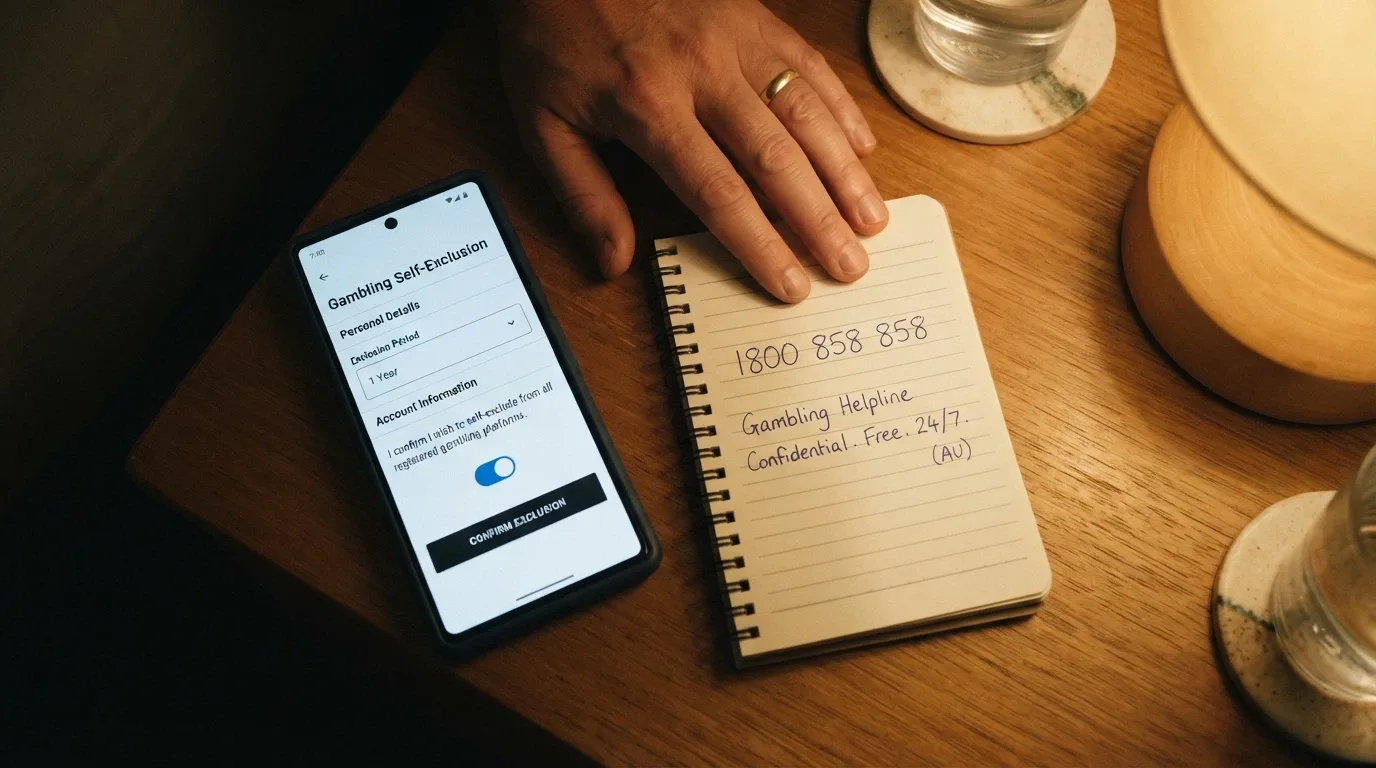
The tools available to a player at an offshore casino are operator-level. Deposit limits, session timers and reality-check pop-ups exist at most Curaçao-licensed brands — they are voluntary, set in the account settings, and not enforceable across operators. A player who sets a A$20 daily deposit limit at one offshore casino can still deposit A$20 at the next one. The same applies at A$200, A$500, A$1,000 — the limit is per operator, and the offshore market does not aggregate.
Deposit limits, session timers and the tools offshore casinos offer
Curaçao-licensed offshore casinos typically offer deposit-limit settings, session-time reminders and self-exclusion options in the responsible-gambling section of the player account. The tools vary by operator. The standard suite is a daily, weekly or monthly deposit cap, a session-time pop-up that fires after a configurable interval, and a self-exclusion option that closes the account for a set period.
These tools are operator-side only. They do not aggregate across operators, do not connect to BetStop, and do not put the player on any national register. A player who needs cross-operator exclusion has to request it from each brand individually. The tools are real. Their reach is narrow.
Where to get help: helplines, self-exclusion and counselling
Free, confidential help is available to every Australian, regardless of where the gambling happens. The services below are not offshore, are not promotional, and will not share a player’s information with any operator.
- National Gambling Helpline: 1800 858 858 — free, confidential, 24/7
- Gambling Help Online: gamblinghelponline.org.au — free 24/7 chat and email counselling
- BetStop: betstop.gov.au — National Self-Exclusion Register (minimum 3 months to lifetime)
- Gambler’s Help: gamblershelp.com.au — face-to-face, online and telephone counselling plus financial counselling and peer support
A player who needs these services does not need to be at the A$20 tier, and the services are not contingent on the player’s deposit size. The A$20 player who picks up the phone picks up the same phone as everyone else.
The scale of gambling harm in Australia
Australians lost A$36.0 billion to gambling in the twelve months to March 2026, an increase of A$1.3 billion on the year before. Per adult, the average annual loss is A$1,635 — the highest in the world. Since COVID-19, total losses have risen 75%, or A$15.3 billion.
The harm is not evenly distributed. As of March 2026, an estimated 3,320,000 Australians — 15.1% of the population — were experiencing gambling harm from their own or someone else’s gambling. Problem gambling severity rose from 1.9% in 2022-23 to 2.9% in 2024-25. Risky gambling, measured by PGSI, almost doubled between 2020-21 and 2025. The majority of problem gamblers are aged under 35.
The offshore casino market sits inside that picture. Online gambling participation has been the fastest-growing segment of Australian gambling for the past decade, and the offshore operators reviewed here are a material part of it. A page about a A$20 deposit tier should be a page that knows what the wider market looks like, because the A$20 tier is the entry point that the wider market grows out of.
How We Selected and Ranked These Offshore Operators
The ten operators in this review were selected for accepting Australian players, offering a bonus or product at the A$20 tier, and holding a Curaçao or equivalent offshore licence. Within that set, ranking was driven by verifiability — operators whose welcome bonus terms, wagering requirements and minimum deposits could be confirmed from their own published terms ranked above operators whose terms could not.
The sources were operator terms pages, affiliate test data published by comparison sites covering the AU-facing offshore market, and ACMA public records for enforcement context. No operator paid for inclusion in this ranking. No weighting system was constructed — the ranking is editorial, not algorithmic, and the reasoning for each placement sits in the operator write-up above.
The legal context is the same for every operator in the table: every brand is offshore, Curaçao-licensed, and not licensed in Australia. The selection did not include brands that are licensed in Australia because no online casino operator holds an Australian licence. The page does not claim the featured set is the whole market — there are several hundred offshore brands accepting Australian players, and the ten here are the ones the editorial pass could verify at the level of detail the ranking demands.
Is a $20 Deposit at an Offshore Casino Worth the Risk?
The arithmetic is simple. The legal picture is not. A$20 buys real-money play at ten offshore casinos that pitch to Australian players, with welcome bonuses ranging from a 100% match at 30x wagering to a 450% package across four deposits at 40x. The withdrawal floor at most of them sits above the deposit floor, which means the A$20 player is the player most likely to find their balance locked below the cashout line.

The expected cost of clearing a welcome bonus at the fairer end of the market is comparable to the bonus value itself. A A$200 bonus at 30x wagering on a 96.50% RTP pokie produces an expected loss of A$210 — the bonus pays the player, then quietly takes it back. That arithmetic is the most honest number on this page, and it is the number a reader who only reads one paragraph should walk away with.
The legal protection gap is the second number. No Australian consumer protection, no BetStop coverage, no ACMA dispute resolution, no deposit guarantee. The ACMA blocks offshore sites regularly — 1,564 since 2019 — and a player can find their account unreachable with a balance on it. From 1 January 2027, banks gain authority to block the transactions themselves. The offshore casino a player uses today may not be reachable by PayID in 2027.
The withdrawal floor trap is the third. Minimum deposit A$20, minimum withdrawal A$25–A$100. The trap is structural and consistent across the market, and it is the reason the A$20 player is not the player the bonus is designed for. The A$200 deposit player is.
The responsible-gambling safeguard is the one honest upside. A A$20 deposit is, by its size, self-capping. The worst case at A$20 is A$20. That does not make the product safe — players with a gambling problem do not stay at A$20 — but it does make the deposit floor a poor vehicle for the kind of loss the Australian gambling-harm data describes. The harm is elsewhere. The A$20 tier is, in a sense, the part of the market least able to cause it.
The decision is personal. It must be made with full knowledge of what Australian law does and does not protect. This page is written to give the reader that knowledge, and to give them the arithmetic to weigh it against the bonus. What they do with both is theirs.
Frequently asked questions
Can I get a welcome bonus with a $20 deposit at Australian online casinos?
Yes — at Fair Go Casino, where the welcome bonus minimum is A$20 and the offer is 100% up to A$200 across five deposits at 30x wagering. Most other operators in this review set their bonus minimum above the account minimum, so SkyCrown triggers at A$30, Rocket Play and Bizzo at A$25. A A$20 deposit still funds the account; it just does not unlock the headline bonus.
How long does a PayID withdrawal take at a $20 deposit casino?
PayID withdrawals at offshore casinos typically clear within twelve hours, based on testing across the operators in this review. The PayID rail is real-time; the delay is the operator’s processing window. A few operators run faster, a few slower, and a small number hold withdrawals for additional verification on the first cashout — which can stretch the timeline into days rather than hours.
What are the wagering requirements for a $20 deposit bonus?
The fairer end of the Australian offshore market sits around 35x bonus-only wagering with a 30-day expiry; the hostile end hits 60x or a 5-day expiry. Fair Go’s 30x is the lowest in the ranked set. SkyCrown, Rocket Play and Bizzo run 40x. Wagering usually applies to the bonus amount only, not the deposit — though some operators apply it to bonus plus deposit combined, which roughly doubles the turnover.
Can I use a credit card to deposit $20 at an online casino in Australia?
Using a credit card to deposit at an Australian-licensed wagering service has been banned since 11 June 2024 under the Interactive Gambling Amendment (Credit and Other Measures) Act 2023. The ban does not reach an offshore casino, but an offshore casino accepting credit cards from Australian players is processing the transaction outside the rules the ban was written for. Debit cards are the legal alternative for a player who wants to use a card at all.
What is BetStop and does it cover offshore casino sites?
BetStop is the National Self-Exclusion Register, launched on 21 August 2023. One registration excludes a person from every Australian-licensed online and phone wagering service — approximately 150 providers. It does not cover offshore casinos. A self-excluded person who wants to stop gambling at offshore sites has to request exclusion from each operator individually, through that operator’s responsible-gambling page.
What pokies can I play with a $20 deposit at an Australian online casino?
Most offshore casinos in this review run Pragmatic Play, NetEnt, Play’n GO and several dozen other providers. The pokies most often attached to welcome bonuses are Big Bass Bonanza, Gates of Olympus, Book of Dead and Sweet Bonanza — all high-volatility, all above 96% RTP. A$20 at A$0.10 per spin buys 200 spins on the minimum bet of Big Bass Bonanza. The expected return over those 200 spins is roughly A$19.34, before any bonus funds are added.