
Fastest Payout Online Casinos in Australia: How Speed Actually Works at Offshore Sites in 2026
The fastest payout in the world is worthless if the operator refuses to send it. That is the sentence this page is built around, because for an Australian player in 2026 the two words “fast payout” and “online casino” sit inside a stack of constraints no European reader ever meets. There is no online casino licensed anywhere in Australia. Every site that promises an instant or same-day withdrawal is operating offshore — licensed in Curaçao, hosted in another time zone, and answerable to nothing in Australian law. The speed is real. The protection is not.

The fastest routings an Australian player can actually use are PayID/Osko on the domestic payments rail, e-wallet withdrawals where the offshore casino offers them, and cryptocurrency on the operators that accept it. The fastest legal routings are PayID/Osko, debit card, bank transfer and BPAY — credit cards and crypto are banned as payment for online wagering from 11 June 2024, and using them at an offshore casino is itself a signal the operator sits outside Australian rules. The page that follows ranks ten offshore casinos by their Australian player base in 2026, walks through each withdrawal method an AU player can choose, and lays out what an Australian player gives up the moment they fund an account at any of them.
Current as of 28 October 2026, with licence and prohibition status verified against the Interactive Gambling Act 2001, ACMA enforcement records and BetStop data.
Table of Contents
- Fast Payouts Aren’t a Perk — They’re the Bare Minimum
- The Fast-Payout Offshore Casinos Australians Are Using in 2026
- Why Your Withdrawal Method Decides Whether You See Your Money This Week
- Crypto Casinos: Where “Instant” Actually Means Instant
- Bonuses That Pay Out — and the Fine Print That Traps Your Winnings
- The Pokies That Pay: High-RTP Games and Fast Cashouts
- Seven Checks Before You Deposit at Any Fast-Payout Casino
- The Legal Reality: Every Fast-Payout Casino Is Offshore
- Staying in Control: Limits, Help and What BetStop Can’t Do
- How We Evaluated and Ranked These Fast-Payout Casinos
- What You Should Actually Do About Fast Payouts in 2026
- Frequently Asked Questions
Fast Payouts Aren’t a Perk — They’re the Bare Minimum
A fast-payout online casino is one that moves a withdrawal from the “pending” state to your bank or wallet fast enough that you do not lose a weekend to it. In practice that means under 24 hours, ideally same-day, and at the top end a few minutes — what the marketing calls instant. The label is loose. The reality is a chain with two links: the operator’s internal approval, and the payment rail that carries the money from the operator to you. The marketing claim almost always covers only the first link. The player feels the second one.
Australian players face a longer chain than European players because the chain runs through an international bank correspondence, not a domestic payments network. A withdrawal to a Polish or Portuguese player can settle on SEPA in a few hours; a withdrawal to an Australian player typically runs through a Curaçao-based processor, an international bank hop, and a domestic receiving bank that may batch settlements. That is why “fast” matters more in this market than in any other, and why the operators that route to PayID/Osko — the Australian instant payments rail — or to crypto can deliver in minutes what a bank-transfer withdrawal delivers in days.
The marketing around fast payouts is built on one piece of physics the operator controls and one piece it does not. The internal approval window — the time between the player pressing “withdraw” and the money leaving the operator’s account — is entirely the operator’s. The settlement window — the time between the money leaving and the player seeing it — is not. A casino that claims an “instant” payout is almost always promising an instant approval, not an instant arrival. A player who reads the marketing as a promise of speed end-to-end sets themselves up to wait.
What a Fast-Payout Casino Actually Delivers
The speed tiers in this market sort into four bands, and an Australian player should know which band the withdrawal will land in before the first deposit, not after.
The instant tier — minutes to one hour — is dominated by crypto. A Bitcoin confirmation typically lands in ten to sixty minutes depending on network congestion, and Ethereum or USDT settle in minutes when the network is calm. Stake and Rainbet, both featured on this page, market themselves around this tier for crypto users. The instant tier also covers operators that hold funds internally and approve withdrawals fast on e-wallets, though whether they actually do is another matter.
The same-day tier — under 24 hours, often within a few hours — covers most e-wallet withdrawals after the operator approves them, and any operator that pairs an aggressive internal approval window with a PayID/Osko payout rail. The big offshore brands in this list — Rocket Play, Skycrown, Royal Reels, WinSpirit, Scream Casino, Bizzo Casino, Rocket Casino — all claim this tier. The claim is what they publish; what the player experiences depends on KYC, on the operator’s pending window, and on the rail actually chosen.
The 1–5 business day tier is bank transfer territory. Even a fast-approving offshore operator pays this clock for a withdrawal to an Australian bank account via SWIFT, because the money has to clear correspondent banking. FairGO, the slowest of the featured set, claims 24–48 hours; that is faster than the tier’s worst case but slower than every other featured operator.
The 3–5 business day tier is debit card territory for most offshore operators. Debit card is one of the legal AU deposit routes, but the corresponding withdrawal mechanism typically falls back to bank transfer or card-network settlement windows, neither of which is fast. A player who deposits by debit card and expects to withdraw to the same card within a day is not reading the operator’s policy.
The one asterisk that sits across every tier is KYC. “Instant withdrawal” universally means instant after the operator has verified identity documents on first withdrawal. A player who has not submitted ID, proof of address and proof of payment-method ownership before the first cashout is going to wait, and the wait is going to feel like operator delay when it is actually the verification queue.
Why Payout Speed Hits Australian Players Harder
Three structural facts stack against the Australian player. The first is the absence of any domestic licence for online casino. The Northern Territory Racing and Wagering Commission licenses online wagering operators — sports and racing bookmakers — but no Australian regulator licenses online casino games, online pokies, or in-play betting. The result is that no AU-licensed entity exists to set a baseline speed or to apply pressure to slow payers. Every fast-payout casino accepting Australian players is offshore.
The second is the international correspondent-banking layer. Money leaving a Curaçao-based casino to an Australian bank typically clears one or more intermediary banks before arriving. Each intermediary adds hours at best and a day at worst. A European player betting on a Malta-licensed site has SEPA and the Single Euro Payments Area for the same task; the Australian player has SWIFT and a smaller domestic instant-payments network.
The third is the payment-method squeeze that came in on 11 June 2024. From that date, credit cards, credit-related products and digital currency cannot be used as payment for online wagering in Australia. The penalty for an operator accepting them is up to A$247,500 per breach. The legal AU deposit routes are debit card, bank transfer, PayID/Osko and BPAY. A player who would prefer to fund an account with crypto — because crypto withdrawals are fast — is now choosing between speed and law. And a player who tries to use credit or crypto anyway has chosen an operator that is operating outside Australian rules.
The combined effect is that an Australian player choosing a fast-payout casino is choosing a speed that the operator can deliver only by routing around the banking friction that the offshore position creates. The fast operators do it. The slow ones do not. The difference is what this page ranks.
“Instant Withdrawal” Claims: What the Label Actually Covers
“Instant” is a marketing word, not a settlement guarantee. The honest reading of an instant-withdrawal claim is that the operator’s internal approval window is measured in minutes, not hours or days. The honest unreading is that the player will see the money in their account in the same window, because that depends on the payment rail.
Three claims deserve specific treatment. The first is the crypto instant claim — for an operator that holds funds in crypto and pays out in crypto, “instant” can be near-true because blockchain settlement is the only delay, and on calm networks that is minutes. The second is the e-wallet instant claim — for an operator that pays out to a Skrill or Neteller account, the operator’s approval is the only delay because the e-wallet funds are already on the receiving side. The third is the PayID instant claim — for an operator that pays out to PayID/Osko, the Australian NPP rail settles near-instantly, so the operator’s approval is again the only delay.
Every other instant claim — “instant to your bank account”, “instant Visa withdrawal” — is at best half-true and at worst false. Bank transfers and card-network settlements are governed by rails the operator does not control. A reader who sees the word “instant” on a fast-payout casino landing page should read it as “instant approval” and then check the policy page to see what comes after approval.
The Fast-Payout Offshore Casinos Australians Are Using in 2026
Ten offshore casinos account for the bulk of the Australian-facing fast-payout market in 2026. All ten operate outside Australian law in 2026. None holds an Australian licence. None is connected to BetStop. What follows is the ranking by Australian market share — the closest proxy the public data offers for which operators Australians are actually depositing with.
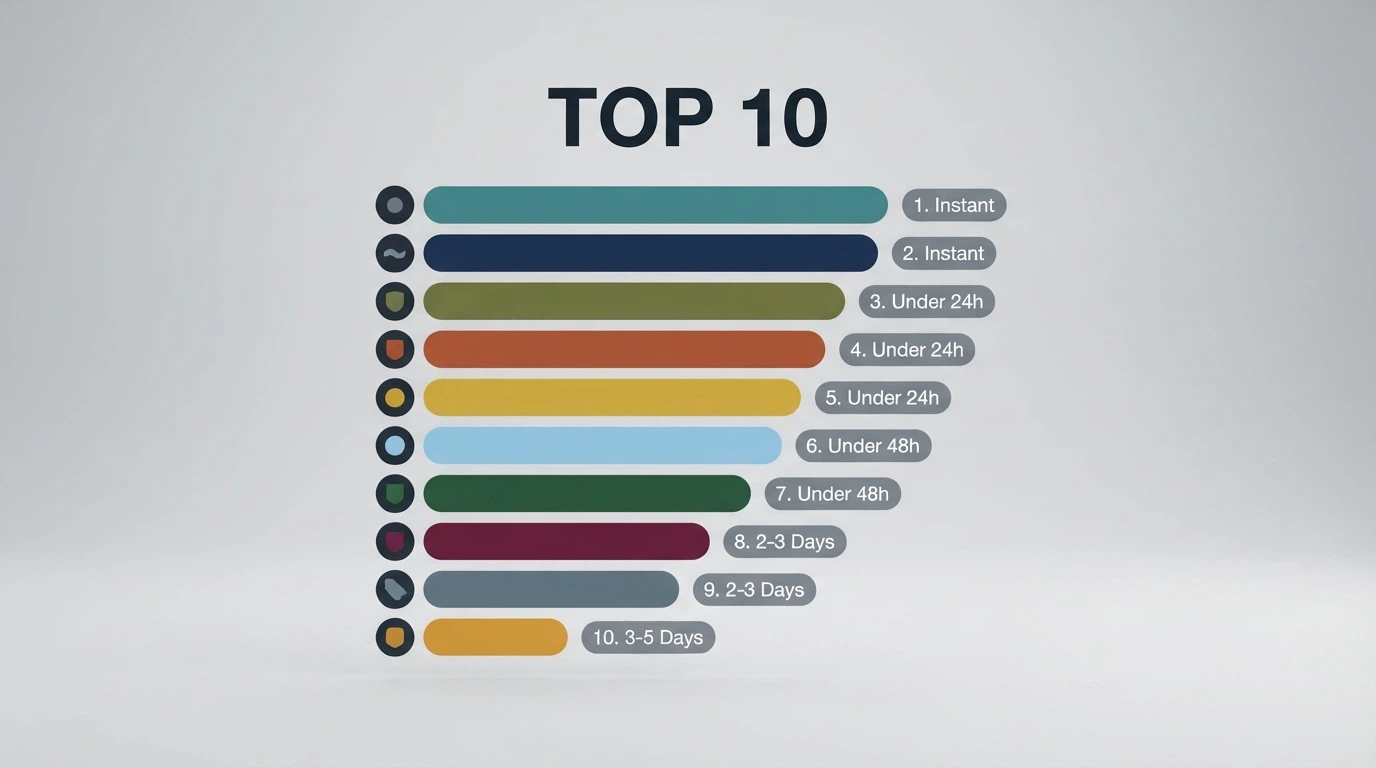
| Casino | Payout speed (claimed) | Licence | Welcome offer | Free spins |
|---|---|---|---|---|
| Rocket Play | Instant–24 hours | Curaçao (offshore — not AU-licensed) | Multi-deposit package | Yes |
| Skycrown | Instant–24 hours | Curaçao (offshore — not AU-licensed) | Multi-tier welcome | Yes |
| Royal Reels | Under 24 hours | Curaçao (offshore — not AU-licensed) | Welcome offer available | — |
| WinSpirit | Under 24 hours | Curaçao (offshore — not AU-licensed) | Welcome offer | Yes |
| Stake | Instant (crypto) | Curaçao (offshore — not AU-licensed) | Crypto-focused bonus | — |
| Rainbet | Instant–1 hour | Curaçao (offshore — not AU-licensed) | Welcome offer available | — |
| Scream Casino | Under 24 hours | Curaçao (offshore — not AU-licensed) | Welcome offer | Yes |
| FairGO | 24–48 hours | Curaçao (offshore — not AU-licensed) | AUD welcome bonus | Yes |
| Bizzo Casino | Under 24 hours | Curaçao (offshore — not AU-licensed) | Multi-tier welcome | Yes |
| Rocket Casino | Under 24 hours | Curaçao (offshore — not AU-licensed) | Welcome offer | Yes |
Rocket Play — The Offshore Casino With the Largest Australian Player Base
Rocket Play holds the largest share of the Australian offshore casino market in 2026 — 9.4%, with revenue of A$632.69M. It is a Curaçao-licensed operator, not an Australian one. Its payout claim is “instant to 24 hours” across crypto and e-wallet rails, which on paper puts it at the top of the speed stack.
The welcome offer is a multi-deposit package — the structure spreads across more than one funding, with a free-spin component on top of the matched-deposit structure. The exact dollar value of each tier, the wagering multiple, and the bonus validity window were not confirmed against Rocket Play’s current promotion page this run. A player considering Rocket Play should check the promotion page directly for those three numbers before depositing; they are the difference between a bonus that is worth clearing and one that is not.
For the Australian player weighing speed against reputation, Rocket Play sits at the top of the AU-facing offshore list by sheer volume, which is a thin kind of trust signal — many Australians use it, many Australians have been paid, and many Australians have not. The payout-claim tier matches the top of the market, the welcome structure is competitive, and the licence is what every operator on this list carries.
Skycrown — High-Volume Fast Payouts With a Multi-Tier Welcome Package
Skycrown sits in second place on the AU offshore list at 8.55% market share and A$436.07M revenue. Curaçao-licensed, same offshore posture as the rest of the field, payout claims of “instant to 24 hours”. The welcome offer is a multi-tier package with a free-spin component — a structure that rewards players who keep depositing past the first one rather than walking away after the initial bonus.
The structural critique of multi-tier offers is the same here as anywhere else: a player who only intended to deposit once ends up converting the welcome offer into a smaller bonus than the headline implies. A player who intends to deposit across all tiers and read every tier’s wagering terms separately gets the full intended value.
Skycrown’s positioning is closest to Rocket Play’s in the AU market — same licence, same claimed speed, same multi-deposit welcome shape. The differentiation, if any, sits in the game library, the operator’s published pending-window rules, and the specifics of the bonus terms that the player should verify on the operator’s promotion page before funding.
Royal Reels — Pokies-First Casino With Sub-24-Hour Withdrawal Claims
Royal Reels sits at 2.51% AU market share with A$243.99M revenue. Curaçao-licensed, payout claims under 24 hours, and a pokies-first game library that signals its AU market positioning: this is a casino built around the games Australian players actually want to play, not a generic international platform with an Australian currency option.
The welcome offer is available; the specific match percentage, free-spin count, wagering multiple and validity window were not confirmed against the operator’s current promotion page this run. For a pokie-heavy player, the relevant terms to check are game weighting — whether the welcome bonus can be cleared entirely on pokies, or whether table games or live casino contribute a lower percentage. A 100% match bonus that only counts 50% of pokie turnover toward wagering is half the bonus the headline implies.
Royal Reels is the operator for the player who has decided that pokies are the game and wants a library built around them. The payout claim is in the standard band for the field; what sets it apart is the game selection.
WinSpirit — Growing Fast With Under-24-Hour Payout Claims
WinSpirit holds 1.55% AU market share at A$110.3M revenue. Curaçao-licensed, under-24-hour payout claim, welcome offer with a free-spin component. The smaller revenue base and the growing share make it the “rising” entry on the list — an operator with momentum rather than incumbency.
The structural read is that WinSpirit is competing on the same axes as the bigger operators but at a smaller scale. The free-spin component is positioned as the headline perk; the match percentage and the wagering terms are the things to verify on the operator’s site before depositing.
For a player weighing a smaller-share operator against a larger one, the calculus is about what the operator can plausibly fund — a smaller operator may be faster to approve withdrawals because the queue is shorter, or it may be slower because the team is smaller. The reputation check (covered later in this page) is the test.
Stake — Crypto-Native Casino With Instant BTC, ETH and USDT Withdrawals
Stake sits at 1.28% AU market share with A$115.67M revenue. Curaçao-licensed, and unlike the rest of the featured set, crypto-native — its payout claim is “instant” specifically for BTC, ETH and USDT, because there is no bank in the chain. The bonus structure is crypto-focused, and the game library combines Stake’s in-house titles with multiple external providers.
The speed claim is the most credible on the list. There is no correspondent bank between a crypto withdrawal and the player’s wallet, and the operator’s approval window is the only delay. Stake is also the operator on this list where using crypto to deposit is the headline feature rather than the exception.
The honesty caveat is sharp. Depositing with crypto to an offshore casino breaches the 11 June 2024 payment ban. The ban targets the operator (penalty up to A$247,500 per breach), not the individual player — but a player who funds Stake with crypto has chosen an operator that is operating outside Australian rules, and has no AU consumer protection if something goes wrong. Stake is the operator to pick when speed is the entire reason for the choice and the player is willing to accept the legal and consumer-protection cost.
Rainbet — Crypto-Focused Newcomer With Sub-1-Hour Payout Claims
Rainbet holds 1.28% AU market share with A$83.13M revenue. Curaçao-licensed, payout claim “instant to 1 hour”, crypto-focused positioning. The welcome offer is available; specifics were not confirmed against the operator’s site this run.
The sub-1-hour claim is the second-most-credible on the list after Stake’s. Crypto-focused operators have the structural advantage of bypassing bank correspondence, and a tight internal approval window paired with that advantage lands a withdrawal in minutes in the best case.
The same 11 June 2024 caveat applies. Crypto deposits at Rainbet breach the AU payment ban. The trade-off is identical to Stake’s: speed versus legal and consumer-protection exposure, weighted entirely by what the player is willing to accept.
Scream Casino — New Entrant With Fast-Payout Positioning and Free Spins
Scream Casino holds 0.99% AU market share with A$94.87M revenue. Curaçao-licensed, under-24-hour payout claim, welcome offer with free spins. The smaller revenue base puts it in the newer-entrant category on this list, alongside WinSpirit.
The differentiation is positioning rather than infrastructure. A new entrant with fast-payout claims and a free-spin-led welcome offer is competing on perceived generosity and speed, which means the terms behind the headline are the test. A player considering Scream Casino should verify the wagering multiple and validity window on the operator’s promotion page before funding — a 50x wagering requirement with a seven-day validity window is a different proposition from a 35x requirement with thirty days.
For the Australian player who has not yet chosen an offshore operator, Scream Casino is one of the smaller-share options. The case for picking it over a higher-share competitor rests on the bonus terms, the game library fit, and the reputation check.
FairGO — AUD-Native RTG Casino With 24–48 Hour Payouts
FairGO sits at 0.8% AU market share with A$69.11M revenue. Curaçao-licensed, AUD-native interface, payout claim of 24–48 hours — the slowest on this list by a clear margin. The game library is RTG (RealTime Gaming) only, which makes FairGO structurally different from every other featured operator.
The AUD-native interface matters for the player who wants a casino that thinks in dollars rather than converting from EUR or USD on every transaction. The RTG-only library is a narrower selection than the multi-provider operators on the list, but it is a library Australian pokie players recognise — RTG has been producing pokies for the AU offshore market for years.
The welcome bonus is denominated in AUD with a free-spin component. The payout claim is the realistic trade-off — FairGO pays slower than every other operator on the list, in exchange for the AUD-native and RTG-specialised positioning. For a player who values the AUD interface and the RTG library above speed, FairGO is the right pick. For a player whose entire reason for choosing an offshore casino is the payout speed, it is the wrong pick.
Bizzo Casino — Multi-Provider Platform With Fast Withdrawal Claims
Bizzo Casino holds 0.57% AU market share with A$51.38M revenue. Curaçao-licensed, under-24-hour payout claim, multi-tier welcome offer with free spins, multi-provider game library. The structural shape is the standard offshore-casino offering: high game variety, a welcome package spread across multiple deposits, fast claimed payouts.
For the player comparing Bizzo Casino to the rest of the field, the differentiator is the game library breadth — multiple providers means broader pokie selection, broader live-casino selection, broader table-game selection. The payout claim sits in the standard band. The welcome structure is competitive. The reputation check is the deciding factor.
Rocket Casino — Distinct From Rocket Play, Same Fast-Payout Pitch
Rocket Casino sits at 0.57% AU market share, the same share as Bizzo Casino, on a separate operator with a separate Curaçao licence. Despite the name overlap, Rocket Casino is not a sister brand to Rocket Play — they are two distinct offshore operators, both pitching fast payouts to the Australian market. Payout claim is under 24 hours; welcome offer carries free spins; game library is multi-provider.
For the Australian player, the Rocket Casino / Rocket Play distinction matters because the two operators carry different terms, different game libraries, and different reputations despite the marketing overlap. A player who has decided on one of them should verify the welcome offer on the specific operator’s promotion page, not assume the two operators’ terms align.
The case for Rocket Casino is the multi-provider library and the free-spin-led welcome structure. The case for Rocket Play is the larger market share and the larger revenue base. The deciding factors are reputation and terms — the things the marketing pages do not show.
Why Your Withdrawal Method Decides Whether You See Your Money This Week
The casino sets the approval window. The payment method sets the arrival window. The payment method is the variable the player controls, and an Australian player at an offshore casino has four real choices.

PayID/Osko is the Australian instant payments rail — near-instant settlement 24/7, no batched bank hours, no correspondent banking layer because the rail is domestic. For an offshore casino that supports PayID for withdrawals, the rail itself delivers in minutes; the operator’s approval window is the only delay. Not every featured operator supports PayID, and that has to be checked on each operator’s banking page before depositing.
E-wallets — Skrill, Neteller, and the smaller e-wallet brands — sit between the casino and the player’s bank. An approved e-wallet withdrawal typically arrives in under 24 hours because the funds are already in the e-wallet system and do not traverse a correspondent bank chain. The friction is that not every offshore casino offers e-wallet withdrawals, and that some e-wallets restrict gambling-related transactions in their own terms.
Debit card withdrawals are the slowest common method — typically 3–5 business days through the card network. Debit card is a legal AU deposit route, and many Australian players deposit by debit card; the corresponding withdrawal speed is governed by the offshore operator’s processor and the card-network settlement window. A player who deposits by debit card and expects a fast withdrawal is going to be surprised.
Bank transfer is the slowest common withdrawal method at most offshore casinos — 3–7 business days depending on the correspondent banking chain. For an Australian player at an offshore casino, bank transfer is the fallback when nothing else is offered, and it is the option that makes “fast payout” a fiction.
PayID and Osko: The Fastest Route Through an Australian Bank
PayID/Osko is the Australian instant payments rail that runs through the New Payments Platform. It settles near-instantly, 24 hours a day, 7 days a week. For a withdrawal from an offshore casino that supports PayID, the rail itself is the fastest bank-based route an Australian player can use — money arrives in minutes once the operator approves it.
The friction is operator support. Not every offshore casino offers PayID for withdrawals. The featured operators that do support it list PayID in their banking pages; a player who values PayID speed should check that specific page before depositing, because the difference between “PayID supported” and “PayID not supported” is the difference between minutes and days.
PayID is a legal AU deposit route at licensed wagering operators. At an offshore casino, the legal status of a PayID withdrawal is the same as any other bank-based withdrawal — the operator is offshore, and the player has no AU consumer protection if the withdrawal fails.
E-Wallets and Debit Cards: Cutting One Layer of Delay
E-wallet withdrawals cut one layer of delay out of the chain — the correspondent banking layer — because the e-wallet sits on the receiving side of the international transfer. Once the operator’s approval lands, the funds are already in a system that does not need to clear through a domestic bank queue.
The friction is e-wallet availability. Not every offshore casino supports Skrill or Neteller, and some e-wallets restrict gambling-related transactions in their terms of service. A player who intends to use an e-wallet should check both the casino’s banking page and the e-wallet’s own terms before committing.
Debit card withdrawals carry the slowest common speed — 3–5 business days at most offshore operators, as card networks settle on their own schedule rather than via fast banking rails. The receiving mechanism usually defaults to standard bank-transfer processes. For those prioritizing speed, debit card deposits are fundamentally mismatched with fast withdrawal expectations.
Withdrawal Limits, KYC and the Hidden Speed Brakes
Even the fastest payment method is constrained by the operator’s published limits and the player’s KYC status. A daily withdrawal cap of a few hundred dollars on a fast operator means a player with a five-figure balance is going to wait through multiple daily windows before they see all their money. A KYC pending queue of a week means the player is waiting on document review, not on payment rails.
KYC is the universal speed brake. First withdrawals at every legitimate offshore casino require ID, proof of address, and proof of payment-method ownership. A player who submits those documents at signup — rather than at first withdrawal — clears the queue before it matters. A player who waits until they have winnings to withdraw is going to spend days in the verification queue.
Withdrawal limits are published on the operator’s policy page. A player with a large balance should check the daily, weekly and monthly caps before depositing, because a fast operator with a low cap is slower in practice than a slower operator with a high cap.
The KYC and limit checks are the second-tier filters after the payout-speed claim. A fast casino with a tight daily cap and a slow KYC queue is not a fast casino — it is a marketing casino.
Crypto Casinos: Where “Instant” Actually Means Instant
Crypto removes the bank from the chain. The operator holds funds in crypto, approves the withdrawal internally, and sends the funds to the player’s wallet on the blockchain. The only delay between approval and arrival is blockchain confirmation, which is minutes for most networks in normal conditions. There is no correspondent bank, no bank business hours, no settlement batching. For a player whose entire reason for choosing a fast-payout casino is speed, crypto is structurally the fastest route available.
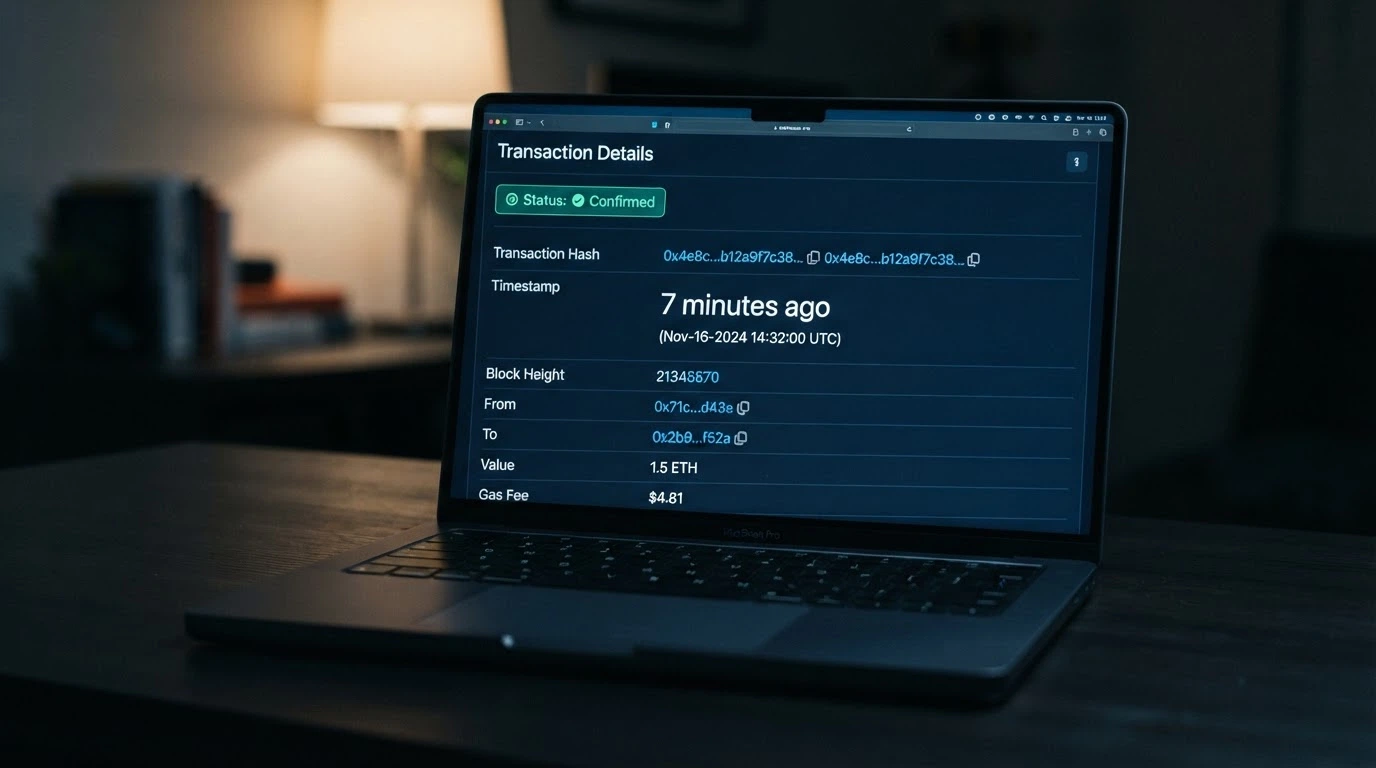
The friction is legal. From 11 June 2024, digital currency is banned as payment for online wagering in Australia. The penalty for an operator accepting crypto deposits is up to A$247,500 per breach. The penalty targets the operator, not the player — the individual player is not prosecuted under the Interactive Gambling Act 2001 — but a player who funds an offshore casino with crypto has chosen an operator that is operating outside Australian rules. The speed is real. The recourse is not.
For the Australian player who has decided on a crypto casino, the two operators on this list that fit the brief are Stake (instant BTC, ETH and USDT withdrawals, crypto-native positioning) and Rainbet (instant-to-1-hour claims, crypto-focused positioning). Both are Curaçao-licensed, both are offshore, both carry the same legal exposure as every other operator on this list.
Bitcoin, Ethereum and USDT: Which Coin Clears Fastest
The three coins an Australian crypto player is most likely to encounter at an offshore casino sort by confirmation time. Bitcoin confirmations take longer — typically ten to sixty minutes depending on network congestion and the casino’s required confirmation count. Ethereum confirmations are faster — typically minutes on a calm network. USDT is typically issued on Tron or Ethereum, and the confirmation time matches the host network’s.
The casino’s internal approval step still applies on top of blockchain confirmation. A casino that markets “instant” Bitcoin withdrawals is promising instant approval plus the blockchain confirmation, not instant approval alone. A player who has chosen Stake or Rainbet for crypto speed should expect ten minutes to an hour for a Bitcoin withdrawal in normal conditions, and minutes for Ethereum or USDT.
Network fees and minimum withdrawal thresholds are the other crypto-specific constraints. Every crypto withdrawal costs the network fee; every casino sets a minimum below which the operator will not process the withdrawal. Those figures are on the operator’s banking page and should be checked before depositing.
The Crypto Payment Ban: What It Means for Australian Players
The Interactive Gambling Amendment (Credit and Other Measures) Act 2023 commenced its core provision on 11 June 2024. From that date, credit cards, credit-related products and digital currency cannot be used as payment for online wagering in Australia. An operator that accepts them faces penalties up to A$247,500 per breach.
The penalty targets the operator, not the player. The IGA’s enforcement mechanism is built around the provider of the prohibited service. Individual Australian players are not prosecuted for using an offshore casino. The practical consequence for the player is sharper than the absence of prosecution suggests: a player who deposits crypto at an offshore casino has no AU consumer protection if the operator refuses a withdrawal, voids a win, or disappears. ACMA cannot recover money on a player’s behalf. The credit-card chargeback mechanism that exists for licensed operators does not exist for crypto at an offshore site. The site itself can be DNS-blocked by ACMA at any time — ACMA has blocked 1,564 illegal gambling and affiliate websites since November 2019 — and a blocked site takes the player’s balance with it.
A casino asking for a crypto deposit from an Australian player is a reliable signal that the operator sits outside Australian rules. That signal does not mean the operator is dishonest — Stake and Rainbet both honour crypto withdrawals at scale — but it does mean the player has stepped outside the protections Australian law would otherwise provide.
Bonuses That Pay Out — and the Fine Print That Traps Your Winnings
A fast-payout bonus is only as good as the terms behind it. The headline “100% match up to A$500” is not a bonus — it is a marketing entry point. The actual bonus is the bonus minus the wagering requirement multiplied by the house edge of the games that count toward wagering, minus any max-cashout cap, minus any validity window that expires before the wagering clears.
The wagering requirement is the dominant term. A 50x wagering multiple on a A$100 bonus means A$5,000 of turnover before the bonus converts to withdrawable cash. At a 3.5% house edge on a typical pokie, A$5,000 of turnover costs the player an expected A$175 in house-edge loss. The “bonus” is then worth A$100 minus A$175, which is a loss, not a gain. The whole structure depends on what the player wins during the wagering — and on a high-house-edge game over a long turnover requirement, the player is more likely to come out behind than ahead.
Bonus validity is the second-order constraint. A bonus with a seven-day validity window on a 50x wagering requirement is hard to clear on a typical player’s session pattern. A thirty-day window on the same requirement is achievable for a player who plays regularly.
Game weighting is the third-order constraint. Most offshore casinos count 100% of pokie turnover toward wagering but count table games at a lower percentage — 10% or 20% is typical. A player who tries to clear a pokie-targeted bonus on blackjack is going to spend ten times the turnover they expected.
Max cashout caps the upside. Some welcome bonuses cap the amount of winnings a player can withdraw from bonus play at a fixed figure — five times the bonus amount is typical. A player who wins A$10,000 on bonus play and is capped at A$500 has lost A$9,500 to the cap. The cap is in the terms; the player who does not read the terms is the player who loses the upside.
Welcome Offers at the Featured Casinos: What You Actually Get
The welcome offers at the featured operators sort into four shapes. The multi-deposit package — Rocket Play, Skycrown, Bizzo Casino — spreads the welcome across two, three or four funding events, with the headline match on the first deposit and smaller matches on the subsequent ones. A player who funds all tiers gets the full intended value; a player who funds only the first tier gets a fraction of it. The free-spin component is typically spread across the same tiers.
The pokies-focused welcome — Royal Reels, FairGO — is built around the Australian pokie market and typically pairs a match bonus with free spins on a specific pokie or set of pokies. Game weighting matters here: a welcome bonus that can be cleared entirely on pokies is worth more to a pokie player than one that counts table games at 10%.
The crypto-focused welcome — Stake, Rainbet — is built around crypto deposits and typically pays out in crypto or in the bonus currency of the operator’s choice. The wagering terms are the same shape as a fiat welcome; the legal exposure is different because crypto deposits breach the 11 June 2024 payment ban.
The standard welcome with free spins — WinSpirit, Scream Casino, Rocket Casino — is a single-deposit match with a free-spin component on top. The shape is the simplest of the four, and the easiest to read at a glance — a player who knows the match percentage and the free-spin count can calculate the headline value without working through a multi-tier structure.
For every offer on this list, the wagering multiple, bonus validity window and max-cashout cap are the terms that determine whether the offer is worth claiming. None of those three figures was confirmed against the operator’s current promotion page this run. A player considering any of the featured offers should check those three figures on the operator’s site before depositing — they are the difference between a bonus worth claiming and one worth skipping.
No-Deposit Bonuses at Fast-Payout Casinos: Rare, and the Terms Are Tight
A no-deposit bonus is one the operator credits without the player funding the account first. At fast-payout-focused offshore casinos, no-deposit bonuses are rare, and the ones that exist carry tight terms — high wagering multiples, low max-cashout caps, game restrictions, short validity windows. The structural reason is that the operator is taking the risk on a player who has not committed any funds, and the terms are calibrated to ensure the bonus clears in the operator’s favour on average.
None of the featured operators on this list confirmed a no-deposit bonus this run. A player who is specifically looking for a no-deposit offer at a fast-payout casino should check each operator’s current promotions page directly. The honest read of “no-deposit bonus at a fast payout casino” in 2026 is that the offer exists at some operators, the terms are tighter than a standard welcome, and the fast-payout positioning is secondary to the small print.
The Pokies That Pay: High-RTP Games and Fast Cashouts
The pokie a player chooses shapes whether they reach the cashout page at all. A high-RTP, low-volatility pokie produces frequent small wins and gradual balance movement — which means the player is more likely to clear the welcome wagering and reach a withdrawable balance. A low-RTP, high-volatility pokie produces rare large wins and faster balance swings — which means the player is more likely to either clear the bonus with a large win or bust the bonus balance before clearing it.

RTP — return to player — is the percentage of wagered money a pokie returns to players over millions of spins. A 96% RTP pokie returns A$96 of every A$100 wagered across its lifetime; the house keeps A$4. The number is a long-run average, not a session guarantee. Volatility is the pattern of payouts — low volatility means frequent small wins, high volatility means rare large wins.
For a player who wants to maximise the chance of reaching the cashout page on a welcome bonus, the right pick is a high-RTP, low-volatility pokie. The math is straightforward — high RTP minimises the house edge per spin, low volatility keeps the balance above zero long enough to clear the wagering. For a player who wants to maximise the size of a potential win and is willing to accept a higher chance of busting the bonus, the right pick is a high-volatility pokie.
The progressive jackpot caveat is the other game-side speed brake. A jackpot win at an offshore casino typically triggers an extra verification step, as the operator must confirm the win is genuine and not a technical error. This additional review process inherently adds time to the payout, overriding any standard withdrawal speed claims.
RTP and Volatility: What They Mean for Your Cashout
RTP is a percentage over the lifetime of a pokie — millions of spins, not a single session. A 96% RTP pokie does not return A$96 on a A$100 session; it returns A$96 on average across millions of players and millions of sessions. The session-to-session variance is what volatility captures.
A low-volatility pokie produces frequent small wins — many spins return something, and the balance moves slowly. A high-volatility pokie produces rare large wins — most spins return nothing, and the balance moves fast in both directions. The session experience of a low-volatility game is closer to its long-run RTP than the session experience of a high-volatility game is to its.
For a player clearing a welcome bonus, low-volatility is the structurally safer pick because the balance is more likely to survive long enough to complete the wagering. For a player who has decided they want the chance of a large win and accepts the higher chance of busting the bonus, high-volatility is the pick. The decision is about risk tolerance, not about which game is “better”.
The withdrawal minimum is the other constraint a pokie player should know. Every offshore casino sets a minimum withdrawal amount — typically A$20 to A$50. A player who has won A$15 on bonus play cannot withdraw until they have at least the minimum. The right pick for clearing a bonus is one that produces enough small wins to keep the balance above the minimum while the wagering clears.
Provider Studios That Dominate the Featured Casinos
The featured operators carry different provider mixes. FairGO is the RTG-only operator on the list — its entire library is RealTime Gaming pokies. The other nine operators carry multi-provider libraries, typically including Pragmatic Play, NetEnt, and a mix of smaller studios.
RTG has been producing pokies for the Australian offshore market for years, and its library is what Australian pokie players recognise from a decade of offshore play. Pragmatic Play and NetEnt are the larger international studios whose pokies appear across most multi-provider offshore casinos. The presence of multiple providers in a library signals game variety, competitive RTPs across the library, and the kind of breadth that lets a player pick a high-RTP pokie to clear a bonus.
A player considering any of the featured operators should check the provider list on the operator’s game lobby before depositing. The provider mix is one of the easier reputation signals to read — a multi-provider lobby is a baseline expectation for a modern offshore casino, and a single-provider lobby is a deliberate positioning choice (FairGO’s RTG-only positioning is one example).
Seven Checks Before You Deposit at Any Fast-Payout Casino
A ranked list of casinos tells the player which operators Australians are using. It does not tell the player which operators are safe to fund. The seven checks below are the screening steps an Australian player should run before any deposit, and each one is grounded in a fact this page has already established.
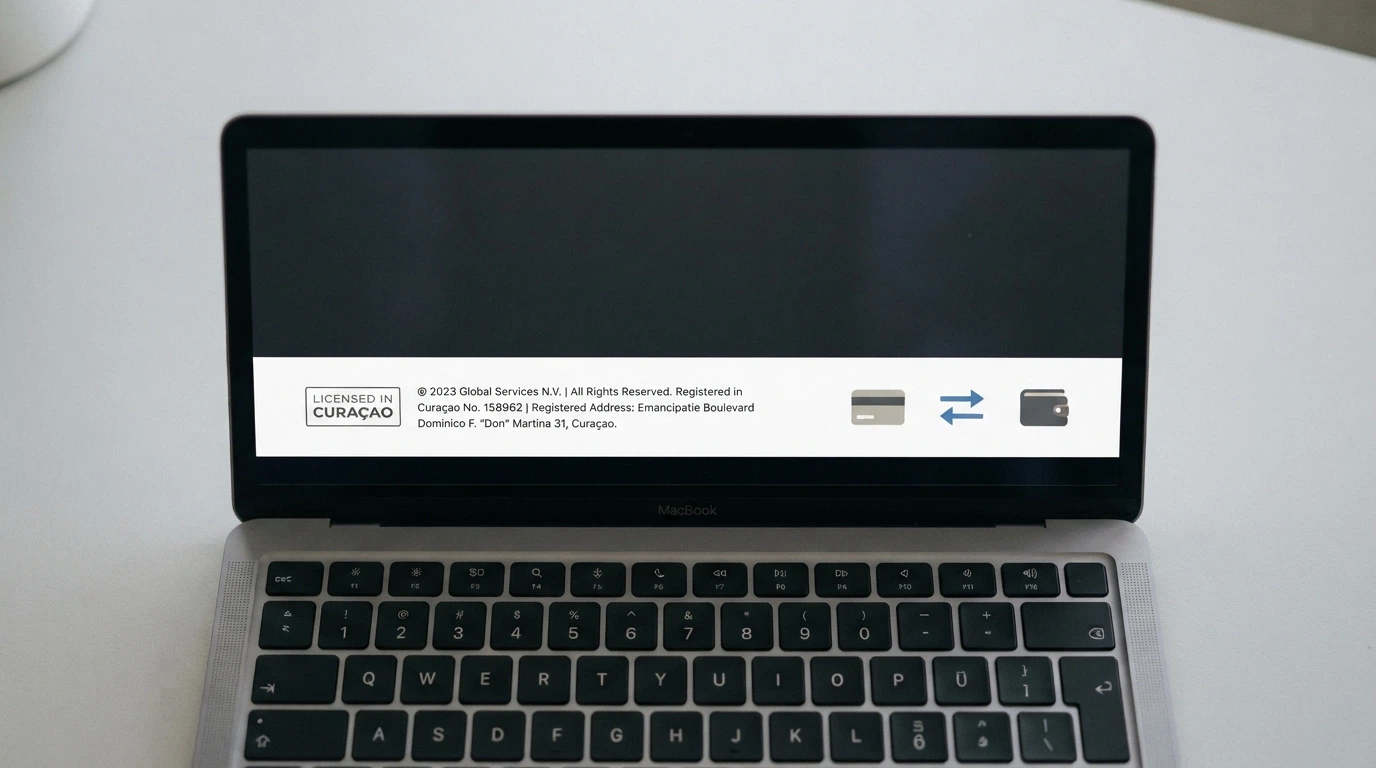
- Check the licence footer of the casino’s homepage. The licence jurisdiction is at the bottom of every legitimate casino’s site. A Curaçao licence is the baseline for the offshore market; no licence visible is a red flag.
- Confirm the operator’s payment methods before depositing. A casino that asks for credit card or crypto deposits is operating outside Australian rules — both are banned as payment for online wagering from 11 June 2024.
- Read the welcome bonus terms before claiming. The match percentage is the headline; the wagering multiple, validity window, game weighting and max-cashout cap are what determine whether the bonus is worth claiming.
- Read the withdrawal policy page before depositing. The daily, weekly and monthly withdrawal caps are the speed constraint the marketing page hides.
- Check the KYC requirements before the first withdrawal. ID, proof of address, and proof of payment-method ownership are the standard set; submitting them at signup clears the queue before it matters.
- Read player feedback on casino forums and review aggregators. Complaint patterns around withdrawal delays or KYC stalling are a more reliable speed signal than the casino’s own claims.
- Confirm that BetStop does not cover the operator before assuming self-exclusion works. BetStop binds AU-licensed wagering services only; an offshore casino is not connected, and self-exclusion through BetStop will not stop the offshore casino accepting the player’s money.
Licence, Ownership and the First Filter
The licence footer is the first filter. Every legitimate casino carries its licence jurisdiction at the bottom of the homepage — Curaçao for the featured operators on this list, Malta or another jurisdiction for some international operators, no jurisdiction at all for the illegitimate ones. A missing licence footer is a red flag that overrides every other consideration on the list.
A Curaçao licence is the floor for the offshore market, not a gold star. Curaçao-licensed operators are not subject to AU consumer protection law, AU complaints bodies, or AU responsible-gambling requirements. The licence is a baseline signal that the operator is regulated somewhere; it is not a signal that the operator is regulated in Australia.
Ownership disclosure is the second filter. A legitimate casino names its parent company and its registered address. An operator that hides ownership behind a shell company or that lists no parent company at all is harder to hold accountable when a withdrawal goes wrong. The Curaçao licence register provides some ownership information; the operator’s own “About” page should confirm it.
ACMA blocking is the third filter. ACMA has blocked 1,564 illegal gambling and affiliate websites since November 2019. An offshore casino that is on ACMA’s current blocking list is unreachable via Australian ISPs, and any balance on it is unreachable too. A player considering a deposit should check that the operator is not on the current list — a single check before a deposit is the difference between a usable casino and a blocked site with money on it.
Player Complaints, Payout Refusals and Reputation Signals
The fastest way to spot a slow payer is to read what players who have already withdrawn are saying. Casino forums, review aggregators, and social media all carry player feedback. The pattern matters more than the individual complaint — a single complaint about a slow withdrawal is noise, a pattern of complaints about the same withdrawal method is signal.
The complaints worth weighting are about withdrawal delays beyond the operator’s stated window, KYC stalling that runs past the verification queue’s typical timeframe, and terms changes applied retroactively to a win. The complaints worth discounting are about player-side mistakes (wrong card details, missed verification steps) and about bonus terms the player agreed to but did not read.
The difference between a slow bank and a slow operator is in the pattern. A complaint that names the payment method as the slow link is a payment-rail problem, not an operator problem. A complaint that names the operator’s pending window — “approved but not sent”, “verification pending for a week” — is an operator problem, and a serious one.
A player weighing one featured operator against another should read at least one forum thread and one review-aggregator page on each. The five minutes spent there is the cheapest reputation check on this page.
The Legal Reality: Every Fast-Payout Casino Is Offshore
The Interactive Gambling Act 2001 makes it an offence to provide an online casino, online pokies, or in-play sports betting to a person in Australia. There is no licence for online casino anywhere in Australia — not federally, not in any state or territory. Every fast-payout casino on this page operates outside Australian law.

The IGA was strengthened by the Interactive Gambling Amendment Act 2017, which closed offshore operator loopholes and gave ACMA enforcement and blocking powers. The credit-card and crypto payment ban of 11 June 2024 added a second layer by capping the payment methods an Australian player can use at any wagering site. The Interactive Gambling Amendment (Gambling Reform) Bill 2026 passed Parliament on 19 August 2026 and commences 1 January 2027, adding a third layer — bank-blocking authority, advertising caps, and inducement restrictions.
The Australian player who chooses an offshore fast-payout casino in 2026 is making a choice that the law does not support. The choice is real — the casino will accept the deposit, the games will play, the withdrawal will (in most cases) be paid. What the law does not provide is the consumer-protection layer that an AU-licensed wagering operator provides. No complaints body can recover money on the player’s behalf. No deposit limit is legally enforceable. No self-exclusion through BetStop reaches the offshore site.
Why Australia Bans Online Casino — and Who the Law Actually Punishes
The IGA targets the provider, not the punter. The Act’s enforcement mechanism is built around operators that provide prohibited interactive gambling services to Australians. The individual player is not prosecuted — there is no provision in the IGA for player prosecution, and ACMA does not pursue individual players.
The player consequence is sharper than the absence of prosecution suggests. A player at an offshore casino has no AU consumer protection — no AU complaints body can order the operator to pay a disputed withdrawal, no AU regulator can compel identity verification before payout, no AU court has jurisdiction over a Curaçao-licensed operator’s terms. The site can be DNS-blocked at any time by ACMA direction to Australian ISPs, and a blocked site takes the player’s balance with it.
The 11 June 2024 credit and crypto payment ban is the second layer of the same prohibition. An operator that accepts credit card or crypto deposits from an Australian player is breaking Australian rules on top of providing a prohibited service. The penalty for the operator is up to A$247,500 per breach. The penalty for the player is the absence of the protection that an AU-licensed operator would provide.
ACMA Enforcement: Blocking, Penalties and What They Mean for Your Balance
ACMA — the Australian Communications and Media Authority — is the federal regulator that enforces the online gambling prohibition. ACMA investigates complaints, issues formal warnings, refers operators for civil penalty proceedings, and directs Australian ISPs to block illegal sites at the DNS level.
The blocking stats are the most concrete measure of the enforcement landscape. ACMA has blocked 1,564 illegal gambling and affiliate websites since its first blocking request in November 2019. More than 225 illegal services have withdrawn from the Australian market since enforcement was strengthened in 2017. Both numbers reflect an active enforcement programme, not a paper prohibition.
The practical consequence for a player is that an offshore casino accessible today can be unreachable tomorrow. DNS-level blocking prevents the site from resolving on Australian ISPs; a player trying to log in to a blocked site gets a “site not found” error and cannot access their account or their balance. ACMA cannot recover money on the player’s behalf — the agency’s enforcement power is over the operator and the ISP, not over the player’s funds.
The 2026 reform adds a new layer from 1 January 2027. From that date, banks and payment providers gain express authority to block transactions to illegal gambling operators. The reform was passed by Parliament on 19 August 2026. The bank-blocking authority is the next escalation of the same enforcement logic — the offshore casino can be cut off from the Australian banking system, in addition to being cut off from Australian internet access.
Offshore Casino vs Licensed Wagering: The Protections You Forfeit
| Protection | Australian-licensed wagering | Offshore casino (unlicensed) |
|---|---|---|
| Self-exclusion via BetStop | Yes — one registration covers every licensed service | No — BetStop does not reach offshore casinos |
| Consumer protection / complaints body | Yes — state or territory regulator | No — ACMA cannot recover funds |
| Debit card chargeback | Available through Australian banks | Not available on crypto or e-wallet withdrawals |
| Payment-method restrictions | Credit cards and crypto banned since 11 June 2024 | Operator may accept credit and crypto |
| Advertising and inducement rules | Capped from 1 January 2027 | No AU rules apply |
| DNS-blocking risk | Zero — licensed operators are not blocked | Real — ACMA has blocked 1,564 sites since 2019 |
| Responsible-gambling tools (deposit limits, activity statements) | Customer-set deposit limits and activity statements under state/territory conditions | Voluntary on the operator’s site; not legally enforceable |
The contrast in the table is the page’s central honesty claim. The licensed wagering column carries protections Australian law provides. The offshore column carries their absence. A player choosing an offshore fast-payout casino is choosing the speed and accepting the absence.
Staying in Control: Limits, Help and What BetStop Can’t Do
The responsible-gambling infrastructure in Australia is real and well-funded. The National Gambling Helpline (1800 858 858) is free, confidential, and staffed 24/7. Gambling Help Online provides live chat and counselling through gamblinghelponline.org.au. BetStop — the National Self-Exclusion Register — has been live since August 2023 and had 67,480 registrations as at 31 July 2026, with 41,290 exclusions still active. The Australian Institute of Health and Welfare estimates that about 2.1% of Australian adults — roughly 430,000 people — experience problem gambling, with another 1.8% in the high-risk category.

The hard truth is that none of this infrastructure reaches an offshore casino. BetStop binds AU-licensed wagering services only; an offshore casino is not connected to the register and will keep accepting a self-excluded person’s money. The National Gambling Helpline and Gambling Help Online support any Australian player regardless of where they play, but the self-exclusion mechanism — the most powerful single tool for a player who has decided to stop — does not extend to the offshore casino list on this page.
For a player who has decided they need a limit, the responsible answer is to use the licensed wagering channels that BetStop covers, not the offshore fast-payout channels it does not. For a player who is using an offshore casino and recognises the signs of problem gambling, the responsible answer is the helpline — 1800 858 858 — and the acknowledgement that the offshore casino will not enforce any limit the player sets on themselves.
Deposit Limits, Activity Statements and the Tools an Offshore Casino Won’t Give You
Australian-licensed wagering operators must offer customer-set deposit limits and activity statements under state and territory conditions. The specifics differ between jurisdictions, but the baseline is the same: a player can set a daily, weekly or monthly deposit limit, and the operator provides a statement of play activity on request. The limits are legally enforceable; the operator cannot override them.
Offshore casinos typically offer a “responsible gaming” page with a self-exclusion checkbox and a deposit-limit field. The structural difference is that the offshore casino’s tools are voluntary — the operator is not legally required to honour them, and the player has no AU regulator to complain to if the operator does not. An offshore casino that honours a player’s self-set deposit limit is doing so by choice; an AU-licensed operator is doing so by law.
There is no federal deposit, loss or stake ceiling for online gambling in Australia, as the products these ceilings would regulate are already prohibited. Federal intervention instead focuses on restricting payment methods—banning credit cards and crypto while permitting debit cards and PayID. Relying on an offshore operator to honour a self-imposed limit is a high-risk strategy; players must maintain strict personal discipline.
Where to Get Help: Helplines, BetStop and Gambling Help Online
The National Gambling Helpline is 1800 858 858 — free, confidential, 24 hours a day, 7 days a week. The line is staffed by counsellors who can help with the immediate situation and refer to longer-term support. Gambling Help Online — gamblinghelponline.org.au — provides live chat, email support, and self-help resources for players who prefer text-based channels.
BetStop — the National Self-Exclusion Register — is the single most powerful tool for a player who has decided to stop betting. One registration excludes the person from every Australian-licensed online and phone wagering service. The registration can be for a fixed period (three months, six months, twelve months) or for life. As at 31 July 2026, 67,480 Australians had registered, of whom 41,290 exclusions were still active — more than 60%. 78% of registrants were under 40; 38% chose lifetime exclusion.
BetStop does not cover offshore casinos. The offshore operators on this page are not connected to the register. A BetStop registration will not stop them accepting a self-excluded person’s money. For a player who has decided to stop and who is using an offshore casino, the additional step is to stop funding the account and to close it where the operator allows. BetStop is necessary, but it is not sufficient.
The prevalence context is the page’s final honest statement about who this page is for. About 2.1% of Australian adults — roughly 430,000 people — experience problem gambling; another 1.8% are in the high-risk category. The players in those statistics are using licensed wagering operators, offshore casinos, or both. The helpline and the self-exclusion register are for all of them.
How We Evaluated and Ranked These Fast-Payout Casinos
The ranking on this page is built on two data sources. The operator identities, Australian market shares, and revenue figures come from BLASK BRANDS data, accessed through the operators skill. The legal and regulatory facts — the IGA, ACMA enforcement, the payment ban, BetStop — come from the AU regulation skill and ACMA records.
The evaluation criteria, in order of weight, are: claimed payout speed (the operator’s own published figure), Australian market share as a proxy for player trust and operator scale (BLASK BRANDS data), welcome-offer shape (the structure of the offer, not the specific dollar value), free-spin availability, and game-provider breadth. The ranking is ordered by Australian market share, with the highest-share operator first. Payout-speed claims sit beside the market-share figure for each operator, so the reader can see the speed ranking as well as the volume ranking.
The honesty caveat applies to the whole ranking. All ten operators are offshore and unlicensed in Australia. The ranking reflects which operators Australians are actually using, not which operators are regulated. The ranking also reflects the operators’ own published payout-speed claims; the page has not independently verified that every claimed payout speed is what a typical Australian player experiences. The bonus specifics — match percentages, wagering multiples, validity windows — were not confirmed against the operators’ current promotion pages this run, and the page describes each offer’s structure qualitatively rather than printing a figure.
The data gaps are explicit. The page does not carry per-operator daily withdrawal limits, KYC turnaround times, or per-title RTP figures, because the research did not surface those figures at the level of confidence required to print them. A player who needs that detail should check the operator’s policy pages directly.
What You Should Actually Do About Fast Payouts in 2026
The fastest payout in the world is worthless if the operator refuses to send it. The fastest payout in Australia in 2026 comes from an offshore casino — Stake or Rainbet on crypto, Rocket Play or Skycrown on e-wallets and PayID where supported. Every one of those operators is unlicensed in Australia. Every one of them can be DNS-blocked by ACMA at any time. Every one of them sits outside the protections Australian law would otherwise provide.
The trade-off the page has laid out is real. Speed versus consumer protection. Speed versus recourse. Speed versus the legal status of the payment method (credit cards and crypto are banned from 11 June 2024). Speed versus BetStop coverage (BetStop does not reach any of these operators). For a player who has weighed those costs and decided the speed is worth it, the three things to do before depositing are: check the licence footer, read the withdrawal policy page, and confirm the payment method is one the operator actually supports for withdrawals.
The honest conclusion is the one the page opened with. A fast-payout casino is one that can deliver speed. A trustworthy fast-payout casino is one that delivers speed and will pay when asked. The marketing pages do not separate the two; the player has to. Pick the operator with the strongest reputation and the cleanest withdrawal policy, not the shortest claimed time. The fastest payout in the world is the one that actually arrives.
Frequently Asked Questions
What happens if an offshore casino refuses to pay out my winnings?
The casino’s internal dispute process is the only available channel — there is no Australian regulator that can order the operator to pay, because the operator is not licensed in Australia. ACMA’s enforcement power is over the operator’s ability to provide the service to Australians, not over individual withdrawal disputes. The practical step is to document the refusal in writing, check whether the casino carries an alternative-dispute-resolution body in its licence jurisdiction (some Curaçao-licensed operators do), and accept that recovery is uncertain. Crypto and e-wallet deposits carry no chargeback mechanism; debit card deposits may carry one through the player’s bank, but the bank cannot force an offshore operator to pay.
Does BetStop cover offshore online casinos?
No. BetStop — the National Self-Exclusion Register — binds Australian-licensed wagering services only. The offshore casinos on this page are not connected to the register, and a BetStop registration will not stop them accepting a self-excluded person’s deposits or bets. For a player who has decided to stop, the additional step is to close the offshore casino account directly (where the operator allows it) and to stop funding it. BetStop covers every AU-licensed online and phone wagering service through one registration — 67,480 Australians had registered as at 31 July 2026 — but the offshore casino list sits outside that coverage.
Are my gambling winnings taxable in Australia?
No — for an ordinary punter. Betting and gambling winnings are not assessable income under section 6-5 of the ITAA 1997, and losses are not deductible under section 8-1, unless the person is carrying on a business of betting or gambling. No Australian case has held an ordinary punter’s winnings assessable. The ATO’s position is consistent with that of most comparable jurisdictions — recreational gambling winnings are treated as windfalls, not income. A professional gambler — someone whose gambling activity meets the ATO’s tests for carrying on a business — is taxed differently, but the recreational offshore casino player is not.
What is the Interactive Gambling Act and how does it affect me?
The Interactive Gambling Act 2001 (IGA) is the federal statute that makes it an offence to provide an online casino, online pokies, or in-play sports betting to a person in Australia. The Act targets the provider of the prohibited service, not the individual player. The IGA was strengthened by the Interactive Gambling Amendment Act 2017, which closed offshore operator loopholes and gave ACMA enforcement and blocking powers. From 11 June 2024, the credit-card and crypto payment ban added a second layer — credit cards, credit-related products and digital currency cannot be used as payment for online wagering. From 1 January 2027, the Interactive Gambling Amendment (Gambling Reform) Bill 2026 adds a third layer — bank-blocking authority, advertising caps, and inducement restrictions. For a player, the practical effect is that every online casino accepting Australian players is offshore, and the protections Australian law would otherwise provide are absent.
How do I know if an online casino is trustworthy for fast payouts?
Trust at an offshore casino is built from signals the operator’s own marketing does not provide. The seven checks earlier on this page are the screening framework: licence footer (Curaçao is the baseline), payment methods (credit and crypto requests signal an offshore operator), welcome bonus terms (wagering multiple, validity window, max-cashout cap), withdrawal policy (daily, weekly and monthly caps), KYC requirements (the universal speed brake), player feedback on forums and review aggregators (complaint patterns over individual complaints), and BetStop coverage (the answer is no for every operator on this page). A trustworthy fast-payout casino is one that passes all seven. The fastest claimed time is the least informative of the seven.
Can I use PayID or crypto to withdraw from an online casino in Australia?
PayID/Osko works as a withdrawal method at offshore casinos that support it, and is the fastest bank-based route an Australian player can use — the Australian NPP rail settles near-instantly. Not every featured operator supports PayID; the operator’s banking page lists the available methods. Crypto works as a withdrawal method at the crypto-focused operators — Stake and Rainbet are the two featured on this page — and settles in minutes on the blockchain in normal conditions. The legal status is different: PayID is a legal AU payment method, crypto is banned as payment for online wagering from 11 June 2024. A player who withdraws in crypto from an offshore casino has deposited in crypto (or in another banned method), and the operator has accepted a banned payment — the speed is real, the legal exposure is real too.