
Casino Payment Methods for Australian Players: The 2026 Stack That Actually Works
 Available in AU
Every deposit an Australian player makes at an online casino leaves the licensed system. Online casino, online pokies and in-play betting are prohibited under the Interactive Gambling Act 2001, and there is no Australian licence for casino games anywhere in the country. The brands Australian players actually reach — Royal Reels, SkyCrown, Stake, FairGO, Bizzo, WinSpirit, Rocket Play, Rainbet and the rest — are all offshore and unlicensed here. That single fact shapes every payment-method question on this page: the AUD stack that works at those brands is the one Australian players have to live with.
Verified against the ACMA register and AU-facing casino cashier pages on 18 October 2026.
The practical question is not whether to use an offshore casino. It is how to fund one in AUD, get paid back in AUD, and not lose hours or hundreds of dollars to the wrong rail. Every method and every operator below was checked against the payment methods Australian players actually see at the cashier, ranked by what the data will defend — deposit speed, withdrawal speed, fees and whether the brand can pay out at all in AUD.
Table of Contents
- Paying at Australian Online Casinos in 2026: What Actually Works
- The 10 Best Casino Payment Methods for Aussie Players in 2026
- Every Casino Payment Method That Takes AUD — And What Each One Costs You
- Behind the Deposit Button: How Casino Payments Really Move Your Money
- Crypto Casino Deposits for Australians: Faster Payouts, Fewer Questions
- Is Your Casino Deposit Legal? What Australian Law Actually Says
- Staying in Control: Deposit Limits and Self-Protection for Aussie Players
- How We Chose the Best Casino Payment Methods for Australian Players
- What Every Aussie Player Should Do Before Their Next Casino Deposit
- Frequently Asked Questions
Paying at Australian Online Casinos in 2026: What Actually Works
The shape of a casino payment in Australia looks nothing like the cashless world a Commonwealth Bank customer lives in the rest of the week. Inside Australia, PayID transfers settle in seconds at no charge, BPAY handles the slow stuff and a debit card is interchangeable with cash. The moment that card or PayID hits an offshore casino cashier, the rails change. Most offshore casinos route Australian deposits through international card networks, third-party processors or crypto rails rather than through PayID’s domestic NPP merchant layer. The money still arrives in AUD. The path it takes to get there no longer runs through Australian payments infrastructure.
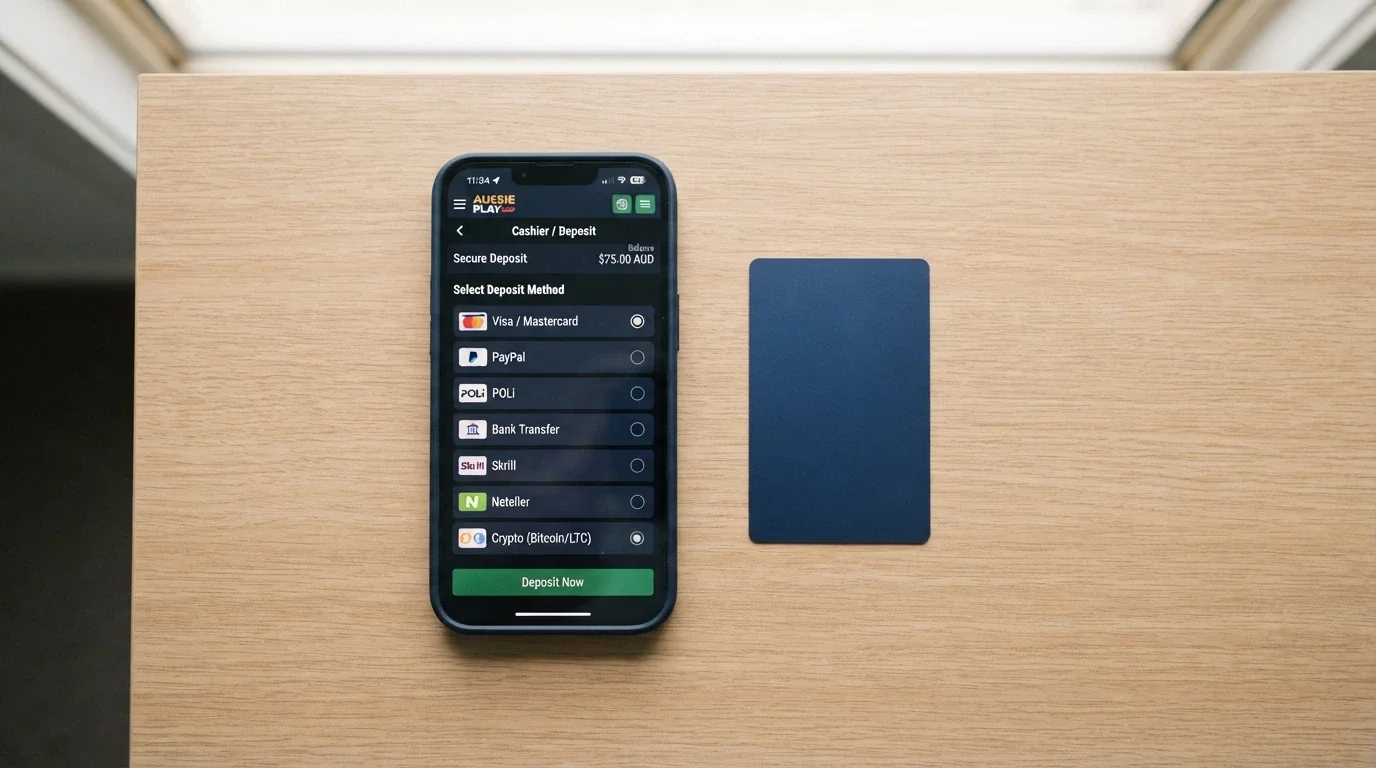
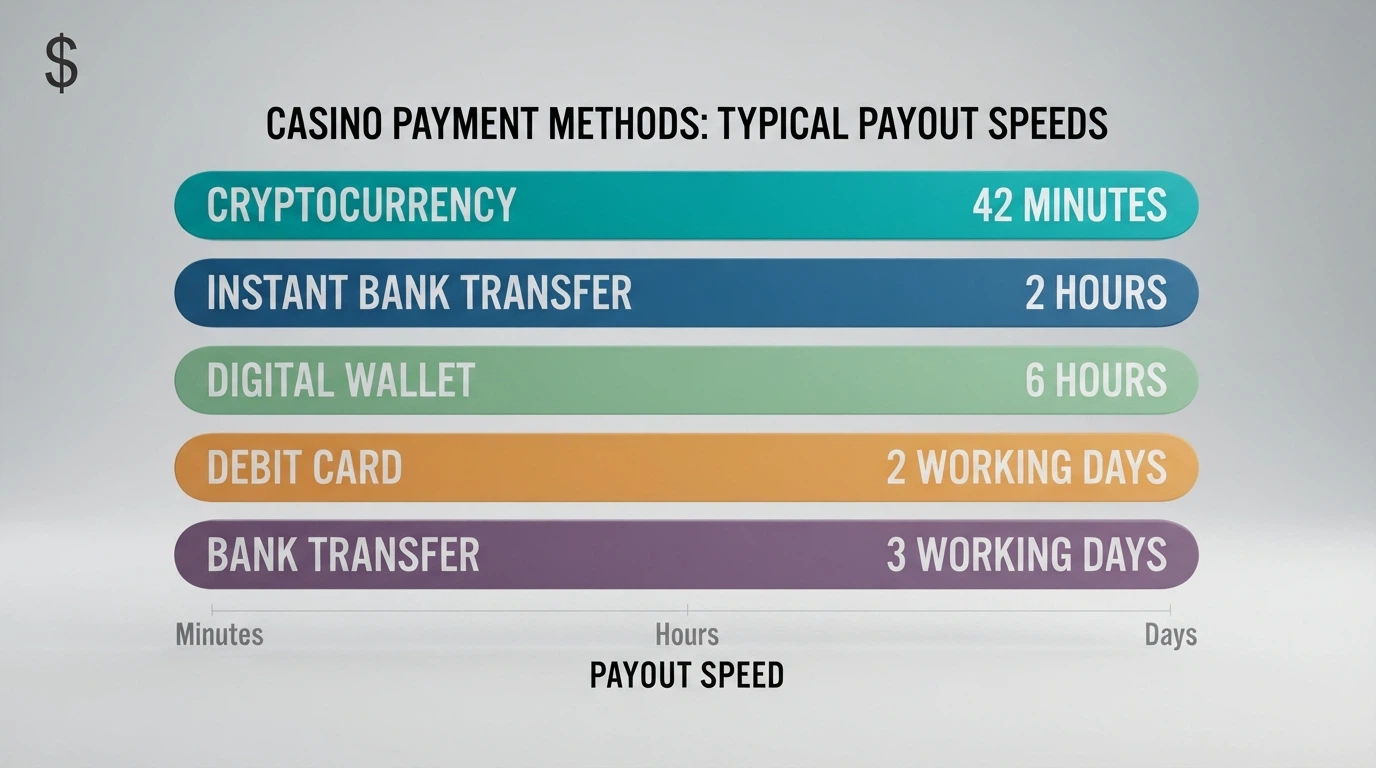
Three things follow from that. First, deposits are usually easier than withdrawals. The deposit rail can be Neosurf, POLi, a credit card or crypto, and almost anything will go through. Second, the rail that funded the account is rarely the rail that pays out. Neosurf is deposit-only, with no receive-funds function at all. POLi is deposit-only and does not support withdrawals. Players who fund with one of those methods must set up a separate withdrawal rail before they deposit, or the winnings have nowhere to go. Third, speed depends on the method. At AU-facing casinos tested in August 2026, crypto had a median payout of 42 minutes. Bank transfers took 3 working days median, 7 worst-case.
What a Casino Deposit Really Is — and Why It Is Not the Same as a Cashout
A casino deposit and a casino withdrawal are two different products, run on two different rails, and governed by two different sets of checks. The deposit is a push: the player hands money to the casino, the casino credits the account, and the transaction is over. The withdrawal is a pull: the player asks the casino to send money back, and the casino runs fraud and anti-money-laundering checks before approving. A 24-to-48-hour internal review is standard practice at brands that advertise “instant” payouts. The advertised speed covers the casino’s release of the funds, not the time the casino spends deciding whether to release them.
That is why a deposit-only method like Neosurf or POLi is a trap if the player has not thought ahead. Neosurf is a prepaid, one-use voucher with no receive-funds function. POLi is a deposit-only gateway that does not support withdrawals at all. Each is fine for funding — Neosurf comes in A$10, A$20, A$50, A$100 and A$200 denominations and most Neosurf casinos require a minimum deposit of A$20 to A$30, though some accept A$10. Neither will pay winnings back. A player who deposits with Neosurf and wins has to set up a separate withdrawal rail before the first cashout — PayID, crypto, e-wallet or bank transfer — or the winnings sit in the cashier until they do.
The lesson is unglamorous but consistent: pick the withdrawal rail first. The deposit method follows from it. For most Australian players at offshore casinos, that means PayID for AUD deposits and either crypto or bank transfer for withdrawals. The AUD stack that actually works is built around that pairing.
The AUD Deposit Stack: PayID In, Crypto or Bank Transfer Out
PayID is the addressing layer for Australia’s New Payments Platform (NPP). A PayID is a phone number, email or ABN that resolves to a bank account — the network figures out which one. Domestic NPP transfers between two Australian financial institutions normally settle in seconds at no charge. At AU-facing casinos tested in August 2026, the median PayID payout was 2 hours and the worst-case was 8 hours. That makes PayID the fastest AUD-denominated cashout rail at offshore casinos, by a clear margin over bank transfer.
Two caveats govern how high PayID can go. A player’s bank daily PayID transfer cap, usually A$1,000–A$10,000, applies on top of any casino limit. SkyCrown’s published daily withdrawal cap is A$10,000 via PayID — at the upper edge of what most banks will release in a day. Players with a bigger bankroll need to look at bank transfer or crypto for the larger amounts.
The withdrawal rail that sits beside PayID depends on the player. Crypto, with a median payout of 42 minutes at tested AU-facing casinos in August 2026 and a worst-case of 4 hours, is the fastest cashout of any method tested. It also carries the AUD-stablecoin translation risk — a player who wins A$1,000 and withdraws in USDT is exposed to the crypto-to-AUD conversion on the receiving end. Bank transfer is the slowest AUD cashout, with a 3-working-day median and 7-working-day worst case, but it lands as AUD in a bank account with no conversion and no merchant-code flag.
The 10 Best Casino Payment Methods for Aussie Players in 2026
The table below ranks the AU-facing brands Australian players actually use, by what their cashier will support and how they will pay out. Every operator here is offshore and unlicensed in Australia for casino games. The licence column reflects that, not a registered Australian licence.
| Operator | Licence / legal status in AU | AUD support | Payment methods accepted | Fastest payout route |
|---|---|---|---|---|
| Royal Reels | Offshore, unlicensed in AU | Yes | Mastercard, Visa, BTC, USDC, ETH, USDT, bank transfer | Crypto |
| SkyCrown | Offshore, unlicensed in AU | Yes | Visa, Mastercard, Neosurf, MiFinity, crypto, PayID | PayID |
| Rocket Play | Offshore, unlicensed in AU | Yes | Neosurf, PayID, crypto | Crypto |
| Stake | Offshore, unlicensed in AU | Yes | Crypto-led; fiat rails vary by region | Crypto |
| FairGO | Offshore, unlicensed in AU | Yes | BTC, ETH, LTC | Crypto |
| WinSpirit | Offshore, unlicensed in AU | Yes | Neosurf, PayID, crypto; cards supported but less reliable | Crypto |
| Rainbet | Offshore, unlicensed in AU | Yes | Crypto, Interac, Pix, AstroPay, SEPA, on-site crypto purchase | Crypto |
| Scream Casino | Offshore, unlicensed in AU | — | Not enumerated in published cashier | — |
| Bizzo Casino | Offshore, unlicensed in AU | Yes | PayID, NPP/Osko, BTC, USDT, ETH, Neosurf, POLi, Skrill, Neteller, Visa Debit, Mastercard Debit | Crypto |
| Betfair | Licensed AU wagering exchange — not an online casino | Yes | Not enumerated in published cashier | — |
Each of these brands is reviewed in its own section below. Two — Scream Casino and Betfair — are included with caveats: the first because its AU cashier details are thin in published sources, the second because it is a licensed Australian wagering exchange and cannot legally offer online casino games.
Royal Reels
Royal Reels supports seven payment methods: Mastercard, Visa, Bitcoin, USDC, Ethereum, USDT and bank transfer. That is a genuinely broad fiat-and-crypto mix for an AU-facing brand, and it covers the two rails a player is most likely to use — card for the first deposit and crypto for the cashout. The published withdrawal limit is A$9,000 per day with no win limit, which is the practical ceiling for any single payout session.
The card side works for the deposit but inherits the standard offshore decline risk: a Visa debit card attached to an Australian bank account may still fail the merchant-category screen. Crypto is where Royal Reels actually delivers on its payout story. BTC, USDC, ETH and USDT all clear through the cashier, and USDC gives the player the option of a stablecoin peg without riding Bitcoin’s volatility on the way out.
Verdict: Royal Reels’ seven methods and A$9,000 daily ceiling cover most AU bankrolls, with stablecoin or BTC the cleanest cashout path.
SkyCrown
SkyCrown is the PayID headliner of the AU-facing set. Visa, Mastercard, Neosurf, MiFinity, crypto and PayID all appear in its cashier, and the published daily withdrawal ceiling via PayID is A$10,000 — at the upper edge of what most Australian banks will release in a day. The minimum withdrawal is A$25.
The published timing is honest. PayID deposits at SkyCrown are instant and PayID withdrawals are instant to 24 hours depending on checks. The “depending on checks” clause is the one to read twice: it is the standard internal-review window, not a guarantee of instant settlement. Players who fund with Neosurf and withdraw via PayID should expect the cashout to take a few hours the first time, longer if the brand has not seen the PayID account before.
Verdict: SkyCrown is the strongest AUD-native stack in the set.
Rocket Play
Rocket Play accepts Neosurf, PayID and crypto, takes AUD, and pays out fastest in crypto. There is no exotic feature in that lineup. It is the standard AU-facing offshore mix and it works.
The absence of cards is worth noting — Rocket Play’s cashier does not list a Visa or Mastercard rail. A player who only has a debit card and no Neosurf voucher or crypto wallet will need a different brand. For everyone else, the trade-off is sensible: instant AUD deposit via PayID, fast crypto cashout, and a Neosurf option for players who want to keep the bank statement clean.
Verdict: Rocket Play works without cards — a player whose only deposit method is a debit card will need a different brand.
Stake
Stake is a crypto-led brand and it behaves like one. Fiat rails at Stake vary by region, and AUD shows up in account reporting — a player can hold an AUD balance and treat the cashier as a crypto rail. The fastest payout route is, accordingly, crypto.
The trade-off is the same as every other crypto-only brand: the deposit and the cashout are both crypto, and the player takes the volatility on the way in and on the way out. A player who wants pure speed and a clean bank statement will find it here. A player who wants to move AUD from a debit card to a casino account without an exchange step will not.
Verdict: Stake is the right brand for a player who treats the casino as another crypto venue, not as a bank-linked entertainment site.
FairGO
FairGO is a crypto-only casino with a thin method list and a sharp cashout story. Bitcoin, Ethereum and Litecoin are the supported rails, and the minimum withdrawal is A$100. Crypto withdrawals at FairGO are processed quickly once approved — the brand sits on the fast end of the AU-facing crypto market.
The A$100 minimum cuts FairGO off from low-stakes players. A player with a A$50 win cannot withdraw it; it sits in the cashier until the balance reaches A$100. That is a deliberate brand choice and it shapes the audience.
Verdict: FairGO is the A$100-floor crypto brand — fast cashouts for players who clear the minimum.
WinSpirit
WinSpirit accepts Neosurf, PayID and crypto. Cards are also supported but are less reliable for AU players — the same merchant-category screen that bounces a Visa debit at one offshore cashier will bounce it here. The minimum deposit is A$10 for Neosurf and PayID, which makes WinSpirit one of the lowest-friction entry points in the set.
The card reliability caveat is the one to act on. A player who funds with a Visa or Mastercard debit card at WinSpirit should expect a meaningful chance of a decline on the first attempt and have Neosurf or PayID ready as a backup. The two backup rails are both well-supported and both start at A$10.
Verdict: WinSpirit suits the AU-facing mix better than brands that lean harder on cards — Neosurf and PayID both at A$10, with crypto for the cashout.
Rainbet
Rainbet is a multi-currency platform with eighteen currencies including AUD, a flat A$15 minimum deposit, no deposit fees and an unlimited maximum deposit. The cashier lists cryptocurrency, Interac, Pix, AstroPay and SEPA, plus an on-site crypto purchase option that lets a player buy digital currency directly from the cashier without leaving the site.
Deposits are instant and free. Withdrawals are credited after one blockchain confirmation and typically arrive within 5 to 15 minutes. The on-site crypto purchase is the differentiator — a player who has never used a crypto wallet before can still fund a Rainbet account without setting up an exchange account first.
Verdict: Rainbet is the most beginner-friendly crypto rail in the set.
Scream Casino
Scream Casino’s published AU cashier details are thin. Payment methods are not enumerated, AUD support is not stated, and no payout timing has been published. A player evaluating the brand in 2026 should treat the cashier as unverified until the brand’s own banking page shows AUD, a withdrawal rail and a published timing.
That is not an indictment of the brand — it is the consequence of incomplete published information. The right move is to check the cashier page directly before depositing, confirm AUD support, confirm the deposit and withdrawal methods, and confirm the minimum and maximum withdrawal. If any of those details are missing from the cashier page, the brand is too opaque to fund from.
Verdict: Scream Casino is a brand to verify, not one to fund on a third-party list.
Bizzo Casino
Bizzo Casino is the broadest AU payment menu in the set. AU guides list PayID, NPP/Osko, BTC, USDT, ETH, Neosurf, POLi, Skrill, Neteller, Visa Debit and Mastercard Debit as the rails available around the brand. That is eleven methods, spanning local AUD rails (PayID, Osko), crypto (BTC, USDT, ETH), deposit-only vouchers (Neosurf, POLi), e-wallets (Skrill, Neteller) and debit cards (Visa, Mastercard).
The breadth comes with a trade-off. Deposit-only methods — Neosurf, POLi — are in the mix, and a player who picks one without setting up a withdrawal rail will hit the same wall at cashout as at any other brand. The fastest payout route is crypto, with PayID as the AUD-native alternative. Bizzo’s value to the AU player is having every rail in one cashier, not having the cheapest rail.
Verdict: Bizzo Casino’s eleven methods are the broadest single cashier here, though two are deposit-only.
Betfair
Betfair is the only licensed Australian operator on this list — and the only one that does not offer online casino games. Betfair is an Australian wagering exchange, licensed by a state or territory regulator, and the Interactive Gambling Act 2001 prohibits it from offering online casino, online pokies or in-play betting. AUD support is confirmed; specific cashier methods and the fastest payout route are not detailed in published AU sources.
Betfair is included because Australian players use it for wagering and the AUD payment story at the cashier looks similar to other licensed brands. A player who lands here looking for an online casino will not find one at Betfair — the Interactive Gambling Act 2001 prohibits it from offering casino games, and the brand’s product mix is racing and sports only.
Verdict: Betfair is a wagering exchange, not a casino — included because Australian players use it, but it does not offer the product this page covers.
Every Casino Payment Method That Takes AUD — And What Each One Costs You
Five method families carry AUD at AU-facing offshore casinos: cards and mobile wallets, e-wallets, bank transfer and the AUD-native rails (PayID, POLi, Osko, BPAY), prepaid vouchers and phone billing, and crypto. Each costs the player a different combination of speed, fee and privacy, and each behaves differently at deposit and at withdrawal. The table below maps the families; the sections that follow go method by method.
| Method family | Deposit speed | Withdrawal speed | Typical fees | Two-way or deposit-only |
|---|---|---|---|---|
| Debit card (Visa, Mastercard) | Instant | 2 working days median, 5 worst-case | None at most casinos | Two-way |
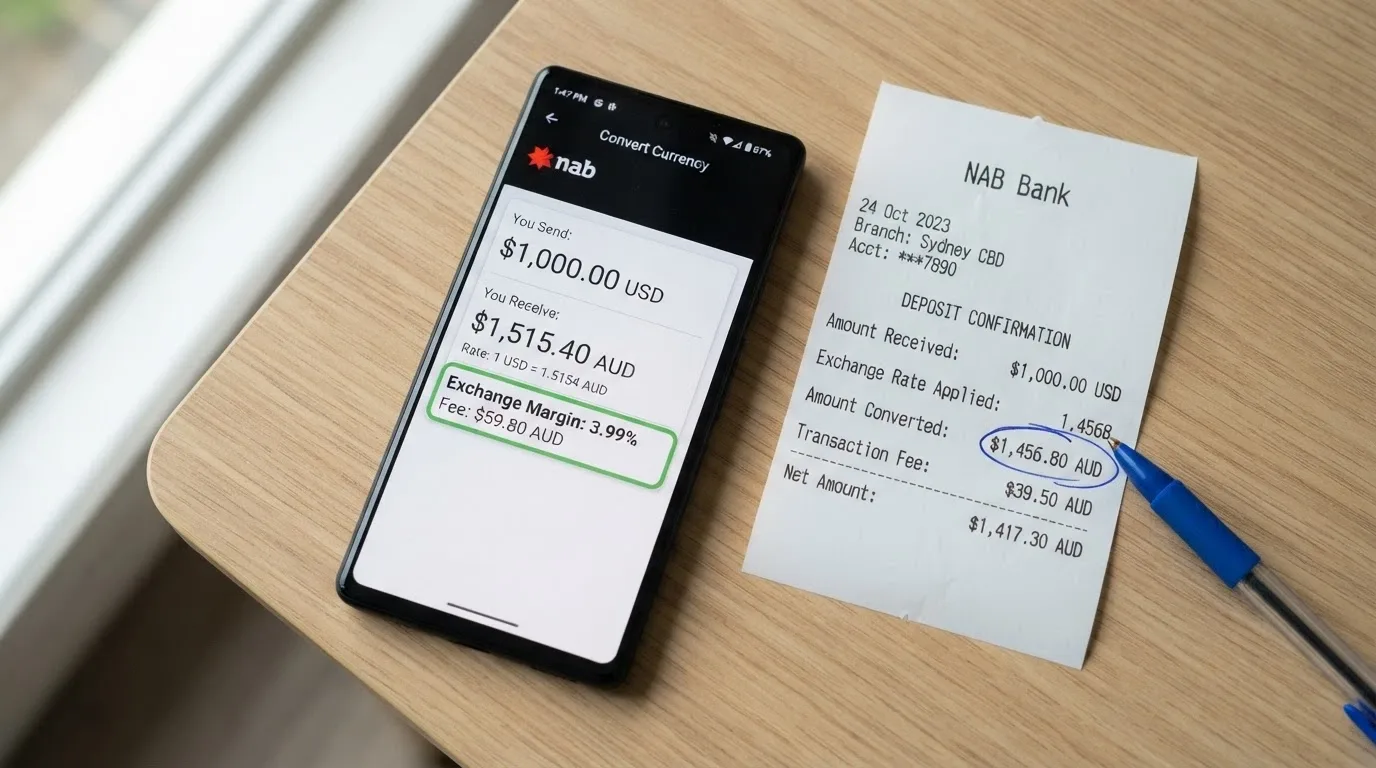
| E-wallet (Skrill, Neteller, PayPal) | Instant | 0–24h at top brands, up to 48h elsewhere | 3.99% exchange margin on Skrill/Neteller | Two-way |
| PayID | Instant | 2 hours median, 8 worst-case | None | Two-way |
| POLi | Instant | Not supported | None | Deposit-only |
| Bank transfer (SWIFT, SEPA-style) | 1–3 working days | 3 working days median, 7 worst-case | Bank wire fees possible | Two-way |
| Neosurf | Instant | Not supported (no receive-funds function) | None at voucher; brand-dependent above | Deposit-only |
| Paysafecard | Instant | Not supported | Voucher fee only | Deposit-only |
| Phone billing (Boku-style) | Instant | Not supported | Carrier premium | Deposit-only |
| Crypto (BTC, ETH, USDT, USDC, LTC) | After 1 blockchain confirmation | 42 minutes median, 4 hours worst-case | Network fee only | Two-way |
Cards and Mobile Wallets: Why Your Visa Gets Declined at Aussie Casinos
The standard Australian debit card — Visa or Mastercard, attached to a transaction account at one of the big four — works at some offshore casinos and bounces at others. The reason is the merchant category code. When a card transaction is routed through an international card network, the casino’s merchant category identifies it as gambling. Many Australian banks have a default block on outbound gambling transactions; many do not. Where the block is on, the decline happens at the bank, before the casino sees it. Where the block is off, the deposit clears.
Two things stack on top of that. From mid-2024 it is illegal to use credit cards, including via digital wallets and cryptocurrencies, for online gambling in Australia. The credit-card and crypto ban for online gambling followed the passage of legislation in June 2023 and aligns online gambling rules with those already in place for land-based venues such as casinos, TABs and racetracks. A credit card transaction will not get past the bank, regardless of the merchant. A debit card attached to a transaction account will, unless the bank has set its own gambling block. For withdrawal, Visa and Mastercard at AU-facing casinos tested in August 2026 took a median of 2 working days and a worst-case of 5.
The practical guidance is short. Try the debit card once. If it clears, the deposit rail works. If it does not, switch to PayID, Neosurf or crypto at the same brand. Most AU-facing offshore brands support all three.
E-Wallets for Casino Deposits: The Hidden 3.99% Fee Nobody Mentions
Skrill, Neteller and PayPal are the three e-wallets Australian players meet most often at offshore casino cashiers. The deposit is instant. The withdrawal is 0–24 hours at top brands and up to 48 hours elsewhere, with typical minimums of A$10 to A$20 and standard weekly maximum withdrawals of A$5,000 to A$10,000 — higher for VIPs. Neteller’s Platinum tier supports transfers up to A$45,000. PayPal caps individual transactions at A$10,000.
The fee story is where e-wallets hurt. Skrill and Neteller convert on deposit, applying a 3.99% exchange margin that is not advertised on the banking page. A player depositing A$100 to a USD-denominated casino loses A$3.99 to the conversion before any game is played. The same margin applies on withdrawal, in reverse. PayPal does not apply the 3.99% margin but caps each transaction at A$10,000, which forces a high-roller to split withdrawals. Jeton sits between Skrill and PayID on speed: its typical withdrawal time is 24–48 hours, against PayID’s 1–4 hours at AU-facing brands.
The “instant” claim deserves a second look. A casino advertising instant e-wallet payouts may still hold withdrawals for 24–48 hours while it conducts an internal review. The brand’s published speed is the speed after the review, not before it. Players who expect their winnings in an hour have not budgeted for the review window.
PayID, POLi and Bank Transfer: The AUD Rails That Actually Work
PayID is the AUD-native rail. It is the addressing layer for Australia’s New Payments Platform, and a PayID is a phone number, email or ABN that resolves to a bank account. Domestic NPP transfers between two Australian financial institutions settle in seconds at no charge. At AU-facing casinos tested in August 2026, the median PayID payout was 2 hours and the worst-case was 8 hours.
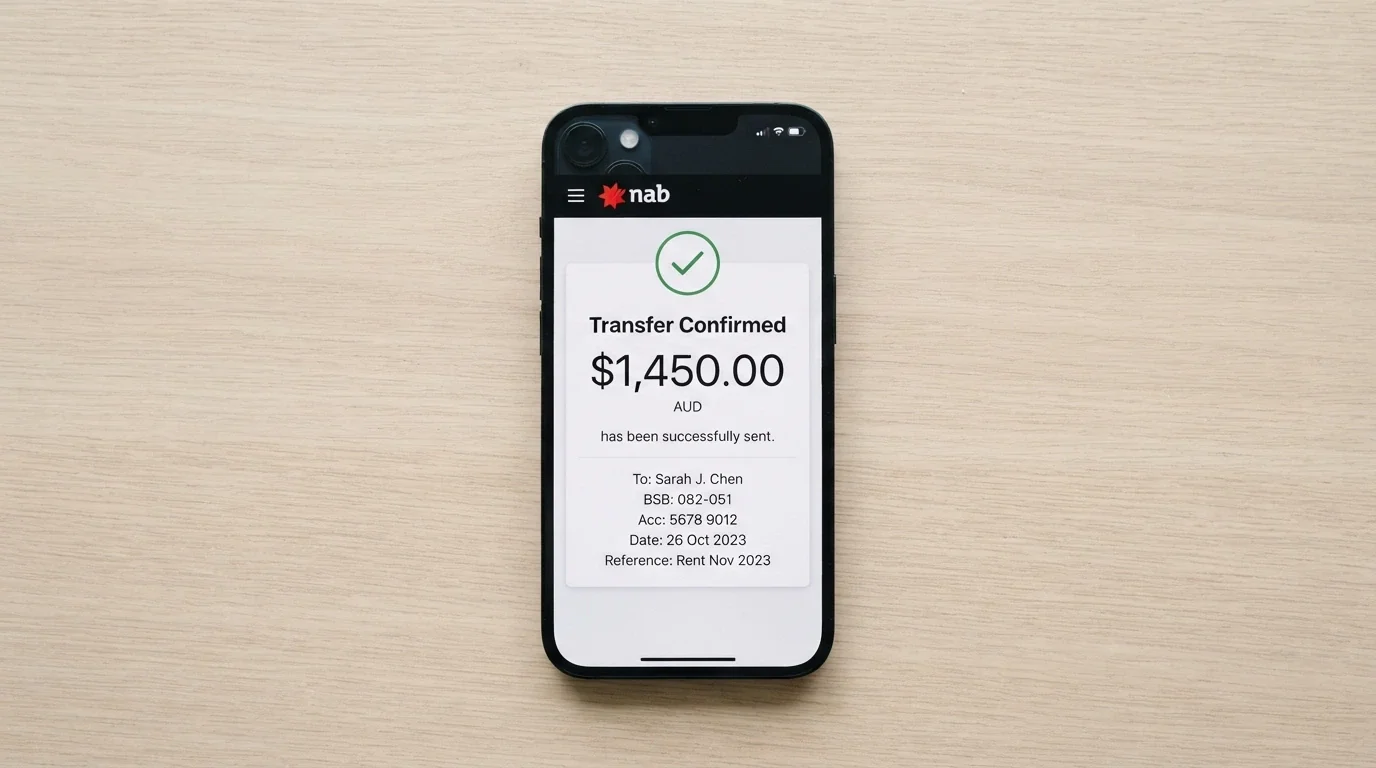
The constraint is the bank’s own PayID cap. Even where PayID is genuinely supported, a player’s bank daily PayID transfer cap, usually A$1,000 to A$10,000, applies on top of any casino limit. A player who wants to move A$15,000 in a single day will hit the bank cap before the casino cap. The fix is to use PayID for the daily limit and bank transfer for the rest, or to use crypto for the larger cashouts.
POLi is a deposit-only method and does not support withdrawals. A player who deposits A$100 via POLi and wins A$500 cannot withdraw the A$500 to POLi — POLi has no receive-funds function. The withdrawal has to go to a separate rail: PayID, bank transfer, e-wallet or crypto.
Bank transfer is the slowest AUD cashout. At AU-facing casinos tested in August 2026, the median was 3 working days and the worst-case was 7. The trade-off is a cashout that lands as AUD in a bank account, with no merchant-code flag and no conversion. For a player withdrawing A$20,000 from a single big session, bank transfer is the cleanest rail despite the wait.
Prepaid Vouchers and Phone Billing: Privacy That Comes at a Price
Neosurf and Paysafecard are the two prepaid vouchers Australian players meet at offshore cashiers. Both keep the bank statement clean — neither generates a gambling merchant entry on a bank statement, because neither touches the bank. Both are deposit-only. Neosurf is a deposit-only, prepaid one-use payment instrument that does not have a receive-funds function. Paysafecard behaves the same way.
Neosurf vouchers come in A$10, A$20, A$50, A$100 and A$200 denominations at some retailers. Most Neosurf casinos require a minimum casino deposit of A$20 to A$30, while some accept A$10. The voucher is a 10-digit code, redeemed at the cashier. Where the operator supports a receive rail, Neosurf withdrawal support is accepted at roughly 7 in 10 AU-facing casinos in the Betsquare index — but the receive rail is the brand’s own implementation, not the Neosurf voucher system. A player withdrawing via “Neosurf” at an AU-facing casino is usually withdrawing to a brand-issued wallet, not to a Neosurf voucher.
Phone billing — Boku and similar rails — is a micro-payment rail where the deposit appears on the player’s phone bill. The carrier charges a premium of 100% or more on top of the deposit, which makes it the most expensive rail on this page. It is also deposit-only.
The privacy premium is real. A player who does not want a gambling entry on the bank statement pays for that privacy in fees, in the inability to withdraw, and in the cap on the deposit (vouchers top out at A$200, phone billing at the carrier’s own ceiling).
How Fast Can You Really Get Paid? Withdrawal Speed by Method
The numbers below come from AU-facing casinos tested in August 2026. They describe real payouts, not marketing claims.
| Method | Median payout | Worst-case payout |
|---|---|---|
| Crypto (BTC, ETH, USDT, USDC, LTC) | 42 minutes | 4 hours |
| PayID | 2 hours | 8 hours |
| E-wallet (Skrill, Neteller, eZeeWallet) | 6 hours | 18 hours |
| Visa / Mastercard | 2 working days | 5 working days |
| Bank transfer | 3 working days | 7 working days |
The gap between crypto and bank transfer is roughly 100x on the median and roughly 40x on the worst case. That gap is the single biggest reason Australian players use crypto at offshore casinos. It is also the gap that the mid-2024 credit-card and crypto ban was built to close at licensed operators — but that ban does not bind the offshore brands, which is why crypto is still the fastest rail at the cashier.
The advertised speed is rarely the real speed. The 24-to-48-hour internal review sits on top of every “instant” claim. A brand that publishes “instant e-wallet payouts” usually means “instant after the 24-to-48-hour review clears.” Players who time their cashout from the moment they click withdraw are timing the wrong clock.
Behind the Deposit Button: How Casino Payments Really Move Your Money
A player who hits “deposit” at an offshore casino cashier starts a chain of three or four parties: the player’s bank or wallet, the payment gateway the casino has integrated, the payment processor the gateway routes to, and the merchant account that receives the funds. At a domestic Australian merchant, that chain stays inside the country — the gateway is local, the processor is local, the merchant is local, and the bank’s merchant-category screen sees a domestic transaction. At an offshore casino, every link except the player’s bank is offshore. The transaction crosses at least one international border before it lands.
The Gateways and Processors Routing Your Casino Deposit
Most offshore casinos route Australian deposits through international card networks, third-party processors or crypto rails rather than through PayID’s domestic NPP merchant layer. The processor names — and there are several — appear on a bank statement as a payment to a corporate entity that does not look like a casino. The merchant category code, where the bank passes one through, identifies the transaction as gambling. Banks that block outbound gambling transactions decline on the merchant category; banks that do not pass it through decline on the corporate entity name.
The same routing decision governs the cashout. The processor the casino uses to receive deposits is usually the same processor the casino uses to send withdrawals. A player who deposited via a card processor will receive a card refund; a player who deposited via PayID will receive a PayID credit. The withdrawal rail is, in practice, set at deposit time.
The Tech Behind the Transaction: Software, Integration and Mobile Apps
The cashier software at an offshore casino is a third-party integration — a payment platform that sits on top of the casino’s core platform and connects the player to a list of processors. The integration runs over an API and handles multi-currency conversion, deposit and withdrawal routing, and the KYC checks that sit on top of every transaction. Most modern cashiers offer an in-browser flow plus a mobile cashier app, and the mobile flow is functionally identical to the desktop one — the same processors, the same limits, the same review window.
The AUD conversion happens at the cashier, not at the bank. A player depositing A$100 to a USD-denominated casino sees the conversion rate at the deposit screen. That rate is the rate the brand or its processor applies — not the rate the player’s bank applies, and not the mid-market rate. The 3.99% Skrill and Neteller margin is the visible end of this; the same margin sits inside the brand’s own conversion at brands that handle currency internally.
How Offshore Casinos Manage Payment Risk — and What It Means for Your Withdrawal
The first withdrawal triggers KYC — a document check the casino is required to run before sending funds back to a player. The check usually means a photo of an ID and a proof of address, submitted through the cashier. A player who has not completed KYC before requesting the first withdrawal waits until the documents are reviewed before the cashout starts.
Fraud and anti-money-laundering screening sit on top of KYC. A casino that detects unusual deposit patterns, large withdrawals to a brand-new method, or a sudden change in deposit size may hold the withdrawal for a source-of-funds review. A casino advertising instant e-wallet payouts may still hold withdrawals for 24–48 hours while it conducts an internal review. The hold is not optional — it is the cost of moving money out of a brand that is offshore, unlicensed in Australia and outside the local dispute-resolution system.
For Australian players, the practical consequence is straightforward: the first withdrawal is the slow one. Subsequent withdrawals to the same rail, with the same KYC profile, clear faster — but the 24-to-48-hour review still appears on the timeline.
Crypto Casino Deposits for Australians: Faster Payouts, Fewer Questions
Crypto is the fastest cashout at AU-facing offshore casinos and the only rail where the player can fund the account without a bank account at all. The median crypto payout at tested AU-facing casinos in August 2026 was 42 minutes. The worst-case was 4 hours. No other method on this page is close.
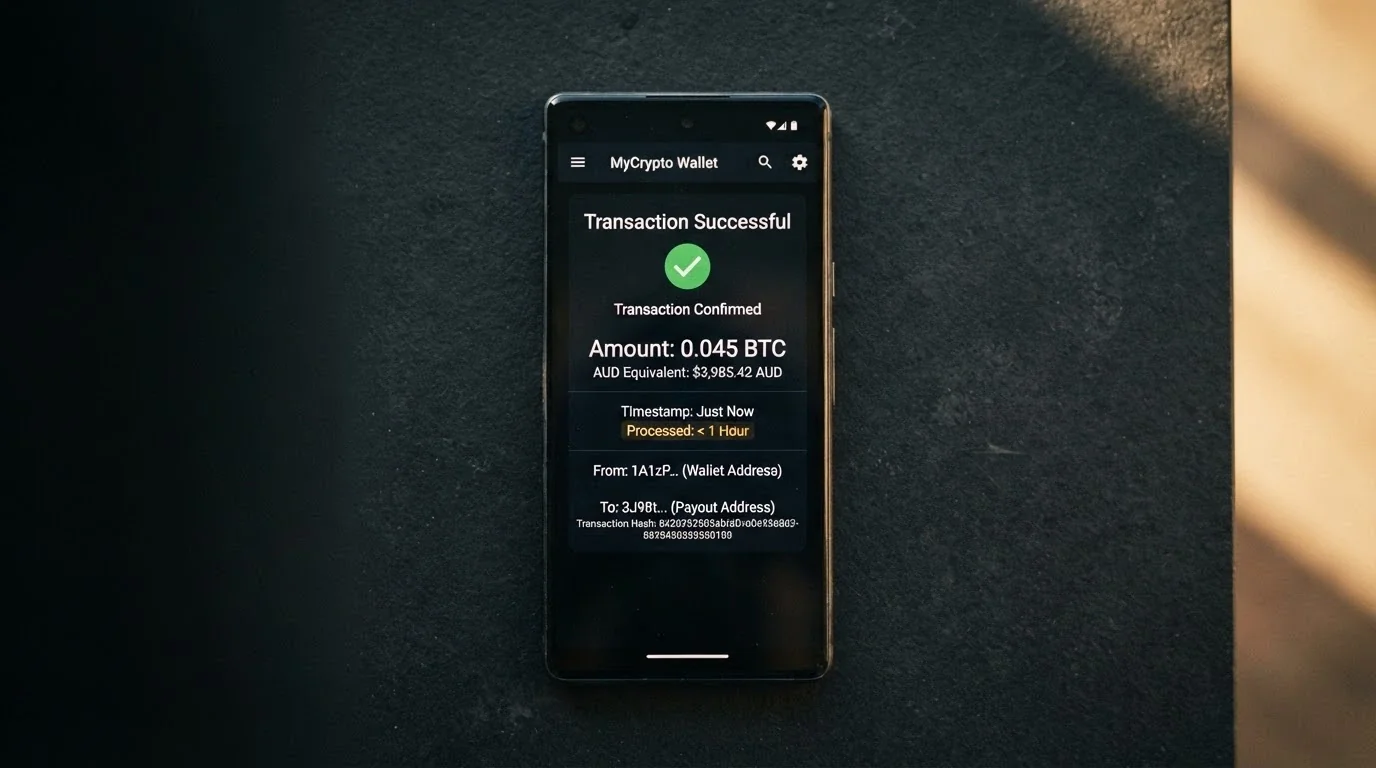
Why Aussie Players Choose Crypto: Anonymity Meets 42-Minute Payouts
The reasons Australian players choose crypto at offshore casinos are three. First, bank-statement privacy: a crypto deposit does not produce a gambling merchant entry on a bank statement, because the bank is not in the transaction. Second, no card-decline risk: the merchant-category screen that bounces a Visa debit at one cashier does not see a crypto transaction at all. Third, payout speed: at Rainbet, for example, deposits are credited after one blockchain confirmation and withdrawals are typically processed and sent within 5 to 15 minutes. Royal Reels accepts BTC, USDC, ETH and USDT alongside cards and bank transfer. Most AU-facing brands in this set take at least one of Bitcoin, Ethereum, USDT or USDC.
The mid-2024 credit-card and crypto ban for licensed online wagering does not bind offshore brands. A licensed Australian wagering operator cannot take a crypto deposit; an offshore casino can. That asymmetry is the structural reason crypto is still the fastest rail at AU-facing offshore brands — the ban is precisely what the offshore cashier is not subject to.
Bitcoin vs Bank Transfer: The Speed Gap That Drives Crypto Adoption
The median crypto payout is 42 minutes; the median bank transfer payout is 3 working days. The worst-case is 4 hours versus 7 working days. The numbers are not close, and they are the numbers that decide the rail for any player who has a session-end cashout in mind.
The trade-off is conversion. A player who wins in USDT and converts to AUD on the receiving end takes the crypto-to-AUD spread on top of any network fee. A player who wins in AUD via bank transfer takes no conversion but accepts the 3-day wait. For high-rollers, the spread is small against the time saved. For small-balance players, the spread is meaningful against a A$100 win.
Is Your Casino Deposit Legal? What Australian Law Actually Says
Online casino games, online pokies and in-play betting are prohibited in Australia. The Interactive Gambling Act 2001 makes it an offence to provide any of those products to a person in Australia. ACMA is the federal regulator that enforces the prohibition and directs ISPs to block illegal sites. The individual player is not prosecuted; the Act targets the provider. Every brand in this guide is offshore, unlicensed in Australia, and outside the local dispute-resolution system.

The Interactive Gambling Act 2001: Why Australia Banned Online Casinos
The Interactive Gambling Act 2001, strengthened by the Interactive Gambling Amendment Act 2017, makes it an offence to provide online casino games to anyone in Australia. Permitted and licensable online products are wagering on races and sport placed before the event begins, lotteries and keno, through operators licensed by a state or territory. Online casino, online pokies and in-play sports betting are not licensable products. The Interactive Gambling Amendment (Gambling Reform) Bill 2026 passed Parliament on 19 August 2026, with its measures commencing 1 January 2027.
The Act targets the provider, not the player. A player who deposits at an offshore casino does not face prosecution under the IGA; the brand that took the deposit does. That distinction is why offshore casinos continue to advertise to Australian players: the legal cost falls on the brand, and the player sits in a grey zone the Act does not directly police.
ACMA, BetStop and the Regulators: Who Actually Watches Your Deposit
ACMA enforces the prohibition and directs ISPs to block illegal sites. State and territory regulators license wagering operators; the Northern Territory Racing and Wagering Commission is one of the larger of those. BetStop is the National Self-Exclusion Register, and one registration on BetStop excludes a person from every Australian-licensed online and phone wagering service in a single step — about 150 licensed wagering providers.
BetStop does not cover offshore casinos. An offshore casino sits outside the BetStop register and can keep taking deposits from a self-excluded person. From 1 January 2027, banks and payment providers gain express authority to block transactions to illegal gambling operators. That authority sits with the bank, not with ACMA, and it is a transaction-level block, not a site-level block.
What Happens When You Deposit at an Unlicensed Offshore Casino
Three consequences follow from depositing at an unlicensed offshore casino. First, BetStop does not apply, and an offshore casino can keep taking deposits from a self-excluded person. Second, there is no Australian deposit guarantee and no local dispute-resolution path; a payout dispute with an offshore brand is resolved under the brand’s own terms, in the brand’s own jurisdiction. Third, the credit-card and crypto ban does not stop the brand from accepting either — the ban is on the licensed operator, not on the offshore one.
An offshore casino advertising a welcome bonus to Australians is breaking the prohibition itself, not merely an advertising rule. Operators that fail to enforce the credit/crypto payment ban at the licensed end face penalties of up to A$247,500. That penalty is on the licensed operator, again not on the offshore brand.
Staying in Control: Deposit Limits and Self-Protection for Aussie Players
The single most effective session control is the one a player sets before the first deposit. Once the money is in the account, the impulse to chase a loss is the rule, not the exception. A deposit limit is the cheapest responsible-gambling tool on the page: it works on every platform, costs nothing to set, and binds the next deposit, not the one already made.
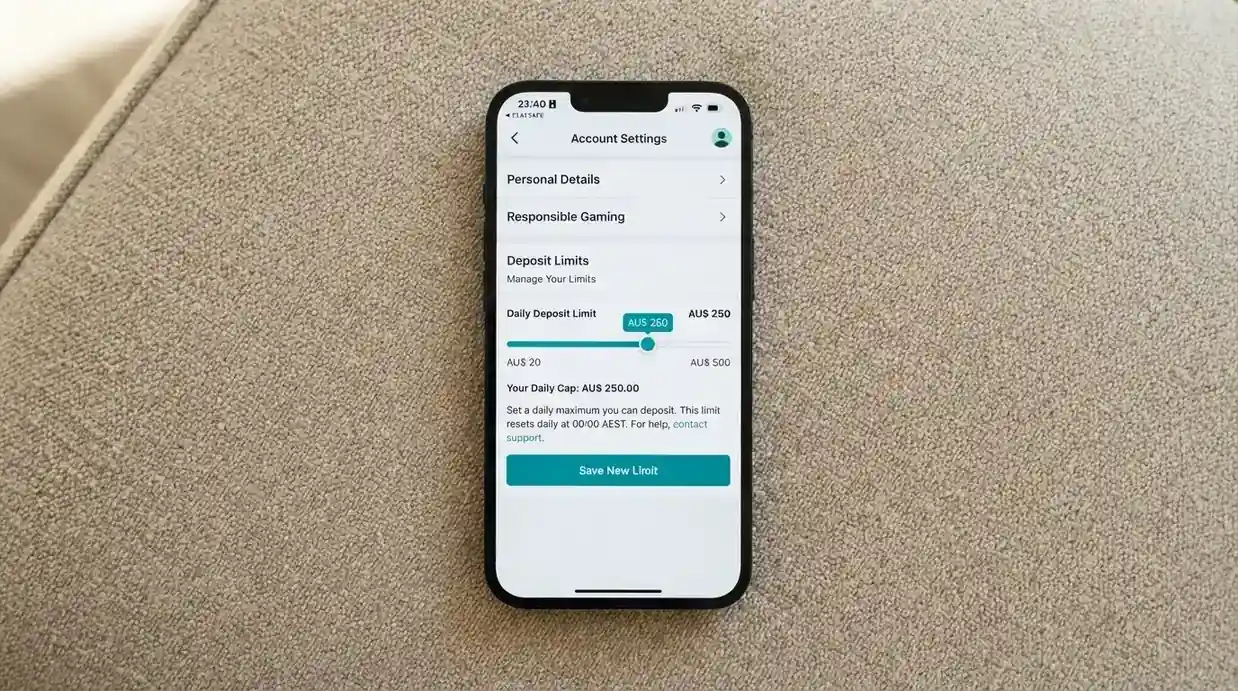
Deposit Limits: The One Setting That Keeps a Session Affordable
A deposit limit at an offshore casino is a daily, weekly or monthly cap the player sets on their own account. The limit is enforced at the cashier; a deposit that would breach it is declined. Most operators allow the player to set or reduce the limit instantly, and to raise it only after a cooling-off period.
The licensed-market context for AU is sharper. Legal deposit routes for licensed wagering are debit card, bank transfer, PayID/Osko and BPAY. Credit cards and crypto are banned as payment for licensed online wagering, with the ban commencing 11 June 2024 under the Interactive Gambling Amendment (Credit and Other Measures) Act 2023. There is no federal deposit, loss or stake ceiling for online gambling in Australia because the product those ceilings would govern is banned outright. The ceiling is therefore a player-set one, on the cashier page, before the first deposit.
BetStop and Self-Exclusion: How to Lock Yourself Out of Every Licensed Provider
BetStop launched on 21 August 2023 as the National Self-Exclusion Register. One registration excludes a person from every Australian-licensed online and phone wagering provider — about 150 brands — for a minimum of 3 months and up to a lifetime. As of 31 March 2026, 37,247 people had active exclusions through BetStop, with 59,830 registered to the end of Q3 FY 2025–2026 and 22,583 having completed or cancelled their exclusion.
The awareness gap is the striking number. Only one in three wagerers (33.5%) know BetStop exists, and around one in four Australian adults (26.5%) know about it. An estimated five million wagerers nationwide include 400,000 high-risk gamblers, while just 30,000 individuals currently have active exclusions through BetStop — if all 30,000 active exclusions were high-risk gamblers, that would still represent only 7.5% of those experiencing severe gambling harms with a safeguard in place. Dr Kei Sakata, Executive Manager at the Australian Gambling Research Centre (AIFS), puts it plainly: “Despite an estimated five million wagerers nationwide, including 400,000 high-risk gamblers, just 30,000 individuals currently have active exclusions through BetStop.”
The National Gambling Helpline is 1800 858 858, free and confidential, open 24 hours a day, 7 days a week. Gambling support services can also be accessed through free 24/7 chat and email counselling via Gambling Help Online. The two services are the front door to help; BetStop is the back door, locking a player out of every licensed provider for as long as the exclusion runs.
BetStop’s limit is its reach. It binds Australian-licensed wagering providers only. An offshore casino is not licensed here, is not connected to the register, and can keep taking deposits from a self-excluded person. A self-excluded player who wants to be locked out of offshore casinos needs the offshore casinos themselves to enforce the exclusion — and most do not.
How We Chose the Best Casino Payment Methods for Australian Players
The brands and methods on this page were checked against three sources. First, the ACMA register: every operator is named as offshore and unlicensed in Australia for casino games. Second, AU-facing casino cashier guides and review sources: where a brand’s primary cashier page was accessible, the published methods, limits and timing were taken from it. Where the published detail was thin, the section flags that. Third, payout-speed measurements at AU-facing casinos in August 2026, sourced from the Betsquare index: the 42-minute crypto median, the 2-hour PayID median, the 6-hour e-wallet median, the 2-working-day card median and the 3-working-day bank-transfer median all come from that sample.
The ranking above reflects four criteria, in this order: AUD support (without it, the brand does not belong on an Australian page), payout route (a real AUD or stablecoin cashout, not a deposit-only illusion), payment-method breadth (more rails mean more ways for a player to fund and cash out), and verified limits (a published daily or weekly ceiling, taken from the cashier page or a review source). No brand is on this page because of a welcome bonus, and no bonus terms were used to order the ranking.
Two brands are included with caveats: Scream Casino, whose AU cashier details are thin in published sources, and Betfair, which is a licensed Australian wagering exchange and cannot legally offer online casino games. Both are flagged in their own sections.
What Every Aussie Player Should Do Before Their Next Casino Deposit
Five steps cover most of what can go wrong. First, set up the withdrawal rail before funding — never deposit with a method that cannot receive a payout. Neosurf is deposit-only. POLi is deposit-only and does not support withdrawals. A PayID deposit with a PayID or crypto cashout is the cleanest pairing. A Neosurf deposit needs a separate PayID or crypto account set up before the first deposit.
Second, check whether the operator is on the ACMA block list. ACMA enforces the prohibition and directs ISPs to block illegal sites. A brand that is on the ACMA list is one a player is reaching through a path the regulator has already tried to close.
Third, pick a method whose real-world payout timeline has been measured, not one whose advertised speed is the only data point. The 42-minute crypto median, the 2-hour PayID median and the 3-working-day bank-transfer median are the data; the “instant” claim on the cashier page is the marketing.
Fourth, set a deposit cap before the session starts. The cap binds the next deposit, not the one already made; setting it on the cashier page, before the first deposit, is the cheapest and most effective responsible-gambling move on this page.
Fifth, the AUD stack that gives the fastest round-trip is PayID in, crypto or bank transfer out. PayID deposits settle in seconds at no charge. Crypto payouts arrive in under an hour at the median. Bank transfer payouts take three working days but land in AUD with no conversion. The combination covers the speed case and the safety case, and it works at every brand on this page that supports the rails.
Frequently Asked Questions
Can I withdraw casino winnings to Neosurf or POLi in Australia?
No — both are deposit-only. Neosurf is a prepaid, one-use voucher with no receive-funds function at all. POLi is a deposit-only gateway that does not support withdrawals. Winnings from a Neosurf or POLi deposit must withdraw through a separate rail — PayID, crypto, e-wallet or bank transfer — set up before the first deposit.
Why do Visa or Mastercard gambling deposits sometimes get declined for Australian players?
The decline is usually at the bank, not at the casino. Australian banks apply a merchant-category block on outbound gambling transactions, and the transaction is declined before the offshore cashier sees it. From mid-2024, credit cards are banned entirely for online gambling in Australia. A debit card may still clear; if it does not, switch to PayID, Neosurf or crypto at the same brand.
Is crypto a better casino payout method than bank transfer for Australian players?
On speed, yes — by a wide margin. The median crypto payout at AU-facing casinos was 42 minutes in August 2026; bank transfers took 3 working days. The trade-off is conversion: USDT or BTC winnings have to be converted back to AUD, and the spread is the cost of the speed.
Do Australian casinos accept credit cards or crypto for real-money deposits?
Licensed Australian wagering operators do not — credit cards and crypto have been banned as payment since 11 June 2024, following June 2023 legislation. Offshore casinos are not subject to the ban, and most accept both. The ban is on the licensed operator; the offshore cashier is on a different legal track.
What should I set up before depositing so I can actually cash out from an AU-facing casino?
Set up the withdrawal rail before funding. A PayID deposit needs a PayID or bank account set to receive. Neosurf and POLi are deposit-only — they need a separate withdrawal rail. A crypto deposit needs a wallet the player controls. Verifying limits and KYC first saves a 24-to-48-hour hold at the first cashout.
Published by the Casino Apps Australia team.