
Which Pokies Actually Pay Best in Australia: An RTP and Operator Guide for 2026
A “best paying pokie” label means one thing in marketing and another at the bank. This page sits with the second meaning. The highest-RTP pokies Australian players can actually reach, the offshore operators that stock them, the payout speed, and the Interactive Gambling Act reality every player steps into when a real-money spin loads — the whole picture, with the marketing trimmed out.

Current as of 3 November 2026 · licence and enforcement claims verified against ACMA records and Curaçao register listings.
Table of Contents
- What “Best Paying” Actually Means for Online Pokies in 2026
- The Few Pokies That Genuinely Pay Above 98% RTP in 2026
- The Offshore Casinos Where Australians Play the Highest-RTP Pokies in 2026
- Why Your Payout Speed Depends on More Than the Casino
- The Legal Reality: Online Pokies and the Interactive Gambling Act
- Staying in Control: Responsible Gambling Tools That Actually Work
- How We Evaluated and Ranked These Pokies Sites
- Your High-RTP Pokies Game Plan for 2026
- Frequently Asked Questions About High-Paying Online Pokies
What “Best Paying” Actually Means for Online Pokies in 2026
Three numbers sit inside every payout claim a pokie makes. The first is the return-to-player percentage. The second is the house edge — the same figure, viewed from the operator’s side of the counter. The third is volatility, and it is the one a marketing paragraph almost never names, because it is the number that turns a 98% RTP label into either a slow drip of small wins or a long drought that ends in a single fat payout. A reader who only watches the first number misses the second; a reader who watches both still misses the third.
RTP, House Edge and the Maths Behind Every Spin
Return-to-player is a long-run average. Take a pokie at 96% RTP, set it running for ten million spins, divide the total returned by the total wagered, and the answer lands somewhere near 96 cents on the dollar. No single session produces that figure. The maths describes a population of spins, not the spin a player happens to be on, and that distinction is the most common source of disappointment at the reels.
The vast majority of online pokies sit between 94% and 97% RTP, with an industry average floating around 95.7%. The house edge is the mirror: a 95.7% RTP pokie keeps 4.3 cents of every dollar wagered as gross profit before operating costs. A 99% pokie keeps one cent. The gap looks tiny on paper — 3.3 percentage points — and that is the gap a marketing line quietly flattens. Across a thousand one-dollar spins, the difference is thirty-three dollars out of pocket. Across ten thousand spins, it is three hundred and thirty. The house edge compounds in a way the percentage does not advertise.
The figure that arrives on a session’s bank statement rarely resembles the published RTP. A player might run hot and finish well above it, or run cold and finish a long way below. Over ten thousand simulated spins, games above 97% RTP returned measurably more than the industry-average cohort. The result is statistical, not promissory. It describes the average player across the average session, and an individual session can land anywhere inside that distribution.
Why Volatility Changes Everything a Payout Percentage Promises
Two pokies at near-identical RTP play nothing alike. Book of 99 sits at 99% with a max win of 12,075 times the bet and a long quiet stretch between sizeable payouts; Blood Suckers sits at 98% with a max win of 900x and a steady drip of small wins that keeps the balance moving. The published percentages are within a single point of each other. The lived experience of either is entirely different.
A high-volatility pokie charges the player in advance for its biggest payouts. Bankrolls swing in long arcs; a session can lose most of its stake before a bonus feature lands, or grind out a near-flat result for hours and then pay out once. A low-volatility pokie returns small wins frequently enough that the balance rarely drops to zero, but rarely climbs to anything that would count as a payout worth chasing. The RTP is the same on paper. The shape of the session is not.
The practical question a player has to answer is which ride they would rather be on. A larger bankroll tolerates the swings of a high-volatility pokie and is positioned to catch the feature when it lands. A smaller bankroll on the same game is more likely to be ground down before the feature arrives. A low-volatility pokie on that smaller bankroll produces a longer session and a more predictable burn rate — a different kind of value, but value nonetheless.
Real-Money Play vs Free-Play Demo Mode: What Is Different
Demo-mode spins run on the same RNG and the same RTP as real-money spins at every reputable provider. What changes is the financial frame: a demo spin is free, a real-money spin costs the stake, and the difference between the two is the only thing that makes volatility meaningful. A demo session on a high-volatility game is a curiosity; a real-money session on the same game is a bankroll question.
Demo mode is useful for one job and one job only: learning a game’s features, paytable, and bonus structure before committing cash. It is not a predictor of how a real session will run. The first thousand spins at a new pokie tend to feel unrepresentative in either direction, and the published RTP is what eventually pulls the average back toward the line — provided a player has the bankroll to stay long enough to let it.
Among the operators reviewed in the section on offshore casinos, free-play access varies. The standard pattern at offshore sites is demo play on most slots without registration, with real-money mode locked until an account is opened and a deposit made. The RTP does not change between modes. The cost of the spin does.
The Few Pokies That Genuinely Pay Above 98% RTP in 2026
Two pokies reach the 99.00% line. Both are old enough to feel it, both demand a specific way of being played, and neither is the answer to every reader. Below them sits a tight tier between 97.7% and 98.9% that beats the industry average by a wider margin than any difference in this band looks like on a marketing page. Below that sits everything else, which is the industry baseline a player pays just by spinning.

| Game Title | Provider | RTP | Max Win |
|---|---|---|---|
| Mega Joker (Supermeter) | NetEnt | 99.00% | 2,000x |
| Book of 99 | Relax Gaming | 99.00% | 12,075x |
| Jackpot 6000 (Supermeter) | NetEnt | 98.86% | — |
| 1429 Uncharted Seas | Thunderkick | 98.60% | 670x |
| Marching Legions | Relax Gaming | 98.12% | 5,000x |
| Blood Suckers | NetEnt | 98.00% | 900x |
| Jokerizer | Yggdrasil | 98.00% | 6,000x |
| Starmania | NextGen | 97.87% | — |
| White Rabbit Megaways | Big Time Gaming | 97.72% | 13,029x |
Mega Joker and Book of 99: Inside the 99% RTP Club
Mega Joker’s 99.00% figure is conditional. The base game runs at 76.9% RTP, which is well below the industry average, and the headline figure only applies when a player is in Supermeter mode after collecting enough coins to trigger it. Play the base game and the player is paying the casino roughly twice the standard house edge. Play Supermeter and the player is paying one of the lowest house edges in the catalogue. The pokie is honest about which mode does what, and the audit certificate backs it up — the two figures are real, not marketing.
Book of 99 reaches the same 99.00% without the conditional. It runs at 99% across the base game and the bonus, with a 12,075x max win and a volatility profile that asks the player to wait. Its 99% RTP is built into the game’s design — the “99” in the title refers to the published figure — and is verified by Relax Gaming’s audit trail. The trade-off is the shape of the session: long quiet stretches, then features that land hard.
The two 99% pokies are not interchangeable. Mega Joker suits a player who can read the mode indicator and switch in and out; Book of 99 suits a player who would rather not manage a game mode and is willing to ride out volatility for a higher max win. Either way, neither is the kind of pokie a reader spins casually for twenty minutes at lunch.
The 98% Club: Blood Suckers, 1429 Uncharted Seas and the Next Tier Down
The next tier down is closer to the player than the marketing gap suggests. Jackpot 6000 in Supermeter mode runs at 98.86%, the highest non-99% figure in the table. Like Mega Joker, the headline figure depends on the mode: the base game sits well below it. 1429 Uncharted Seas, by Thunderkick, runs at 98.60% across the whole game with a 670x max win — a quieter profile than the Supermeter NetEnt titles, useful for a player who wants a high-RTP session without managing a mode switch.
Marching Legions, a Relax Gaming title, runs at 98.12% with a 5,000x max win. Blood Suckers, NetEnt’s long-running vampire-themed pokie, runs at 98.00% with a 900x max win and a low-volatility profile that pays out small wins often enough to keep a bankroll moving. Jokerizer, by Yggdrasil, also runs at 98.00% with a 6,000x max win and a higher-volatility feel than Blood Suckers.
Below the 98% line sit Starmania (NextGen, 97.87%) and White Rabbit Megaways (Big Time Gaming, 97.72%) — the latter carrying a 13,029x max win that places it among the highest-paying single-spin payouts in the entire catalogue. White Rabbit is the outlier in this list: its RTP sits below 98% while its max win sits above every title in the tier. The two numbers are not in conflict; they describe different things. A 97.72% RTP is the long-run return. A 13,029x max win is a once-in-a-very-long-while outcome. A player reading both numbers with the same weight will draw the wrong conclusion from one of them.
Why a Pokie’s Published RTP Means Nothing Without an Audit Certificate
A 99% RTP claim on a pokie that no one has audited is a marketing line, not a fact. The independent test labs — companies like eCOGRA, GLI, iTech Labs, and BMM Testlabs — run the actual simulations and issue certificates a publisher can publish. A pokie with an audit certificate from one of those bodies has had its published figure independently verified. A pokie without one has had nothing.
The practical test a player can run is straightforward. Without an audit certificate to point at, a 99% claim is marketing noise. The higher the headline RTP, the more useful this filter becomes — the 99% tier is small enough that any title in it can be checked against the certificate register at its provider. NetEnt, Relax Gaming, Thunderkick, Yggdrasil, and Big Time Gaming all publish audit trails for their titles. A pokie that publishes a high RTP and cannot show its certificate is asking the player to take the marketing on trust.
Provider reputation is a secondary signal but a useful one. The studios whose names appear in the table above have a track record of having their published figures match their audited figures. A pokie from a less well-known studio at a high RTP is worth treating with more suspicion than the same number from one of these publishers.
AU-Player-Friendly Titles: Which High-RTP Pokies You Can Actually Find
The high-RTP titles in the table above are published by studios with broad distribution. NetEnt and Relax Gaming, in particular, show up across nearly every offshore operator reviewed in the next section; Mega Joker, Blood Suckers, Book of 99, and 1429 Uncharted Seas are commonly stocked at the Curaçao-licensed brands that accept Australian players. Thunderkick and Yggdrasil titles are slightly less universal but still broadly available at the larger libraries.
The titles that are harder to find are not the high-RTP NetEnt or Relax Gaming games — those are everywhere. The scarcer titles are the ones from smaller studios or older catalogues that some operators have not licensed. White Rabbit Megaways, by Big Time Gaming, is well-known enough to be common, but Starmania, by NextGen, is less reliably stocked. Jokerizer and Marching Legions are present at most major offshore libraries but not at every one.
The practical rule for a player looking for any specific title in the table: the larger the operator’s library, the more likely the title is present. Wild Fortune, reviewed below, carries fifteen of the top twenty highest-RTP titles, which is a strong coverage claim for a player whose priority is the catalogue rather than the headline bonus.
The Offshore Casinos Where Australians Play the Highest-RTP Pokies in 2026
Every operator in this section holds a Curaçao licence, accepts Australian players, and operates in a market where the Interactive Gambling Act prohibits online casino play. None holds an Australian licence for casino games, and no such licence can exist. The table below shows the licence and the game-provider mix; the prose after it works through what each operator actually offers.
| Operator | Licence | Game Providers |
|---|---|---|
| Wild Fortune | Curaçao (offshore) | NetEnt, Relax Gaming, Thunderkick, Yggdrasil |
| Winshark | Curaçao (offshore) | 10,000+ games (97.2% stated avg RTP) |
| Spirit Casino | Curaçao (offshore) | 6,000+ games (96.35% stated avg RTP) |
| Lucky7Even | Curaçao (offshore) | NetEnt, Pragmatic Play |
| StoneVegas | Curaçao (offshore) | Microgaming, BetSoft, Play’n GO, Playtech |
| Neospin | Curaçao (offshore) | NetEnt, Pragmatic Play |
| SkyCrown | Curaçao (offshore) | NetEnt, Pragmatic Play |
| GoldenCrown | Curaçao (offshore) | NetEnt |
| Royal Reels | Curaçao (offshore) | Pragmatic Play |
| FairGO | Curaçao (offshore) | RTG |
What We Compared: RTP Title Access, Game Libraries and Licence Status
Three columns earn their place in the table. The first is the licence: every operator here is Curaçao-licensed, and that fact — not a marketing line about safety or trust — is the only licence claim that can be made. The second is the game-provider mix, which is the only honest proxy for RTP title access: a NetEnt-equipped operator can stock Mega Joker and Blood Suckers, a Play’n GO-equipped operator cannot. The third is the operator’s overall library size where research carries one, which is a coverage proxy at the high-RTP end of the catalogue.
What the table does not carry is the welcome-bonus comparison. Of the ten operators listed, only two have a confirmed dollar figure attached to their welcome offer in research — Lucky7Even, with up to AU$3,000 plus 200 free spins, and StoneVegas, with A$500 plus 200 free spins. Neither operator has a confirmed wagering multiplier or a confirmed bonus validity, which makes a bonus-versus-bonus comparison impossible on this set. The remaining eight operators do not have a confirmed bonus figure at all. Where research carries the figure, it is stated below; where it does not, the operator’s bonus is described qualitatively rather than guessed at.
Licensed vs Offshore: What Every Australian Player Needs to Know Before Signing Up
The licensed Australian wagering market covers pre-event sports and racing only. Online casino games, online pokies, and in-play sports betting are prohibited under the Interactive Gambling Act 2001. The Australian Communications and Media Authority, the ACMA, enforces that prohibition against the provider, not the player — the player is not the target of the law — but the practical consequences of using an offshore casino are real and worth understanding before any deposit is made.
BetStop, the National Self-Exclusion Register, does not reach offshore casinos. The register binds Australian-licensed wagering services only; an offshore operator has no integration with it and no obligation to honour it. Anyone reading this page who has registered on BetStop and is considering an offshore casino as a substitute is choosing to override their own exclusion — the details of why this matters are spelled out in the section on responsible gambling tools.
Consumer protection is the second gap. There is no Australian complaint body that can compel an offshore operator to pay a disputed withdrawal. There is no local regulator a player can call. The licence the operator holds is Curaçao, and the dispute process under that licence is conducted outside Australian jurisdiction. A player who loses a withdrawal argument with a Curaçao-licensed operator has, in practical terms, very limited recourse.
The third gap is the block. The ACMA’s enforcement record against offshore operators targeting Australian players is consistent — the running count of blocked sites and the names of the brands named in it are covered in the legal-reality section below — and any of the brands reviewed here can find itself added to the block list at any time. A player with a balance on a site that gets blocked faces the prospect of trying to recover funds from an operator that has just been designated illegal in Australia.
Wild Fortune
Wild Fortune runs a Curaçao licence and carries the deepest high-RTP catalogue of any operator reviewed here. Fifteen of the top twenty highest-RTP titles appear in its library, and the provider mix — NetEnt, Relax Gaming, Thunderkick, Yggdrasil — covers the four studios whose names show up most often in the high-RTP table above. For a player whose primary filter is title access rather than welcome offer, Wild Fortune is the operator whose catalogue does the most work without further argument.
The welcome offer is described qualitatively in research rather than as a specific figure, which leaves the bonus side of the comparison open. That is the right kind of gap to have, on this set. A player choosing Wild Fortune on catalogue strength should read the welcome terms carefully before claiming; the operator’s catalogue strength does not extend to a confirmed bonus offer on the page.
Best catalogue for high-RTP titles in this set, full stop.
Winshark
Winshark carries a stated 97.2% average RTP across more than 10,000 games, which is the highest stated average on this set and the figure that distinguishes the operator from the larger libraries that sit closer to the industry baseline. The 97.2% is the operator’s stated figure, not a third-party audit; the difference matters because an operator’s stated average can shift as its library is updated, while an audited figure on a single title is fixed.
The library size is the other distinguishing feature. Ten thousand games is broader than any other operator reviewed here, which is a coverage argument in favour of Winshark for a player who wants every high-RTP title to be available somewhere in the same place.
For the player who values breadth and a stated-above-industry-average RTP, with the understanding that the figure is operator-stated rather than independently audited.
Spirit Casino
Spirit Casino runs a 6,000-plus game library with a stated 96.35% average RTP, which is above the industry midpoint and below Winshark’s 97.2%. The library is large enough that a player will not be searching for individual high-RTP titles, and the average RTP sits comfortably in the band that this page argues is the meaningful threshold for a casino’s overall return.
The welcome offer is qualitative in research, and the bonus side of the comparison is the gap a player choosing Spirit Casino on catalogue size will need to fill by reading the operator’s terms.
A mid-sized library at a mid-tier average RTP — neither the best nor the worst of this set.
Lucky7Even
Lucky7Even is the only operator on this set with a confirmed dollar welcome figure attached to it — up to AU$3,000 plus 200 free spins. The wagering multiplier is unconfirmed, and the bonus validity is unconfirmed, which means the dollar figure on its own does not let a reader compare the offer’s real cost to any other operator on the page. A reader who treats “AU$3,000 plus 200 free spins” as a clean win is reading past the conditions they have not been shown.
The provider mix is NetEnt and Pragmatic Play, which covers the highest-RTP NetEnt titles and a wide Pragmatic Play catalogue but does not reach Relax Gaming, Thunderkick, or Yggdrasil — the studios whose titles dominate the upper tier of the high-RTP table.
The welcome offer is quotable in dollars; the wagering cost of that offer is not.
StoneVegas
StoneVegas offers a confirmed A$500 plus 200 free spins welcome package. Like Lucky7Even, the wagering multiplier is unconfirmed and the bonus validity is unconfirmed, so the figure cannot be compared against any other operator on the page. The package is smaller than Lucky7Even’s headline number; whether that makes it a worse offer depends entirely on the wagering multiplier that research does not carry.
The provider mix is the most distinctive on this set: Microgaming, BetSoft, Play’n GO, and Playtech. None of those studios are represented in the high-RTP table above. The 98%+ tier is the property of NetEnt, Relax Gaming, Thunderkick, and Yggdrasil — StoneVegas’s mix carries none of them.
A confirmed dollar figure on the bonus side, a library that misses the high-RTP tier on the catalogue side — pick which side matters more.
Neospin
Neospin runs on a daily-cashback model rather than a lump-sum welcome bonus: 20% back, paid daily, on losses during the previous period. The exact cashback terms are not confirmed on the operator’s site in research, which is the same kind of gap StoneVegas and Lucky7Even carry on the welcome side. A daily-cashback model produces a different kind of value from a welcome bonus: it extends through a player’s first weeks rather than concentrating at deposit one.
The provider mix is NetEnt and Pragmatic Play, which puts Neospin in the same category as Lucky7Even and SkyCrown for high-RTP title access.
The ACMA’s enforcement record against Neospin is worth naming. Enforcement action has been confirmed for alternate domains used by the brand. The Neospin brand is on the regulator’s radar; the action has been taken against mirror sites, but the operator itself is the same entity. A reader who chooses Neospin is choosing an offshore operator the ACMA has acted against.
Daily cashback, not a lump-sum welcome; ACMA enforcement history, not a clean record.
SkyCrown
SkyCrown runs a Curaçao licence and a NetEnt-plus-Pragmatic-Play provider mix. ACMA enforcement has been confirmed under the variant name “Sky Crown” — the brand is on the regulator’s list, with the same block risk as any other operator in this section.
The welcome bonus is qualitative only. Research does not carry a confirmed figure, and the operator’s own terms have not been verified for this page. A player reading SkyCrown’s offer should treat it as a black box on the bonus side and weight the rest of the comparison accordingly.
Like Neospin with a different enforcement-variant name and no confirmed bonus.
GoldenCrown
GoldenCrown holds a Curaçao licence and runs a NetEnt-led library. ACMA enforcement has been confirmed under the variant “Golden Crown Casino” — the brand has been named in the regulator’s action, with the same offshore-casino risk profile as the rest of this set.
The welcome bonus is qualitative only. The provider mix is narrower than the larger libraries in this section; a player looking for the full high-RTP table above will not find every title at GoldenCrown.
NetEnt-led, regulator-listed, unquoted on the bonus side.
Royal Reels
Royal Reels holds a Curaçao licence, a Pragmatic Play-centred library, and a 2.51% share of the market that the operator serves. Pragmatic Play is one of the larger studios in the offshore market, and the library reaches the studio’s full range of titles, but Pragmatic Play does not appear in the high-RTP table above. A player who reads this page for the high-RTP titles will not find them at Royal Reels.
The welcome bonus is qualitative only.
Pragmatic Play centred, at the smaller end of the market.
FairGO
FairGO runs an RTG-only game library and holds 0.8% market share — the smallest operator in this section by a wide margin. Real Time Gaming is one of the older studios in the offshore market, and its catalogue does not overlap with the high-RTP table above. A player reading this page for Mega Joker, Blood Suckers, or 1429 Uncharted Seas will not find them at FairGO.
The welcome bonus is qualitative only.
For a player who already knows what they want from an RTG-only library.
Why Your Payout Speed Depends on More Than the Casino
A “fast payout casino” label is shorthand for the best-case scenario at a given operator, not the typical one. The actual speed a player experiences is the product of three things: the withdrawal method they pick, the operator’s pending period before the request is even reviewed, and the KYC verification step that gates the first withdrawal of any kind. None of the three is fixed by the casino’s brand name, and any one of them can be the difference between a ten-minute payout and a three-day wait.
PayID and Osko: The Fastest Withdrawal Methods for Australian Players
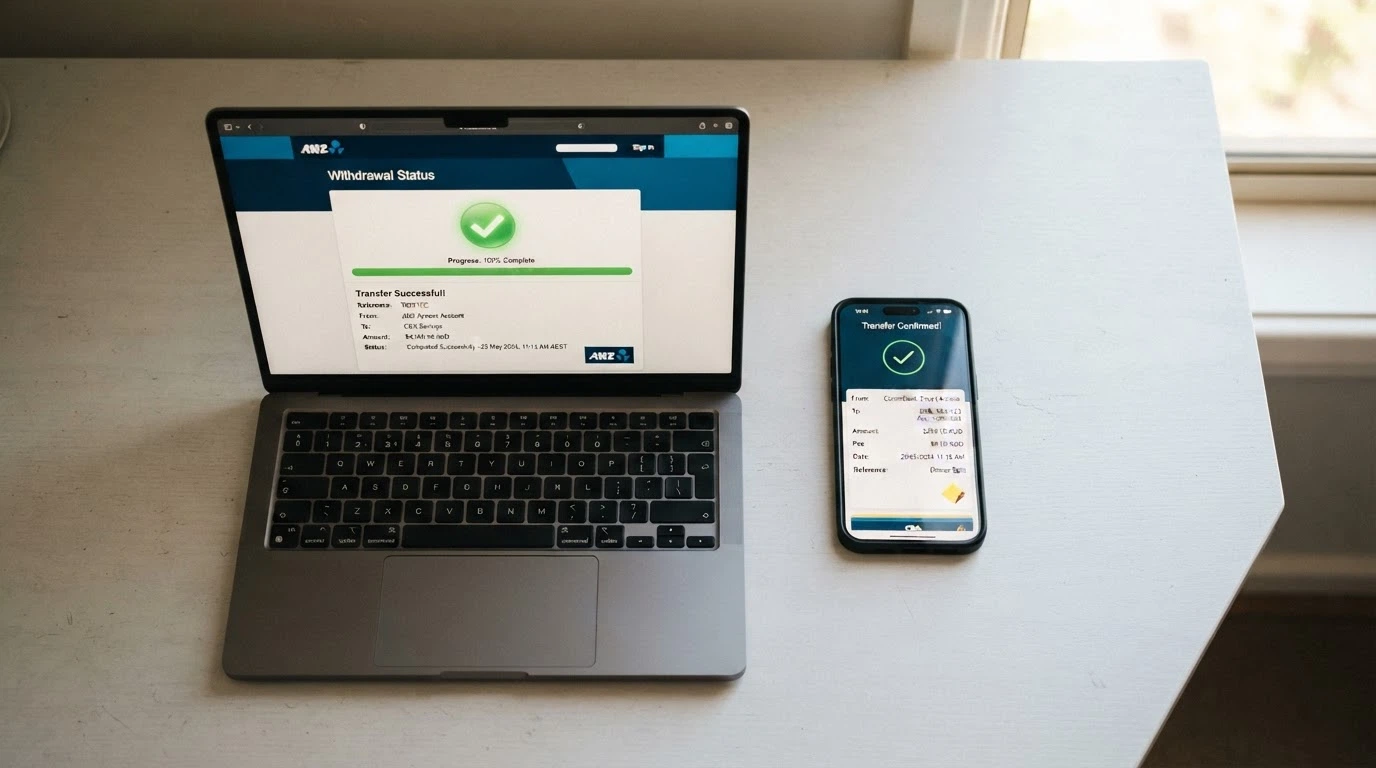
The fastest PayID casino payout was processed in under ten minutes in Q2 2026 testing. PayID ties a withdrawal to a player’s mobile number or email rather than to a BSB and account number, and the receiving bank needs to be Osko-enabled for the instant-credit leg to fire. Most Australian banks are Osko-enabled. A player banking with a non-Osko institution will see a PayID withdrawal arrive through standard transfer timing rather than the instant path.
The practical consequence for an Australian player choosing a payout method is that PayID at an Osko-enabled bank is the only path that puts a withdrawal on the same screen as the request itself. Standard bank transfer at the same operator will land one to three business days later, on the same bank account, through the same BSB and account number, with no difference to the player except the wait.
Crypto, Bank Transfer and the Methods That Take Longer
Bitcoin withdrawals at the offshore operators in the section above average ten to thirty minutes. That is faster than a bank transfer and slower than PayID at an Osko-enabled bank, with an additional layer of friction attached. That layer is the credit-card-and-crypto ban covered in the legal-reality section, which catches crypto as well as cards: an Australian player depositing in Bitcoin is using a payment method the licensed Australian market prohibits, and the recourse if anything goes wrong is the offshore licence rather than any Australian body.
Bank transfers are the slowest of the standard methods, at one to three business days, with the advantage of being the path the Australian banking system is built around. A player who values the standardisation and the audit trail of a bank transfer over the speed of PayID or crypto will accept the three-day window as the cost of that trade-off.
Withdrawal Limits, Verification and What Actually Slows a Payout Down
The single biggest reason a fast-payout promise falls apart in practice is KYC. The first withdrawal at any reputable operator triggers KYC verification, and the check can take anywhere from a few hours to a few business days depending on how clean the documents are and how busy the verification queue is. A player who has uploaded documents before requesting a withdrawal will move through this gate faster than a player who is doing both at once.
The second reason is the operator’s own pending period. Many offshore casinos hold a withdrawal request for twenty-four to forty-eight hours before processing it, on the logic that players sometimes reverse a request after thinking about it. The pending period is set by the operator, not by the payment method, and it sits on top of whatever the method itself takes. A PayID withdrawal that hits a forty-eight-hour pending period is not a ten-minute payout.
Withdrawal limits are the third layer. Across the major offshore sites, minimum withdrawals sit between A$10 and A$30 and maximum daily limits sit between A$2,000 and A$10,000. A player withdrawing a five-figure win will hit the daily cap and have to wait for the next day’s window, which turns a fast payout into a multi-day payout regardless of the method.
The Legal Reality: Online Pokies and the Interactive Gambling Act
Online casino games, online pokies, and in-play betting on a sporting event are prohibited in Australia under the Interactive Gambling Act 2001. The Interactive Gambling Amendment Act 2017 strengthened that prohibition, and the Interactive Gambling Amendment (Gambling Reform) Bill 2026 passed Parliament on 19 August 2026 and commences on 1 January 2027. None of these acts creates a pathway for an Australian-licensed online casino. None exists. The licensed Australian wagering market covers pre-event sports betting and racing only, administered through state and territory regulators — most large online bookmakers through the Northern Territory Racing and Wagering Commission.

What the Interactive Gambling Act 2001 Actually Prohibits
The IGA targets the provider of a prohibited interactive gambling service, not the player. Civil penalties for providing one can run up to $2,475,000 per day for an individual and up to $12,375,000 per day for a corporation. On 16 January 2026, the ACMA issued eight infringement notices to Tabcorp — each for $19,800, totalling $158,400 — for providing a prohibited service. Tabcorp is the largest wagering operator in Australia. The fact that the ACMA took action against Tabcorp rather than against an offshore brand illustrates the IGA’s enforcement scope: the regulator acts against providers serving Australian customers from within reach of Australian law.
The licensed wagering market is real and large. Pre-event sports and racing, lotteries, and keno — all licensed, all regulated. The licensed online bookmaker an Australian player can name is a different business from the offshore casino an Australian player can name. The first is regulated by a state or territory body, with consumer protection, dispute resolution, and BetStop coverage. The second is none of those things.
The ACMA Enforcement Record: 1,788 Sites Blocked and Counting
Since the ACMA made its first blocking request in November 2019, 1,788 illegal gambling and affiliate websites have been blocked. Over 230 illegal services have pulled out of the Australian market since the ACMA began enforcing the new rules in 2017. The Northern Territory wagering regime, the de facto national licensor for large online bookmakers, was reformed in 2026 after criticism of its structure.
The blocking power is not theoretical. Any of the operators in the offshore section above can find itself added to the ACMA’s block list. The enforcement record is consistent enough that “any” is a word that fits.
The Credit Card and Crypto Ban: What the 2024 Restrictions Mean
From 11 June 2024, credit cards, credit-related products, and digital currency are banned as payment for online wagering in Australia. The ban applies to the licensed market — Australian-licensed operators cannot accept these methods. It does not bind offshore operators, who continue to accept both from Australian players; the consequence is that an Australian using credit or crypto at an offshore casino is using a payment method the Australian rules prohibit, with no Australian recourse if the transaction goes wrong.
Betting and gambling winnings are not assessable income under section 6-5 of the ITAA 1997, unless the person is carrying on a business of gambling. For a player whose gambling is a hobby rather than a trade, winnings are tax-free. A player whose gambling crosses the line into a business-like pattern — regular, systematic, treated as income — is in a different position and should read the ATO’s guidance rather than rely on this paragraph.
Staying in Control: Responsible Gambling Tools That Actually Work
More than 3.3 million Australians — 15.1% of the adult population — are experiencing some level of gambling harm from their own gambling or that of someone close to them. As of March 2026, 13.0% of the Australian population, an estimated 2,857,000 people, were experiencing harm from their own gambling. These are not small numbers. The harm is the reason the responsible-gambling infrastructure exists, and the harm is also the reason a reader looking at offshore casinos needs to understand what the infrastructure does and does not cover.

BetStop Explained: What the National Self-Exclusion Register Does and Does Not Do
BetStop, the National Self-Exclusion Register, launched on 21 August 2023. To the end of the third quarter of FY 2025–2026, 59,830 people had registered to self-exclude from all licensed online and phone wagering providers in Australia. As of 31 March 2026, 37,247 people had active exclusions on the register. Seventy-eight per cent of BetStop registrants were under 40, and thirty-eight per cent chose a lifetime exclusion rather than a fixed-term one. Only one in three wagerers — 33.5% — know that BetStop exists.
The register binds Australian-licensed wagering services only. An offshore casino is not connected to it. A person who has self-excluded and then opens an account at a Curaçao-licensed operator will not be stopped by the register; the operator has no integration with BetStop and no obligation to honour it. The self-exclusion covers the licensed market and nothing else. The two-thirds of wagerers who do not know BetStop exists is the group the register is least able to reach.
Where to Get Help: Helplines, Counselling and Support Services
The National Gambling Helpline is 1800 858 858 — free, confidential, staffed twenty-four hours a day, seven days a week. Gambling Help Online offers free twenty-four-seven chat and email counselling. State services include Gambler’s Help in Victoria and Gambling Harm Support SA in South Australia. The BetStop registration portal is online at the National Self-Exclusion Register.
These services are for the licensed market and the people who use it. They are also for the people who use the offshore market and want to stop — the harm does not care which licence the operator holds. A reader who is finding their gambling harder to control than they would like should call, regardless of where they play.
How We Evaluated and Ranked These Pokies Sites
The operators in the offshore section above were checked against three sources of record. First, ACMA enforcement records — the public list of blocked sites and infringement notices, used to confirm or rule out regulator action against each brand. Second, Curaçao licence registers, used to confirm that the licence each operator claims is a real one in the register. Third, publisher RTP data — the published return figures for the games that appear in the catalogue, cross-referenced against the audit certificates the publishers make available.

What the evaluation did not produce is a numerical weighting or a percentage score for each operator. The published RTP figures for individual titles are fixed and verifiable; an operator’s “average RTP across its library” is operator-stated and harder to verify independently. Where the page quotes a figure like Winshark’s 97.2% stated average, the qualifier is stated in the same sentence.
Welcome bonuses and wagering terms were treated the same way. Where research carries a confirmed figure, it is stated. Where it does not, the offer is described qualitatively. The result is a page that names what it can verify and admits the gaps it cannot, rather than a ranking built on figures that were guessed at to fill a column.
Your High-RTP Pokies Game Plan for 2026
The arithmetic is plain. The vast majority of online pokies sit between 94% and 97% RTP, with an industry average around 95.7%. Games above 97% returned measurably more during ten-thousand-spin test sessions. The difference between playing at 95.7% and playing at 99% is three-and-a-bit percentage points; across a thousand spins at A$1, it is the difference between losing A$43 and losing A$10. The choice of game is the largest single decision a player controls.

The operator choice matters less than the catalogue suggests it does, once the player accepts that every operator on this page is offshore and unregulated in Australia. The bet on the high-RTP titles is the bet that is actually playing the maths; the bet on the operator is the bet on whether the operator will pay out at all. Wild Fortune’s catalogue covers fifteen of the top twenty high-RTP titles — that is the catalogue decision to make, and the payout-side decision is the one the player cannot make from a comparison table.
The legal status shapes every other decision. The BetStop coverage gap explained in the responsible-gambling section means any of the brands reviewed here can keep taking a self-excluded person’s money. The 1,788 blocked sites counted in the legal-reality section shows the enforcement direction. The 33.5% of wagerers who do not know BetStop exists includes readers of this page who have not yet registered; for them, the single most useful action this page can recommend is reading the BetStop section above before choosing any operator on it.
The single most important number to watch is the RTP of the game, not the welcome offer of the casino. The offer is marketing; the RTP is the maths. A player with a clear head and a fixed budget who plays a 98%+ RTP game at an operator that actually stocks it has done what this page argues can be done.
Frequently Asked Questions About High-Paying Online Pokies
How quickly can I withdraw winnings from an AU-facing online casino?
PayID to an Osko-enabled bank is the fastest path — under ten minutes in Q2 2026 testing. Crypto averages ten to thirty minutes but is a banned payment method in the licensed Australian market. Bank transfers take one to three business days. The first withdrawal at any reputable operator triggers KYC verification.
How do I actually sign up to BetStop and what happens after I register?
Registration is at the BetStop portal. Choose a self-exclusion period — three months, six months, twelve months, or lifetime — and the register notifies every Australian-licensed wagering service to close your accounts. As of 31 March 2026, 37,247 people held active exclusions. Offshore casinos are not connected to the register.
What happens if I deposit with a banned payment method at an Australian online casino?
From 11 June 2024, credit cards, credit-related products, and digital currency are banned for online wagering in Australia. The ban binds Australian-licensed operators; offshore casinos continue to accept them. Disputes over crypto deposits are conducted under the Curaçao licence, not Australian law.
How much does the average pokie keep from every dollar you wager?
The industry average is around 95.7% RTP. A pokie at that figure keeps 4.3 cents of every dollar wagered. Across a thousand A$1 spins the expected loss is A$43. The 98%+ tier keeps one to two cents per dollar — the gap this page exists to describe.
Do high-volatility pokies pay more than low-volatility ones over time?
No, in the long run. Two pokies at the same RTP return the same per dollar wagered over enough spins, regardless of volatility. The difference is the shape of the session — high-volatility pays out rarely and in larger amounts, low-volatility pays often and small.