
Instant Withdrawal Casinos in Australia: What “Fast Payout” Really Means in 2026
A withdrawal button is not a bank balance. The distance between the two depends on which casino is sitting in the middle, which payment rail the player chose, and — in Australia, uniquely — whether the operator is licensed anywhere at all. “Instant withdrawal casino” is a search phrase that promises a market it does not deliver. The casino that pays out fastest to an Australian player is not, in fact, an online casino at all: it is a licensed Australian bookmaker where PayID/Osko settles in seconds because the operator sits inside the same banking system the player’s own bank uses. Online casino games are prohibited under the Interactive Gambling Act 2001, so every casino on the comparison table below is offshore, outside Australian consumer protection, and operating against a regulator that has already blocked 1,564 illegal sites.

This page ranks ten offshore casinos that Australian players actually use, walks through the payment rails that move money in and out of them, and spells out what the marketing word “instant” leaves out. It also covers the bonus fine print — wagering multiples, validity windows, cashout caps — that shrink the headline figure before a dollar reaches the bank account. The legal section is not a disclaimer appended to the end. It is the governing fact, and every row of the comparison table carries it.
Current as of 3 November 2026; verified against the ACMA register and the Northern Territory Racing and Wagering Commission licence list.
Table of Contents
- Why “Instant Withdrawal” Rarely Means What You Think
- The Aussie Payment Lanes That Actually Clear in Minutes
- The 2026 Fast-Payout Casinos Australians Are Actually Using
- Why Your 2026 Bonus Is Smaller Than the Number on the Banner
- Crypto Cashouts: Fastest Track or Fastest Ban?
- Pokies and Instant-Withdrawal Play in Australia
- The Legal Reality: Every Fast-Payout Casino on This Page Is Offshore
- Staying in Control When the Cashout Is Instant
- How We Selected and Ranked These Casinos
- What This Means for Your Next Deposit
- Frequently Asked Questions
Why “Instant Withdrawal” Rarely Means What You Think
What “Instant Payout” Actually Covers — and What It Doesn’t
A casino withdrawal is a three-stage pipeline. Stage one is the casino’s own internal review — the period during which the operator’s payments team checks the request, confirms the player has met any bonus conditions and verifies the destination account. Stage two is the handoff to the payment processor. Stage three is the settlement at the player’s bank or wallet, which is governed by that institution’s own clearing rules.
The phrase “instant withdrawal” usually covers stage one only. A casino can clear its own pending window in minutes and still hand the funds to a payment rail that takes one to three business days. What the marketing copy describes — “instant” — is the part the casino controls. What the player experiences is the slowest of the three stages.
Online casino and the licensed Australian bookmaker (TAB, Sportsbet, bet365, Ladbrokes) are not in the same category. A licensed bookmaker operating through the Northern Territory Racing and Wagering Commission framework accepts PayID/Osko, and the player’s bank processes that payment in seconds because both sides sit inside the New Payments Platform. An offshore casino may or may not offer PayID, may or may not have built the rail, and the speed it advertises depends on which payment method the player actually chose. Comparing “instant withdrawal at a casino” with “PayID at a licensed bookie” is comparing two different clocks.
Online Casino vs the TAB App: Why the Cashout Clock Is Different
The TAB app pays out in seconds because the operator is inside the Australian banking system. PayID/Osko clears near-instantly when both sides are NPP participants, and the licensed wagering operator is exactly that. The offshore casino sitting on a Curaçao licence does not have a PayID rail by default — the operator has to build or rent it, and very few have done so. What looks like the same payment method delivers two completely different speeds depending on who holds the licence.
The legal status of the product is the second difference. Wagering on a licensed Australian bookie is licensed activity under Northern Territory or state regulation; the player has consumer protection, a complaint path, and access to BetStop. Online casino gaming is prohibited under the Interactive Gambling Act 2001, and the offshore casino offering it operates against the law. From a player’s perspective, the speed is what they see; the legality is what they cannot see — and it is what governs what happens to a balance if the site is blocked, the operator refuses a withdrawal, or the account is closed.
A practical tell exists. An offshore site asking for a credit card or crypto deposit is, by definition, sitting outside Australian rules — both have been banned for online wagering since 11 June 2024. PayID, debit card and bank transfer are the only rails a licensed operator accepts, and the payment method an operator asks for is itself a signal.
Real-Money Play: The Only Context Where Withdrawal Speed Matters
Demo mode does not pay out. Free-play casino games run on credits that have no cash value, and a withdrawal button in a demo account is a placeholder. Every claim on this page assumes real-money deposits, real-money play, and a real balance sitting on the casino’s server waiting to be moved. A player who has never deposited cannot withdraw. A player who has only played free games cannot withdraw. The withdrawal speed comparison below applies only to players who have funded an account, met any bonus conditions and submitted a cashout request.
This scope is worth stating because it is the scope the marketing copy quietly assumes. “Instant withdrawal” is meaningless without a balance to withdraw. The rest of the page is written for the player who has already decided to deposit.
The Australian Search That Landed You Here
Australian players search the same product with their own vocabulary. The slot machine is a pokie. The bookmaker is a bookie or a TAB. The wagering customer is a punter. The local payment rail is PayID. The national self-exclusion register is BetStop, and the regulator that blocks illegal sites is the ACMA. Every search for “instant withdrawal casino Australia” runs through that vocabulary, and the results the player sees are filtered through the same words.
The legal reality shapes every result. Online casino is prohibited, so the Australian-facing market is an offshore market. The Australian player searching for fast withdrawals is not comparing licensed casinos against licensed casinos — they are comparing offshore brands against each other, with the offshore status being the one fact every result shares. The fastest legal cashout path for an Australian player runs through licensed wagering, not through casino gaming. That is the line the rest of the page draws.
The Aussie Payment Lanes That Actually Clear in Minutes
| Payment Method | Typical Speed Tier | Legal for AU Gambling Deposits? | Operator Support |
|---|---|---|---|
| PayID / Osko | Seconds when both sides are NPP participants | Yes — for licensed wagering | Not standard at offshore casinos |
| Debit card (Visa / Mastercard) | 1–3 business days after casino approval | Yes | Widely supported |
| Bank transfer (direct) | 1–3 business days | Yes | Common at licensed operators |
| BPAY | Same day to next business day | Yes — for licensed wagering | Limited offshore |
| PayPal | Within hours to 1–2 days | Yes (not a credit product) | Variable by operator |
| Skrill / Neteller | Within hours | Yes (e-wallet) | Common at offshore casinos |
| Credit card | n/a — prohibited for online wagering | No — banned since 11 June 2024 | None at licensed operators |
| Crypto (Bitcoin, Ethereum, USDT) | Minutes to an hour on blockchain | No — banned since 11 June 2024 | Offered offshore as a tell |
PayID: The Local Rail That Clears in Seconds — for Licensed Bookies
PayID/Osko is the fastest rail in the country when both sides sit inside the New Payments Platform. A licensed Australian bookmaker — Sportsbet, bet365, Ladbrokes, the TAB app — accepts PayID because it holds a Northern Territory wagering licence and is a regulated NPP participant. The settlement is seconds.
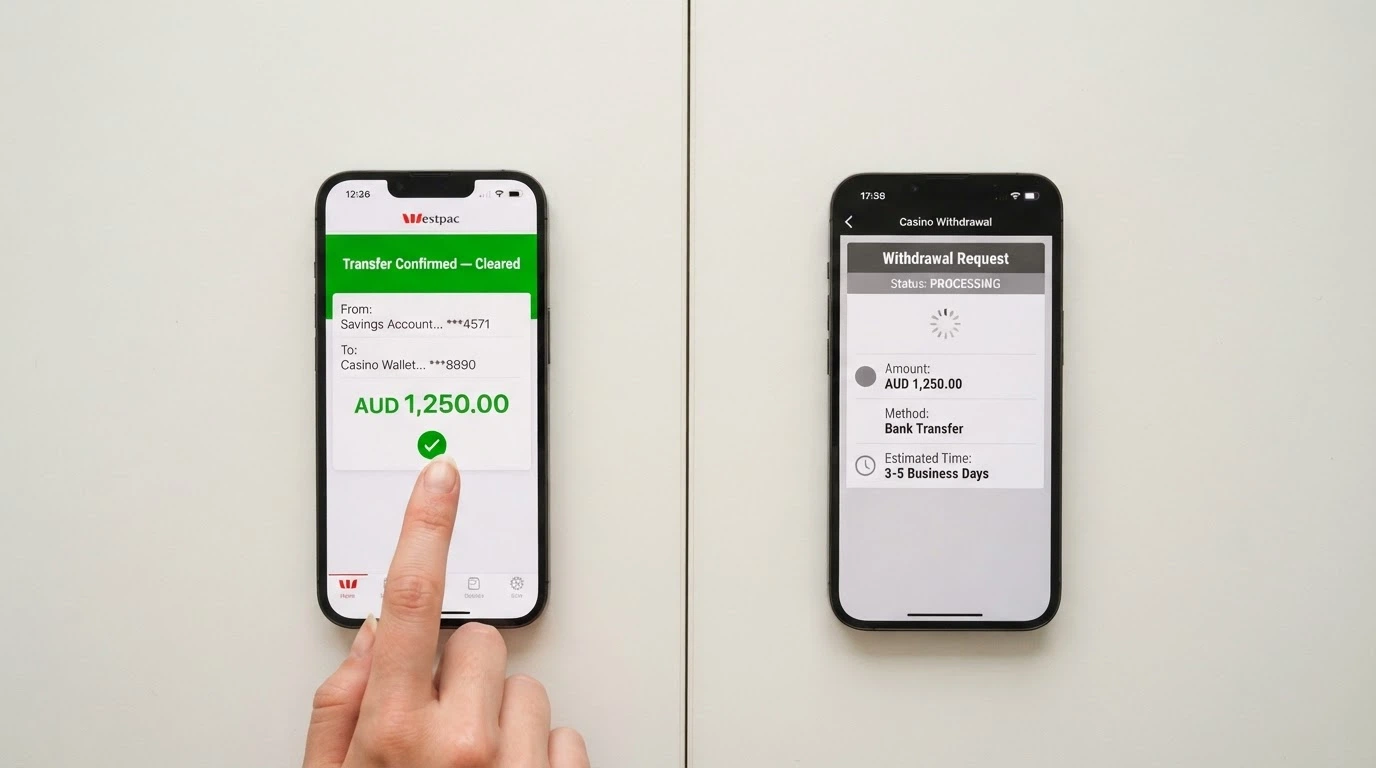
The same rail at an offshore casino is a different animal. The casino is not an NPP participant by default. To offer PayID it has to integrate a payment processor that connects to the platform, and that integration is the variable — not the rail itself. An offshore casino that does offer PayID may clear in minutes; one that has not built the rail will not offer it at all. PayID at an offshore casino is faster than a card cashout at the same casino, but it is not the same rail as PayID at a licensed bookmaker.
The legal frame is the cleaner version of the same point. PayID is a permitted deposit route for licensed wagering operators under the Interactive Gambling Act framework. An online casino accepting PayID from Australian players is offering a prohibited product through a permitted rail — the rail is not the issue, the product is.
E-Wallets: PayPal, Skrill and Neteller — the Middle Ground
E-wallets sit between PayID speed and card friction. PayPal, Skrill and Neteller each clear faster than a debit card because the e-wallet account holds the funds before onward transfer. PayPal to a verified bank account typically clears within hours; Skrill and Neteller are casino-focused and have built-in faster rails for gambling operators, so a cashout to an e-wallet often shows up within an hour of casino approval.

The catch is operator support. PayPal is not universal among offshore casinos — PayPal’s Acceptable Use Policy restricts gambling merchants, and many offshore operators run Skrill or Neteller instead. A player picking the fastest e-wallet rail should pick the rail the casino actually offers. The casino’s payments page, not the e-wallet’s own marketing, decides what is reachable.
A second catch: e-wallets are not anonymous. Verification at the e-wallet level mirrors the casino’s KYC step, and if the casino requires ID on cashout, the e-wallet does too. The “no verification” pitch that some offshore brands use runs through the casino side, not the e-wallet side — and KYC at one node is KYC at the destination.
Visa and Card Withdrawals: Why the Plastic Route Lags
Cards are everywhere but slow. Visa and Mastercard debit withdrawals from a casino typically take one to three business days after the casino’s own approval window, because the funds route through the card network and the card-issuing bank. The acquiring-bank processing delay is the bottleneck — the casino has cleared its end, the funds have left, and the player’s bank now controls the clock.
The card-versus-credit distinction is the trap. A credit card at a gambling site is a prohibition breach — digital currencies and credit products have been banned for online wagering since 11 June 2024. A debit card is a permitted deposit route for licensed wagering. The same plastic can be either legal or illegal depending on which side of the credit line it sits. An offshore casino asking for a credit card is, again, the tell that it is operating outside Australian rules.
PayID and Pokies: The Combo Australian Players Actually Search For
“PayID pokies instant withdrawal” is the search pairing an Australian player actually types. It bundles two things: the local payment rail that clears fastest, and the local game category that gets the most searches. The pairing is honest about player priorities — speed and pokies, in that order. The pairing is also slightly fictional, because no Australian-licensed site offers online pokies, so the PayID rail is never the rail at the pokie site itself. The rail lives on the licensed wagering side; the pokies live on the offshore side.
That gap matters. A player searching “PayID pokies instant withdrawal” is searching for a product that does not exist in licensed form and a payment method that is built for a different product. The fastest path through that search is, in practice, PayID at a licensed bookmaker for funds in and out, and a separate offshore casino account for the pokie play itself. Two operators, two different clocks, two different legal statuses — and the player manages both.
The 2026 Fast-Payout Casinos Australians Are Actually Using
Every casino in the table below operates offshore. Online casino products are prohibited to Australians under the Interactive Gambling Act 2001 (IGA), and no licence exists for them. The ACMA has blocked 1,564 illegal gambling and affiliate websites since November 2019, with 225+ illegal services withdrawing from the Australian market since 2017. None of the brands below holds an Australian casino licence because none can. What they offer is the only version of the product that exists — and the table ranks them on the basis of what they offer, not on a licence they do not hold.

| Operator | Offshore Licence Regime | Welcome Offer Shape |
|---|---|---|
| Rocket Play | Offshore (no Australian casino licence exists) | Multi-tier welcome package |
| Skycrown | Offshore (no Australian casino licence exists) | Multi-tier welcome package |
| Royal Reels | Offshore (no Australian casino licence exists) | Welcome offer available |
| WinSpirit | Offshore (no Australian casino licence exists) | Welcome offer available |
| Stake | Curaçao e-gaming licence | Crypto-focused welcome offer |
| Rainbet | Offshore (no Australian casino licence exists) | Welcome offer not confirmed |
| Scream Casino | Offshore (no Australian casino licence exists) | Welcome package available |
| FairGO | Offshore (no Australian casino licence exists) | Multi-deposit welcome package |
| Bizzo Casino | Offshore (no Australian casino licence exists) | Multi-tier welcome package |
| Rocket Casino | Offshore (no Australian casino licence exists) | Welcome package available |
The welcome-offer shapes above are qualitative. Exact bonus amounts, free-spin counts, wagering multipliers, validity windows and maximum cashout caps were not confirmed for any operator in this run; the comparison ranks on structure (single deposit vs multi-tier vs multi-deposit) and on the withdrawal-rail each brand centres its claim around. Where a figure is missing, the gap is stated plainly rather than filled.
Rocket Play
The largest AU-facing offshore casino by player share. Rocket Play positions itself around a multi-tier welcome package that spreads the match across the first several deposits, with withdrawal-speed marketing centred on e-wallet rails — Skrill and Neteller, where supported — rather than on PayID. The brand’s payments page is the document a player should read before depositing; the welcome banner is the document a player should not trust on its own.
Rocket Play is not licensed in Australia because no Australian casino licence exists. The brand operates offshore and reaches Australian players in violation of the IGA. A player with a Rocket Play account has no ACMA complaint path, no BetStop coverage and no Australian consumer-law recourse if a withdrawal is refused. The wagering requirements on each tier of the welcome package are the levers that determine whether any of the bonus becomes withdrawable cash; the validity window is the lever that determines whether the player finishes the wagering in time.
For a player who has decided an offshore casino is the route and who prefers an e-wallet cashout, Rocket Play is the heaviest of the featured brands by player share. For a player who wants the fastest legal cashout in the country, the route is a licensed bookmaker with PayID — not any offshore casino.
Skycrown
The second-largest AU-facing offshore casino. Skycrown pairs a multi-tier welcome with a deep game lobby and markets withdrawal speed around e-wallet and crypto rails where available. The crypto angle is worth flagging: digital currencies have been excluded from licensed wagering since 11 June 2024, so a Skycrown deposit in Bitcoin or Ethereum is, by definition, a transaction an Australian-licensed operator would refuse. The offshore brand offers it; the Australian rules do not.
Skycrown’s volatile specifics were not confirmed this run — wagering multiplier, free-spin count, validity window and cashout cap all sit in the gap. The brand is the second-heaviest of the featured set by player share, which is the metric that places it in the second row of the table. The offshore status is identical to Rocket Play: no Australian casino licence, no ACMA recourse, no BetStop coverage.
For a player who wants a deep lobby and accepts the offshore status, Skycrown sits behind Rocket Play on player share but ahead of every other brand on the table. The reader is looking for a brand that fits their preferences, not someone weighing licensed versus unlicensed.
Royal Reels
A mid-tier offshore brand with an Australian-facing name. Royal Reels’ positioning leans into pokies play, the category Australian players search most, and the welcome offer is framed around that single category. The name is local; the licence is not — Royal Reels is offshore, unlicensed in Australia, and the player has the same limited recourse as at any other brand on the table.
The welcome-offer specifics were not confirmed this run. A welcome offer available at Royal Reels carries whatever wagering multiple, validity window and cashout cap its terms page states; the player who deposits before reading those terms is depositing on trust. Royal Reels is mid-tier on the comparison because mid-tier is its player-share position, not because the offer is provably smaller or larger than the others.
For a pokies-first player who wants an Australian-facing brand name and accepts the offshore frame, Royal Reels sits in the middle of the table. The legitimate alternative for a pokies player in Australia is a land-based casino — Crown Melbourne, The Star Sydney — but those are physical venues, not online products.
WinSpirit
A smaller AU-facing offshore brand with a welcome offer built for the bonus hunter — multi-stage package, social-casino feel, and a lighter market position than the top of the table. The operator serves Australian players from offshore, lacking any local licence.
The bonus structure is the angle. WinSpirit’s positioning suggests a longer engagement model than the deposit-match brands — a player who enjoys the social-casino shape and treats the welcome package as a multi-session commitment rather than a one-shot match. The volatile specifics were not confirmed, so the wagering terms and the cashout cap are unknowns until the player reads them.
For a player who likes the social-casino shape and has decided on the offshore route, WinSpirit sits fourth on the table by player share. The offshore status is the same as the rest — no licence, no BetStop, no ACMA — and the welcome offer is whatever its terms page states it is.
Stake
The crypto-native outlier. Stake is the only featured brand with a named offshore licence regime — Curaçao e-gaming — and it is built for digital-currency deposits and cashouts rather than for fiat rails. The withdrawal speed claim is blockchain-bound: a Bitcoin or Ethereum cashout clears in minutes because the casino is not the bottleneck, the network confirmation time is. A withdrawal that the casino approves in seconds still has to wait for a block.
The Australian legal frame applies in full. Digital currencies were excluded from wagering on 11 June 2024, and an operator asking for a Bitcoin deposit from an Australian player is operating outside every Australian rule that governs payment. The penalty for non-compliance is up to A$247,500. Stake’s offshore Curaçao licence is not an Australian licence — Curaçao is the regime the operator chose, not the regime the player is protected under.
For a crypto-comfortable player seeking a specific rail, Stake is the brand built around the rail it uses. Stake’s offer is fundamentally incompatible with the Australian regulatory frame.
Rainbet
A smaller player on the comparison with a lean offer and a payment-method-dependent withdrawal speed story. Rainbet’s welcome bonus was not confirmed this run — the gap is stated as a gap rather than filled with an estimate. A player who wants to evaluate Rainbet should evaluate it on the payments page and the terms page, not on a comparison cell that does not carry the data.
Rainbet sits sixth on the table by player share, behind the five larger AU-facing brands and ahead of the four smaller ones. The offshore status is identical to the rest of the table — no Australian licence, no BetStop coverage, no ACMA recourse. The volatile data gap is the honest disclosure.
For a player evaluating Rainbet directly, the question is not which row of the table Rainbet sits on — it is what the terms page states, and what the payment-rail list actually contains. A lean offer with thin terms is a different proposition from a lean offer with heavy ones.
Scream Casino
A mid-pack offshore brand with a welcome package and a game-first positioning. Scream Casino’s market position is in the middle of the table, behind the larger AU-facing brands and ahead of the smallest. The welcome package shape is qualitative this run — the wagering multiplier, free-spin count, validity window and cashout cap are not confirmed.
Scream Casino is a mid-pack brand that reaches Australian players from offshore. The withdrawal speed varies by payment method, and the casino’s own payments page is the only document that states which methods are actually supported. A “fast payout” claim on the homepage is marketing language until the terms page confirms it.
For a player looking for a mid-pack option without the heavier volumes of the top of the table, Scream Casino sits seventh. The decision is between Scream Casino and the brands around it on player share, not between Scream Casino and a licensed Australian alternative — the licensed alternative does not exist for online casino.
FairGO
The RTG house. FairGO is the one featured brand with a known primary game provider — RealTime Gaming (RTG) — which gives its pokies lobby a recognisable backbone that the other brands do not name. RTG is a long-established online casino software house with a stable catalogue of pokies titles, and a player who values provider consistency over lobby breadth has a reason to prefer FairGO.
FairGO is the RTG house. FairGO reaches Australian players from offshore, lacking any local licence. The welcome offer is a multi-deposit package — the structure is confirmed, the specifics are not. The volatile terms (wagering multiple, free-spin count, validity window, cashout cap) were not confirmed this run, and the player who deposits before reading the terms is depositing on trust.
For a pokies-first player who values provider consistency and accepts the offshore route, FairGO is the strongest of the featured brands by game-provider visibility. RTG is a known name; the bonus terms are whatever the brand’s own page states.
Bizzo Casino
Bizzo Casino offers a multi-tier welcome across the early deposits, a broad game-lobby claim, and a full-service positioning. The brand operates from offshore, providing its services to Australian players despite the IGA. The brand’s player share puts it ninth on the table, behind the larger AU-facing brands and ahead of Rocket Casino.
The welcome-offer shape is multi-tier, the same structure as Rocket Play and Skycrown. The volatile specifics were not confirmed this run. The payment-rail list was not confirmed this run. The game-provider list was not confirmed this run. A player who wants to evaluate Bizzo Casino should evaluate it on the brand’s own pages, not on the comparison cell that carries the qualitative shape.
For a player looking at the lower end of the comparison and weighing Bizzo Casino against Rocket Casino, the tie-breaker is the brand’s own terms page — wagering multiple, validity window, cashout cap, payment-method support. The qualitative shape is the same; the specifics are not.
Rocket Casino
The smallest AU-facing share of the featured set. Rocket Casino sits at the bottom of the table, with a welcome package available but the volatile data thin enough that the comparison cell can only carry the shape, not the numbers. A player evaluating Rocket Casino should evaluate it directly — the brand’s own pages are the only document that states the wagering terms, the validity window and the cashout cap.
Rocket Casino represents the smallest AU-facing share of the featured set. The operator provides its services from offshore, reaching Australian players without an Australian licence. The “instant withdrawal” claim, like every other brand on the table, is whatever the terms page states it is.
For a player comparing Rocket Casino against the rest of the table, the row is a starting point — not an answer. The wagering terms and the payment-rail list are the answer, and neither was confirmed this run.
Why Your 2026 Bonus Is Smaller Than the Number on the Banner
The headline number on a welcome banner is the ceiling, not the floor. Every bonus carries three levers that shrink the figure before a dollar reaches the bank account: the wagering multiple, the validity window and the cashout cap. Understanding the three is the difference between reading a bonus banner and evaluating one.

The wagering multiple is the turnover requirement. A bonus with a 40x wagering multiple means the player must bet 40 times the bonus amount before any winnings become withdrawable. A A$500 bonus at 40x is A$20,000 of turnover — at typical slot stakes, that is thousands of spins. The “free” offer is not free; it is a grind.
The validity window is the clock. Most bonuses expire in seven to thirty days. A wagering requirement that takes a casual player more than the validity window to clear is a wagering requirement that voids the bonus. The player who reaches day 31 with 60% of the turnover incomplete loses the bonus and the winnings tied to it.
The cashout cap is the ceiling. Even after the wagering is cleared, a bonus may cap the withdrawable winnings at a fixed multiple of the bonus amount — 5x, 10x, sometimes lower. A A$500 bonus with a 5x cashout cap means the player can withdraw at most A$2,500 of bonus-derived winnings, no matter how the wagering played out. The “win a fortune” headline runs into the cap on its way to the bank.
The three levers interact. A bonus with a 40x wagering multiple, a 14-day validity window and a 5x cashout cap is not three separate problems — it is one problem wearing three hats. The headline figure shrinks under all three at once, and the player who evaluates only one of the three is evaluating one-third of the offer.
No-Deposit Bonuses: The “Free” Offer That Costs You a Turnover Mountain
A no-deposit bonus looks like free money because no deposit is required. The wagering requirement on a no-deposit bonus is typically higher than on a deposit-match bonus — 50x, 60x, sometimes higher — because the casino is giving away value without a deposit in return. The “free” label is honest about the deposit; it is misleading about the cost.
The cashout cap matters more on a no-deposit bonus than on a deposit match. A A$20 no-deposit bonus with a 5x cashout cap and a 50x wagering multiple is a A$1,000 turnover grind for at most A$100 of withdrawable winnings. Most players do not reach the cap. The ones who do reach it have spent the time on the grind.
In Australia, the no-deposit pitch is doubly problematic. An offshore casino offering a no-deposit welcome bonus to Australian players is violating the prohibition under the IGA — the advertising of a welcome bonus to Australians is itself the offence, separate from the underlying service. The bonus does not become legal because it is free; the operator offering it remains offshore and outside Australian rules.
Welcome Packages: Bigger Number, Longer Chain
A multi-tier welcome bonus spreads the match across several deposits — a 100% match on the first deposit, 50% on the second, 25% on the third, and so on. The total at the bottom of the page looks huge; the early tiers lock the player in before the later tiers unlock.
Each tier carries its own wagering requirement. A first-deposit match at 40x is a A$5,000 turnover grind on a A$125 bonus; a second-deposit match at 35x on a smaller bonus is a smaller but still meaningful grind. The player who clears the first tier and moves to the second is now committing to a second wagering cycle before the second deposit has earned a single cent of withdrawable cash. The chain is the structure; the structure is the offer.
The early tiers are the lever. A player who clears the first tier and stops playing has cleared the smallest grind at the lowest bonus. A player who clears every tier has cleared the largest grind at the highest bonus — but has also spent the most time and the most of their own deposit funds on the wagering requirement. The “total” headline number rewards the player who stays; the early tiers reward the player who does not.
Free Spins: The Fine Print Inside the Free Game
Free spins always carry a per-spin value floor, a wagering multiple on the winnings, and a game restriction. A “100 free spins” headline is 100 spins at the casino’s chosen stake — often the minimum stake of the chosen slot — with whatever the wagering multiple states on the winnings, often 30x to 50x, applied only to the games the casino has selected.
The per-spin value floor is the first lever. A free-spin package with a A$0.10 per-spin floor is a A$10 bonus before wagering. A free-spin package with a A$0.20 per-spin floor is a A$20 bonus before wagering. The headline spin count is the same; the value is not.
The wagering multiple on winnings is the second lever. A player who wins A$5 from the free spins and clears a 40x wagering multiple has cleared A$200 of turnover for a A$5 prize. Most players do not reach the cashout; the ones who do have spent the time on the grind.
The game restriction is the third lever. Free spins tied to a single slot — a high-volatility title, often — give the player no choice about which game the wagering plays through. A high-volatility slot produces long losing runs punctuated by occasional larger wins; the wagering requirement on those occasional wins is the same 40x. The player is grinding through a game the casino chose, not a game the player would have chosen.
Crypto Cashouts: Fastest Track or Fastest Ban?
Crypto withdrawals clear in minutes because they skip the banking rail. A Bitcoin or Ethereum cashout from an offshore casino routes through the blockchain directly to the player’s wallet, and the settlement time is the network confirmation time — ten minutes for Bitcoin, a few minutes for Ethereum. The casino is not the bottleneck; the network is. A fiat rail clearing in one to three business days is slower than a blockchain clearing in ten minutes, full stop.

The Australian legal frame is the second half of the same sentence. Digital currencies were excluded from wagering on 11 June 2024. An operator that accepts a Bitcoin or Ethereum deposit from an Australian player is, by definition, sitting outside the Australian rules. The payment method is the tell. The Australian Communications and Media Authority has stated directly that an Australian asked for a credit card or crypto deposit at a gambling site is being served by someone outside Australian rules.
The penalty for non-compliance is up to A$247,500 per offence. The offshore brand offering crypto deposits to Australian players is accepting that risk by design. The Australian player using the rail accepts a different risk: the rail itself is illegal for gambling, and the funds routed through it have no Australian consumer-law protection if the operator refuses a withdrawal, closes the account or is blocked by the ACMA.
From 1 January 2027, banks and payment providers in Australia gain express authority to block transactions to illegal gambling operators under the Interactive Gambling Amendment (Gambling Reform) Bill 2026. A crypto transaction is harder for a bank to block than a card transaction, but the regulatory direction is unambiguous.
Bitcoin Withdrawals: The Original Fast Lane
Bitcoin is the original fast lane. A Bitcoin cashout from an offshore casino clears after the casino’s approval window plus the network confirmation time, typically ten minutes per block. The casino-side approval can take minutes or hours; the blockchain-side confirmation is the floor the player cannot go below.
The Australian legal problem is unchanged. Bitcoin is a digital currency. Digital currencies were excluded from wagering on 11 June 2024. An offshore casino offering Bitcoin withdrawals to Australian players is offering them in violation of Australian law. The casino’s Curaçao licence — Stake’s situation — is the regime the operator chose, not the regime the player is protected under.
For a player who has decided on the offshore route and who holds Bitcoin in a self-custody wallet, the rail delivers the speed the marketing claims. For a player who wants to stay inside the Australian rules, Bitcoin is not an option for gambling transactions.
Altcoins and the Multi-Coin Cashout
Ethereum, Litecoin, USDT and other altcoins offer the same blockchain-speed promise with different confirmation times. Ethereum clears in a few minutes; Litecoin is faster still; USDT runs on different chains with different settlement profiles. The cashout is fast; the legal status is identical to Bitcoin’s.
Per-operator altcoin support was not confirmed this run. The casino’s payments page is the only document that states which altcoins are actually offered, and the same page is the only document that states the confirmation time the player should expect. A multi-coin casino supports more rails; a single-coin casino supports fewer. The speed promise on each is the same; the rail list is not.
For a player who already holds altcoins and has decided on the offshore route, the multi-coin casino is a wider menu. Cryptocurrency alternatives remain outside the bounds of legal gambling as defined by Australian law.
Anonymous-Fast: The No-KYC Withdrawal Promise
Some offshore casinos market “no verification” withdrawals as a speed feature. The pitch is that the player does not need to upload ID, proof of address or source-of-funds documentation before cashing out. The first withdrawal clears faster because the KYC step is skipped.
KYC exists for three reasons. Anti-money-laundering compliance requires the casino to verify the source of funds and the identity of the customer. Player protection requires the casino to confirm the customer is not on a self-exclusion register, is of legal age, and is not a vulnerable person being targeted by the operator. Dispute resolution requires the casino to hold a verified identity against which a complaint can be raised and adjudicated.
Skipping KYC skips all three. A no-KYC casino is a casino where the player has no identity on file — no dispute path, no regulator to appeal to, no record the ACMA can act on if the site is blocked with a balance on it. The speed gain on the first withdrawal is real. The protection loss is permanent.
For a player who has decided on the offshore route and is comfortable with no KYC, the speed gain is the trade. For a player who wants Australian consumer-law protection, no offshore casino offers it — but a no-KYC casino offers even less than the offshore norm.
Pokies and Instant-Withdrawal Play in Australia
Pokies are the game Australians search most alongside “instant withdrawal.” The pairing — fast cashout, pokies play — is the most common combined search on the topic. The pairing is also shaped by the legal frame: pokies are the dominant game category at every offshore casino that targets Australian players, and the fast-cashout pitch is the differentiator in a market where no Australian-licensed pokies site exists.

Online pokies are prohibited in Australia under the Interactive Gambling Act 2001 (IGA). There is no licensed online pokie, no state-run monopoly and no permitted product tier for the category. Every pokies site an Australian player reaches is offshore, unlicensed locally, and operating in violation of the IGA. The ACMA has blocked over 1,500 illegal gambling sites since November 2019, and pokies sites sit inside that blocked category.
The withdrawal speed claim on a pokies site is governed by the payment rail chosen, not by the game category. A pokies win cleared to PayID clears in seconds at a licensed bookmaker; a pokies win cleared to a card takes one to three business days at an offshore casino. The game does not change the rail; the rail changes the rail.
Australian Pokies vs “Online Slots”: One Game, Two Names
An Australian player searches “pokies”; an international casino labels the same game “slots.” The terminology gap is geographic, not categorical. The game under both labels is a digital reel machine with a fixed RTP, configurable volatility and bonus features triggered by symbol combinations. The same title appears in a “pokies” lobby at an Australian-facing brand and in a “slots” lobby at an international brand, often with identical mechanics.
Game-type breadth under both labels is wide. Classic three-reel pokies sit alongside five-reel video pokies, progressive jackpot pokies, Megaways pokies and branded pokies tied to film, television or music properties. The labels are the surface; the underlying product range is the same. An Australian player searching “pokies” reaches a lobby with the same titles an international player searching “slots” reaches.
The lobby-label choice is the marketing decision. Australian-facing brands label for the local player; international brands label for the international player. The games are the same; the words are different.
The RTP Factor: What Return-to-Player Means for Your Cashout
RTP does not change withdrawal speed. It changes whether there is anything to withdraw. Return-to-Player is the percentage of wagered money a slot returns to players over a large number of spins — a 96% RTP slot returns A$0.96 of every A$1 wagered, on average, across millions of spins. The 4% the slot does not return is the house edge.
The house edge is the leak. A 96% RTP slot played through a 40x wagering requirement on a A$100 bonus leaks A$4 of every A$100 wagered to the house. Across the A$4,000 turnover the bonus requires, the leak is A$160 — which the player pays from their own deposit funds, not from the bonus. The bonus is the prize; the wagering is the cost; the RTP shapes the size of the cost.
RTP is statistical, not personal. A 96% RTP slot is a 96% RTP slot over millions of spins. Any individual session can return more or less — the variance is the volatility, the other knob on the slot. A high-volatility slot produces long losing runs and occasional larger wins; a low-volatility slot produces frequent smaller wins and short losing runs. The RTP is the average; the volatility is the spread around it.
For a player evaluating a welcome bonus, RTP matters because it shapes the cost of clearing the wagering requirement. A 96% RTP slot costs less to clear than a 92% RTP slot. The wagering multiple is the volume; the RTP is the price per unit of volume. Both matter, and both belong in the calculation.
The Legal Reality: Every Fast-Payout Casino on This Page Is Offshore
Online casino products are prohibited in Australia under the IGA. The Interactive Gambling Amendment Act 2017 strengthened enforcement, gave the ACMA its blocking powers and closed the loopholes offshore operators had used to reach Australian players. No licence exists for online casino games, online pokies or any online casino product anywhere in Australia. The Interactive Gambling Amendment (Gambling Reform) Bill 2026 passed Parliament on 19 August 2026; its measures commence 1 January 2027.
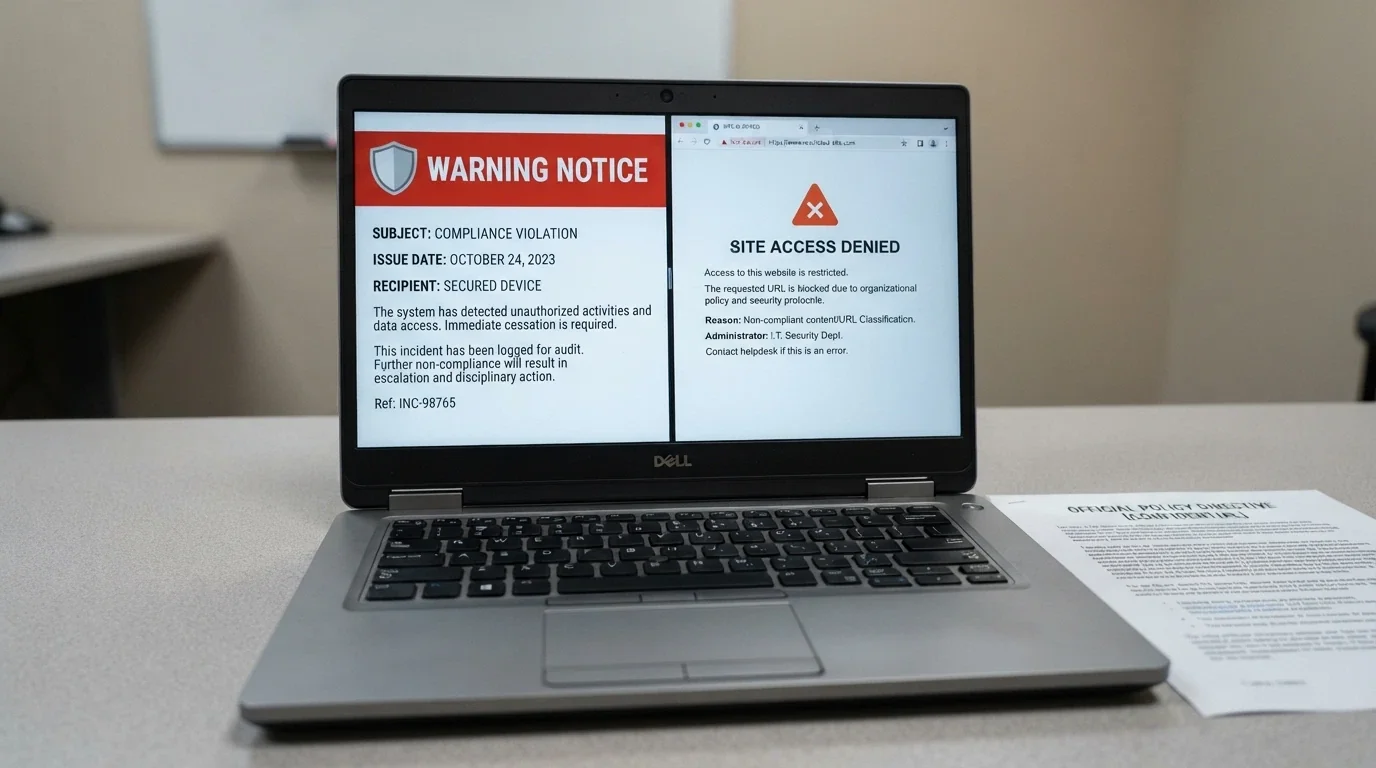
The offshore status of every brand on the comparison table is not a footnote. It is the governing fact. Every casino on the list reaches Australian players from outside Australian law, accepts Australian player funds in violation of Australian law, and offers a welcome bonus to Australian players in violation of Australian law. The advertising of a welcome bonus to Australians is itself an offence, separate from the underlying service provision.
The player is not prosecuted under the IGA — the Act targets the provider, not the customer. But the absence of prosecution is not the same as the presence of protection. A player at an offshore casino has no Australian consumer-law recourse if the operator refuses a withdrawal. A player at an offshore casino has no BetStop coverage. A player at an offshore casino has no ACMA complaint path. A player at an offshore casino can wake up to a blocked site with a balance on it, because the ACMA can direct Australian ISPs to block the site at any time — and 1,564 sites have already been blocked.
There is no federal deposit, loss or stake ceiling for online gambling in Australia — because the product those ceilings would govern is banned outright. What Australia caps is how the player pays. Digital currencies and credit products have been banned as payment for online wagering since 11 June 2024. Penalties for non-compliance by the operator reach up to A$247,500. From 1 January 2027, banks and payment providers gain express authority to block transactions to illegal gambling operators.
No Verification, No KYC: What You Lose When the Casino Skips the Check
A casino that asks for no ID is also a casino where the player has no identity. The losses stack:
- No dispute path. A complaint about a refused withdrawal has no adjudicator because there is no verified identity on file.
- No regulator appeal. The ACMA cannot act on a player complaint that lacks a verified Australian identity, and the offshore regulator has no Australian jurisdiction.
- No record the ACMA can trace. If the site is blocked with a balance on it, there is no record tying the balance to a verified Australian player.
- No BetStop coverage. A self-excluded Australian can still deposit at an offshore casino, because the casino is not connected to the National Self-Exclusion Register.
- No Australian consumer-law recourse. Australian consumer law does not apply to an offshore operator serving Australian players in violation of Australian law.
- No recourse if the operator closes the account. The offshore operator has no obligation to return funds, no Australian regulator can compel it, and the player has no verified record to support a complaint.
KYC at an offshore casino is not Australian consumer protection — the operator is still offshore, the player is still outside Australian consumer law. KYC is the minimum record-keeping that allows any complaint path to function at all. Skipping it is a risk transfer, not a feature.
The ACMA Blockade: 1,564 Sites and Counting
Since November 2019 the ACMA has directed Australian ISPs to block 1,564 illegal gambling and affiliate websites as at March 2026. The blocking is DNS-level — the ISP returns a “site not found” response when an Australian user tries to reach a blocked domain. The block is invisible to the operator’s server; it is visible to the player at the Australian end of the connection.
More than 225 illegal services have withdrawn from the Australian market since enforcement was strengthened in 2017. The withdrawals are voluntary in form but enforcement-driven in substance — the ACMA’s blocking notices, civil penalty proceedings and formal warnings make continued operation in the Australian market a regulatory risk the operator is not willing to absorb. The market shrinks by both routes: sites that are blocked, and sites that leave before they are blocked.
A player with a balance on a blocked site has a real problem. The casino is still running offshore; the player cannot reach it from Australia; and the funds sitting on the casino’s server are governed by whatever dispute path the casino offers — which, for an offshore operator outside Australian jurisdiction, is no Australian path at all. The block protects other Australian players from reaching the site; it does not protect the player’s existing balance.
From 1 January 2027, the 2026 reform gives banks and payment providers express authority to block transactions to illegal gambling operators. A card transaction from an Australian bank to an offshore casino can be refused at the bank level, not just at the network level. The enforcement surface expands from the network to the bank.
Licensed Wagering vs Prohibited Casino: The Line Australia Actually Draws
Australia draws a sharp line. Wagering on races and sport placed before the event begins is licensed activity. Online casino games, online pokies and in-play sports betting are prohibited. The line is the same federally and in every state and territory, because the IGA is federal legislation and the prohibition applies to every Australian resident regardless of where they sit.
Licensed wagering operators concentrate in the Northern Territory. The Northern Territory Racing and Wagering Commission, administered through Licensing NT, is the de facto national licensor for online wagering operators; wagering licences run for terms of up to 20 years. Licensed operators include Sportsbet, bet365, Ladbrokes and approximately fifty others. The licensed framework is concrete: a regulator, a register, an operator list, a complaint path, a self-exclusion register.
The licensed framework does not extend to casino games. There is no licensed online casino to anchor to. The land-based casinos — Crown, The Star and others — are state-licensed venues; their licences cover the physical premises, not the online casino product. An Australian player searching for an online casino game reaches an offshore brand, not a licensed Australian one.
The withdrawal-speed difference is downstream of the licensing difference. A licensed wagering operator is inside the Australian banking system, accepts PayID/Osko and clears in seconds. An offshore casino is outside the Australian banking system, accepts whatever payment methods it has integrated and clears on whatever clock those methods carry. The fastest legal cashout for an Australian player is PayID at a licensed bookmaker; the fastest cashout at an offshore casino is whichever rail the casino has built and the rail’s own settlement time.
Staying in Control When the Cashout Is Instant
A fast withdrawal rail shortens the gap between impulse and consequence. The same rail that gets a win out in minutes can drain a session before a cooling-off thought lands. The tools exist for exactly that reason — to put friction back into a system that has been frictionless. The tools are not a disclaimer; they are the practical answer to the speed pitch.

BetStop — the National Self-Exclusion Register — went live in August 2023. One registration excludes a person from every Australian-licensed online and phone wagering service in a single step. As at 31 July 2026, BetStop had 67,480 registrations in three years, of which 41,290 exclusions were still active — more than 60% of everyone who ever registered. 78% of registrants were under 40; 38% chose lifetime exclusion.
The National Gambling Helpline is 1800 858 858, free, confidential and staffed 24 hours a day, 7 days a week, with online chat and counselling through Gambling Help Online. About 2.1% of Australian adults — roughly 430,000 people — experience problem gambling; the Australian Institute of Health and Welfare put high-risk gambling at 1.8% in 2022.
BetStop: One Registration, Every Licensed Service Blocked
BetStop excludes a player from every Australian-licensed wagering service in a single registration. The exclusion is binding on every operator holding a Northern Territory or state wagering licence. The player cannot deposit, cannot wager and cannot be marketed to during the exclusion period. The minimum exclusion period is three months; the maximum is lifetime, and 38% of registrants choose lifetime.
BetStop binds Australian-licensed wagering services only. An offshore casino is not connected to the register and will keep taking a self-excluded person’s money — the most concrete harm of the offshore route. A player who has registered with BetStop and then opens an account at one of the casinos on the comparison table above has self-excluded from the licensed system and remained exposed to the unlicensed one.
From 1 January 2027, the 2026 reform strengthens BetStop’s operation and bans direct marketing of inducements for three months after a person deregisters. The expansion does not extend BetStop to offshore casinos — it tightens the licensed side of the framework. An Australian player looking for system-wide self-exclusion still has the gap.
Help That Is Free, 24/7 and One Call Away
The two concrete resources every Australian player should know:
- National Gambling Helpline — 1800 858 858. Free, confidential, staffed 24 hours a day, 7 days a week. Call from any Australian phone.
- Gambling Help Online — gamblinghelponline.org.au. Online chat and counselling, with the same coverage as the phone line and a written record of the conversation.
Both services are free, both are confidential, and both are staffed by people whose job is to listen. A player who has noticed their play drifting from a choice into a habit has a 24/7 line to call before the habit becomes the headline. A player who is already at the headline has the same line, and the people on the other end of it are trained for that call.
How We Selected and Ranked These Casinos
The set to rank is ten offshore casinos from the operators skill: Rocket Play, Skycrown, Royal Reels, WinSpirit, Stake, Rainbet, Scream Casino, FairGO, Bizzo Casino and Rocket Casino. The ranking is by player share, which is a market-position metric and not a quality claim — a larger player share means a larger number of Australian players have chosen the brand, not that the brand is provably better than the one below it on the table.
The comparison columns are the ones research carries: offshore licence regime and welcome-offer shape. The volatile specifics — exact bonus amounts, free-spin counts, wagering multipliers, validity windows, cashout caps, payment-rail lists and game-provider lists — were not confirmed for any operator this run, and the comparison table reflects that gap rather than filling it. The legal-status column is on every row because the legal status is on every brand: every casino on the list is offshore, unlicensed in Australia, and operating against the Interactive Gambling Act 2001. No operator on the list holds an Australian casino licence because no Australian casino licence exists.
The licence-register check ran against the ACMA records for illegal services and the Northern Territory Racing and Wagering Commission register for licensed wagering operators. No brand on the list appears on the NTRWC register; every brand on the list appears in the set of operators the ACMA has acted against or has the power to act against. The cross-check between ACMA and NTRWC is the legal-status verification the comparison carries.
The criteria that ordered the comparison are withdrawal-speed positioning, payment-method coverage as a proxy for the speed pitch, bonus-structure transparency and the legal-status disclosure that sits on every row. Each criterion is qualitative this run — the volatile specifics are missing, so the criteria are shapes rather than numbers. A reader who wants the volatile specifics should read each brand’s own terms page; the comparison table is the starting point, not the answer.
What This Means for Your Next Deposit
The fastest legal cashout in Australia is PayID/Osko at a licensed wagering operator — a bookmaker holding a Northern Territory wagering licence. The settlement is seconds because both sides sit inside the New Payments Platform. The product is licensed, the operator is regulated, the player has consumer-law recourse and BetStop coverage. Online casino gaming is not a licensed product; the fastest cashout at an offshore casino is whichever rail the operator has built and the rail’s own settlement time.
The bonus number on the banner is a starting figure, not an ending one. A 100% match at 40x wagering with a 14-day validity window and a 5x cashout cap is a grind before it is a win. The wagering requirement is the volume; the validity window is the clock; the cashout cap is the ceiling. The player who evaluates only the headline number is evaluating one-third of the offer.
The offshore status of every operator on the comparison table is the one fact that governs everything else. ACMA has blocked 1,564 illegal gambling sites since November 2019; 225+ illegal services have withdrawn since 2017; the Interactive Gambling Amendment (Gambling Reform) Bill 2026 passed Parliament on 19 August 2026 and tightens the framework further from 1 January 2027. A player with a balance on an offshore casino has no Australian consumer-law recourse if the operator refuses a withdrawal, no BetStop coverage if the player later self-excludes, and no ACMA complaint path if the site is blocked. The speed is real; the protection is not.
The fastest cashout rail is the easy decision. PayID at a licensed bookmaker is the route. The harder decision is whether to play online casino at all, given that the product is prohibited and every casino offering it to Australian players is operating against Australian law. The page has walked through the rails, the operators, the bonus mechanics and the legal reality. The deposit decision is the reader’s; the facts are above.
Frequently Asked Questions
What is the fastest withdrawal method at online casinos in Australia?
At a licensed Australian bookmaker, PayID/Osko clears in seconds because both sides sit inside the New Payments Platform. At an offshore casino, the fastest rail is whichever payment method the operator has integrated — typically an e-wallet like Skrill or Neteller, or a crypto rail where supported, clearing within hours rather than days. Card withdrawals at any operator take one to three business days after approval.
Can I use PayID to withdraw from an online casino in Australia?
PayID is a permitted deposit route for licensed wagering operators under Australian rules. Online casino games are prohibited under the Interactive Gambling Act 2001, and no Australian-licensed online casino exists. An offshore casino that offers PayID is faster than one that does not, but is still operating outside Australian consumer-law protection and ACMA recourse.
What does “instant withdrawal” actually mean at online casinos?
“Instant” usually covers the casino’s internal pending and review window only — the period between the player clicking “withdraw” and the funds leaving the casino’s account. The next stage is the payment-processor handoff, and the final stage is settlement at the player’s bank or wallet, which is governed by that institution’s clearing rules. A true end-to-end instant cashout is rare; a fast casino-side approval on a slow rail is common.
Do no-deposit bonuses at Australian casinos come with wagering requirements?
Yes. No-deposit bonuses typically carry higher wagering multiples than deposit-match bonuses — 50x to 60x is common — because the casino is giving away value without a deposit in return. Most no-deposit bonuses also carry a cashout cap, often 5x the bonus amount. A A$20 no-deposit bonus with a 50x wagering multiple and a 5x cap is a substantial grind for at most A$100 of withdrawable winnings.
Is it safe to play at offshore casinos that accept Australian players?
Online casino products are prohibited in Australia under the IGA, and no licence exists for the product. Offshore casinos operate against Australian law and outside local consumer protection. The ACMA has blocked 1,564 illegal gambling sites since November 2019, and 225+ illegal services have withdrawn since 2017. A player at an offshore casino has no local consumer-law recourse, no BetStop coverage, and no guarantee of fund access if the site is blocked.
What is BetStop and how does it protect Australian gamblers?
BetStop — the National Self-Exclusion Register — went live in August 2023. One registration excludes a person from every Australian-licensed online and phone wagering service in a single step. As at 31 July 2026, BetStop had 67,480 registrations with 41,290 still active; 78% of registrants were under 40 and 38% chose lifetime exclusion. The limitation is scope: BetStop binds Australian-licensed wagering services only. An offshore casino is not connected, and a self-excluded person can still deposit at the offshore brands on the comparison table above.