
What a Low-Deposit Online Casino Actually Costs an Australian Player in 2026
The headline “$1 deposit casino” sits at the top of almost every comparison page that targets Australian players. It is also, for almost every Australian player, fiction. The floor that real money buys in 2026 is closer to A$10 on fiat rails and roughly A$0.10 if you are willing to send crypto to a Curaçao-licensed operator the ACMA has on its blocking list. The difference between those numbers and the marketing ones is the difference between a page that explains what is actually on offer and a page that explains what an affiliate wants you to click.
Verified against ACMA enforcement records and operator terms pages as of 22 November 2026.
Every operator named below sits outside the Australian regulatory perimeter. Online casino is prohibited under the Interactive Gambling Act 2001; there is no Australian online casino licence, anywhere, in any state or territory. The brands ranked here are the ones Australian low-deposit players actually reach, and they are all offshore. None of them carries an Australian licence, and none of them can. That is the frame the rest of this page sits inside.
Table of Contents
- Why Your 2026 Low-Deposit Casino Bonus Is Smaller Than It Looks
- The 10 Offshore Casinos Accepting Australian Players at the Lowest Deposits
- No Online Casino Is Licensed in Australia — Here Is What That Means
- What Each Payment Method Really Costs to Use
- Crypto Deposits: The Only Route Below A$10
- When the Bonus Needs More Than You Deposited
- Pokies You Can Actually Afford at Minimum Stakes
- Staying Safe When the Safeguards Stop at the Border
- How We Selected and Ranked These Operators
- What a Low Deposit Actually Buys You — and What It Doesn’t
- Frequently Asked Questions About Low-Deposit Online Casinos in Australia
Why Your 2026 Low-Deposit Casino Bonus Is Smaller Than It Looks
The promise of a low-deposit casino is access. The reality is arithmetic. A low deposit opens the door, and then a separate set of conditions — the bonus minimum, the wagering multiplier, the max bet, the validity window — decides what the player actually has to do before any of it can be withdrawn. Most comparison pages quote the deposit number and stop. The deposit is the smallest cost on the page.
The offshore setup makes it worse. None of these brands is regulated by the ACMA, none falls under BetStop, and none offers the consumer-law recourse that an Australian-licensed wagering service is required to provide. The player takes the risk; the operator keeps the licence.
What Counts as a Low-Deposit Casino
A low-deposit casino is a real-money casino whose minimum deposit sits at or below A$20 — typically the A$10 mark — and which accepts players at that floor. Below A$20 is where the segment lives. Above it, the term stops meaning anything specific and an ordinary casino is just a casino.
The reason Australian players search for this category is straightforward. The lowest reasonable entertainment spend is a real category of purchase, and a $200 deposit is a different decision from a $10 deposit. The label is also where the worst marketing online concentrates, because the smallest advertised number always wins the click. A player looking for a $1 entry point and a player looking for a $10 entry point usually end up on the same page; only one of them finds a real product at the end of it.
The Minimum-Deposit Tiers That Are Real — and the Ones That Are Not
Four tiers get quoted. Three of them exist. The “$1 deposit casino” tier is a real product, but only on a narrow band of crypto-only brands — Stake at roughly A$0.10 BTC-equivalent, BC.Game at about A$1 USDT — and never on a fiat rail an Australian player can reach without converting first.
The “$5 deposit casino” tier does not exist for Australian fiat players. Neosurf sells A$5 vouchers in Europe. It does not sell them in Australia. The smallest Neosurf voucher on a shelf in Sydney is A$10, and the brands that accept Neosurf at that floor — Spin Samurai, 7Bit, PlayAmo, HellSpin, National Casino, Asino — all settle on A$10 as their published minimum. The A$5 figure that appears on competitor comparison pages is a marketing error, not a product.
The “$10 deposit casino” tier is the practical floor. FairGO and Bizzo Casino both publish A$10 as the entry point on their lowest-cost rails. PayID is a different question — the casino-side minimum there is A$20, because anti-fraud rules flag any smaller deposit as testing or laundering. A player who arrives thinking they will deposit A$10 via PayID discovers the floor when the cashier rejects the transaction.
The “$20 deposit casino” tier is where PayID, most debit cards and WinSpirit sit. It is also where Rocket Casino and SkyCrown’s standard play minimum begins. Most of the actual market lives here, and most comparison pages call it “low deposit” because the marketing requires a number below $25 somewhere.
Real-Money Play at Low Stakes
A$0.10 per spin is the working figure for low-stakes play. At that stake, A$1 buys exactly ten spins in cash play, A$10 buys one hundred, and A$20 buys two hundred. On a $20 bankroll the session is short either way, and what decides whether it lasts ten minutes or an hour is variance, not the deposit amount.
A penny pokie at very low variance — Starburst is the canonical example — gives the player more dead spins and small returns, which preserves the balance but rarely returns enough to extend the session meaningfully. A medium-variance title like Thunderstruck II will eat a $20 balance faster, but a single feature hit can multiply it. Neither style is “better”. They are different products for different expectations, and a $20 deposit will look very different on each.
The honest framing: a low deposit buys time and a chance to learn the cashier. It does not buy a path to a payout. The wagering requirement, the bonus terms and the offshore protection gap are what decide the rest.
The Australian Low-Deposit Landscape: Offshore, Not Licensed
Every brand in this space is offshore. There is no licensed alternative. The Interactive Gambling Act 2001 prohibits online casino, online pokies and in-play betting; the Interactive Gambling Amendment Act 2017 strengthened the prohibition; and no licence for online casino exists federally or in any state or territory. The licence the offshore brands carry — Curaçao, Anjouan, occasionally Kahnawake — is a foreign supervisory regime. It does not provide Australian consumer protection, it does not register a player with BetStop, and it does not give a complaint to the ACMA.
Since November 2019 the ACMA has had 1,518 illegal gambling and affiliate sites blocked at the DNS level, and more than 220 illegal services have withdrawn from the Australian market since the new rules came into force in 2017. A blocked site can be reached through a workaround, but a balance left on a blocked site cannot be recovered through an Australian body. That is the practical meaning of “offshore, not licensed” — and it is the frame the ranking below sits inside.
The 10 Offshore Casinos Accepting Australian Players at the Lowest Deposits
The table below ranks the ten offshore brands that AU-facing comparison pages reach this year, ordered by minimum deposit. Every one is unlicensed in Australia. Every one carries a Curaçao licence unless the table shows otherwise. The two brands at the bottom — Scream Casino and Rainbet — sit in the set but with almost no independently verified terms available this run; they are included because they appear in the AU comparison set, and they are written about as honestly as that allows.

| Operator | Min Deposit (AU$) | Welcome Bonus | Wagering (x) | Licence |
|---|---|---|---|---|
| FairGO | 10 | 100% up to A$200 | 30x | Curaçao |
| Bizzo Casino | 10 | — | 35x | Curaçao |
| Stake | ~0.10 (BTC-equiv.) | — | — | Curaçao |
| WinSpirit | 20 | 200% + 25 FS (A$100 cap) | 40x | Curaçao |
| Rocket Casino | 20 | 100% up to A$150 | 30x | Curaçao |
| SkyCrown | 20 standard / 30–50 bonus tiers | 450% up to A$8,000 + 400 FS across 4 deposits | 40x | Curaçao |
| Royal Reels | 30 | 100% up to A$500 + A$10 no-deposit | 30–40x | Curaçao |
| Rocket Play | 25 (cards) / 30 (MiFinity) | 100% up to A$1,000 + 100 FS | 40x | Curaçao |
| Scream Casino | — | — | — | Not confirmed |
| Rainbet | — | — | — | Not confirmed |
FairGO: The A$10 Fiat Minimum with a 30x Playthrough
FairGO sets the floor for fiat players. The minimum deposit is A$10, the welcome bonus is a 100% match up to A$200, and the wagering requirement is 30x — the joint-lowest playthrough in the featured set. The 30x number matters more than the headline bonus, because a lower multiplier is the difference between a bonus that is mathematically possible to clear and one that is not.
FairGO has positioned itself around the AU market and accepts Neosurf at the A$10 floor. The brand’s coverage on review sites is thin compared to SkyCrown or Rocket Play, and its welcome offer is small by comparison, but the combination of A$10 entry and 30x turnover is the cleanest low-deposit pairing the table carries. For a player whose priority is the smallest reasonable test deposit, FairGO is the answer the table gives.
Bizzo Casino: Another A$10 Door with a 35x Requirement
Bizzo matches FairGO on the deposit floor and goes one rung higher on the wagering requirement. The minimum deposit is A$10, the maximum bonus is A$100 and the playthrough is 35x. Specific terms on the welcome package were not confirmed this run, but the deposit and wagering figures are stable across the AU-facing review sites.
What separates Bizzo from FairGO is the wagering multiple. 35x against a A$100 bonus is A$3,500 of turnover before any of it becomes withdrawable; 30x against A$100 is A$3,000. The difference looks small and is not. Both are high. The 30x is the lower of two bad options, and Bizzo sits one rung above it. The A$10 floor remains the cheapest way in for a fiat player; the playthrough decides whether the offer is worth claiming.
Stake: Crypto-Only Deposits from Roughly A$0.10
Stake is the lowest entry point of any operator in the table — and the only one that gets below A$10 without a marketing trick. The minimum deposit sits at approximately A$0.10 BTC-equivalent. The platform is crypto-only. There is no fiat cashier, no PayID button and no debit-card rail. A player who arrives without a crypto wallet cannot play here.
Stake’s status this run is unusual: it is one of the most prominent AU-facing offshore brands, but its welcome offer was not confirmed in independently verified terms. The deposit floor is real and consistent across AU comparison pages. The bonus structure is not. For a player who already holds BTC or USDT and wants the absolute lowest entry point into real-money offshore play, Stake is the only table entry that genuinely offers what the $1 marketing promises. The protection trade-off is the subject of the section on crypto below.
Rocket Casino: A$20 Minimum with a 30x Wagering Requirement
Rocket Casino sits one tier above the A$10 floor with a A$20 minimum, a 30x wagering requirement and a maximum bonus of A$150. The specific welcome package was not confirmed in detail this run, but the deposit, wagering and bonus cap are stable figures on AU-facing pages. 30x on a A$150 bonus means A$4,500 of turnover before withdrawal.
The brand is straightforward. A$20 in, 30x playthrough, A$150 cap. There is no flashy headline number, and there is no A$10 trick. For a fiat player whose bankroll is closer to A$50 than A$10, Rocket Casino is a reasonable mid-tier entry; it does not pretend to be smaller than it is, which is part of the appeal.
Rocket Play: 100% Match to A$1,000 with 100 Free Spins
Rocket Play carries the strongest welcome package among the A$25-and-up operators in the table — and the widest gap between the deposit floor and the bonus-eligibility threshold. The headline is 100% up to A$1,000 plus 100 free spins on the first deposit. The bonus needs A$30 to trigger. The free spins arrive in batches of twenty over five consecutive days and carry a A$5,000 maximum win cap.
The payment-method minimums vary. Visa, Mastercard and CashtoCode all sit at A$25. MiFinity is A$30. A player depositing the A$25 Visa minimum does not qualify for the bonus. They need A$30. That gap is the bonus-minimum trap, written on this brand’s own terms page.
The wagering is 40x on both bonus funds and free spin winnings. On a A$1,000 bonus that is A$40,000 of turnover; on the free spins it depends on what each spin returns. The maximum bet during any active bonus period is A$7.50, and exceeding it can cancel the bonus. The bonus validity on the free spins is five days.
For a player whose budget is in the A$30 to A$100 range and who reads the terms before depositing, Rocket Play is a serious offer — the second-deposit bonus alone, 200% up to A$1,000, requires a A$75 minimum and 40x wagering. The brand rewards a player who commits more, but it punishes the one who assumes a A$25 Visa deposit unlocks the headline.
SkyCrown: 450% Across Four Deposits, up to A$8,000
SkyCrown carries the largest headline number in the table: 450% up to A$8,000 plus 400 free spins across the first four deposits. The number is real. It is also the most inflated offer to clear in the featured set.
The bonus does not arrive as one payment. It is split across four deposits with rising minimums — A$30 on the first and second, A$40 on the third and A$50 on the fourth. The wagering requirement is 40x on bonus funds and on free spin winnings. The maximum bet during any active bonus is A$7.50. The bonus validity is fourteen days. The maximum conversion from bonus to real money is A$5,000 per welcome bonus.
The standard play minimum at SkyCrown is A$20. The bonus minimum starts at A$30. A$20 player will play, but they will not see the bonus — and they will only discover the gap after depositing. A player who reads the terms knows the floor moves with each deposit tier.
The arithmetic on a SkyCrown bonus is unforgiving. Take the second deposit tier: 100% up to A$1,300, 40x playthrough, A$7.50 max bet. To clear a A$1,300 bonus requires A$52,000 of turnover inside a fourteen-day window. A player without a high bankroll and a clear time horizon cannot realistically reach the conversion cap. SkyCrown is an offer for the player who plans to deposit A$50 to A$100 across four separate days and accepts that the headline bonus number is a cap, not a guarantee.
Royal Reels: 100% to A$500 Plus a No-Deposit A$10
Royal Reels is the only featured operator that publishes a genuine no-deposit bonus alongside its welcome match. The offer is 100% up to A$500 on a A$30 minimum deposit, plus a A$10 bonus for signing up before any deposit. Wagering on both is 30–40x.
The catalogue is the brand’s other differentiator. Royal Reels carries more than 2,000 games from over thirty providers, including Pragmatic Play, Evolution Gaming, Yggdrasil and Hacksaw Gaming. For a player whose priority is range rather than headline bonus size, this is the most generous library in the featured set.
The no-deposit A$10 is the smallest realistic test in the table — smaller even than the A$10 fiat deposits, because no money leaves the player’s account before play begins. It is also the bonus most likely to attract the players who should be reading the offshore-protection section rather than the welcome-offer section. Royal Reels is the operator that gives the most before asking anything of the player. What happens after that is governed by the wagering and the offshore terms.
WinSpirit: 200% Match Plus 25 Free Spins
WinSpirit sits at a A$20 minimum with a 200% welcome match plus 25 free spins. The maximum bonus is A$100 and the wagering is 40x. 200% looks generous against a 100% baseline until the cap is read: A$100 is the ceiling, and a A$50 deposit unlocks it.
For a player who wants a high-percentage match on a small deposit, WinSpirit is the cleanest expression of that in the table. The wagering is high — 40x against a A$100 bonus is A$4,000 of turnover — but the deposit-to-bonus ratio is the most efficient for the player depositing A$50 or less. WinSpirit is a small-bankroll brand. It does not pretend to be anything else.
Scream Casino: Limited Confirmed Data
Scream Casino appears in the AU low-deposit comparison set, but the independently verified terms available this run are thin. The licence status was not confirmed. The minimum deposit was not confirmed. The welcome bonus was not confirmed. The wagering requirement was not confirmed. The provider list was not confirmed.
What can be said is that the brand is reached by Australian players, and that any player arriving at it should treat the published terms as the only terms that matter. Read the cashier page before depositing. Read the bonus terms page. Read the withdrawal terms page. The pages that do not exist in the public record cannot be relied on, and a brand with thin public data is the brand where the bonus-minimum gap is most likely to appear without warning.
Rainbet: Limited Confirmed Data
Rainbet sits in the same position as Scream Casino. It appears in AU-facing comparisons; the independently verified terms are minimal. Licence status, minimum deposit, welcome offer, wagering requirement and provider list were not confirmed this run.
A player evaluating Rainbet against the table above is choosing on marketing alone, because that is all the public record carries. That is a position a player can take, and the section on staying safe applies to it directly. It is not a position the table recommends.
No Online Casino Is Licensed in Australia — Here Is What That Means
This is the section every competitor page omits. Online casino is prohibited under the Interactive Gambling Act 2001, and there is no Australian licence for it — federally, in any state, in any territory. The brands ranked above are offshore. They accept Australian players. They hold Curaçao licences, not Australian ones. The distinction matters because what an Australian-licensed wagering operator is required to provide — deposit limits, activity statements, BetStop coverage, an Australian complaints body, accountable advertising — does not extend to an offshore casino.
The Interactive Gambling Act and What It Actually Prohibits
The Interactive Gambling Act 2001, strengthened by the Interactive Gambling Amendment Act 2017, prohibits online casino, online pokies and in-play sports betting for Australian residents. Wagering on races and on pre-event sport is legal and licensed; lotteries and keno are legal and licensed; online casino and in-play betting are not. The Act targets the provider. The individual player is not prosecuted.
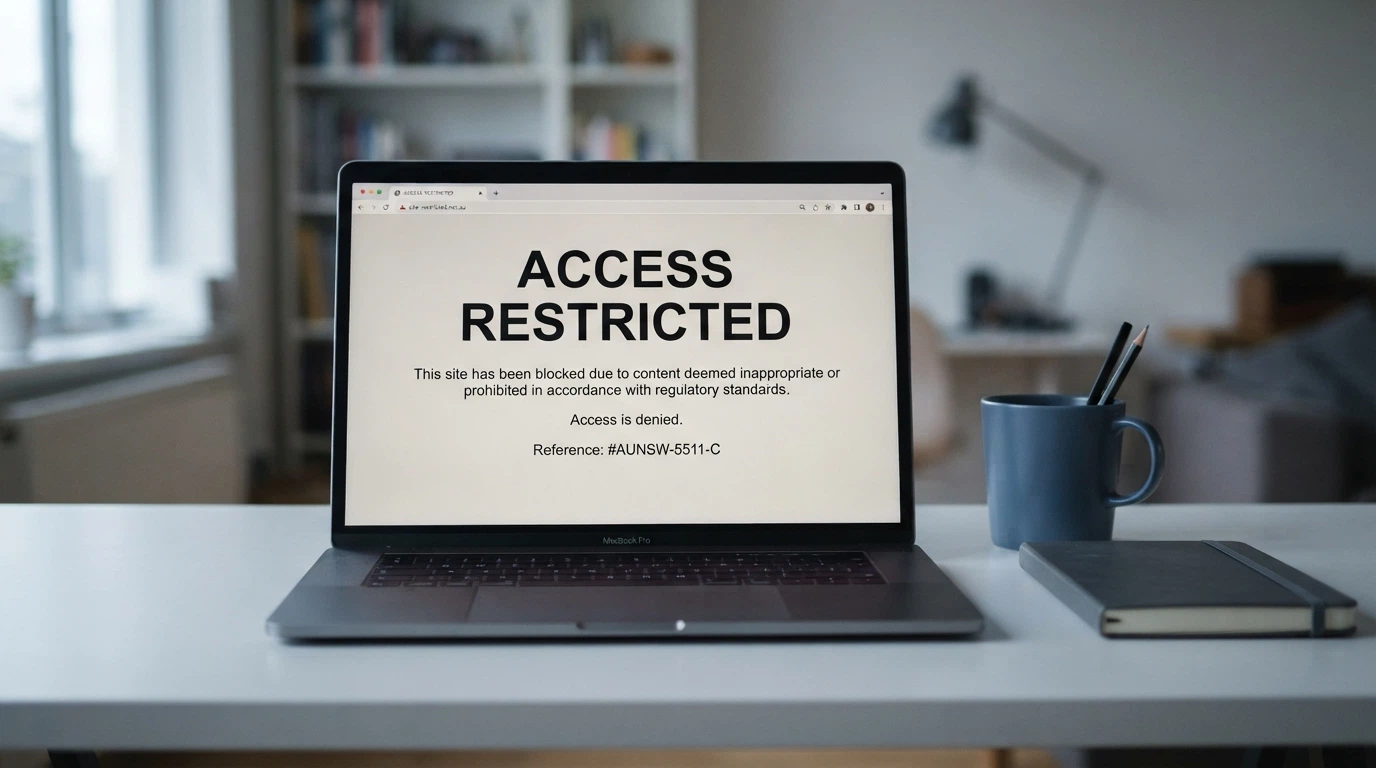
The ACMA enforces the prohibition. Since November 2019 it has had 1,518 illegal gambling and affiliate websites blocked at the DNS level by Australian ISPs, and more than 220 illegal services have withdrawn from the Australian market since the ACMA’s new enforcement regime came into force in 2017. The block is at the DNS layer, which means it works for most Australian players most of the time but does not require any technical sophistication to circumvent. The legal weight sits on the operator, not on the player’s DNS resolver.
The minimum gambling age for all commercial gambling in Australia is 18. That applies offshore as a matter of operator policy, not Australian law, but every legitimate comparison page treats it as a hard floor.
The 2026 Reform: What Changes on 1 January 2027
The Interactive Gambling Amendment (Gambling Reform) Bill 2026 passed Parliament on 19 August 2026 and its measures commence on 1 January 2027. None of the changes legalises online casino. What they do is strengthen the perimeter around licensed wagering and the prohibition on offshore product.
The advertising reform caps wagering ads at three per hour between 6:00 am and 8:30 pm, with a live-sport blackout running from fifteen minutes before kick-off to five minutes after the final whistle. Radio ads are barred during school times. Broadcasting odds is banned. Online ads are restricted to logged-in, age-confirmed users. Athletes, celebrities and influencers are barred from promotion.
The inducement reform is the part that hits bonus design directly. Direct marketing of inducements is prohibited for fourteen days after a customer signs up with a licensed operator, for three months after a person deregisters from BetStop, and indefinitely for any customer identified as at-risk of gambling-related harm. The cooling-off periods do not bind offshore brands. They are written into the reform precisely because offshore brands do not honour them.
The payment reform gives banks and payment providers express authority to block transactions to illegal gambling operators. The AdStop register — a national wagering-advertising opt-out — will be administered by the ACMA. Licensed providers must close accounts within seven days of a customer’s BetStop registration.
What Australian Player Protection Does Not Cover Offshore
BetStop, the National Self-Exclusion Register, has recorded 67,480 registrations as at 31 July 2026, of which 41,290 exclusions were still active — more than sixty per cent of everyone who ever signed up. Seventy-eight per cent of registrants were under forty; thirty-eight per cent chose lifetime exclusion. BetStop binds only Australian-licensed wagering services. An offshore casino is not connected to the register. A player who registers with BetStop and then plays at an offshore brand will continue to be allowed to deposit. The protection the register provides ends at the border.
The credit-card and crypto payment ban came into force on 11 June 2024 under the Interactive Gambling Amendment (Credit and Other Measures) Act 2023. An operator that fails to enforce it faces penalties of up to A$247,500. The ban applies to licensed wagering. It does not apply offshore. Which is why a gambling site asking an Australian player for a credit card or a crypto deposit is, by that single question, telling the player it sits outside Australian rules.
There is no federal deposit, loss or stake ceiling for online gambling in Australia. The country caps the payment method, not the amount — and an offshore operator caps neither. There is no ACMA complaints body for fund recovery from an offshore dispute. There is no AU consumer-law recourse if the operator voids a bonus, refuses a withdrawal, or simply disappears. The site can be blocked tomorrow with a balance on it, and there is no Australian body to appeal to. That is the offshore deal in full.
What Each Payment Method Really Costs to Use
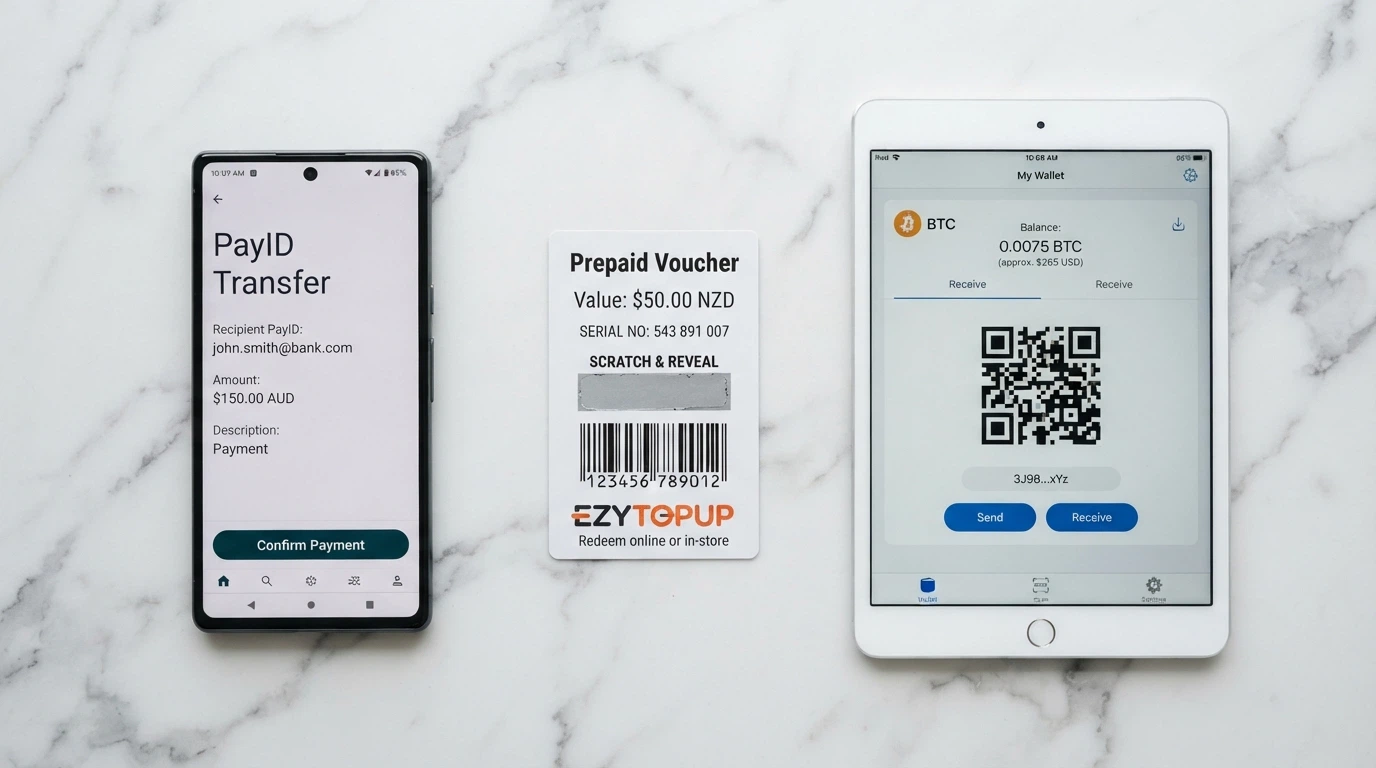
The minimum deposit is not set by the casino alone. Each payment rail carries its own floor, and the advertised number is often unreachable on the method the player actually wants to use. A casino that publishes a A$10 minimum will not accept a A$10 PayID deposit. The cashier enforces a separate floor.
| Payment Method | Minimum Deposit (AU$) | Deposit Speed | Withdrawal Speed | Notes |
|---|---|---|---|---|
| PayID / Osko | 5–10 rail / 20 casino floor | Under 60 seconds | Rarely supported | AU bank rail; casino floor is A$20 |
| Neosurf (AU) | 10 | Instant | n/a (voucher) | A$5 voucher EU-only |
| Visa / Mastercard (debit) | 10–25 | Instant | 1–3 business days | Credit cards banned; debit OK |
| MiFinity / eWallets | 25–30 | Instant | Up to 24 hours | Method minimums vary by brand |
| Crypto (BTC / USDT) | ~0.10 (BTC) / ~1 (USDT) | ~10–30 minutes | 2–60 minutes | No chargeback; offshore only |
| Bank transfer | 20+ | Hours | 1–3 business days | Slowest withdrawal route |
PayID: Fast Deposits, but the Minimum Is Not A$1
PayID is the AU player’s default rail. It is instant, it is familiar, and on the bank side it works for deposits as small as a single dollar. The casino enforces a different floor. Anti-fraud rules at the cashier flag micro-deposits as testing or laundering, and every AU-facing brand in the comparison set has settled on A$20 as the PayID minimum. A player who thinks they can deposit A$5 by PayID will be rejected at the cashier and routed to a higher rail.
Deposits credit in under sixty seconds at verified brands. That speed is real. The cash-out side is the trade: PayID cash-outs are rarely supported. Players plan withdrawals through crypto, eWallets or bank transfer. PayID is a one-way rail at most of these brands, and the player who deposits with it needs to nominate a different method for withdrawals before they start.
Neosurf and the A$10 Floor
Neosurf is the lowest fiat route to a real-money cashier. The A$10 voucher is sold in Australia; the A$5 voucher is not. Neosurf’s lower denominations are an EU product. A player who lands on an AU comparison page that quotes a A$5 Neosurf minimum is reading an error.
The brands that accept Neosurf at A$10 are a specific set: Spin Samurai, 7Bit Casino, PlayAmo, HellSpin, National Casino and Asino. None of those names appears in the ranking table above — they sit just below the curated top ten in market footprint — but the rail itself is the answer for any player whose bankroll is exactly A$10 and who does not want to hold crypto. A Neosurf voucher is also a withdrawal ceiling, because Neosurf is a deposit-only rail. Cashing out goes through a different method.
Debit Cards, eWallets and Bank Transfer: Slower, Higher Minimums
The traditional rails work, and they ask for more. Visa and Mastercard debit minimums typically sit at A$20–A$25 on the featured brands — Rocket Play quotes A$25 on cards and CashtoCode, A$30 on MiFinity. The credit-card ban does not affect a debit card, but it does mean any AU-facing brand that asks for a credit card is operating outside Australian rules. Treat that as a tell.
eWallet withdrawals take up to twenty-four hours. Bank transfer is slower — one to three business days — and is the route most exposed to operator-side delay. None of the traditional rails offers a sub-A$20 deposit. A player who wants that needs PayID, Neosurf or crypto.
Crypto Deposits: The Only Route Below A$10
Crypto is the sole payment method that lets an Australian player deposit below A$10. It is also the method that the credit-and-crypto ban of June 2024 has explicitly excluded from licensed wagering, which means any brand offering it sits, by definition, outside Australian regulation. The player trades consumer protection for a smaller deposit floor.

Bitcoin and Altcoin Minimums: from A$0.10 at Stake
The numbers are real and they are small. Stake accepts approximately A$0.10 BTC-equivalent — the lowest entry point in the comparison set. BC.Game sits at roughly A$1 USDT. Bitcasino.io accepts near-zero BTC amounts. On the other side of the table, USDT and Ethereum minimums depend heavily on network fees; a USDC transfer on Ethereum can cost more in gas than the deposit is worth. Practical crypto deposits on altchains settle closer to A$15–A$30 once the network fee is included.
The headline number is the BTC minimum. The reality is the wallet cost. A player depositing A$0.10 in BTC at Stake pays a network fee that is set by the Bitcoin network, not by Stake — and on a congested day that fee is more than the deposit. The deposit is real. The cost to make it is the catch.
The Trade-Off: No Australian Consumer Protection
The credit-card and crypto ban is a consumer-protection measure: it removes payment rails that give the player a chargeback. Sites that still offer crypto to Australian players are signalling, by the offer itself, that they operate outside the rules the ban was written to enforce. The payment method is the tell.
There is no chargeback on a crypto deposit. There is no AU consumer body for a dispute with an offshore crypto casino. There is no BetStop coverage. There is no ACMA complaints route. The crypto path opens the door at A$0.10 and closes every Australian safety net behind the player on the way in. That is the deal, and a player who wants the lowest deposit on the table pays for it in the protections that no longer apply.
When the Bonus Needs More Than You Deposited
This is the section that decides whether a low-deposit bonus is worth claiming. The deposit is the front of the offer. The bonus minimum, the wagering multiplier, the maximum bet, the validity window and the conversion cap are the back. Eight of fifteen AU-facing brands surveyed quietly enforce a higher minimum for welcome-bonus eligibility than for play — the player deposits A$10 expecting a match and discovers the bonus needed A$20.
The Bonus-Minimum Trap: Deposit $10, the Bonus Needs $20
The trap is the gap between “minimum deposit” and “minimum deposit to qualify for the welcome bonus.” It appears on the majority of brands AU comparison pages feature. SkyCrown publishes a standard play minimum of A$20 but a bonus minimum of A$30 on the first and second deposits, A$40 on the third and A$50 on the fourth. Rocket Play publishes A$25 on cards but A$30 to qualify for the welcome bonus. Royal Reels sets the bonus minimum at A$30 across the board. None of these brands hides the gap; all of them publish it on the terms page the player is unlikely to read until after depositing.
The A$10 deposit does not qualify for the bonus. It qualifies for play. The two are different products. A player who has read the terms knows this; a player who has not learns it at the cashier.
The check is mechanical. Before depositing, find the welcome offer terms page. Find the line that reads “minimum deposit to claim the bonus.” If that number is higher than the cashier’s published minimum, the gap is real. Deposit the bonus-eligible amount or do not deposit at all.
The Real Cost of a 30x or 40x Playthrough
Wagering multipliers are the cost side of a bonus. A 30x requirement on a $100 bonus means $3,000 of turnover before any of the bonus becomes withdrawable. A 40x requirement means $4,000. On Rocket Play’s A$1,000 first-deposit match, 40x means A$40,000 of turnover. The headline bonus is the cap. The wagering requirement is the work.
The house edge erodes the balance during the playthrough. Starburst carries an RTP of 96.09%, Book of Dead 96.21%, Sweet Bonanza 96.48%. On a A$1,200 playthrough — a A$30 bonus at 40x — the expected loss at Starburst’s RTP works out to roughly A$47. That is the bonus’s real cost, before max-bet rules, validity windows or conversion caps come into play. It is also a statistical average, not a guaranteed outcome; the house edge is what the player pays over many spins, not what any single spin returns.
The max-bet rule is the next trap. Both SkyCrown and Rocket Play cap the maximum bet during any active bonus at A$7.50. Exceeding it can cancel the bonus and void the winnings. A player who adjusts their bet size to clear the bonus faster risks the bonus itself. The cap is there to slow the player down, and a player who ignores it pays for it.
The validity window closes faster than expected. SkyCrown gives fourteen days on its bonus funds. Rocket Play gives five days on its free spins. The wagering requirement and the validity window are calibrated together: a tight window and a high multiplier are the same condition. A player who cannot commit the time on the terms the bonus sets should not claim the bonus.
The RTP comparison above is illustrative, not an endorsement. The expected loss is what the bonus costs on average across many spins. A single session can return more or less. The math describes the long-run cost, which is what a sharp player needs to know before they claim.
Pokies You Can Actually Afford at Minimum Stakes
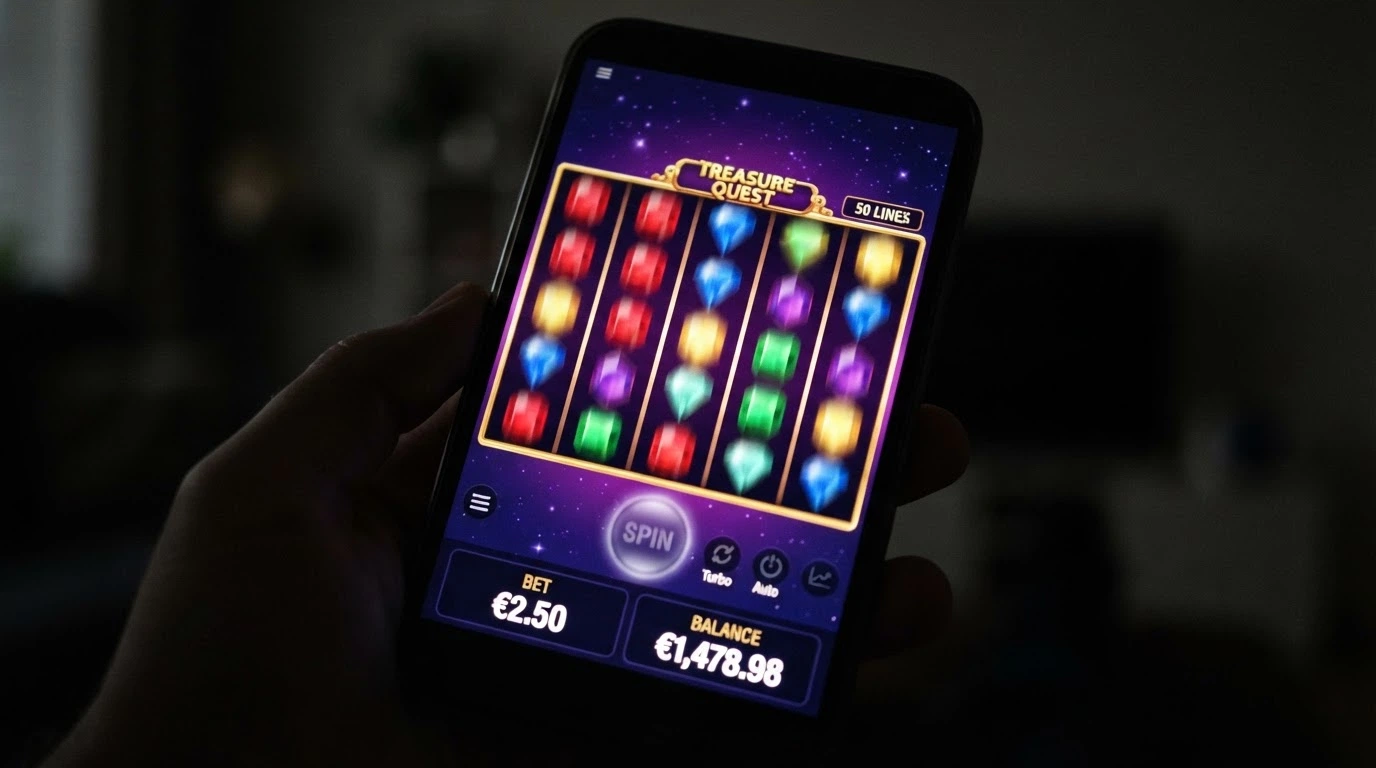
On a A$10 or A$20 bankroll the pokie choice matters more than the deposit amount. A penny pokie with low variance preserves the balance; a high-variance title can wipe it in twenty spins. The table below lists the titles with confirmed RTP and provider in the public record this run. Volatility is listed where research confirms it; where it is unconfirmed, the cell stays empty rather than guess.
| Slot Title | RTP | Provider | Volatility |
|---|---|---|---|
| Starburst | 96.09% | NetEnt | Low |
| Book of Dead | 96.21% | Play’n GO | — |
| Sweet Bonanza | 96.48% | — | — |
| Thunderstruck II | 96.65% | — | Medium |
| Cats and Cash | 95.82% | Play’n GO | — |
Penny Pokies: Titles with Sub-$0.20 Spins
Starburst is the canonical penny pokie. The minimum bet sits at A$0.10, the RTP is 96.09% and the variance is low. The game does not produce large wins; it produces frequent small returns, which is exactly what a A$20 bankroll needs to last longer than ten minutes. Starburst is available across most of the featured operators, though provider availability varies.
Thunderstruck II runs at a higher RTP — 96.65% — and medium variance. The minimum bet is still in the penny range. A $20 deposit will not last as long as it does on Starburst, but the variance produces features that can multiply the balance when they hit. Thunderstruck II is the pokie for the player who wants the session to have a swing.
Cats and Cash by Play’n GO sits at 95.82% RTP with a published ultra-low minimum bet. It is a niche pick and not on every brand’s lobby. A player who finds it on a featured operator and values session length over feature depth will get what they want from it.
RTP and Volatility: What Matters at Low Stakes
RTP and volatility are not abstract stats on a small balance. They are the difference between a session that lasts ten minutes and one that lasts an hour. On a $20 bankroll, a low-variance title returns the player’s bet in small increments often enough that the balance survives long enough for a feature to appear. A high-variance title does not.
The mistake is to chase the highest RTP. 96.65% on a medium-variance game does not outperform 96.09% on a low-variance game if the higher-variance title wipes the balance before the variance evens out. The math only works if the player has enough spins left for the math to matter. On $20 at A$0.10 a spin, that is two hundred spins. A high-variance game can end a session in twenty.
The discipline is to match the pokie to the bankroll. Small bankroll, low variance. Larger bankroll, room for variance to express itself. The RTP is the long-run figure; the bankroll is the short-run constraint, and on a low deposit the short run is all there is.
Staying Safe When the Safeguards Stop at the Border
The responsible-gambling tools that Australian players hear about — BetStop, deposit limits, activity statements — apply to Australian-licensed wagering operators. They do not apply to an offshore casino. A player who wants to use them needs to understand the gap.

Deposit Limits and Self-Exclusion Tools That Actually Work
Licensed Australian wagering operators are required to offer customer-set deposit limits and activity statements. State and territory regulators set the conditions, and the operators honour them because the licence depends on it. Offshore casinos may offer on-platform limit tools — deposit caps, time-outs, self-exclusion buttons — but they sit outside any Australian enforcement, and the player cannot escalate a dispute to an Australian body if the operator does not honour them.
BetStop is the cleanest signal of the gap. The register has recorded 67,480 registrations as at 31 July 2026, with 41,290 exclusions still active. Seventy-eight per cent of registrants were under forty; thirty-eight per cent chose lifetime exclusion. Every one of those registrations binds licensed wagering services. None of them binds the brands in the ranking above. A player who has registered with BetStop and then deposits at an offshore casino has not self-excluded. They have only self-excluded from the licensed bookmakers.
The on-platform tools on offshore brands vary. Some offer deposit caps, cool-off periods and self-exclusion. Some do not. The audit is mechanical: open the responsible-gambling page, read what is on offer, test it before depositing. If the toolset is thin, the protection is thin.
Where to Get Help: The National Gambling Helpline and Gambling Help Online
The help infrastructure sits with the Australian bodies, not with the offshore brands. The National Gambling Helpline is 1800 858 858 — free, confidential, staffed twenty-four hours a day, seven days a week. Gambling Help Online at gamblinghelponline.org.au offers online chat and counselling for players and families. BetStop registration is at betstop.gov.au for anyone who wants to exclude from licensed wagering services.
About 2.1 per cent of Australian adults — roughly 430,000 people — experience problem gambling; the Australian Institute of Health and Welfare put high-risk gambling at 1.8 per cent in 2022. The minimum age for all commercial gambling in Australia is eighteen. None of that is a recommendation about whether to play. It is the floor on what a player needs to know before they deposit.
How We Selected and Ranked These Operators
The ranking above is built on three sources: the ACMA’s enforcement and blocking data, the operators’ own published terms pages, and AU-facing third-party review sites that quote those terms. The minimum deposit, the bonus terms, the wagering multiplier and the licence are all figures the operator publishes. Where a brand’s terms are stable across multiple sources, the figure is in the table. Where a brand’s terms were not confirmed this run, the cell stays empty.
The criteria, in order, are minimum deposit on the cheapest fiat rail, the wagering requirement on the welcome bonus, the bonus structure relative to the deposit, and the licence. The Curaçao licence is the floor; it is not a recommendation. None of these operators carries an Australian licence, because none can. The credit-card and crypto payment ban is a check on offshore status, not a quality signal. A brand that asks for credit cards or crypto from Australian players is operating outside Australian rules. That is the fact the ranking treats as given.
What this page does not claim: it does not rank these brands by safety, fairness or reliability in any absolute sense. Offshore casino operations sit outside the Australian regulatory perimeter, and the page does not pretend otherwise. It ranks the brands a player will reach when they search for a low-deposit Australian online casino, by the figures that are actually published.
What a Low Deposit Actually Buys You — and What It Doesn’t
A low deposit buys a session. It buys a few hundred spins at minimum stake on a low-variance pokie, a chance to read the cashier without a large balance at risk, and an exit if the brand is not what the marketing promised. For a player whose entertainment spend is exactly that — a few hundred spins and a closed tab — a low deposit is a reasonable product. A$10 on Stake or on a Neosurf-accepting brand is the cleanest expression of it.
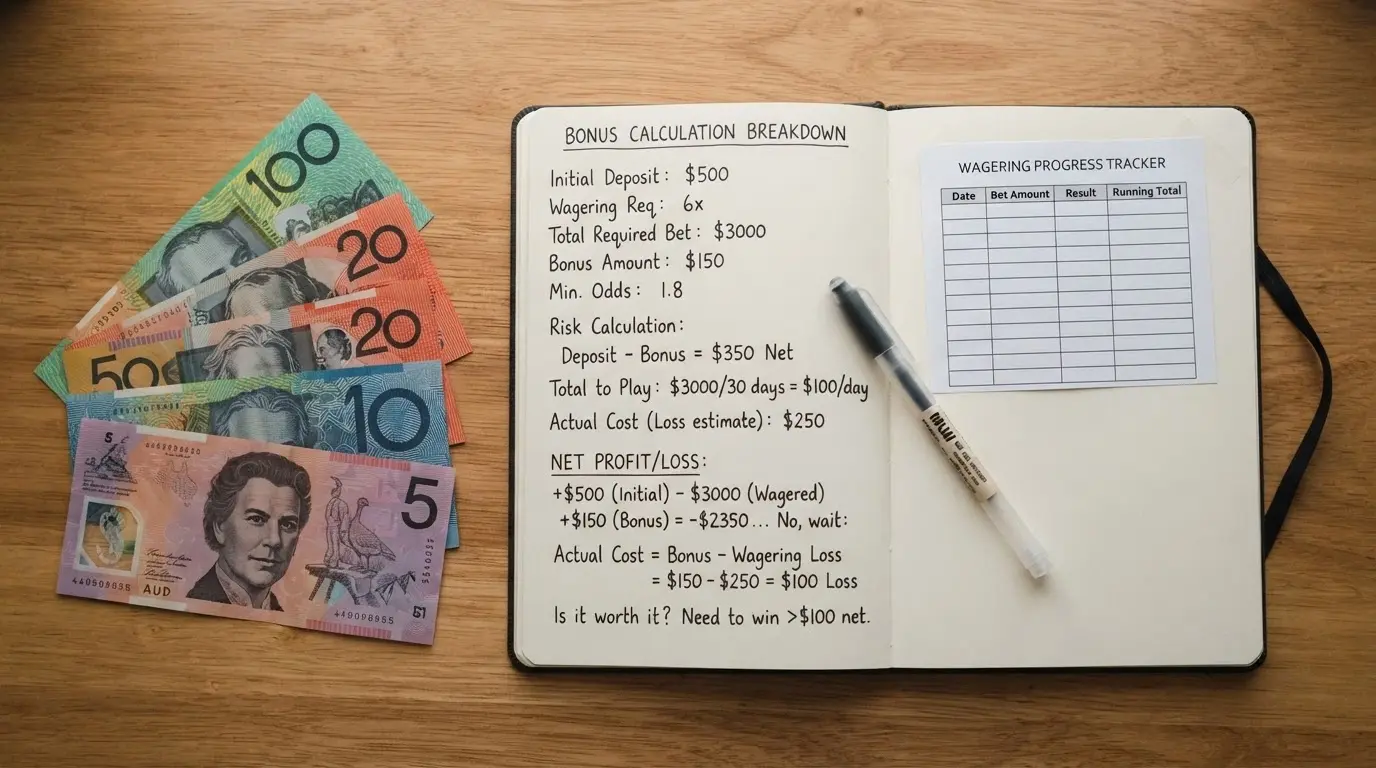
A low deposit does not buy a path to a payout. The bonus-minimum gap catches players who assume a A$10 deposit unlocks a welcome offer; eight of fifteen surveyed brands enforce a higher bonus minimum than they publish. The wagering multiplier on the bonus is high — 30x to 40x across the featured set — and the RTP during the playthrough costs the player roughly A$47 for every A$30 bonus cleared on Starburst’s numbers. The max-bet rule and the validity window are calibrated to make the playthrough harder than the bonus terms make it sound. The offshore protection gap means the player has no Australian body to appeal to if the operator refuses a withdrawal, voids a bonus or simply disappears.
The “payout” promised by the marketing is the trap. The minimum deposit is real. The bonus number is real. The path from one to the other is gated by terms the player is not meant to read until they have already deposited. The arithmetic is the page, not the headline.
A low-deposit casino is a reasonable entertainment expense for a player who treats it that way: a small spend, a short session, an acceptance that the bonus number is a cap and not a guarantee, and a read of the responsible-gambling section before the cashier page. It is a trap for a player who sees the A$10 entry point and assumes the rest of the offer works the same way.
The honest summary: a low deposit opens a door. What the player finds on the other side is an offshore product with no Australian licence, no Australian consumer protection, and bonus terms that turn a A$10 entry into a A$4,000 turnover requirement before a cent becomes withdrawable. The player who knows that going in is the player the offer is built for. The player who does not is the player it is built to extract from.
Frequently Asked Questions About Low-Deposit Online Casinos in Australia
What is the lowest minimum deposit at an online casino for Australian players?
The lowest real-money deposit an Australian player can make today is roughly A$0.10 BTC-equivalent at Stake, with BC.Game around A$1 USDT. On fiat rails the practical floor is A$10 — Neosurf at brands such as PlayAmo and 7Bit, and the published cashier minimums at FairGO and Bizzo. PayID’s casino-side floor is A$20. The “$1 fiat deposit” advertised on comparison pages does not exist in Australia.
Are low-deposit online casinos legal in Australia?
No. Online casino is prohibited under the Interactive Gambling Act 2001. There is no Australian online casino licence, anywhere. Every operator in this ranking is offshore, holding a Curaçao licence, and is reached from Australia at the player’s discretion. The IGA targets the provider, not the player, but the player has no Australian consumer protection, no ACMA complaints body and no BetStop coverage on an offshore brand.
Can I use PayID to deposit at a low-deposit casino in Australia?
Yes, but not at the A$5 or A$10 floor that the bank rail technically allows. Anti-fraud rules at the casino cashier enforce a A$20 minimum on PayID. Deposits credit in under sixty seconds; withdrawals are rarely supported on PayID. A player who deposits via PayID will need a separate rail — typically crypto, eWallet or bank transfer — to cash out.
Which payment methods have the lowest minimum deposits at Australian online casinos?
Crypto, by a wide margin. Bitcoin at Stake is approximately A$0.10; USDT at BC.Game is around A$1. On fiat rails the floor is Neosurf at A$10, then debit cards at A$10–A$25 depending on the brand, then PayID and bank transfer at A$20. The A$5 figure that appears on competitor pages is not a product available to Australian players.
What are the wagering requirements on low-deposit casino bonuses?
Across the featured set, wagering requirements run from 30x to 40x on bonus funds. FairGO and Rocket Casino are 30x; Bizzo is 35x; SkyCrown, Rocket Play and WinSpirit are 40x. On a $100 bonus, 30x means $3,000 of turnover; 40x means $4,000. The playthrough is the cost side of the bonus, and the headline bonus number is the cap, not the payout.
Can I play pokies with a $1 deposit in Australia?
Not in fiat. Neosurf’s A$5 voucher is sold only in Europe; the smallest Neosurf denomination in Australia is A$10. PayID’s casino floor is A$20. The only way to play real-money pokies at a sub-A$10 deposit from Australia is crypto: approximately A$0.10 BTC at Stake or A$1 USDT at BC.Game. The casino’s minimum bet on penny pokies is A$0.10, so a $10 deposit buys one hundred spins.
How fast are withdrawals from low-deposit casinos in Australia?
Crypto is fastest — two to sixty minutes once the casino approves the request. eWallets take up to twenty-four hours. Bank transfer takes one to three business days. PayID cash-outs are rarely supported on offshore brands. Withdrawal speed on offshore casinos also depends on the operator’s internal approval queue; the rail time is the floor, not the ceiling.